
Your tea cup collection deserves more than hiding in kitchen cabinets. Whether you own delicate bone china pieces or colorful porcelain sets, proper display transforms functional items into captivating decor. This guide shows you exactly how to showcase your tea cups while keeping them safe and accessible.
From simple shelf arrangements to elaborate cabinet presentations, you’ll discover methods that work for any space and budget. Each technique protects your collection while creating visual interest in your home.
Table of Contents
Understanding Tea Cup Display Basics
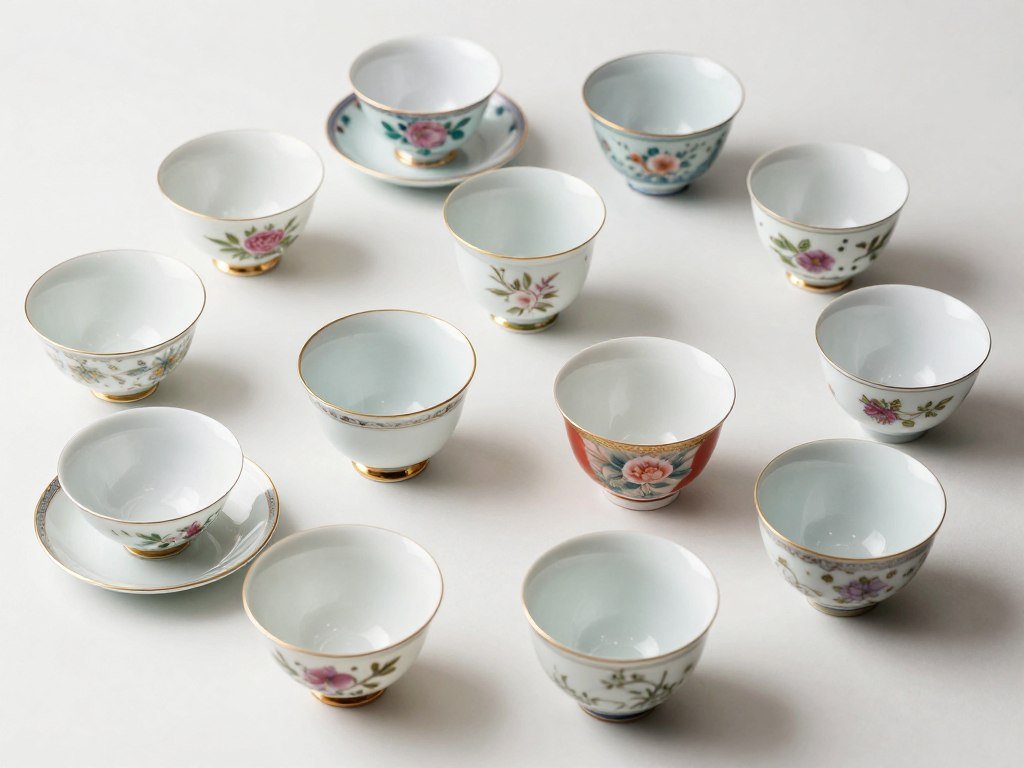
Before arranging your tea cups, consider their material and value. Bone china requires gentler handling than standard porcelain. Antique pieces need protection from direct sunlight. Modern mugs tolerate casual display better than heirloom sets.
The display location matters significantly. High-traffic areas risk accidental bumps. Kitchens expose cups to cooking grease and steam. Living rooms and dining areas typically offer safer environments for showcasing your collection.
Display Considerations
Essential factors determine display success and longevity for your tea collection.
- Protection from direct sunlight prevents fading
- Stable surfaces prevent tipping accidents
- Distance from heat sources protects delicate china
- Easy cleaning access maintains collection appearance
Safety Priorities
Proper precautions keep your tea cups intact for years of enjoyment.
- Earthquake-prone areas need display anchoring
- Households with children require higher placement
- Pet owners should avoid low open shelving
- Humidity control prevents bone china deterioration
Aesthetic Goals
Visual appeal enhances your home while honoring your collection’s beauty.
- Color coordination creates cohesive presentations
- Pattern grouping emphasizes design similarities
- Size variation adds visual interest
- Spacing balance prevents overcrowding
Accessibility Needs
Functional display allows you to actually use your favorite tea cups.
- Daily-use cups need convenient reach
- Special occasion sets can sit higher
- Rotation access keeps collection fresh
- Cleaning ease maintains display quality
Shelf Display Methods for Tea Cups
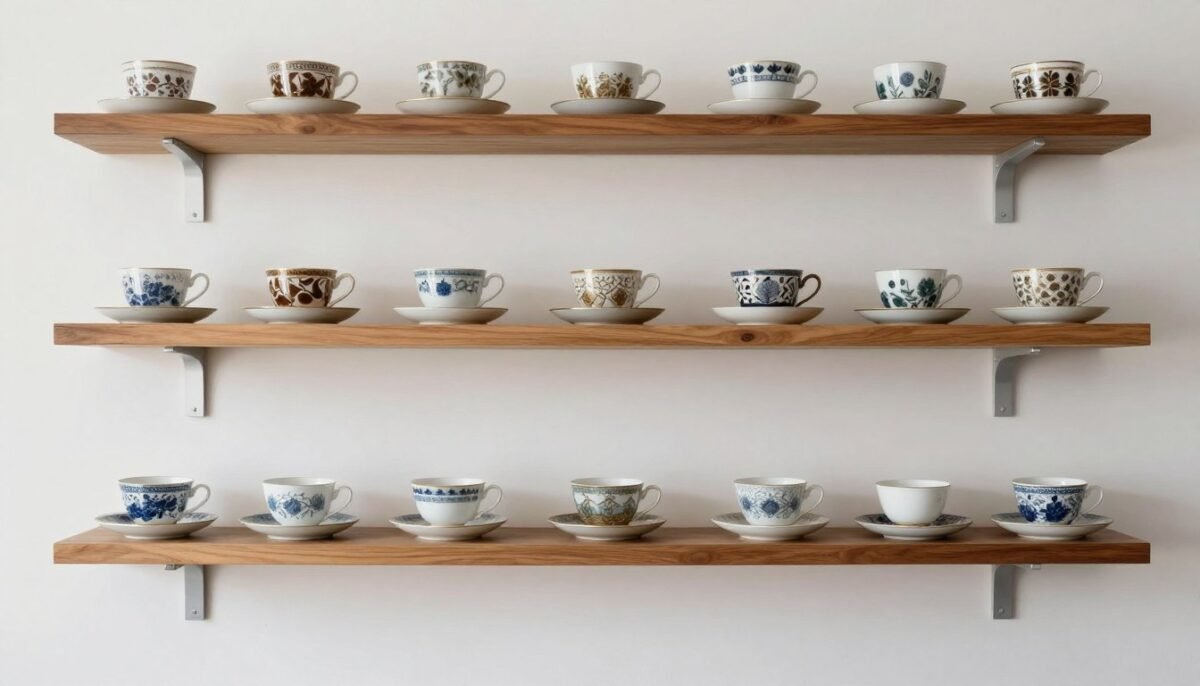
Shelving offers the most versatile display option for tea cups. Open shelves let you admire your collection daily while keeping cups easily accessible. The key lies in proper arrangement and spacing to prevent overcrowding.
Floating Shelf Arrangements
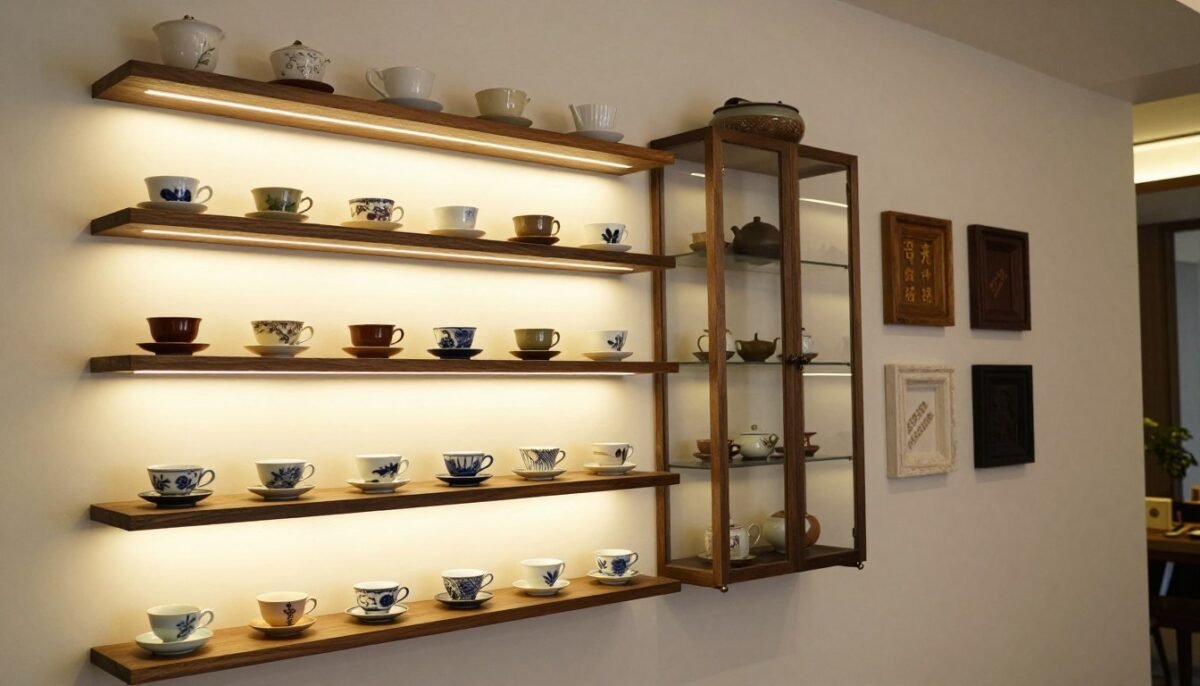
Floating shelves create clean, modern displays that work in any room. Install them at eye level for maximum visual impact. Space shelves twelve to fifteen inches apart to accommodate standard tea cup heights with saucers.
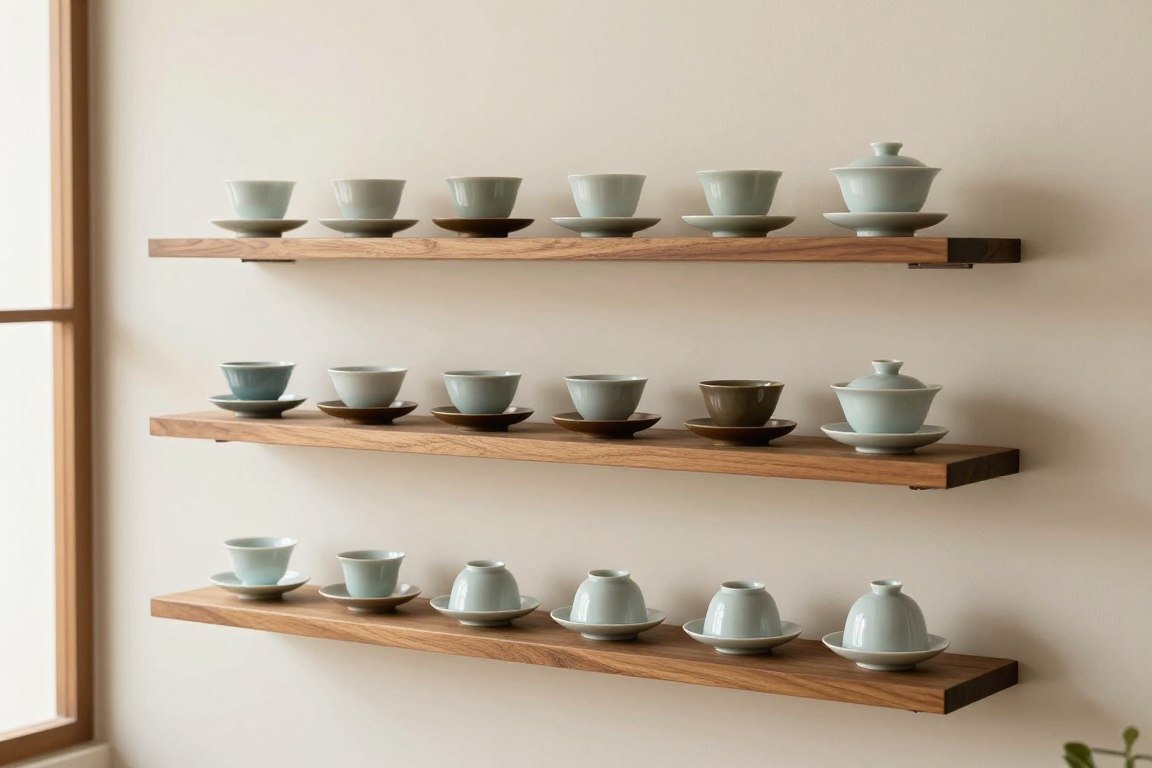
Arrange cups by height, placing taller pieces toward the back. This creates depth and ensures every cup remains visible. For bone china collections, consider felt shelf liners that cushion bases and prevent scratching.
Bookcase and Built-in Shelving
Existing bookcases transform into excellent tea cup displays. Dedicate specific shelves to your collection, mixing in complementary items like loose leaf tea canisters or vintage tea tins. This creates a cohesive tea-themed vignette.
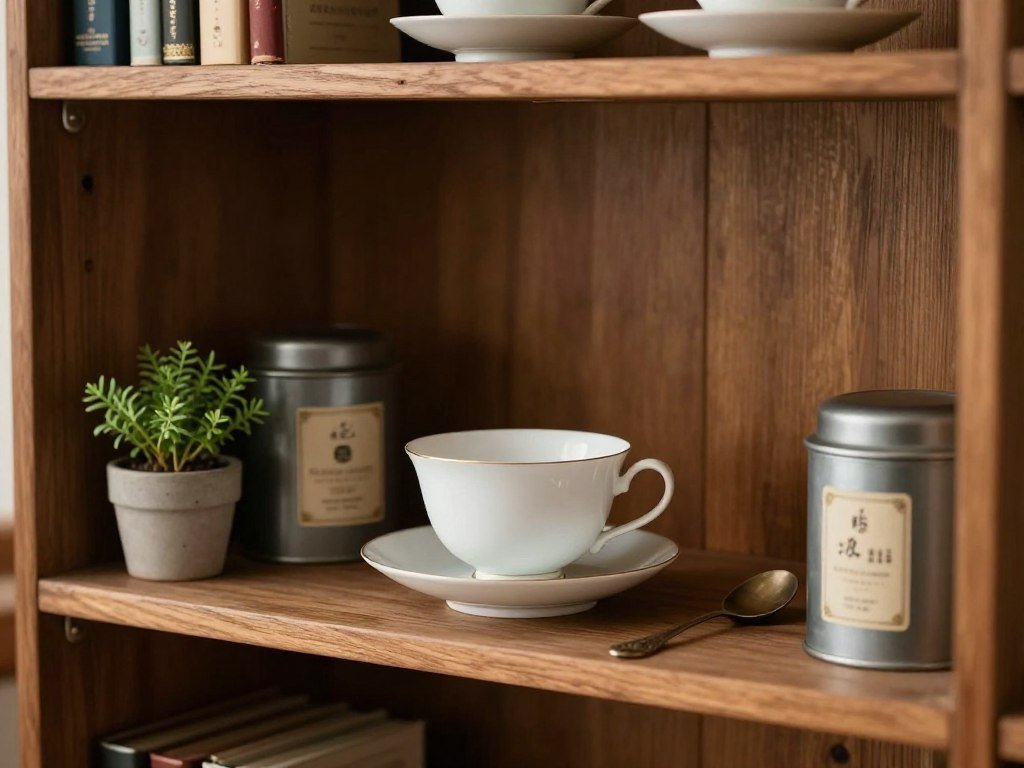
Leave adequate space between cups for air circulation and dust prevention. Group sets together while separating different patterns. This organization helps guests appreciate individual designs without visual confusion.
Corner Shelving Solutions
Corner shelves maximize unused wall space while creating intimate display areas. These work particularly well in dining rooms where corner placement frames the collection beautifully. Triangular corner shelves suit smaller tea cup collections perfectly.
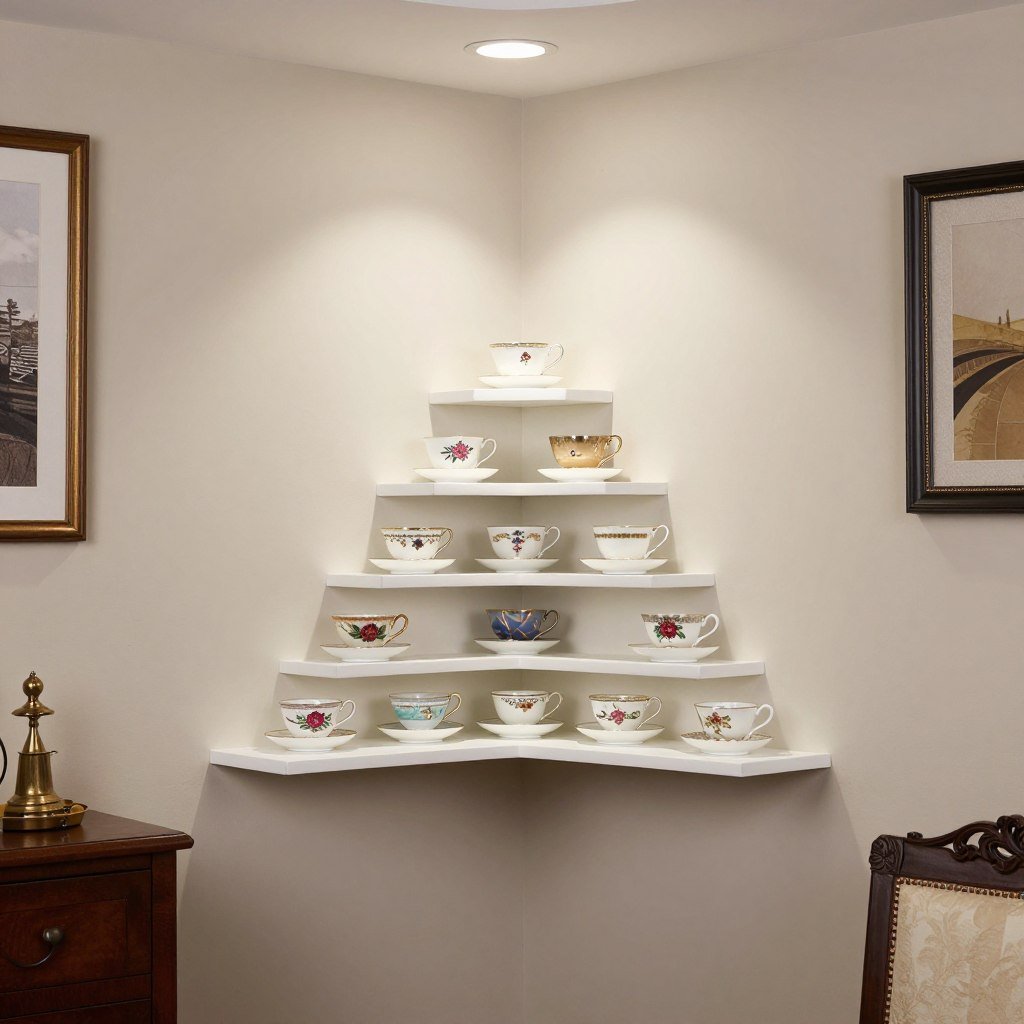
Install lighting above or below corner shelves to eliminate shadows. LED strip lights work exceptionally well for highlighting bone china translucency. Warm white light temperatures complement most tea cup designs better than cool white.
Cabinet Display Techniques
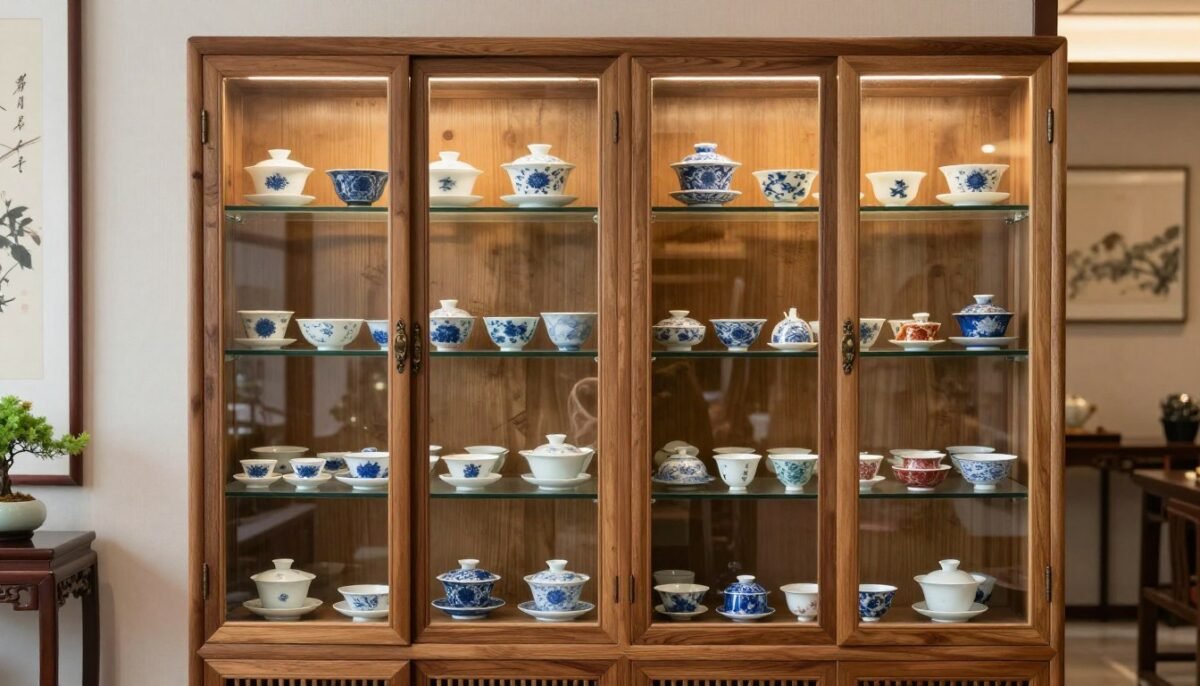
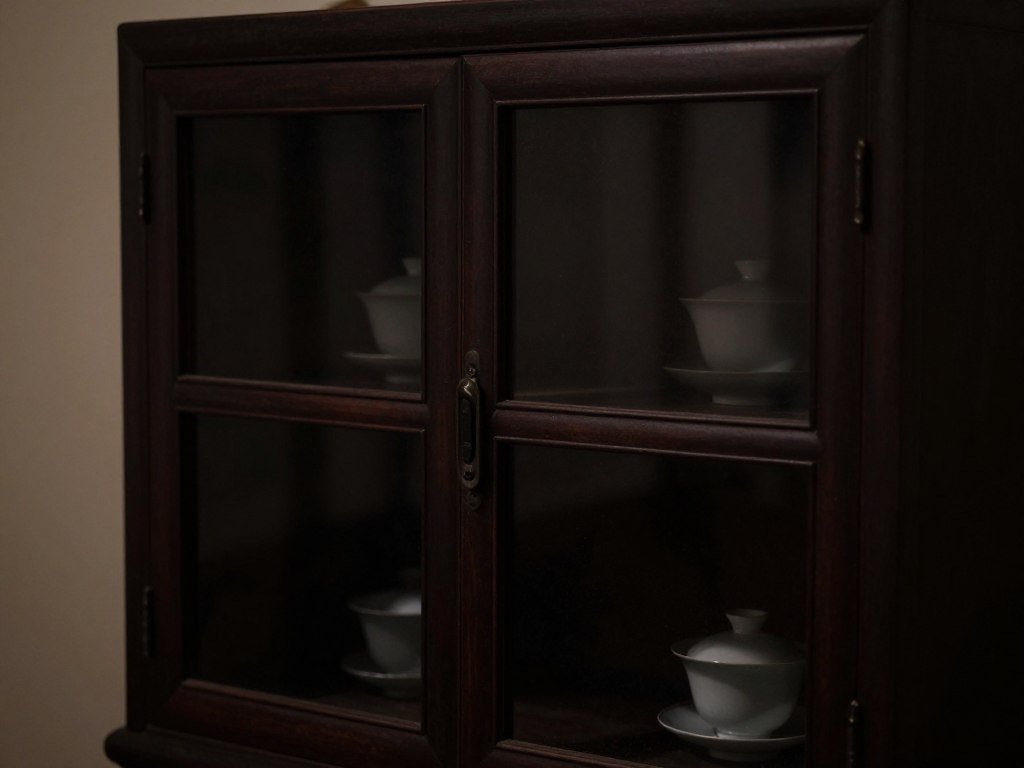
Cabinets offer superior protection for valuable tea cups while maintaining visibility. Glass-front cabinets shield collections from dust, cooking odors, and accidental contact. This protection proves essential for antique bone china and heirloom sets.
China Cabinet Arrangements
Traditional china cabinets provide ideal tea cup storage and display. Position your most prized pieces at eye level where they receive maximum attention. Reserve top shelves for less frequently viewed items and bottom shelves for everyday cups.
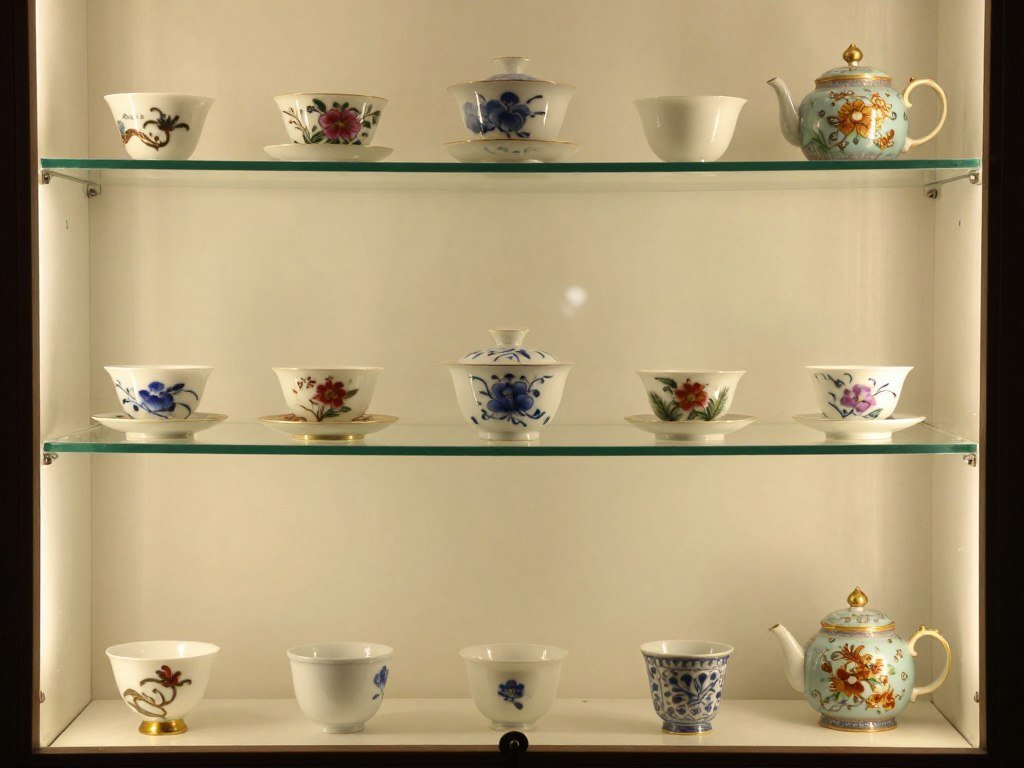
Install small LED puck lights inside cabinets to enhance visibility. These battery-operated lights eliminate wiring hassles while providing focused illumination. Position lights to shine on cup interiors, revealing delicate painted details and gold leaf accents.
Curio Cabinet Displays
Curio cabinets with mirrored backs double visual impact by reflecting tea cup designs. The mirrors also create illusion of larger collections. Choose cabinets with adjustable shelving to accommodate various cup sizes within your collection.
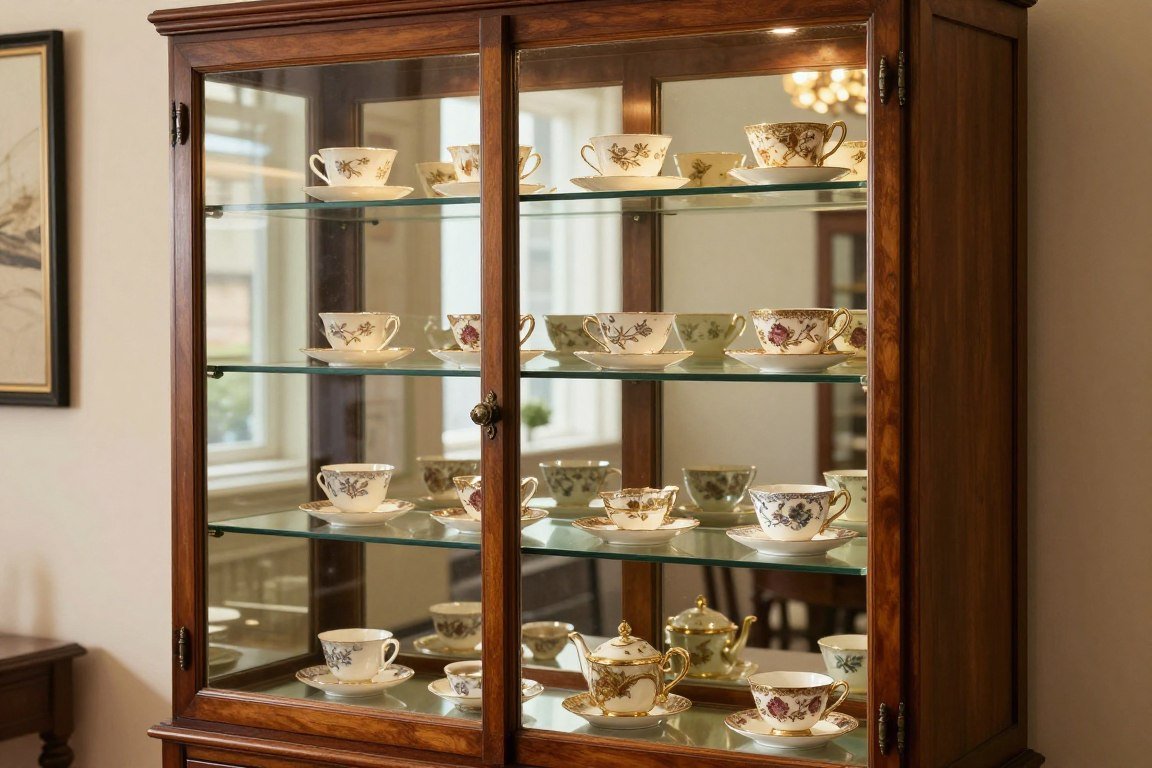
Avoid overcrowding cabinet shelves. Leave three to four inches between cups for proper appreciation of each piece. This spacing also facilitates easier retrieval when you want to use specific cups for special occasions.
Wall-Mounted Glass Cabinets
Wall-mounted glass cabinets save floor space while providing excellent tea cup protection. These shallow cabinets work beautifully in hallways, dining rooms, and breakfast nooks. Select depths that accommodate cups with saucers without wasted space.
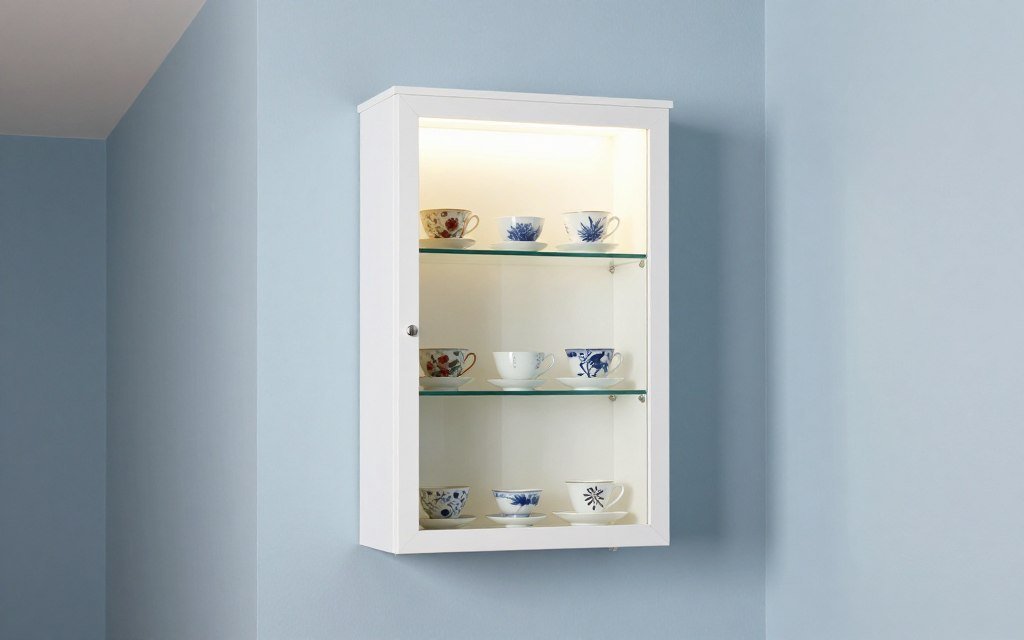
Mount cabinets securely using wall anchors rated for cabinet weight plus collection weight. Glass shelves increase load, so proper installation prevents accidents. Many homeowners benefit from professional installation for valuable collections.
Wall-Mounted Display Options
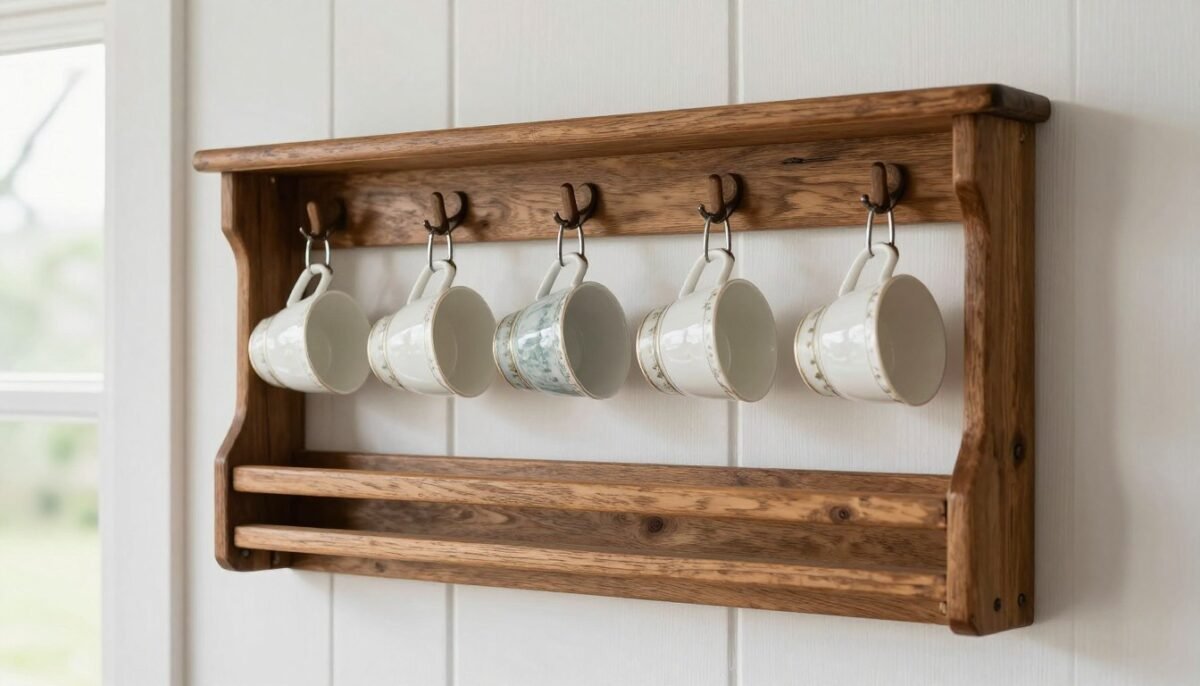
Wall displays turn tea cups into functional art. These methods work especially well in kitchens where cups remain easily accessible for daily use. Wall mounting also frees up valuable cabinet and counter space.
Plate Rack Displays
Traditional plate racks accommodate tea cups beautifully. Hang cups from hooks by their handles while standing saucers vertically in the rack grooves. This dual display showcases both cup and saucer designs simultaneously.
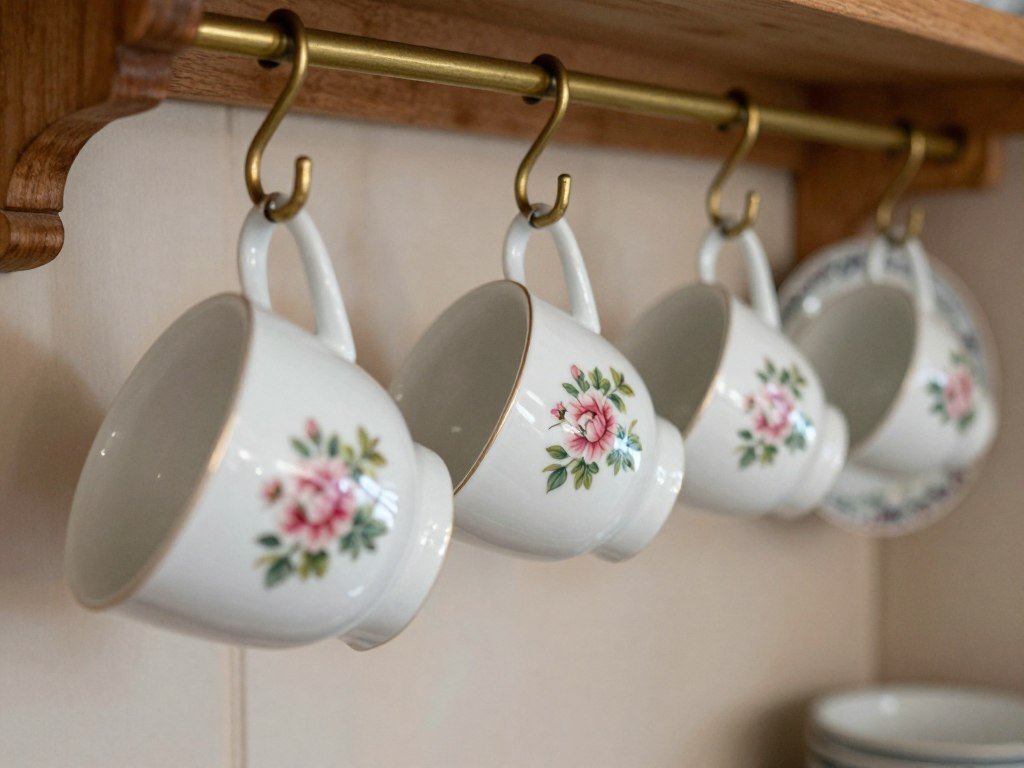
Ensure rack installation hits wall studs for adequate weight support. A fully loaded plate rack with tea cups and saucers can exceed twenty pounds. Use appropriate hardware rated for this weight to prevent pulling away from walls.
Individual Cup Hooks
Small brass or chrome hooks let you create custom wall arrangements. Space hooks evenly to create grid patterns or arrange them organically for eclectic displays. This method works particularly well for mismatched vintage tea cup collections.
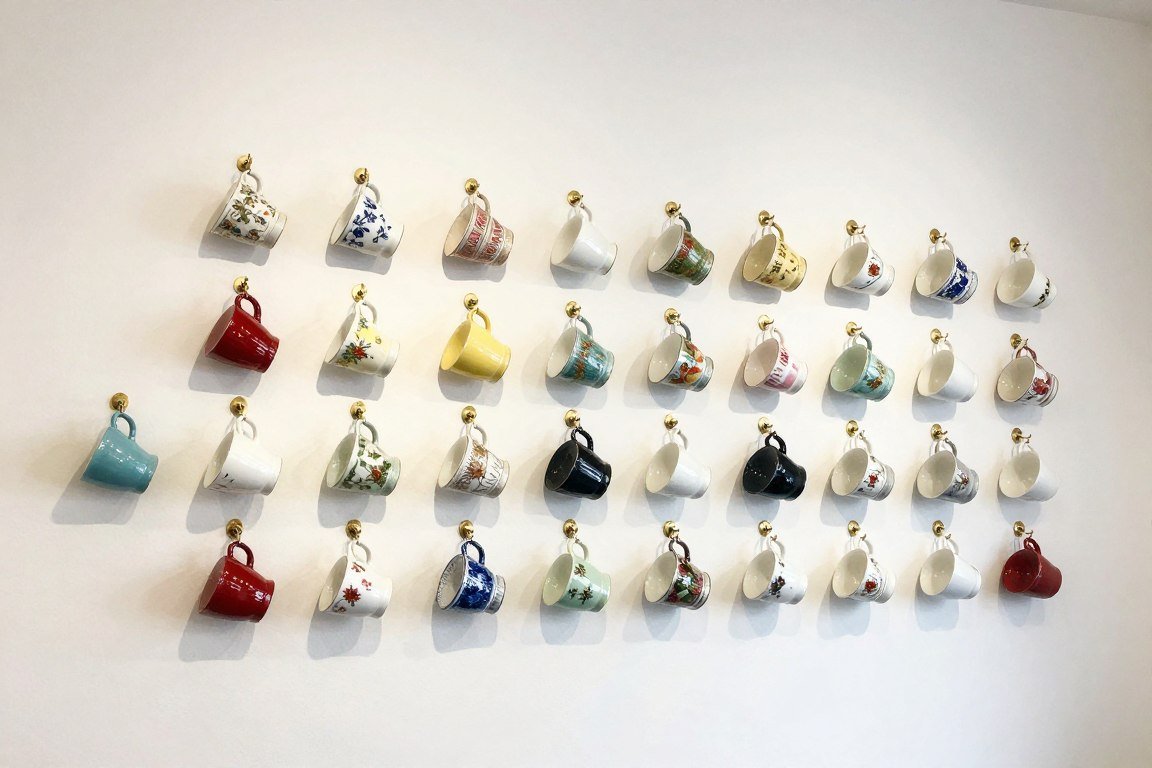
Rotate cups periodically to prevent handle stress from constant hanging. Bone china handles, while sturdy, can develop hairline cracks under prolonged weight bearing. Inspection every few months identifies potential issues before breakage occurs.
Shadow Box Displays
Deep shadow boxes protect single prized tea cups while creating focal points. These enclosed displays prevent dust accumulation and accidental damage. Shadow boxes work beautifully for heirloom cups with sentimental value or rare antique finds.
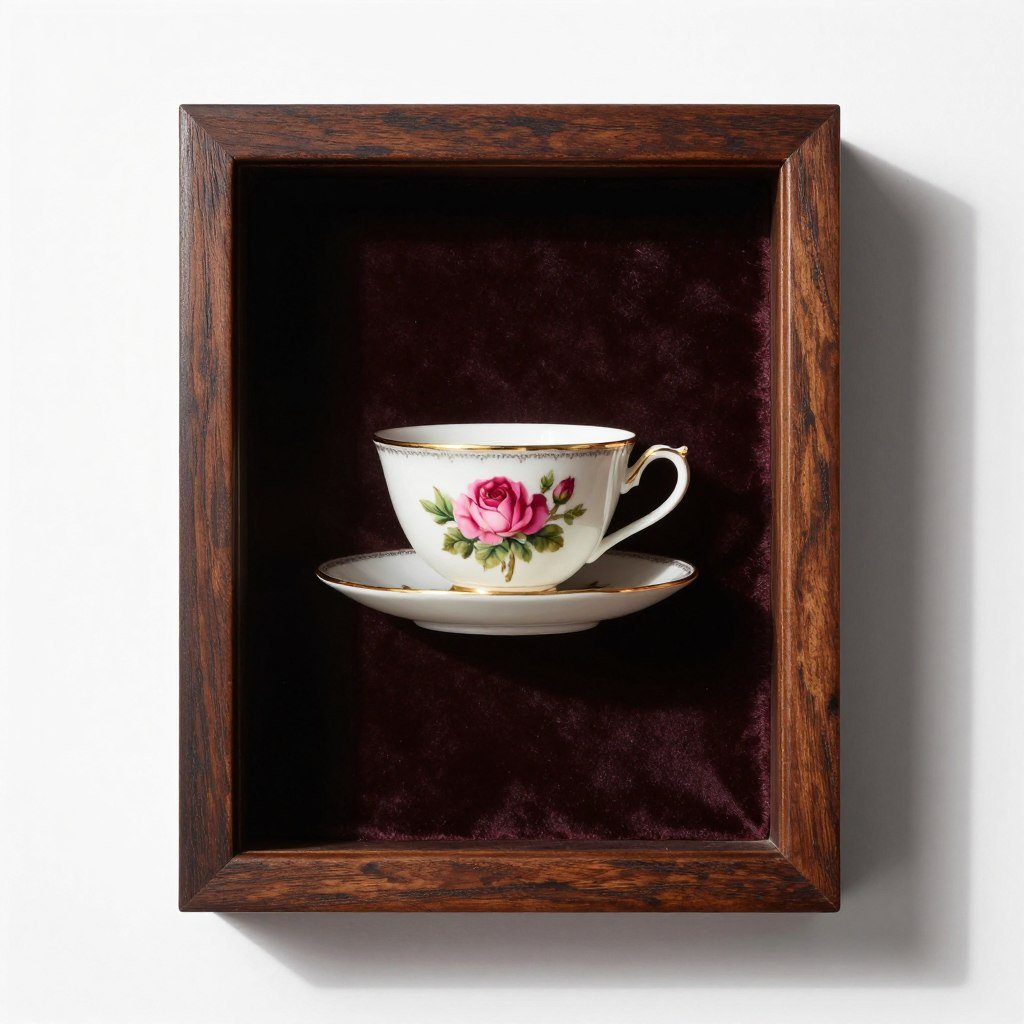
Line shadow box backs with complementary fabric to enhance cup colors. Deep blue velvet makes white and gold bone china pop dramatically. Neutral linen provides subtle backgrounds for colorful porcelain designs. Avoid direct sunlight on shadow box contents to prevent fading.
Creative Presentation Ideas
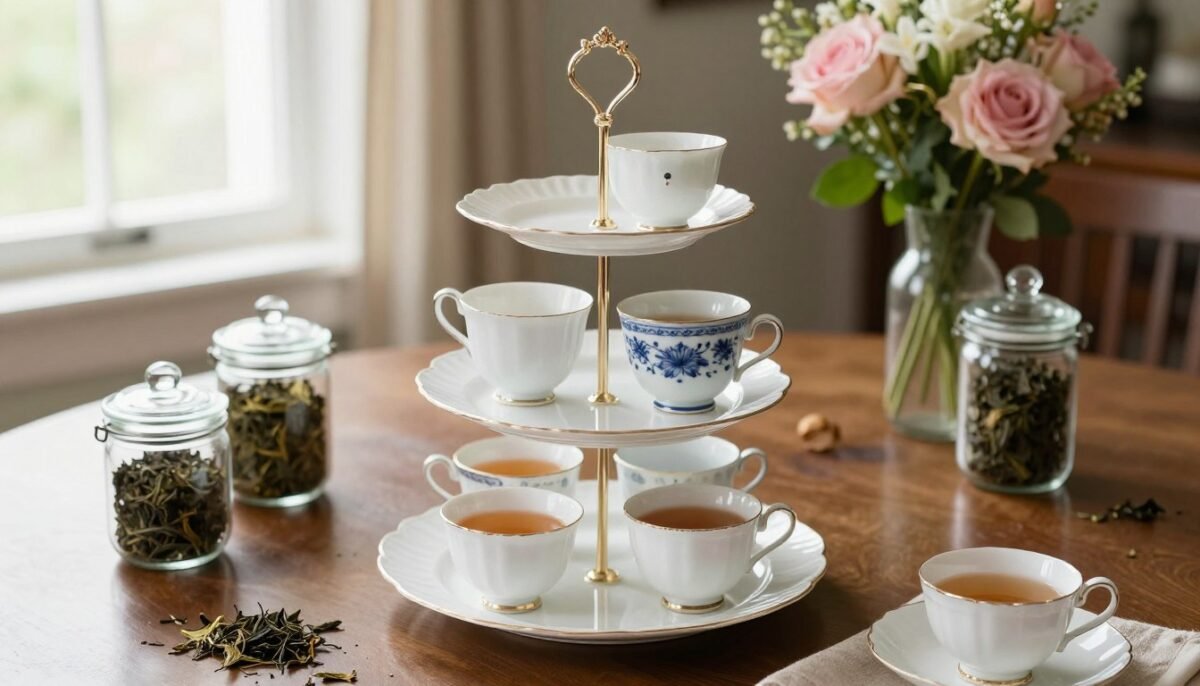
Unconventional display methods add personality to tea cup collections. These creative approaches transform ordinary cups into conversation pieces while maintaining accessibility and safety.
Tiered Stand Presentations
Cake stands and tiered servers create dimensional tea cup displays. These work exceptionally well on dining tables, kitchen islands, and buffet surfaces. The vertical arrangement showcases multiple cups in minimal space.
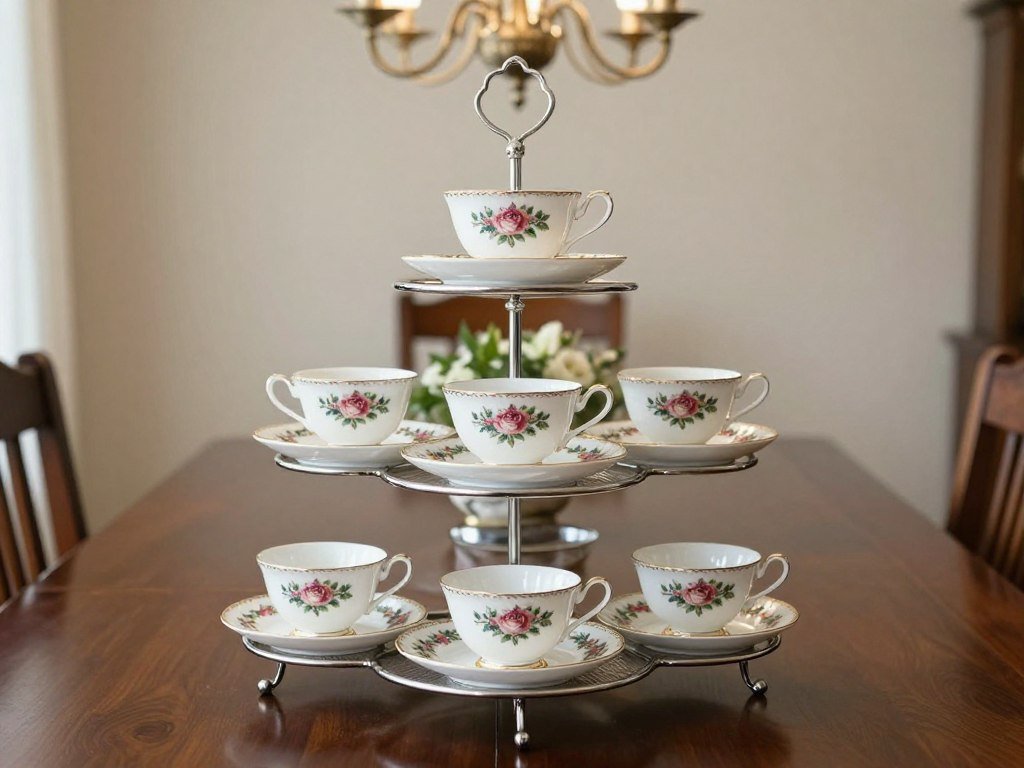
Secure cups on tiered stands using museum putty if you have active households. This removable adhesive prevents shifting during normal use while protecting cups from toppling. The putty removes cleanly without residue when rearranging displays.
Garden and Outdoor Displays
Weatherproof tea cups and mugs create charming garden displays. Use them as small planters for succulents or herbs. Hang them from shepherd’s hooks along garden paths. Outdoor display works best for sturdy stoneware mugs rather than delicate bone china.
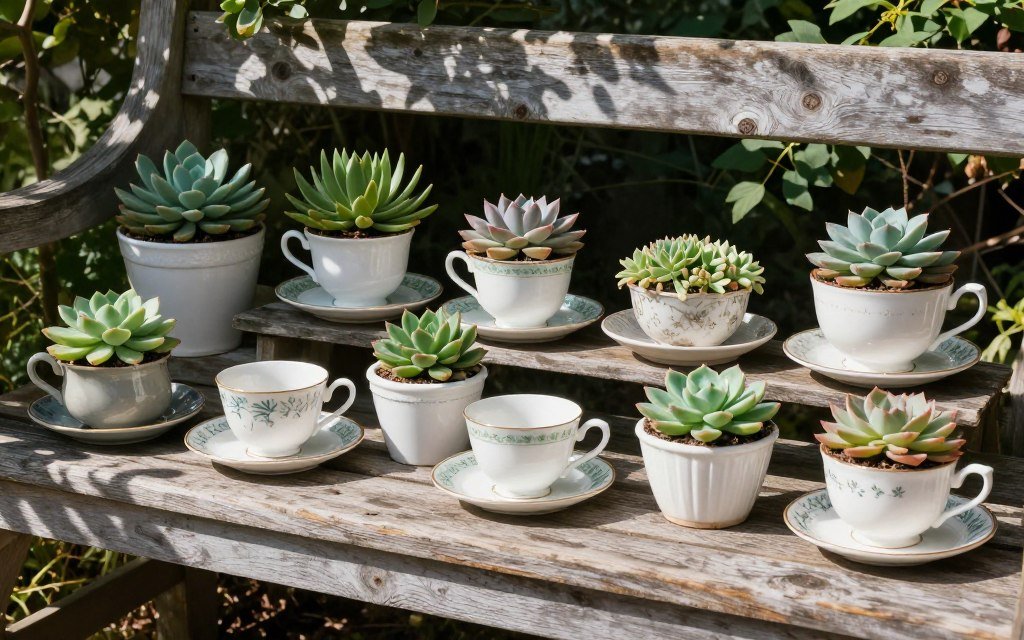
Reserve chipped or cracked cups for outdoor use. These damaged pieces that can’t serve tea anymore find new purpose as garden decor. Drill small drainage holes in cup bottoms to prevent water accumulation that kills plants.
Seasonal Rotation Displays
Change displayed tea cups seasonally to keep your decor fresh. Show floral bone china patterns during spring and summer. Switch to rich jewel-toned porcelain for fall and winter. Holiday-themed cups deserve special prominence during festive seasons.
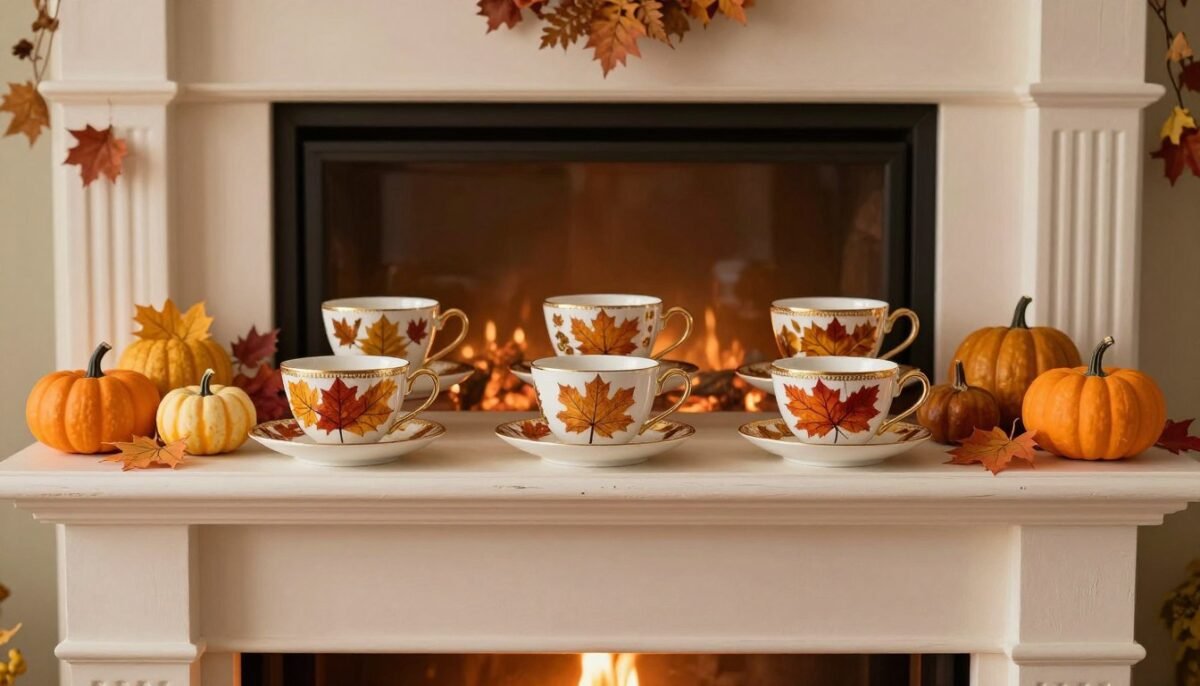
Store rotated cups in padded containers designed for china storage. Wrap individual cups in acid-free tissue paper and nestle them in divided storage boxes. Proper storage during off-seasons protects cups as effectively as careful display.
Recommended Display Solutions
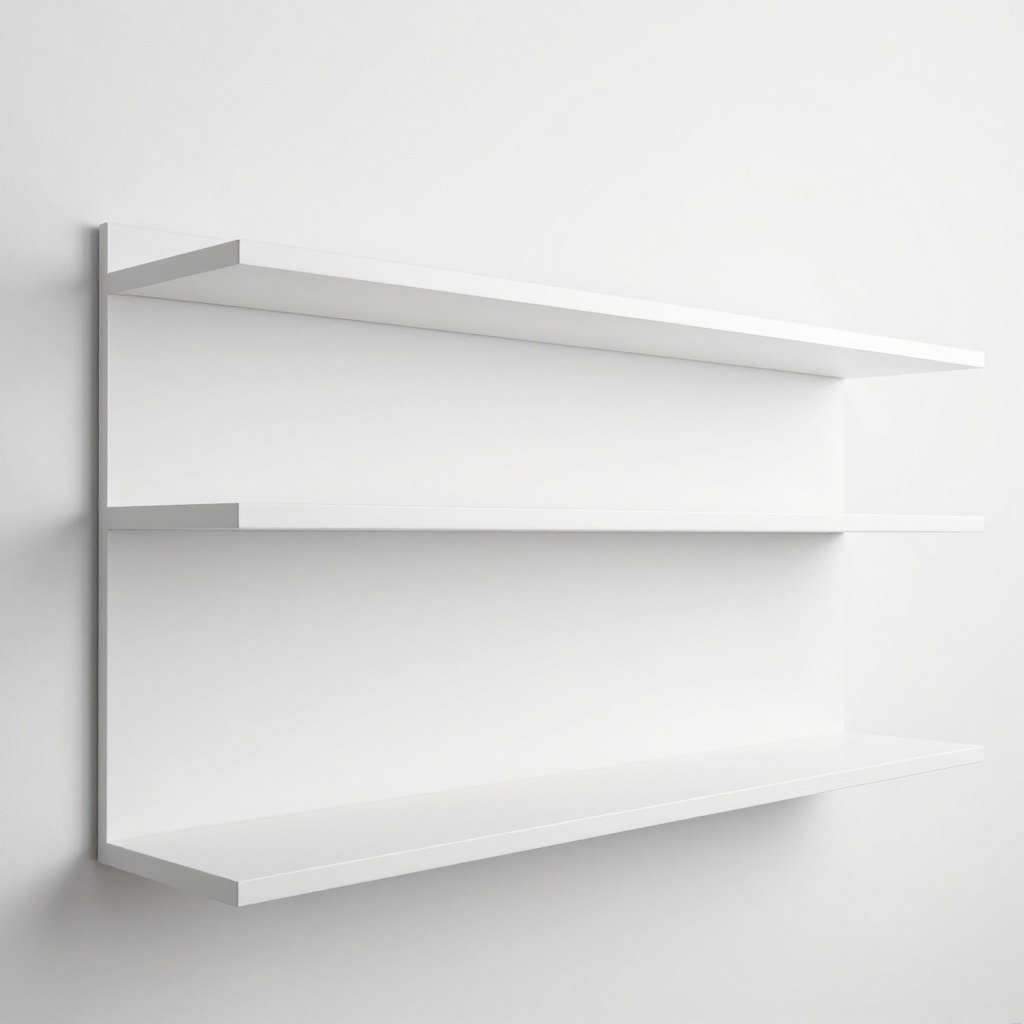
Floating Shelf System
Premium wood floating shelves with invisible mounting hardware create seamless tea cup displays. These shelves support up to thirty pounds each, perfect for extensive collections. The clean design complements any decor style from traditional to contemporary.
- Holds 8-10 standard tea cups per shelf
- Available in oak, walnut, and white finishes
- Easy installation with included template
- Felt pads included to protect bone china
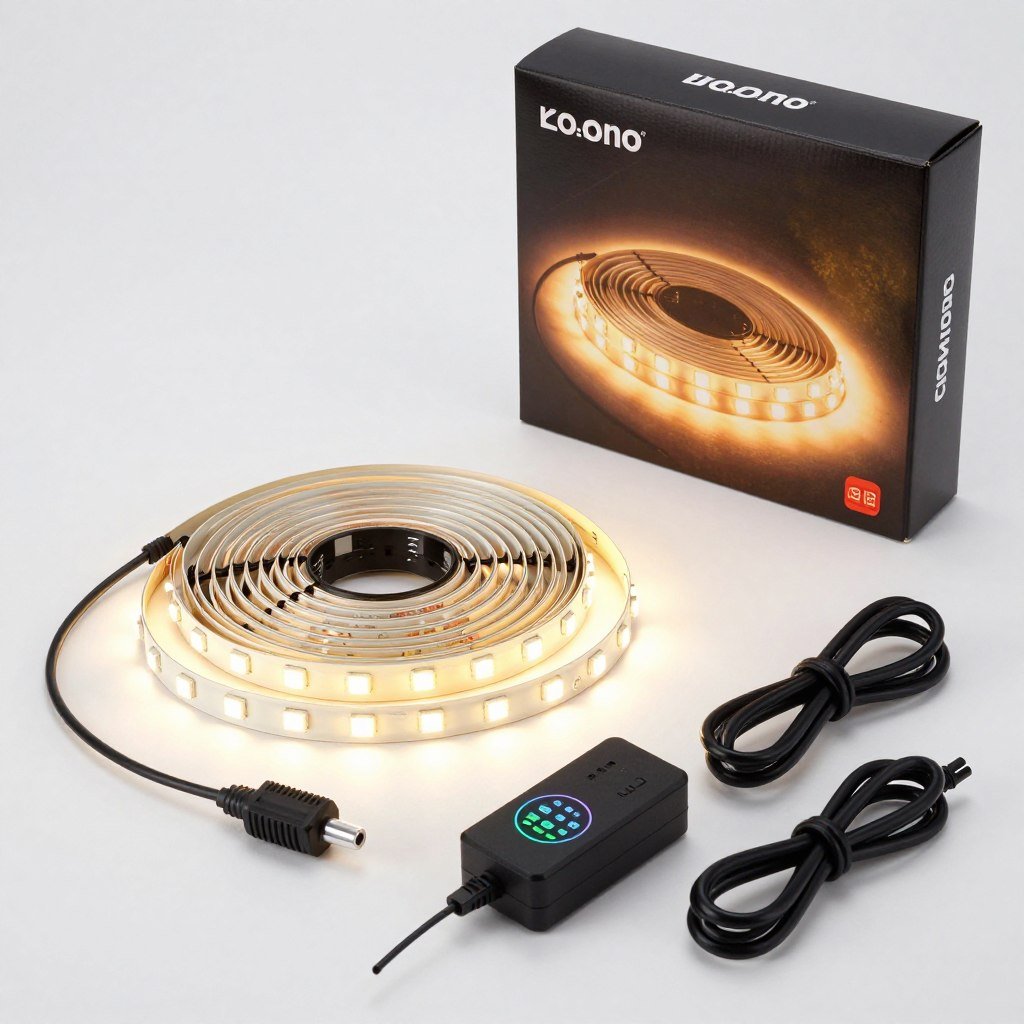
LED Display Lighting Kit
Professional-grade LED lighting transforms tea cup displays with adjustable brightness. The warm white temperature enhances bone china translucency and gold accents. Battery-powered design eliminates complicated wiring in cabinets and shelving.
- Sixteen-foot total length for large displays
- Cuttable every two inches for custom fit
- Adhesive backing for easy installation
- Dimmable to create perfect ambiance
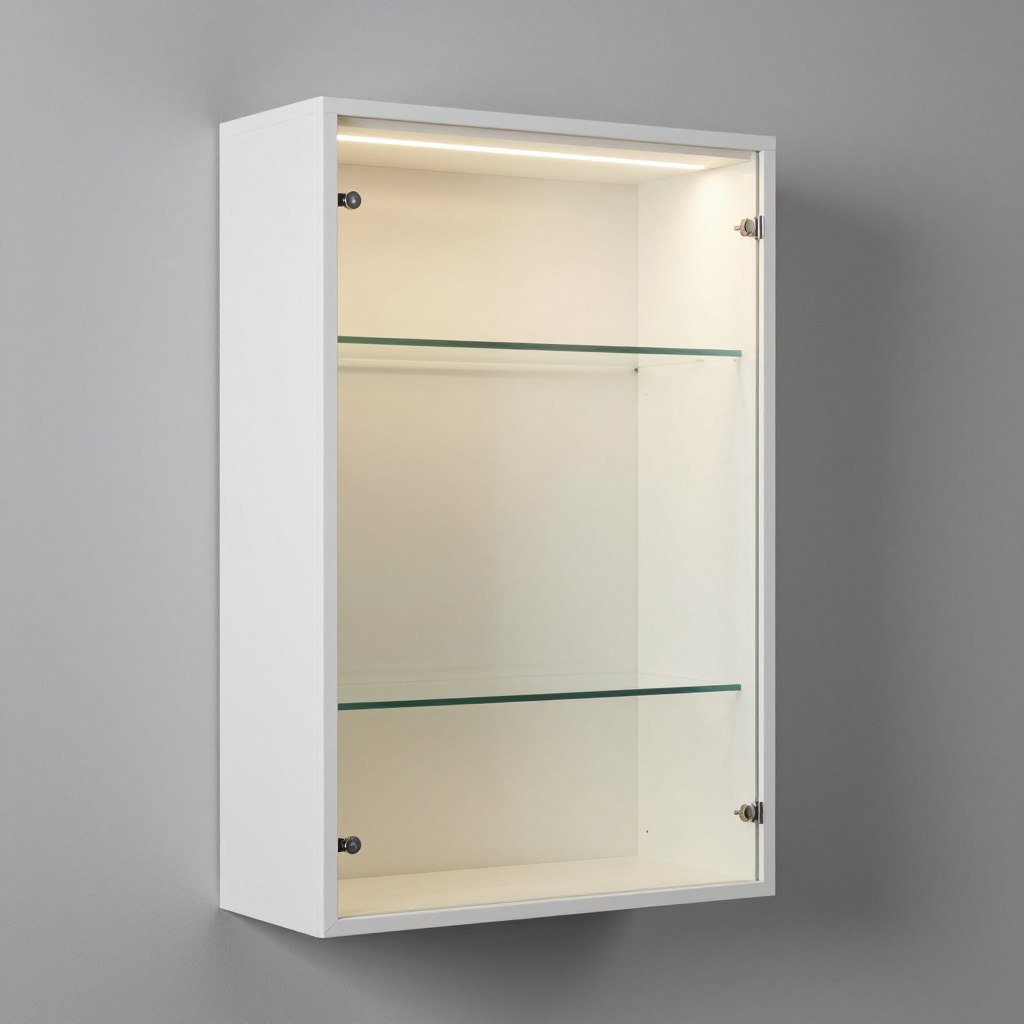
Glass Display Cabinet
Wall-mounted glass cabinet provides museum-quality protection for valuable tea cup collections. Lockable doors secure precious bone china and antique porcelain. Mirrored backing doubles visual impact while integrated lighting highlights your finest pieces.
- Tempered glass shelves hold 15 pounds each
- Adjustable shelf positions for various cup sizes
- Built-in LED lighting with wall switch
- Dust-proof design protects delicate china
Organizing Tea Cups by Style and Color
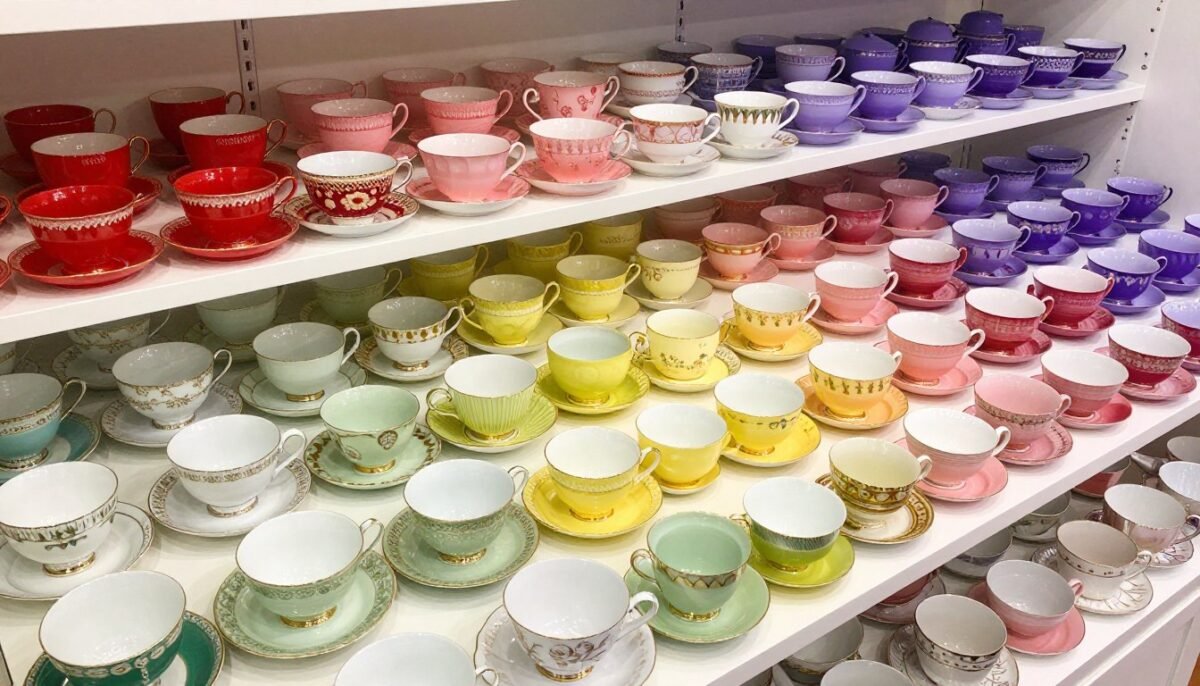
Thoughtful organization elevates tea cup displays from cluttered collections to curated presentations. Color and style grouping creates visual harmony that pleases the eye while making specific cups easier to locate.
Color-Based Arrangements
Grouping tea cups by dominant color creates stunning gradients. Arrange warm colors together (reds, oranges, yellows) and cool colors separately (blues, greens, purples). White and cream bone china form elegant neutral zones between color groups.
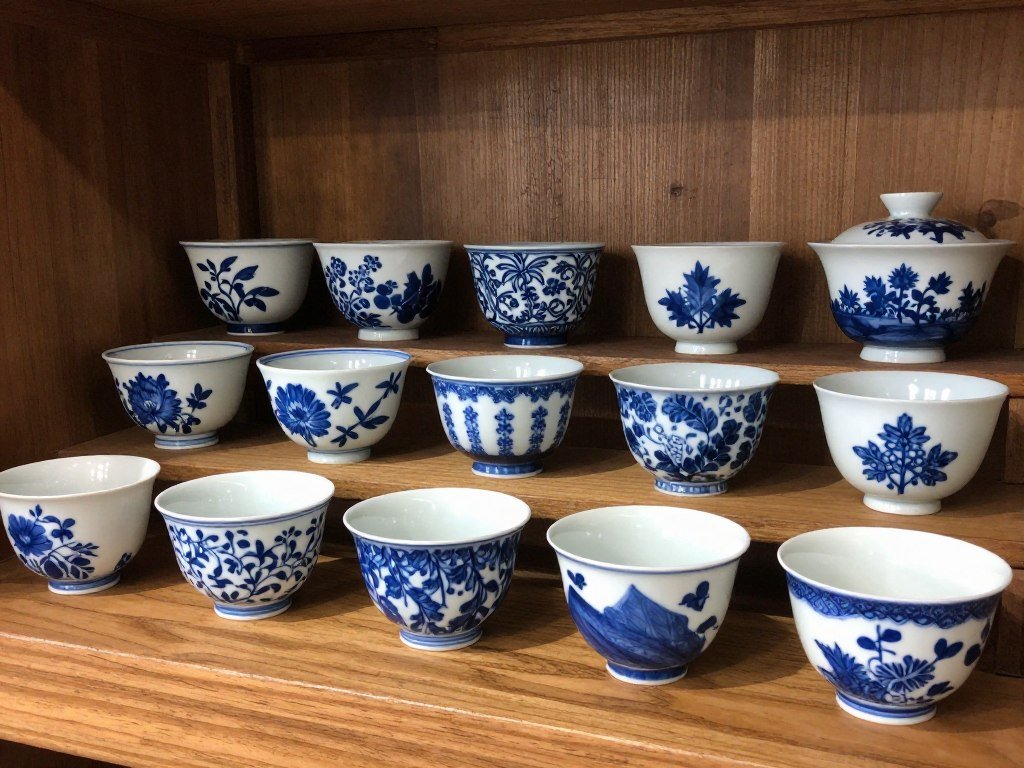
Monochromatic displays make bold statements. A shelf devoted entirely to green tea cups in varying shades creates sophisticated impact. This approach works particularly well with extensive collections where you own multiple cups in similar color families.
Pattern and Design Grouping
Organize tea cups by design motifs for thematic displays. Group all floral patterns together, regardless of color. Create sections for geometric designs, landscape scenes, or gold-trimmed bone china. This organization helps collectors appreciate design evolution across different manufacturers.
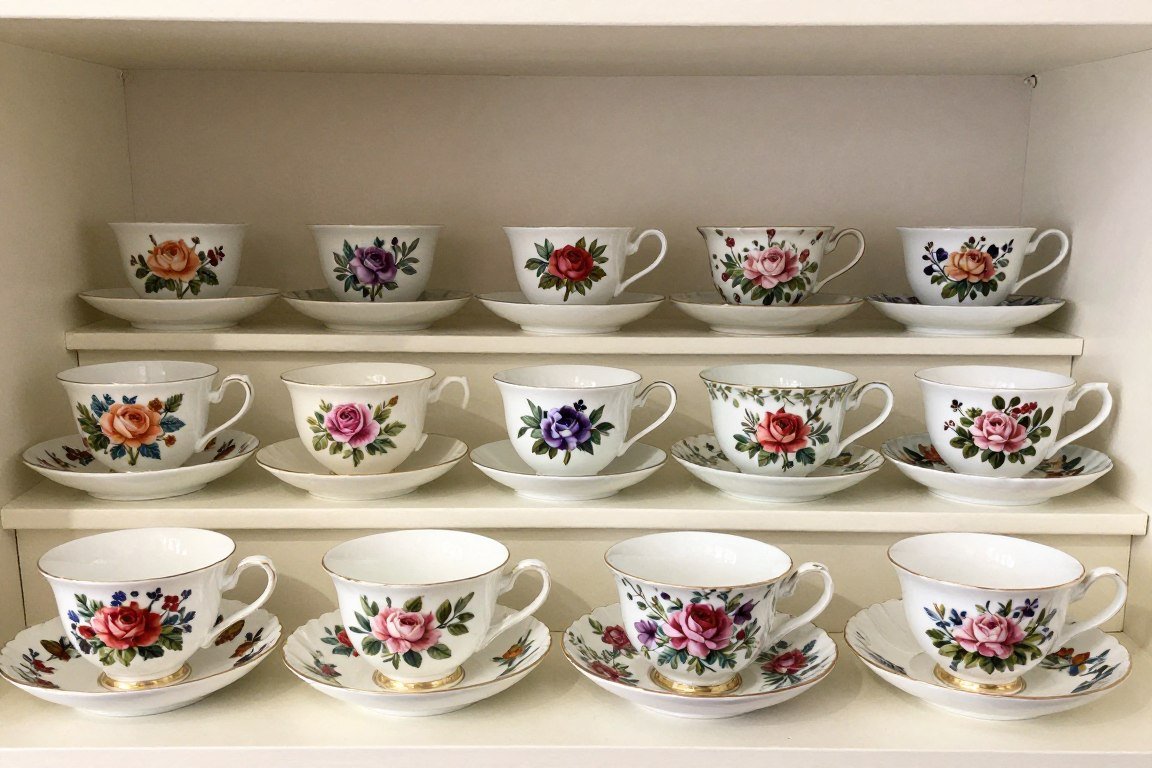
Mixed pattern displays work when unified by era or origin. Display all Victorian-era cups together even if patterns differ. Group Japanese porcelain separately from English bone china. This geographical organization tells cultural stories through your tea cup collection.
Size and Shape Organization
Arrange tea cups by size to create pleasing proportions. Place largest cups at display ends with progressively smaller cups toward center. This creates visual balance that draws eyes to your most interesting pieces positioned centrally.
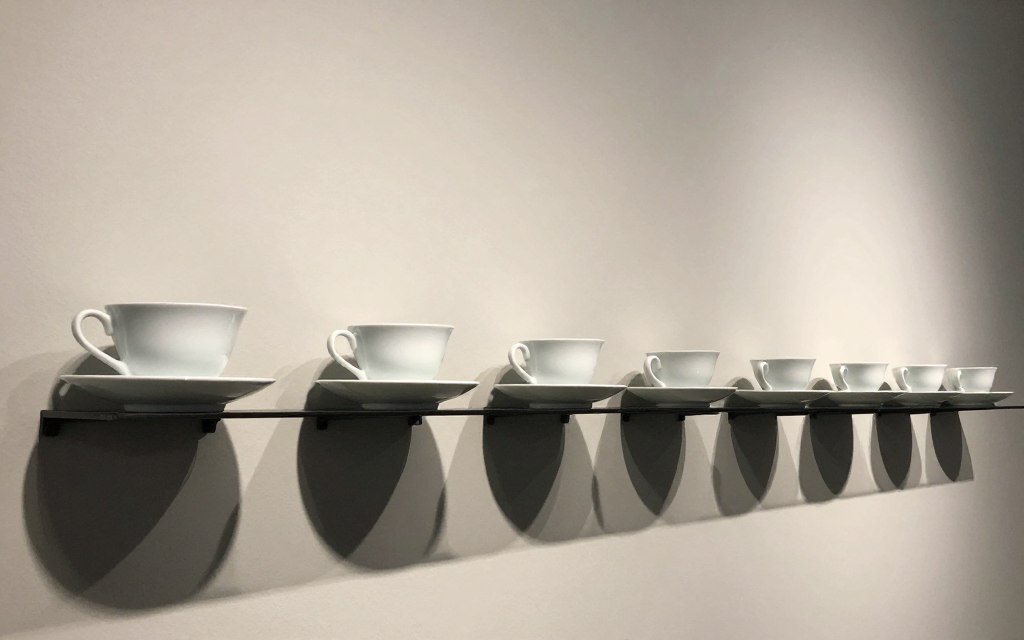
Shape variation adds interest to organized displays. Mix standard rounded tea cups with angular Art Deco designs. Include occasional mug shapes among delicate tea cups for contrast. Variety prevents monotonous displays while maintaining overall cohesion through your chosen organization method.
Lighting Techniques for Tea Cup Displays
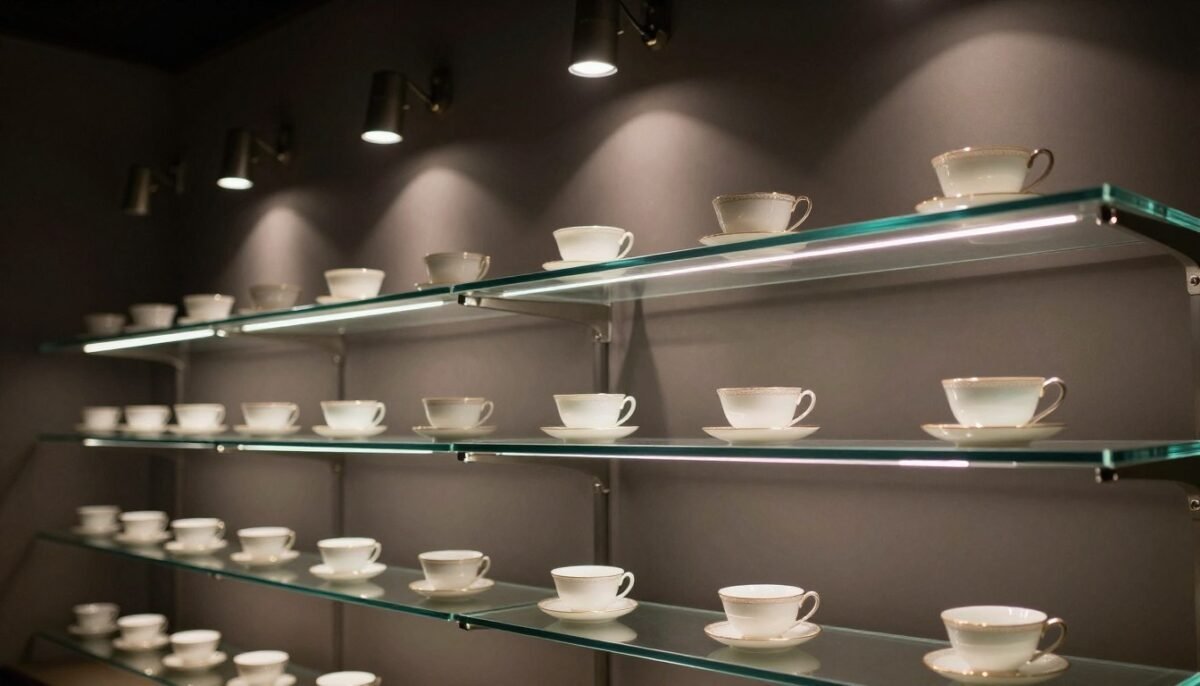
Proper lighting transforms ordinary tea cup displays into gallery-worthy presentations. Light reveals bone china translucency, highlights gold leaf details, and creates depth that flat overhead lighting cannot achieve.
Under-Shelf Lighting
LED strip lights mounted beneath shelves cast gentle upward glow on displayed tea cups. This lighting technique creates sophisticated ambiance while eliminating harsh shadows. The soft illumination particularly enhances delicate bone china patterns and translucent qualities.
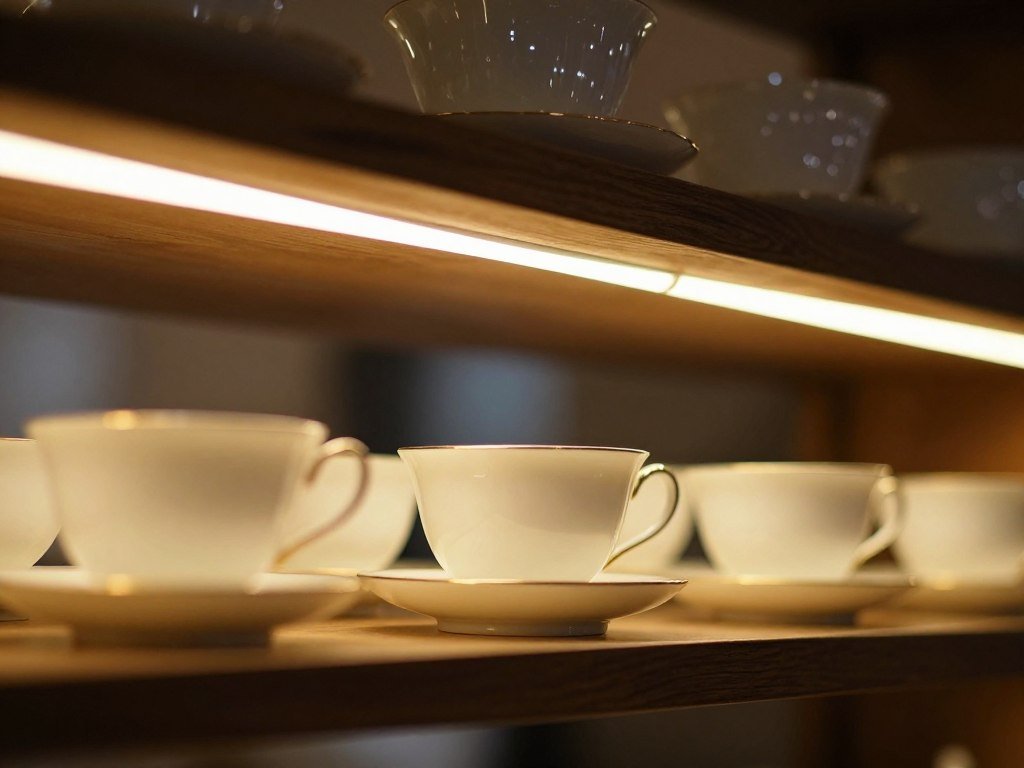
Choose warm white LED temperatures between 2700K and 3000K for tea cup displays. These warmer tones complement cream and ivory bone china better than cool white lights. Dimmable strips let you adjust brightness for different times of day.
Spotlight Accent Lighting
Small spotlight fixtures highlight individual prized pieces within larger collections. Position adjustable track lights or picture lights to create focused beams on your most valuable tea cups. This directed lighting draws attention to collection centerpieces.
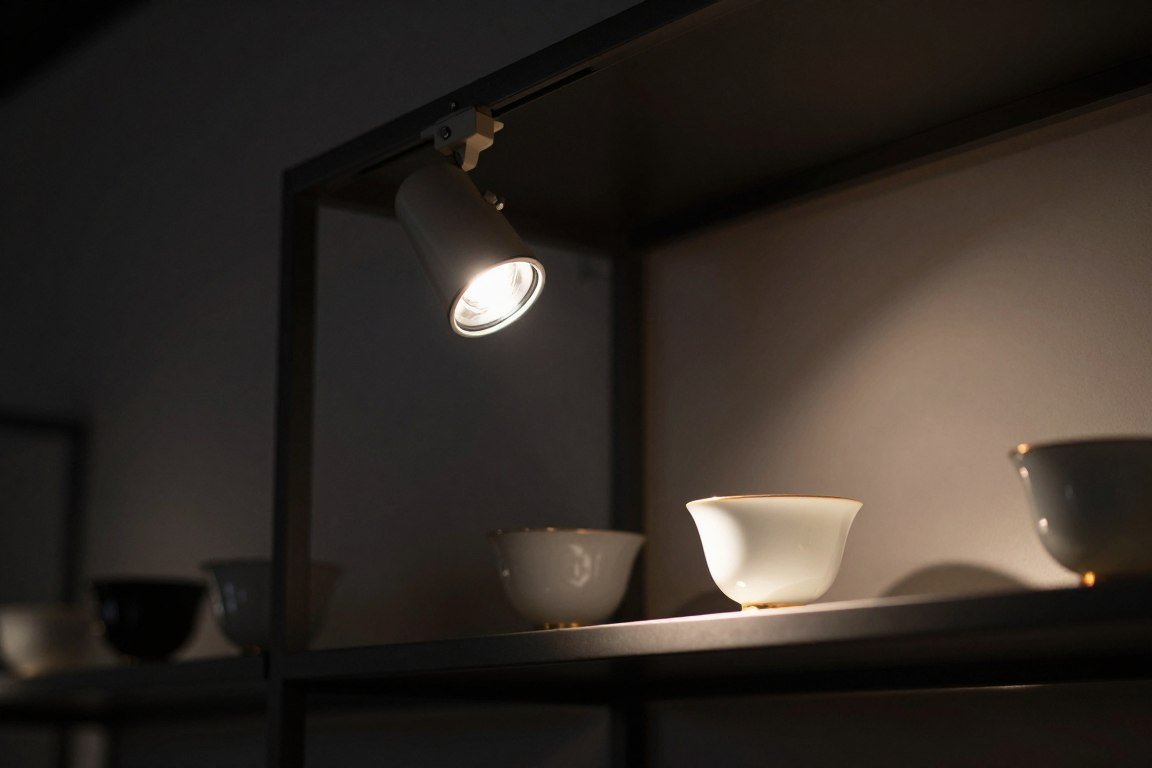
Avoid hot incandescent spotlights near tea cups. Heat damages delicate bone china and can discolor white porcelain over time. LED spotlights provide equivalent brightness without heat concerns, making them ideal for close-proximity accent lighting.
Cabinet Interior Lighting
Internal cabinet lighting prevents dark interiors that hide collection details. Install LED puck lights or strip lights inside glass-front cabinets. Motion-activated options conserve energy while providing illumination when approaching your display.
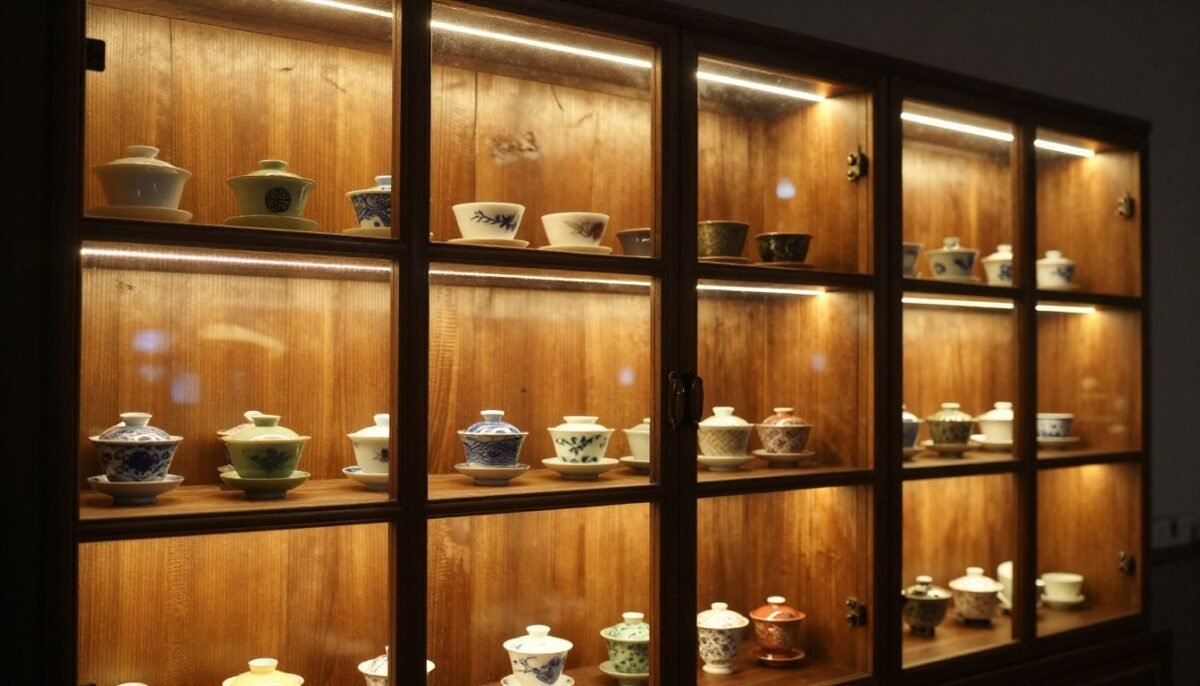
Hide lighting fixtures behind cabinet trim or beneath shelving lips for clean appearances. Visible wiring and light sources distract from tea cup displays. Professional installations often recess lights into cabinet tops with diffusers that spread illumination evenly across all shelves.
Natural Light Considerations
Natural window light beautifully illuminates tea cup displays during daytime hours. However, direct sunlight fades delicate painted designs and weakens bone china structure over time. Position displays near windows but not in direct sun paths.
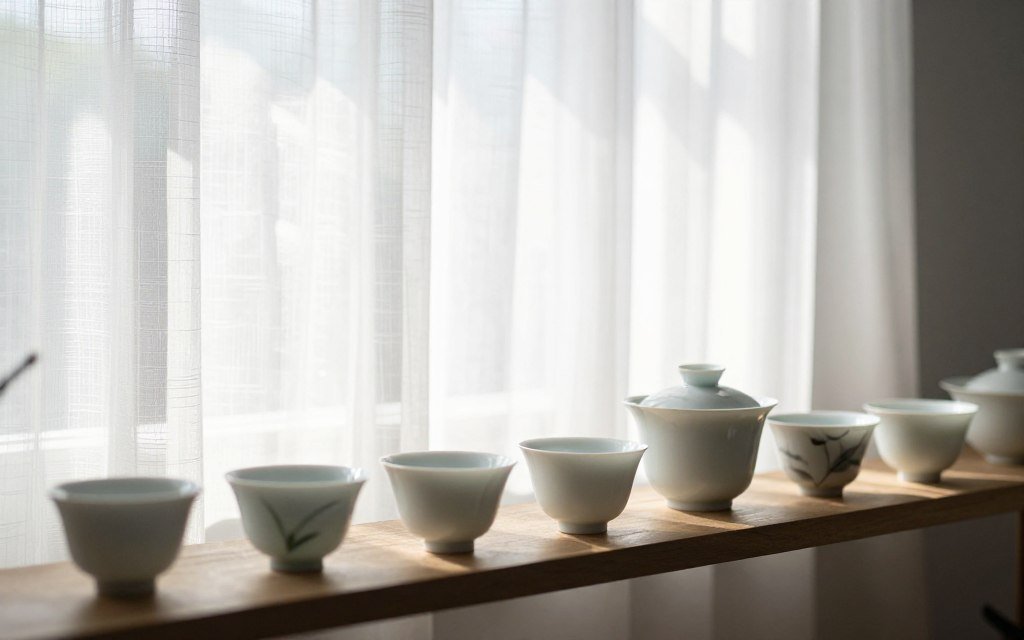
Use sheer curtains or UV-filtering window films to protect displayed tea cups from harmful sun rays. These solutions maintain bright, airy displays while blocking ultraviolet radiation that damages antique porcelain and bone china. Your collection stays beautiful longer with appropriate sun protection.
Maintaining Tea Cups on Display
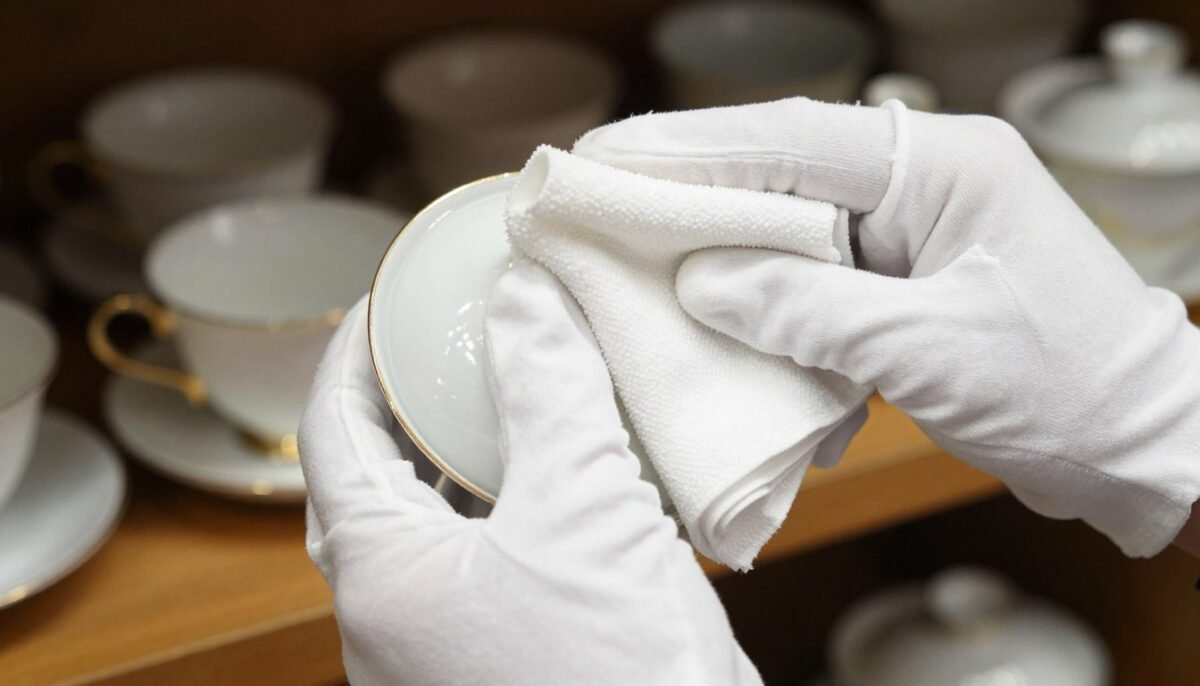
Regular maintenance keeps displayed tea cups looking pristine while preventing damage. Dust accumulation dulls finishes and can scratch delicate surfaces during eventual cleaning. Preventive care preserves your collection better than occasional deep cleaning.
Dusting Routines
Dust open displays weekly using soft microfiber cloths or feather dusters. Handle tea cups gently, supporting both cup and handle during cleaning. Never grasp bone china solely by the handle, as this creates stress points that cause cracks.
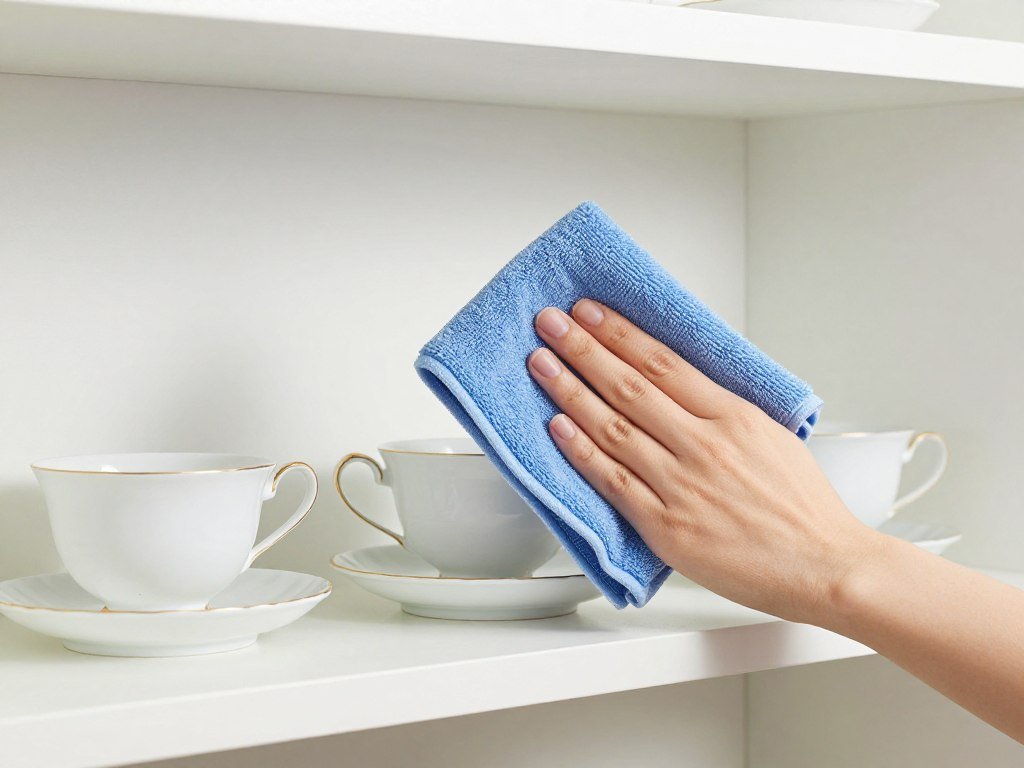
Use compressed air for hard-to-reach areas like cup interiors and underneath handles. Brief air bursts dislodge dust without requiring direct contact. This method works particularly well for delicate gold leaf trim that shouldn’t be rubbed frequently.
Deep Cleaning Schedule
Deep clean displayed tea cups quarterly by removing them from displays for washing. Use lukewarm water and mild dish soap designed for fine china. Avoid harsh detergents that strip gold trim or fade painted designs on antique porcelain.
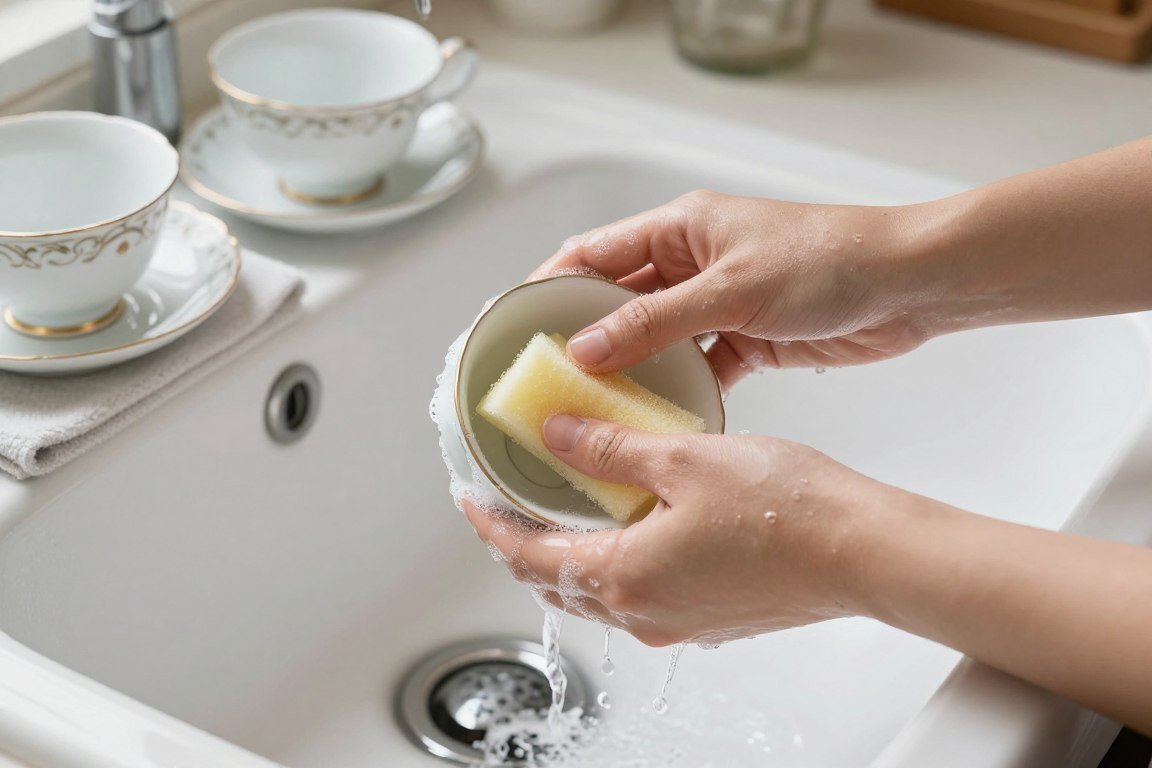
Dry tea cups immediately after washing using lint-free towels. Air drying leaves water spots that mar bone china finishes. Pat dry rather than rubbing to prevent micro-scratches. Store cleaned cups temporarily in padded containers while cleaning display shelves.
Damage Prevention
Inspect displayed tea cups monthly for developing cracks or chips. Early detection prevents minor damage from worsening. Hairline cracks in bone china can spread if cups remain under stress from poor display positioning.
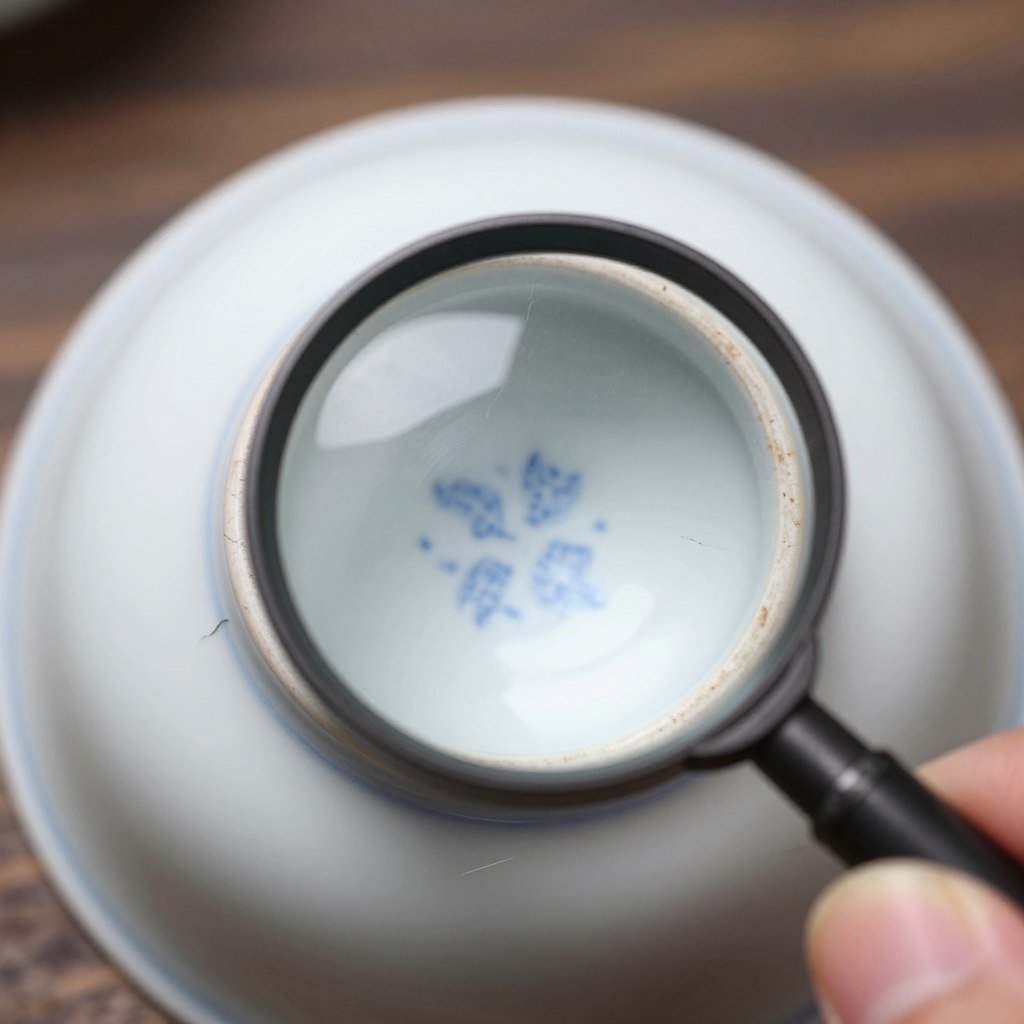
Rotate displayed tea cups seasonally to prevent uneven fading. Cups in constant sunlight fade faster than shaded pieces. Regular rotation ensures your entire collection ages uniformly. Mark rotation schedules on calendars to maintain consistent care routines.
Special Considerations for Valuable Collections
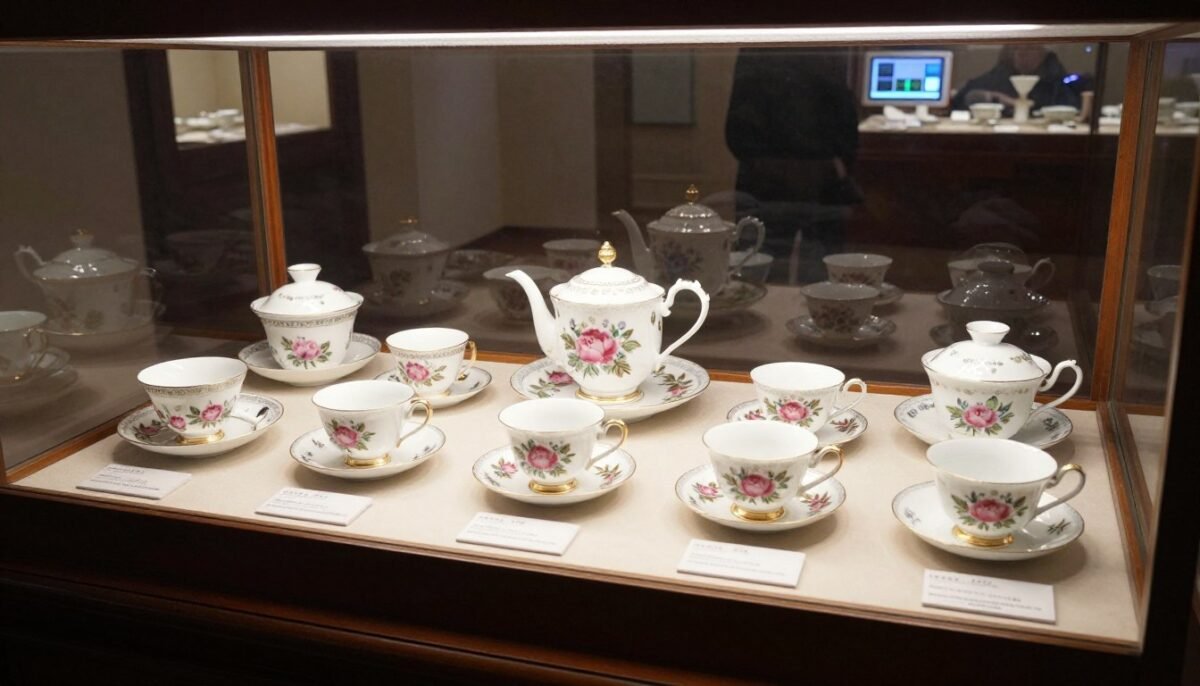
High-value tea cup collections require extra security and environmental controls. Insurance companies often mandate specific display conditions for coverage of rare bone china and antique porcelain. Proper precautions protect financial investments while allowing you to enjoy your collection.
Security Measures
Lock valuable tea cup displays in cabinets with key or combination locks. This prevents theft during parties and deters curious visitors from handling fragile pieces. Document your collection with photographs for insurance purposes, capturing each cup from multiple angles.
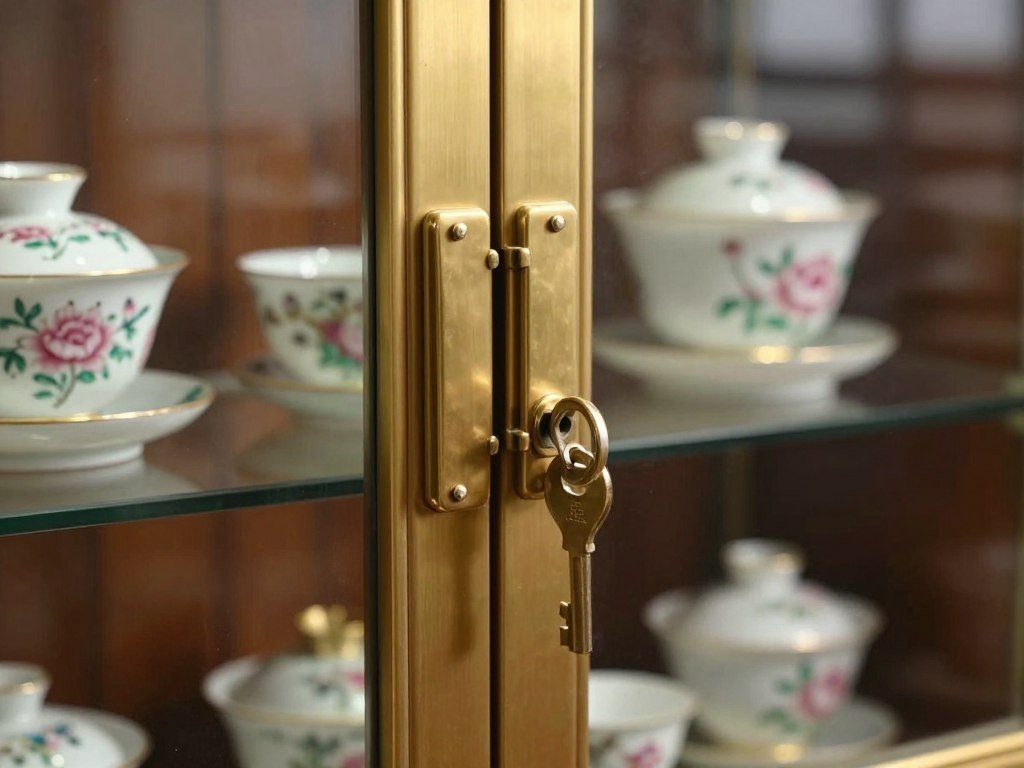
Consider alarm systems for extremely valuable collections. Glass-break sensors alert you to cabinet damage from earthquakes or break-ins. Some collectors install motion sensors near displays as additional security layers during absences.
Climate Control
Maintain stable humidity between forty and sixty percent for bone china preservation. Excessive dryness causes crazing in glazes. High humidity encourages mold growth on organic decorative elements. Digital hygrometers monitor conditions accurately.
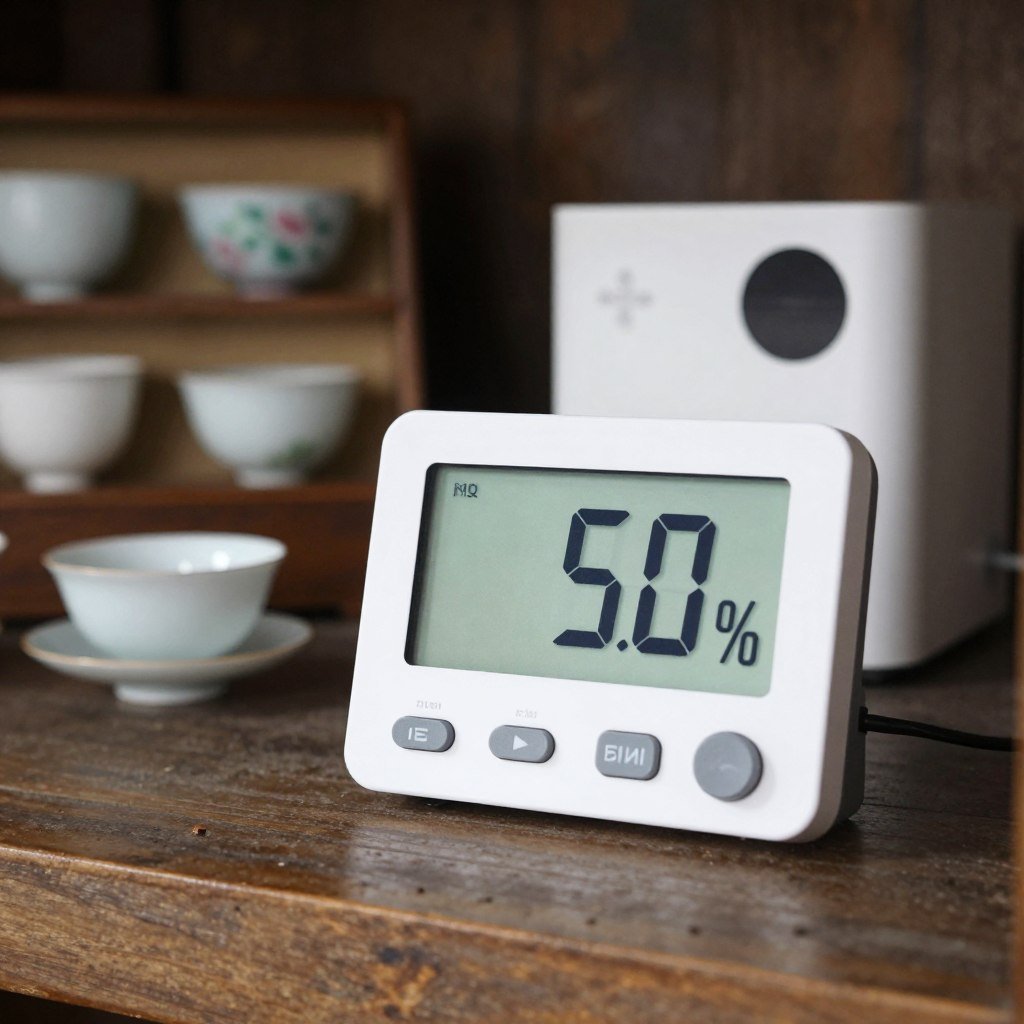
Avoid displaying valuable tea cups near heating vents or air conditioning returns. These locations experience temperature fluctuations that stress delicate bone china. Rapid temperature changes cause expansion and contraction that creates cracks over time.
Appraisal and Documentation
Have significant collections professionally appraised every five years. Market values fluctuate, and insurance coverage should reflect current replacement costs. Appraisers identify rare pieces you might not recognize, potentially revealing hidden treasures within inherited collections.
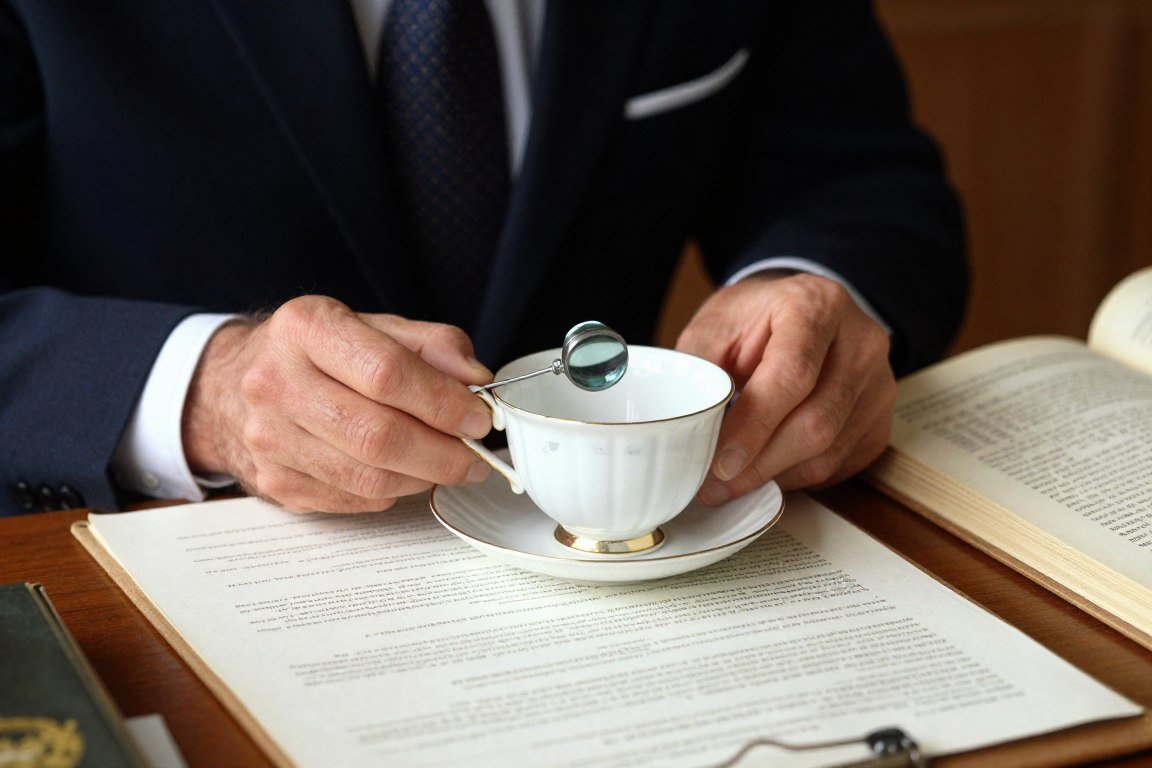
Maintain detailed inventory records including purchase dates, prices paid, maker marks, and pattern names. Digital databases with photographs create searchable archives. This documentation proves invaluable for insurance claims and helps heirs understand collection value.
Troubleshooting Common Display Problems
Overcrowding Issues
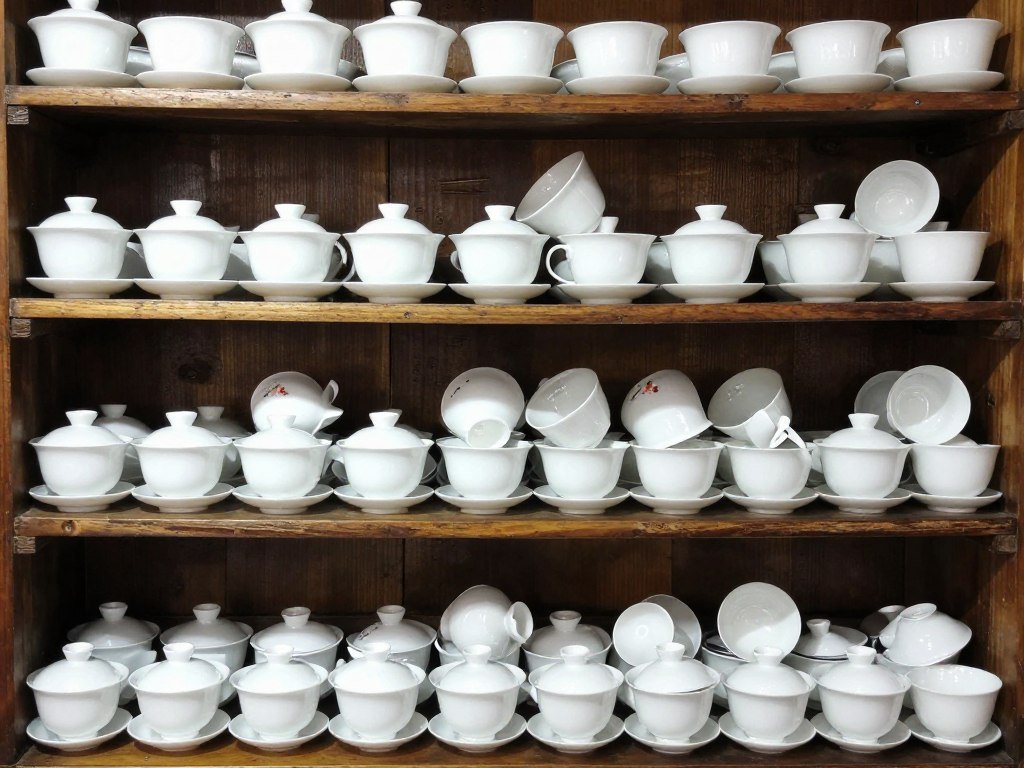
Overcrowded displays prevent proper appreciation of individual tea cups. Each piece needs breathing room to showcase its unique design. Overcrowding also increases accident risk when retrieving specific cups from tight spaces.
Remove twenty to thirty percent of displayed cups and rotate them seasonally. This creates better spacing while keeping your entire collection in active use. Store rotated pieces properly in padded china storage containers designed for long-term protection.
Lighting Challenges
Poor lighting hides collection details and creates uninviting displays. Dark cabinet interiors defeat the purpose of glass-front designs. Harsh overhead lighting creates unflattering shadows that obscure delicate patterns.
Install LED strip lights under shelves and inside cabinets for even illumination. Layer lighting types by combining ambient overhead lights with focused accent spotlights. Dimmers allow adjustment for different times of day and occasions.
Stability Concerns
Wobbly shelves threaten tea cup safety. Test shelf stability before loading valuable collections. Press down firmly on shelf centers and edges to detect movement. Any flex or bounce indicates insufficient support that could lead to collapse.
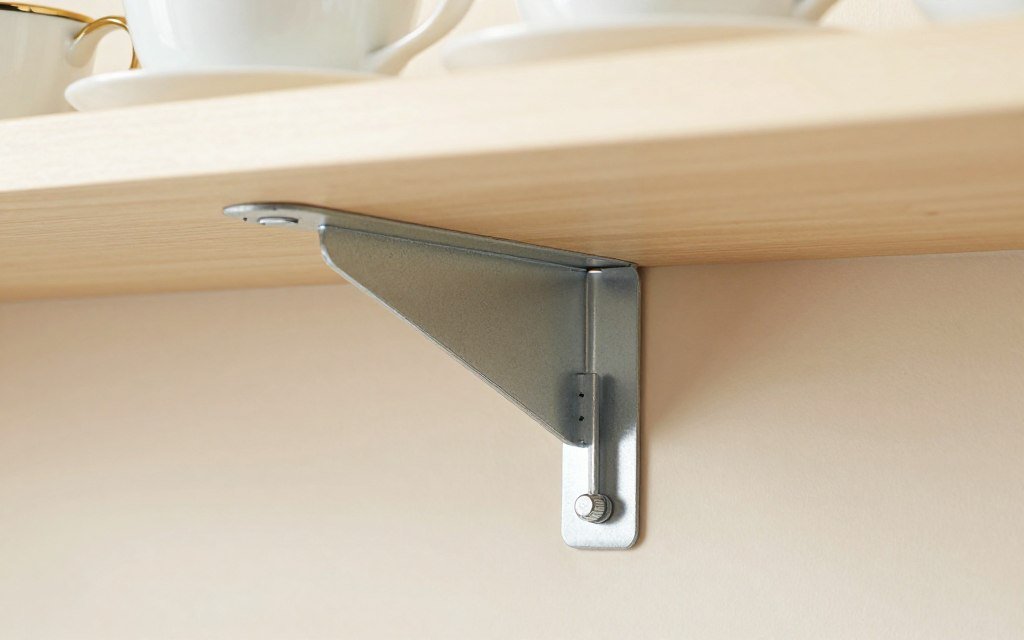
Reinforce questionable shelves with additional brackets before displaying heavy bone china collections. Add center supports to shelves exceeding thirty inches in length. Wall anchors should penetrate studs rather than relying solely on drywall anchors for weight-bearing displays.
Dust Accumulation
Open displays collect dust rapidly, requiring frequent cleaning that increases handling risks. Dust dulls finishes and settles into decorative crevices on ornate tea cups. This accumulation eventually requires aggressive cleaning that threatens delicate gold leaf.
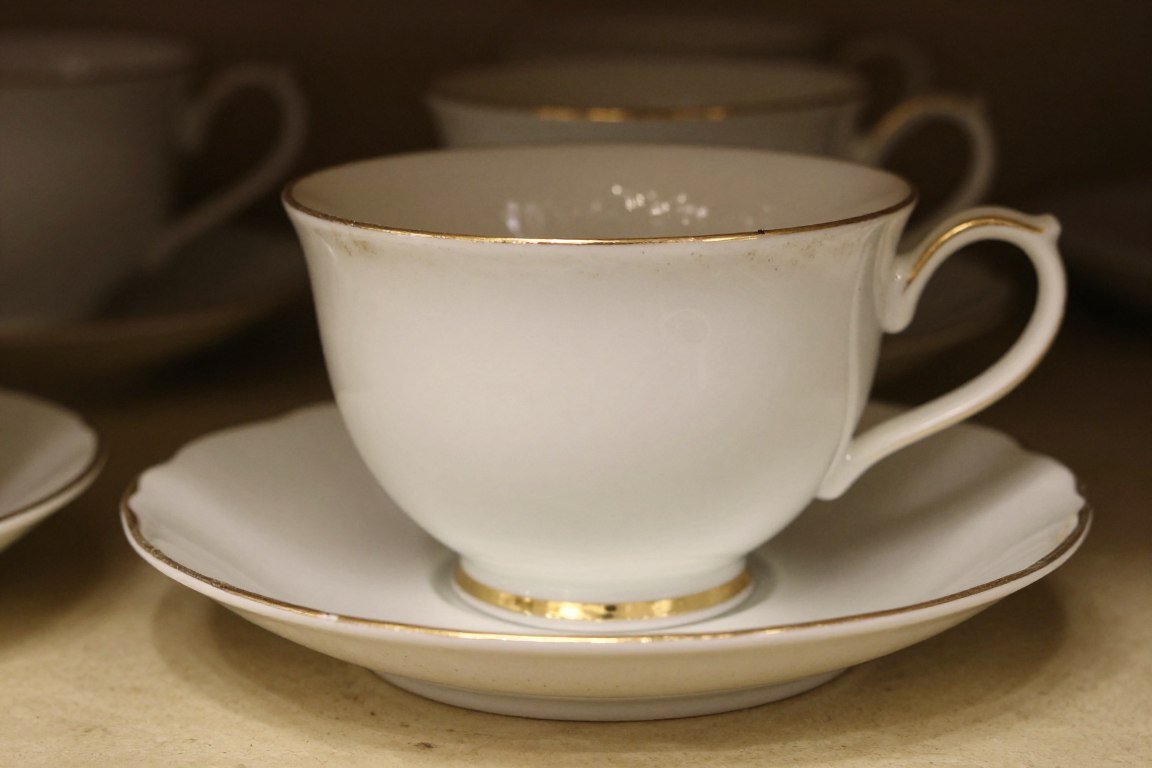
Switch to enclosed glass-front displays for valuable pieces requiring minimal handling. The glass barrier reduces dust exposure by eighty percent. Weekly exterior glass cleaning maintains visibility while protecting cups inside from frequent disturbance.
Seasonal and Holiday Display Ideas
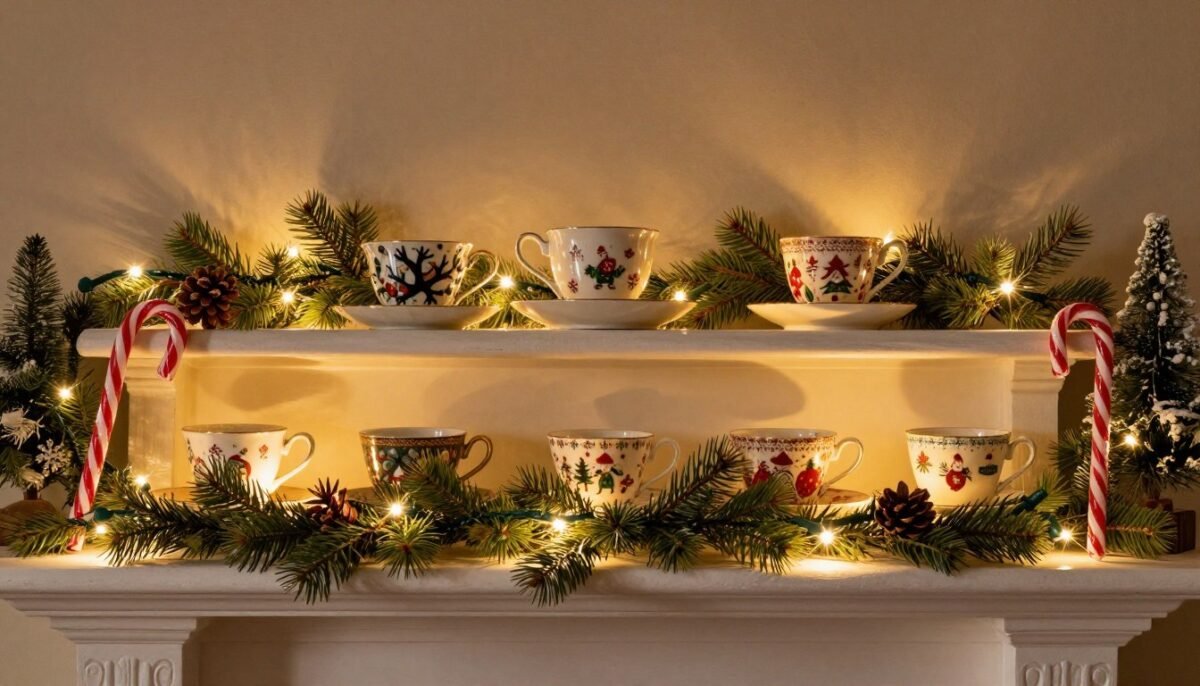
Seasonal tea cup displays keep your home decor fresh throughout the year. Changing displays with seasons maintains visual interest while letting you showcase your entire collection gradually. This rotation also prevents display fatigue from seeing the same cups constantly.
Spring and Summer Displays
Feature floral bone china patterns during spring months. Display tea cups alongside fresh flowers in complementary colors. Light, bright porcelain with delicate designs suits warm weather aesthetics perfectly.
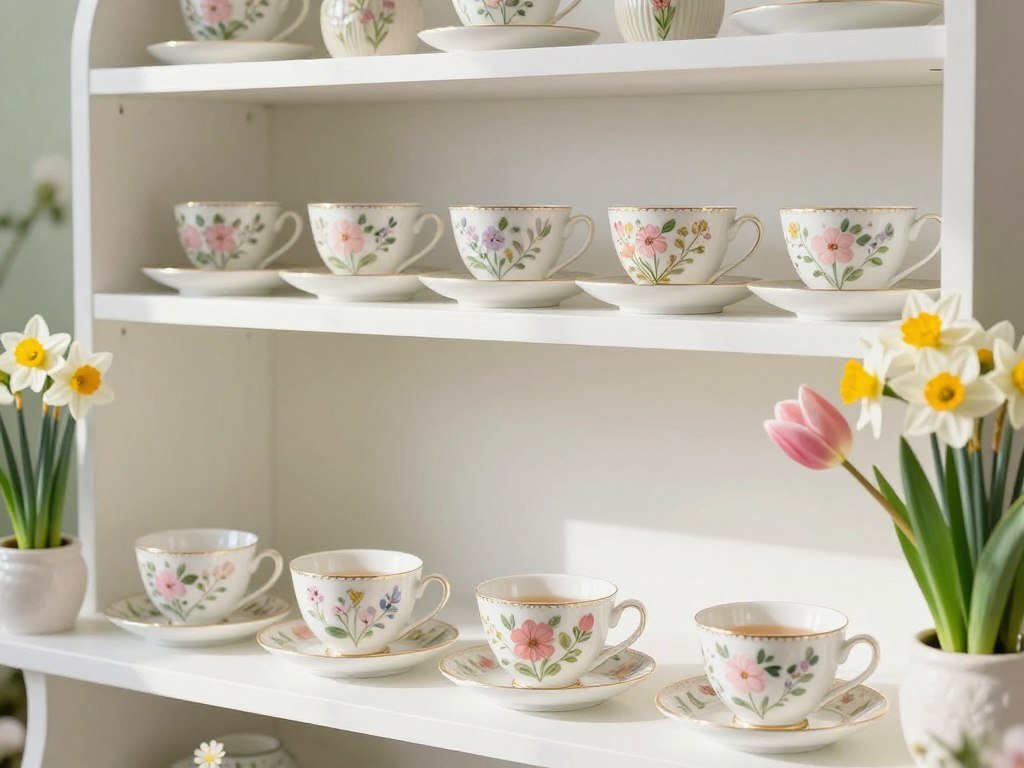
Create garden-themed vignettes by displaying tea cups near potted herbs or small topiaries. The combination celebrates outdoor living while maintaining elegant indoor presentations. Use tea cups as actual planters for succulents in casual summer displays.
Fall and Winter Arrangements
Transition to deeper colors and richer patterns as weather cools. Display tea cups with autumn leaf designs, harvest gold trim, or jewel-toned glazes. These warmer aesthetics suit cozy fall and winter decorating schemes.
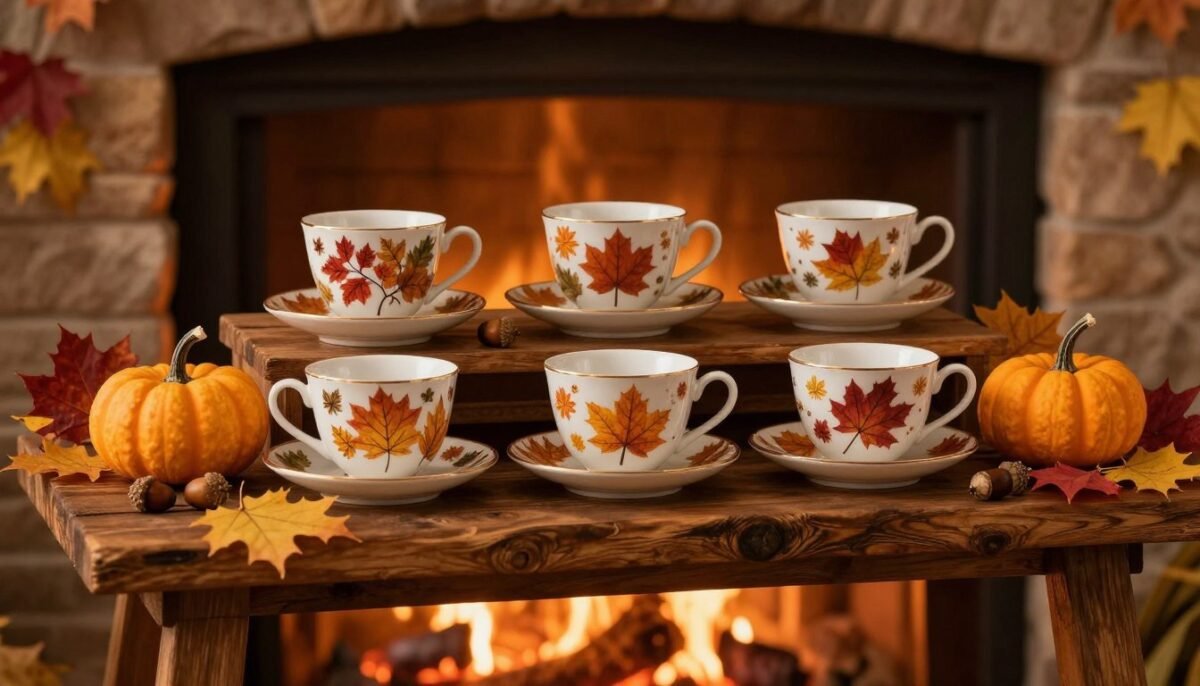
Incorporate tea cups into holiday tablescapes and mantel displays. Christmas tea cups with holly patterns deserve prominent placement during December. Valentine’s Day showcases romantic rose-patterned bone china beautifully. Let holidays guide which portions of your collection take center stage.
Themed Collection Rotations
Organize rotations around themes beyond seasons. Display travel-themed tea cups during summer vacation months. Feature tea cups from specific countries when planning related meals. Themed rotations educate family and guests about collection diversity.
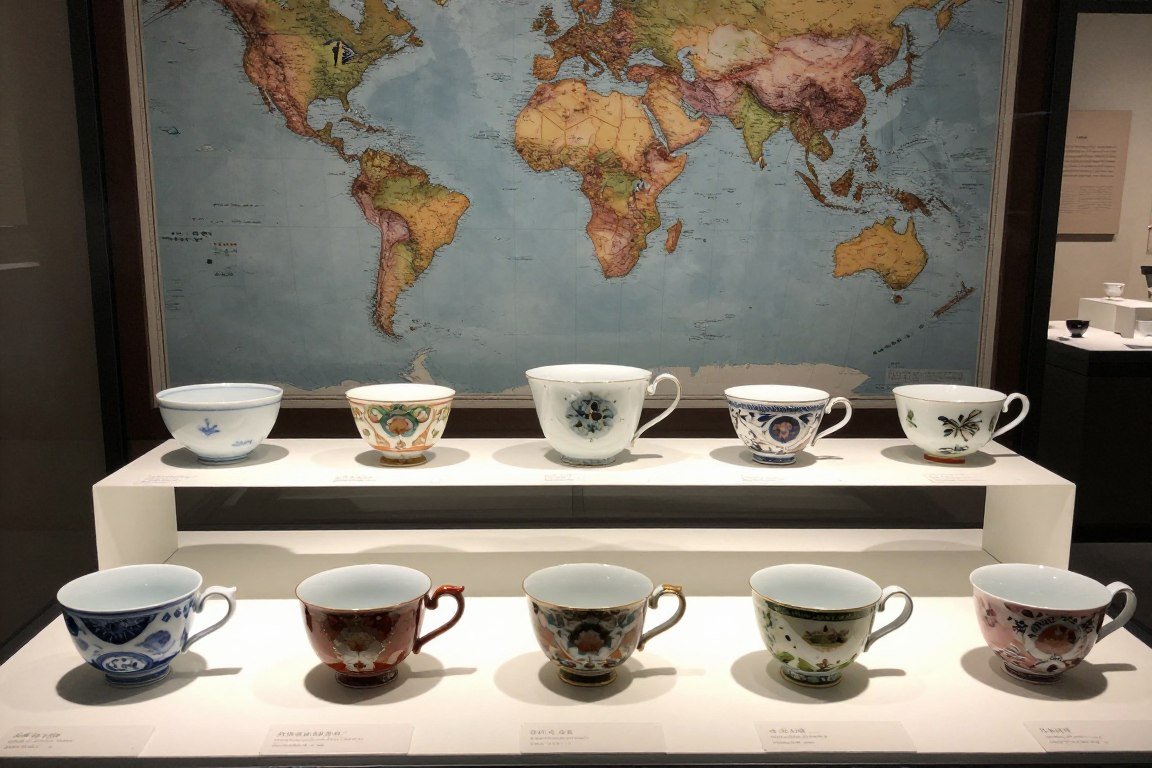
Document rotation schedules with photographs showing each seasonal arrangement. This creates reference material for future years when you want to recreate successful displays. Your documentation also tracks which combinations work best in your specific spaces and lighting conditions.
Creating Your Perfect Tea Cup Display
Your tea cup collection deserves thoughtful presentation that honors each piece while enhancing your home. Whether you choose simple floating shelves or elaborate glass cabinets, proper display protects your investment and creates daily joy.
Start with the display method that suits your current space and budget. Add lighting to enhance visibility and ambiance. Organize cups by color, pattern, or size to create visual harmony. Maintain your display through regular dusting and periodic deep cleaning.
Remember that displays evolve over time. Seasonal rotations keep presentations fresh while protecting cups from constant light exposure. Your collection grows and changes, and your display methods should adapt accordingly.
The perfect tea cup display balances beauty with protection, accessibility with security, and personal style with practical considerations. Take inspiration from these techniques and adapt them to your unique collection and home environment. Your displayed tea cups will reward you with beauty and satisfaction for years to come.