
River rock landscaping transforms ordinary front yards into stunning outdoor spaces. Traditional mulch requires constant replacement and maintenance. River rocks offer a permanent solution that saves time and money.
Homeowners choose river rocks for practical reasons. These natural stones resist decomposition and pest problems. They create clean, polished landscapes that boost curb appeal instantly.
This guide presents twenty innovative ways to use river rocks instead of mulch. Each idea includes actionable steps and design considerations. You’ll discover how to implement these concepts in your own yard.
Table of Contents
Modern Minimalist River Rock Borders
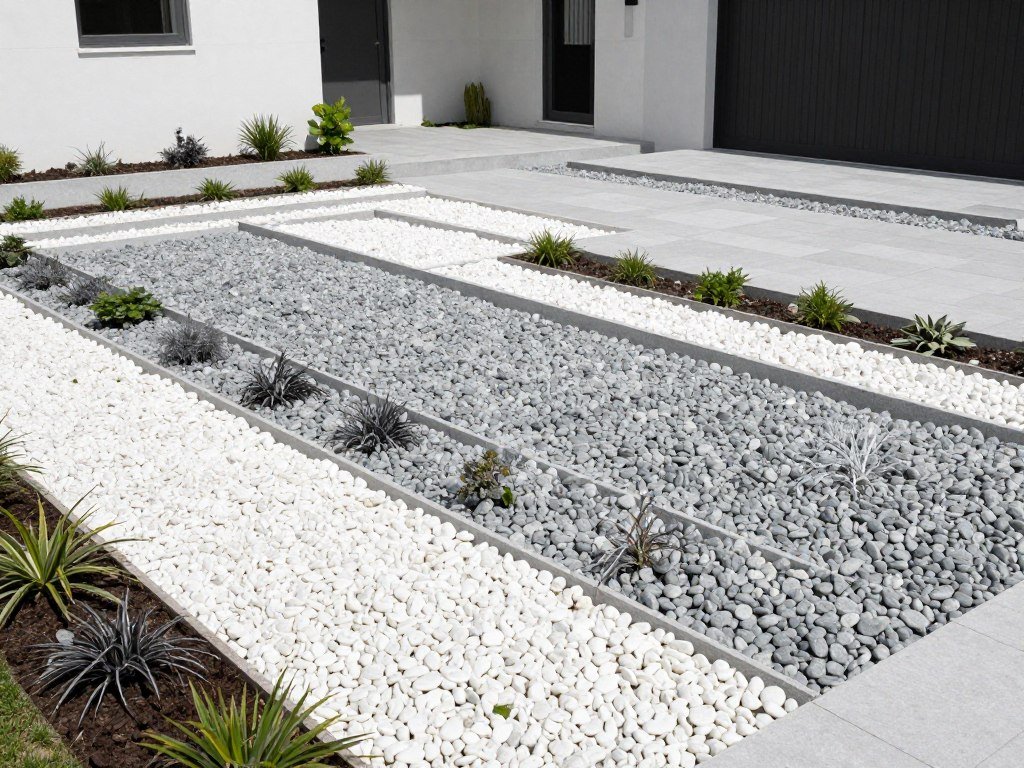
Clean lines define modern landscape design. River rock borders create sharp edges around flower beds and walkways. The contrast between smooth stones and green plants produces striking visual impact.
Choose uniform rock sizes for consistent borders. Light-colored river rocks work well with dark mulch alternatives. Install landscape fabric beneath stones to prevent weed growth effectively.
This approach requires minimal maintenance compared to traditional edging. The rocks stay in place through weather changes. You’ll spend less time on yard work throughout the year.
Installation Steps for Rock Borders
- Measure and mark border areas with spray paint or stakes
- Dig trenches approximately four inches deep along marked lines
- Install commercial-grade landscape fabric in trenches
- Fill trenches with selected river rocks in uniform layers
- Compact rocks gently to create stable, permanent borders
Dry River Bed Water Feature Alternative
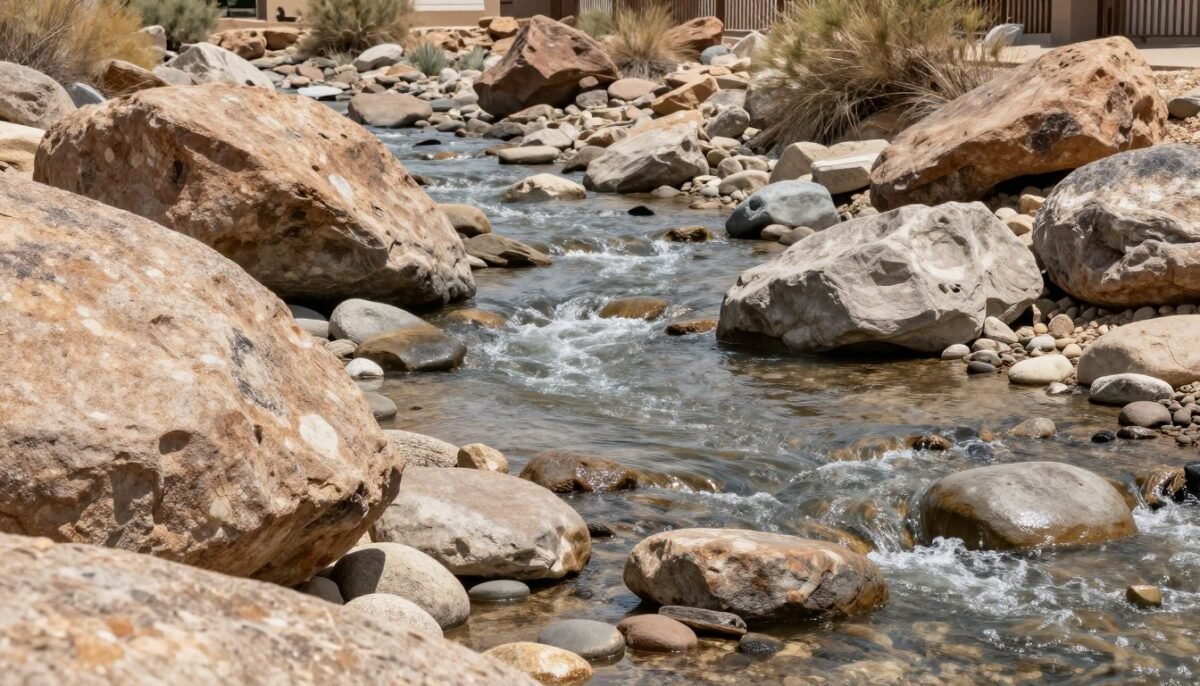
Dry river beds bring natural beauty without water maintenance. These features mimic natural waterways using strategically placed rocks. The design creates visual movement across your landscape.
Start with larger boulders as anchor points. Fill spaces with medium river rocks for the main channel. Add small stones along edges to create realistic transitions.
Position the dry river bed to follow natural drainage patterns. This serves both decorative and functional purposes. Water flows through during rain while the feature looks attractive year-round.
Design Considerations
- Select rocks in complementary earth tones for natural appearance
- Create curves and bends to mimic natural water flow patterns
- Incorporate drought-tolerant plants along the banks for softness
- Use landscape fabric to prevent weed growth between rocks
- Plan for proper water drainage during heavy rainfall events
Rock Garden Centerpiece Design
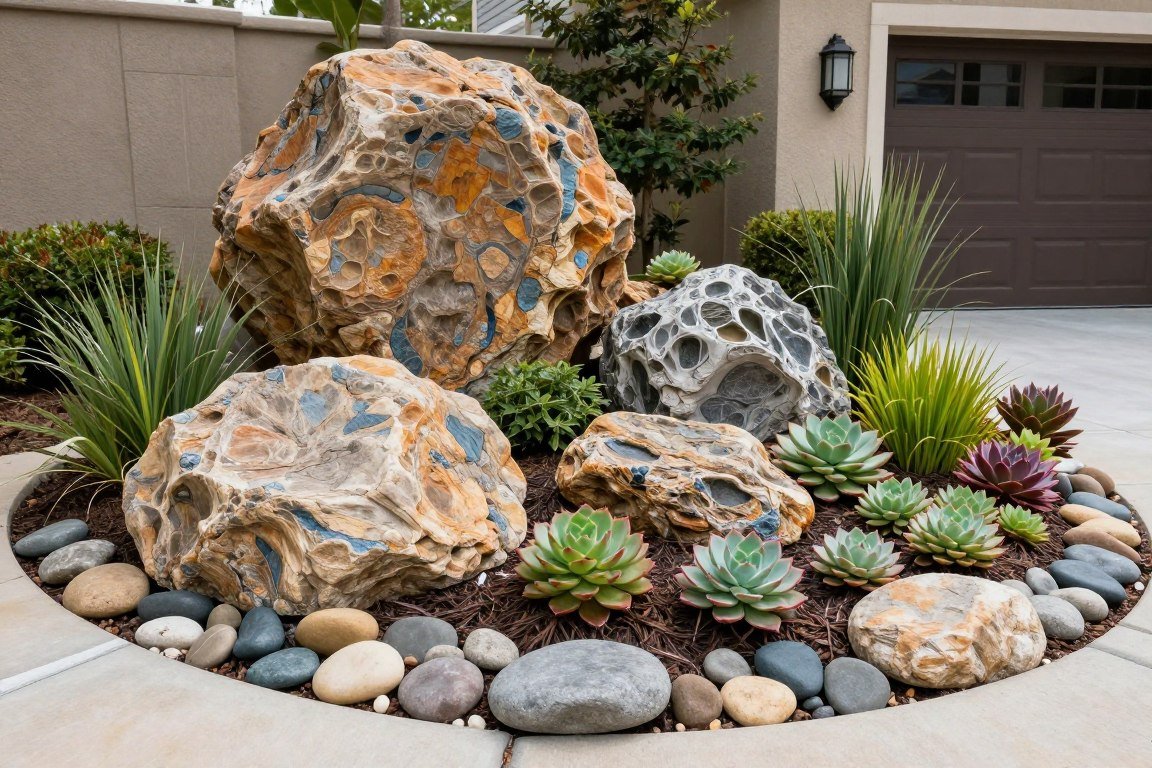
Rock gardens showcase plant diversity in compact spaces. River rocks provide the perfect neutral backdrop for colorful plants. This landscaping style requires significantly less water than traditional gardens.
Layer rocks of different sizes to create depth and texture. Place larger boulders first to establish structure. Fill surrounding areas with smaller river rocks as ground cover.
Select plants that thrive in rocky environments. Succulents, sedums, and alpine plants work exceptionally well. These varieties need minimal water and complement the stone aesthetic perfectly.
River Rock Pathway and Walkway
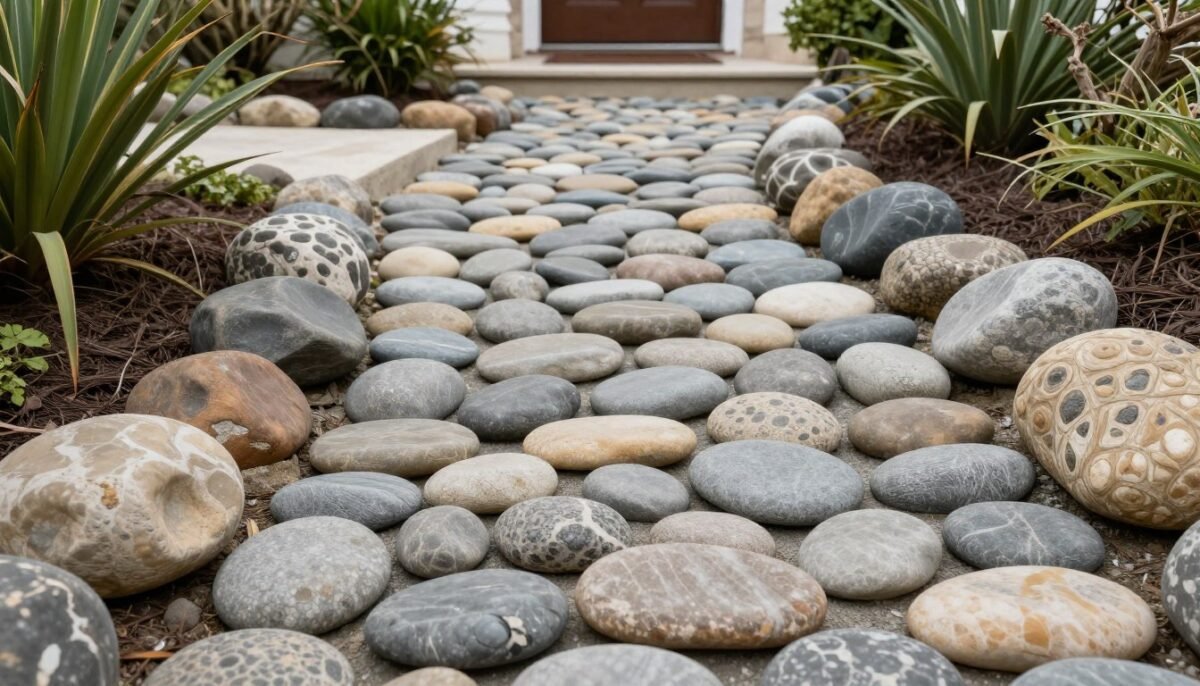
Pathways made from river rocks add charm and functionality. These walkways handle foot traffic while maintaining visual appeal. The rounded stones feel pleasant underfoot and drain water efficiently.
Create stable pathways by compacting the base layer thoroughly. Use landscape fabric to separate rocks from soil beneath. Border the pathway with larger stones to prevent spreading.
Choose rock sizes appropriate for comfortable walking. Smaller stones work better for heavily-trafficked areas. Mix sizes slightly for a more natural, organic appearance.
Pathway Construction Tips
- Excavate pathway area to depth of six inches minimum
- Add crushed gravel base for drainage and stability
- Compact base thoroughly before adding river rocks
- Install edging to maintain pathway shape over time
- Apply rocks in three-inch layer for comfortable walking surface
Tree Ring River Rock Applications
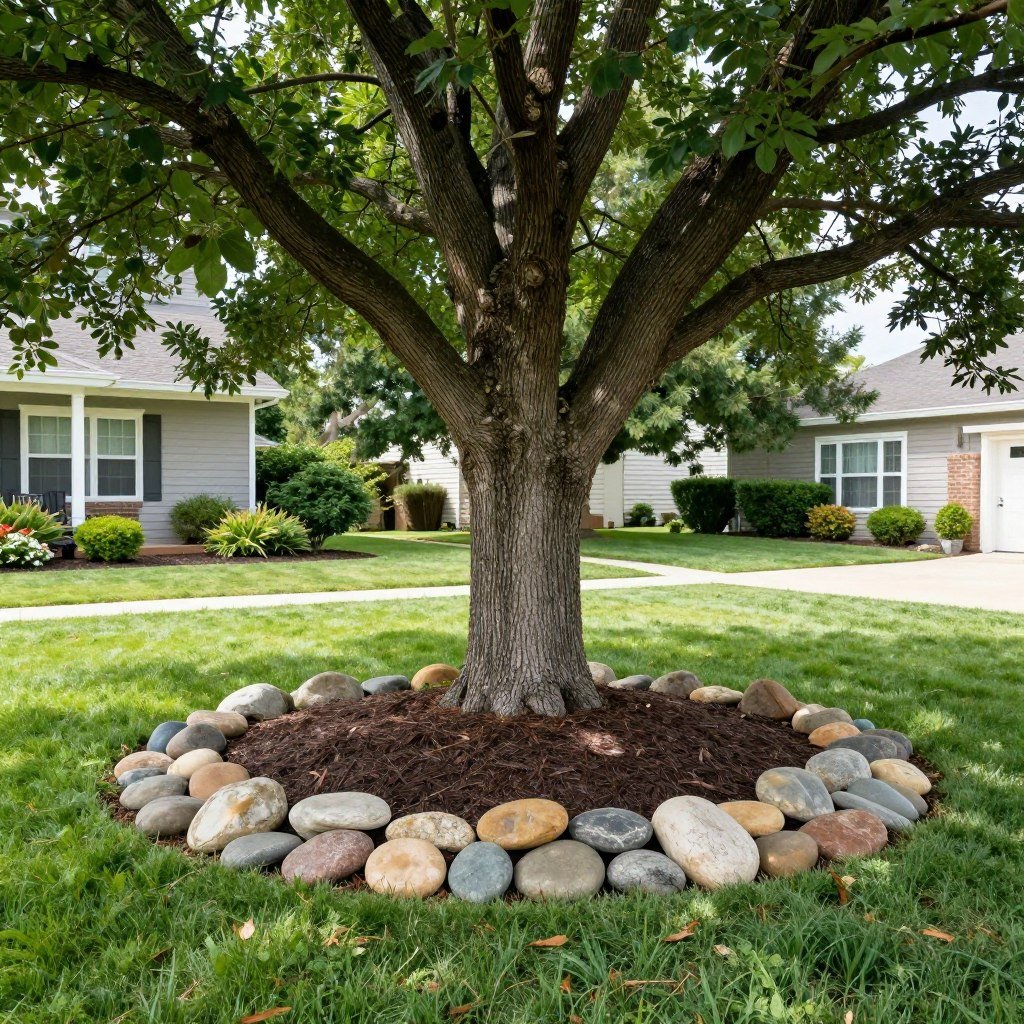
Tree rings using river rocks eliminate mulch replacement tasks. These circular designs protect tree roots while looking polished. The stones prevent grass from growing too close to trunks.
Measure appropriate distance from the trunk based on tree size. Avoid piling rocks against bark to prevent moisture problems. Maintain a small gap for air circulation around the base.
River rocks around trees reduce water evaporation from soil. This helps trees stay hydrated during dry periods. The permanent nature means no annual mulch purchases or spreading.
Gravel and River Rock Combination
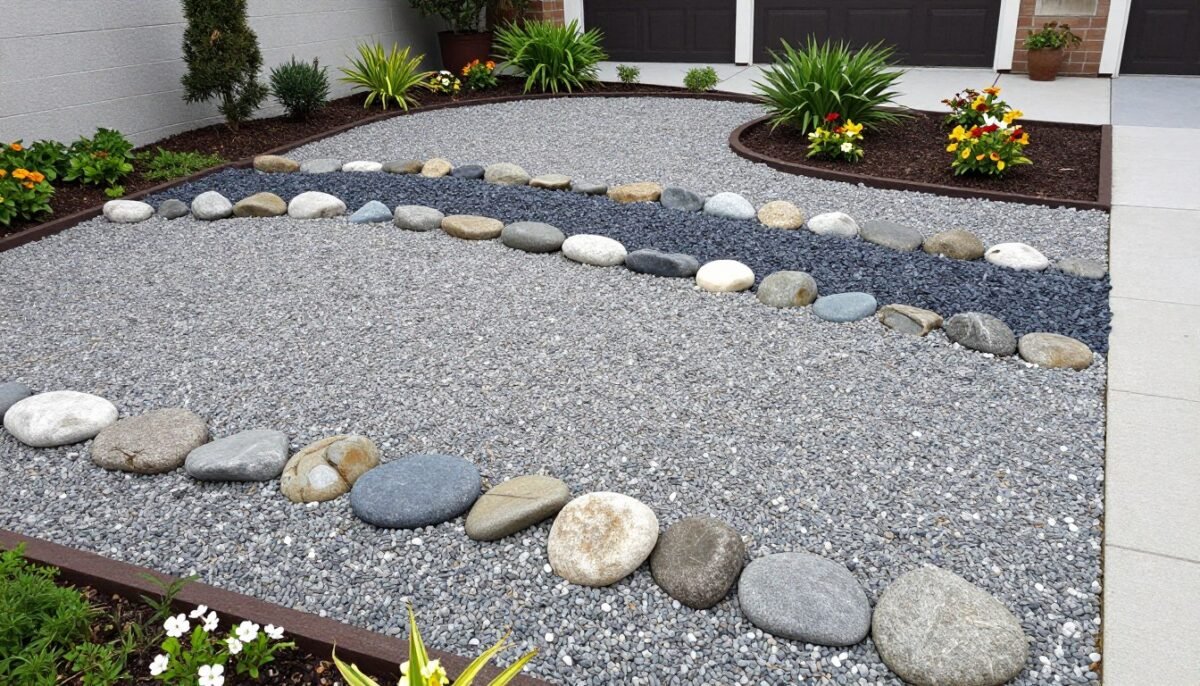
Mixing gravel with river rocks creates dynamic visual texture. Small gravel fills gaps between larger stones efficiently. This combination provides excellent drainage throughout the landscape.
Use gravel as the base layer for cost-effective coverage. Place decorative river rocks on top strategically for focal points. This approach reduces overall material costs while maintaining beauty.
Different rock colors create patterns and define spaces. Light gravel contrasts beautifully with darker river rocks. Experiment with color combinations to match your home’s exterior.
Material Ratio Guidelines
- Use 70% gravel base for economical full coverage
- Apply 30% river rocks as decorative top layer
- Mix rock sizes for natural, non-uniform appearance
- Choose complementary colors within same earth-tone family
- Calculate materials based on square footage and depth
Xeriscape River Rock Gardens
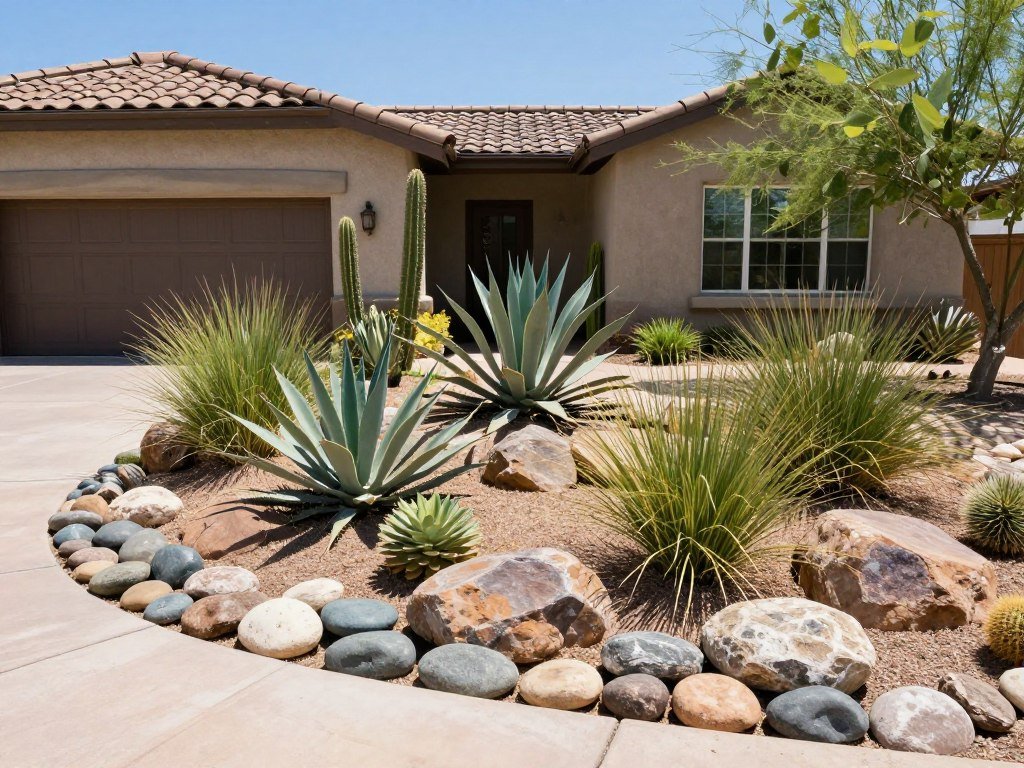
Xeriscaping with river rocks dramatically reduces water consumption. This sustainable approach works perfectly in dry climates. Native plants combined with rocks create attractive, low-maintenance landscapes.
Select drought-tolerant plants that match your climate zone. Group plants with similar water needs together. River rocks between plants reduce soil moisture evaporation significantly.
This landscaping style saves money on water bills throughout the year. The rocks never need replacement or refreshing. Maintenance involves occasional weeding and plant trimming only.
Monochromatic River Rock Schemes
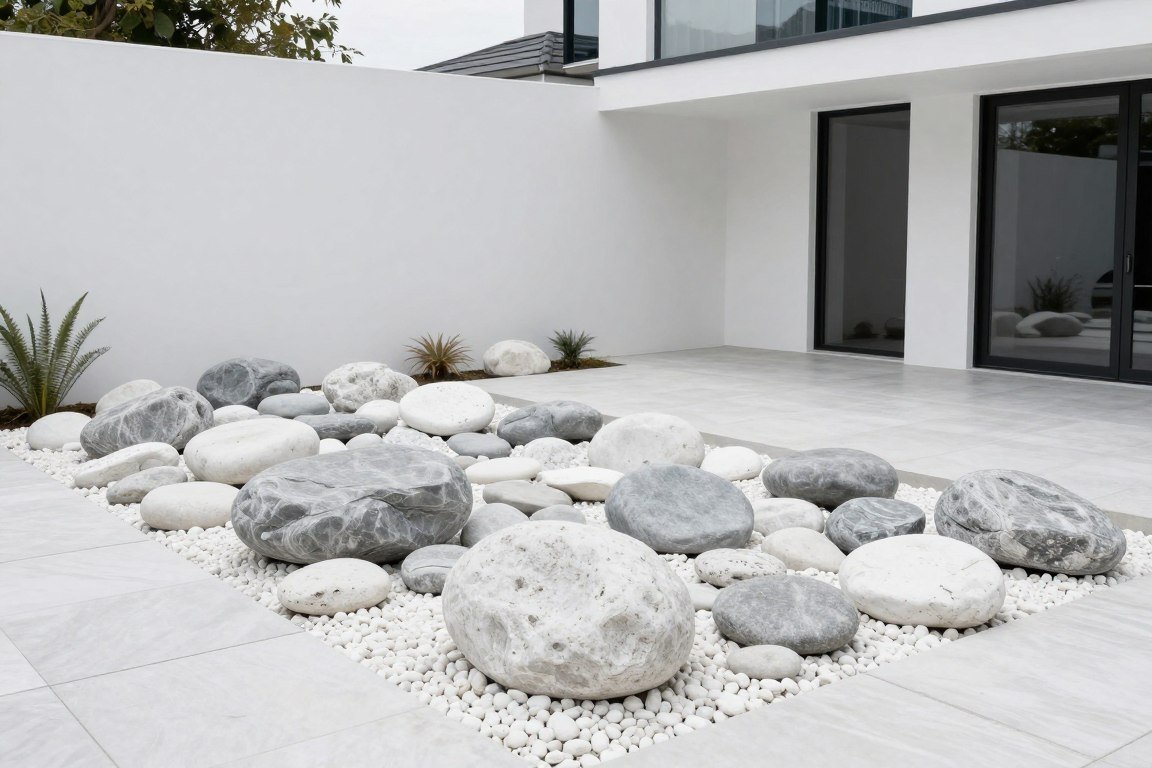
Single-color rock schemes create sophisticated, cohesive designs. White river rocks brighten shaded areas naturally. Dark rocks provide dramatic contrast against light-colored homes.
Monochromatic approaches simplify design decisions considerably. You’ll achieve professional results without complex color planning. The uniform appearance looks intentional and polished.
Consider how rock color affects temperature in your yard. Light-colored stones reflect heat and stay cooler. Dark rocks absorb warmth, which benefits cold-climate gardens.
Color Selection Guide
White River Rocks
Perfect for creating bright, clean aesthetics that maximize light reflection and cool temperatures.
- Brighten shaded front yard areas effectively
- Create striking contrast with dark foliage
- Reflect heat to keep soil cooler
- Pair beautifully with modern architecture
Gray River Rocks
Versatile neutral option that complements virtually any home style and plant palette.
- Match both warm and cool color schemes
- Hide dirt and debris better than white
- Create subtle, sophisticated landscapes
- Work well in traditional and modern settings
Tan and Brown Rocks
Natural earth tones blend seamlessly with organic garden elements and traditional homes.
- Complement natural wood and earth tones
- Blend with southwestern landscape styles
- Provide warm, inviting aesthetic appeal
- Coordinate with most plant colors
Black River Rocks
Bold dramatic choice that creates striking contrast and modern visual impact.
- Absorb heat for warmer microclimate
- Create dramatic contrast with plants
- Make colors of flowers pop visually
- Suit contemporary architectural styles
Raised Bed River Rock Borders
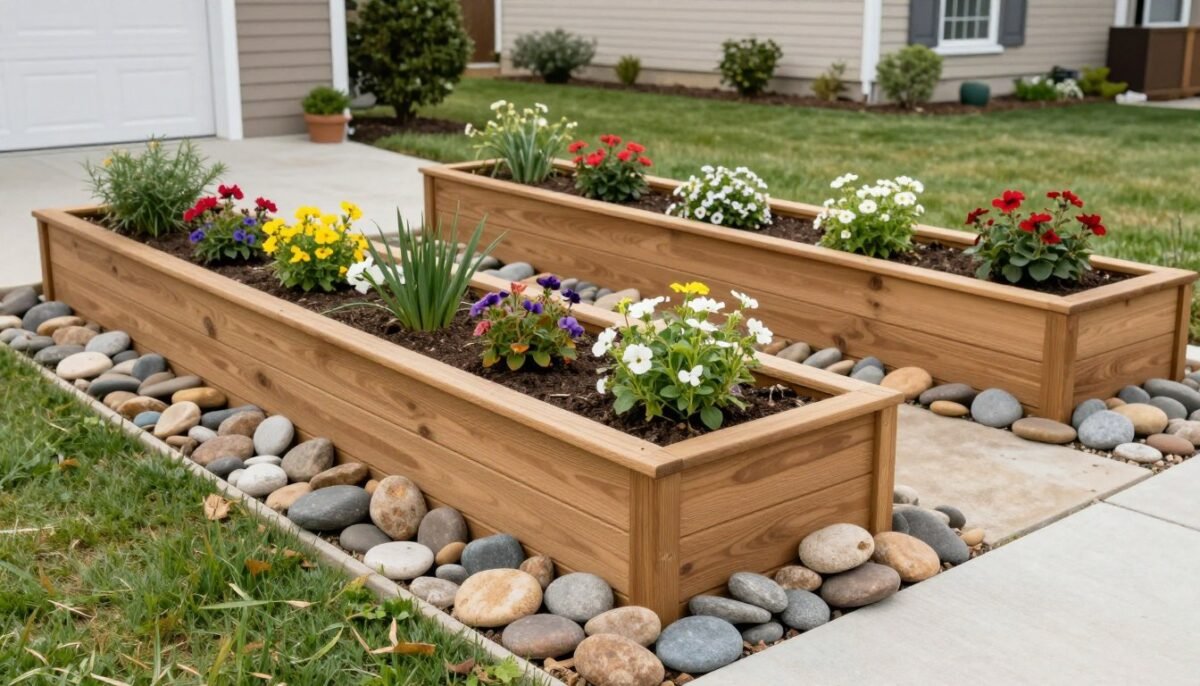
Raised beds gain definition with river rock borders and fill. The elevated design improves drainage around plant roots. Rocks inside beds reduce watering frequency and weed growth.
Build raised bed frames from weather-resistant materials. Fill the bottom layer with river rocks for drainage. Add quality soil on top for planting space.
This design works exceptionally well for vegetable gardens too. The rocks regulate soil temperature throughout growing seasons. Your plants receive consistent moisture without waterlogging.
Slope and Erosion Control Solutions
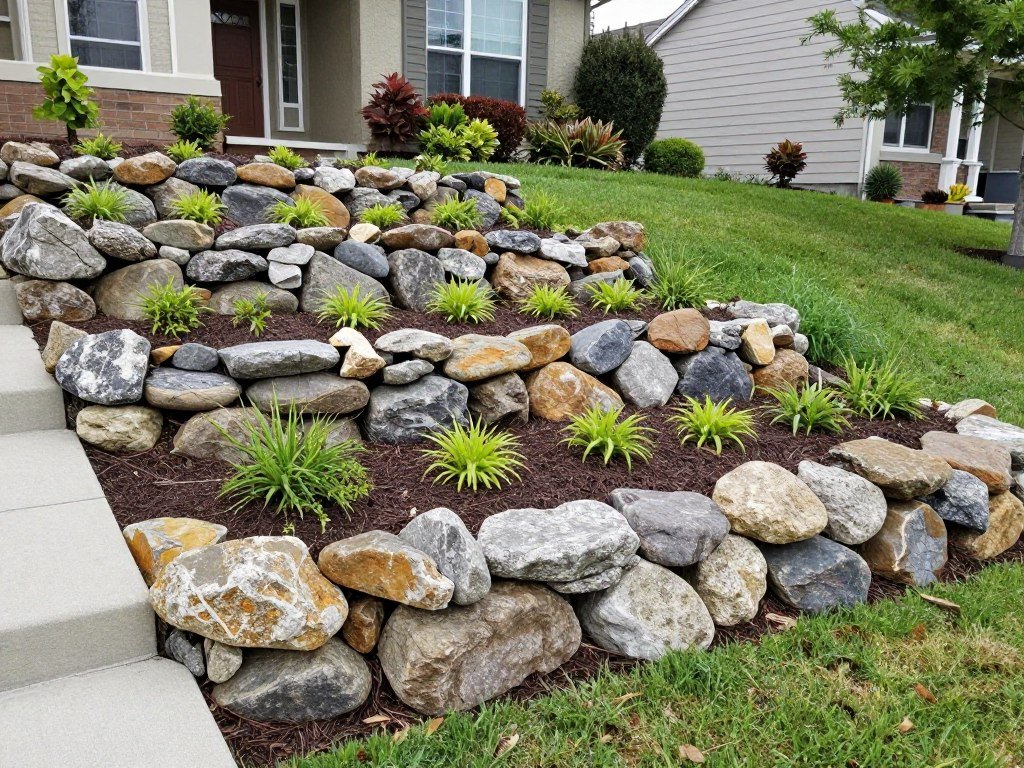
River rocks prevent soil erosion on sloped yards effectively. Heavy stones stay in place during rain and wind. They slow water flow while allowing proper drainage.
Arrange larger rocks at the base of slopes for stability. Layer smaller river rocks upward in gradual progression. This creates natural-looking terraces that hold soil firmly.
Plant ground covers between rocks to enhance erosion control. The combination of rocks and roots provides maximum stability. Your slope becomes an attractive feature instead of a problem area.
Slope Stabilization Steps
- Assess slope angle and determine erosion severity level
- Install landscape fabric across entire slope surface
- Place large boulders at base as anchor points
- Layer river rocks from bottom to top progressively
- Add erosion-control plants in pockets between stones
- Monitor during first rainy season for adjustments needed
Decorative Accent Areas with Boulders
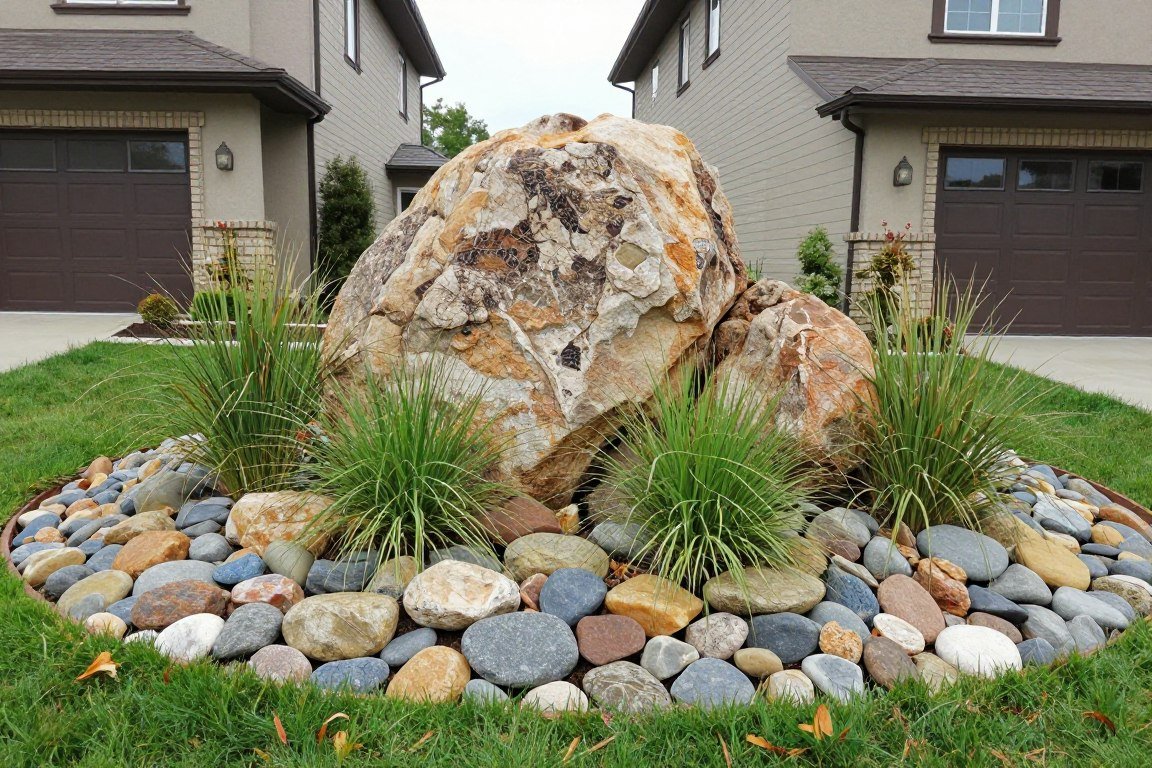
Large boulders create instant focal points in rock gardens. Surround statement stones with smaller river rocks for cohesive design. This technique draws the eye and adds vertical interest.
Position boulders at odd numbers for natural aesthetics. Three or five large rocks look more organic than even numbers. Vary heights and angles to mimic nature’s randomness.
The combination of boulder sizes creates depth perception. Your front yard appears larger and more dimensional. Lighting these features at night adds dramatic evening curb appeal.
Water Feature Foundation Applications
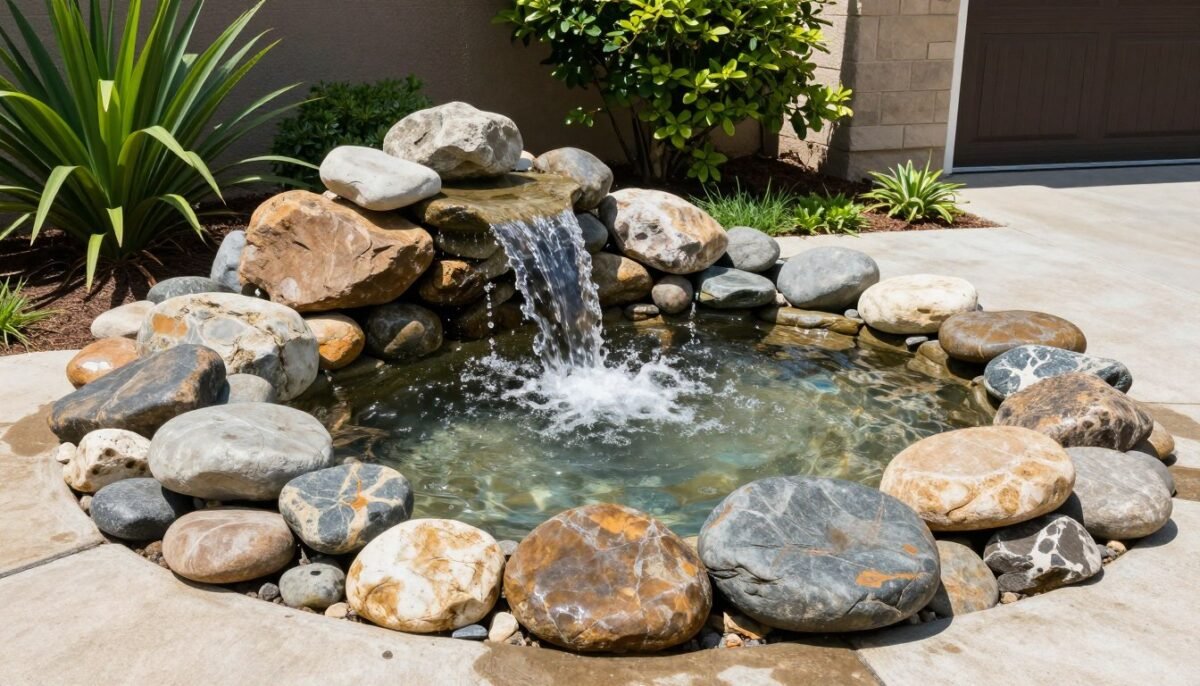
River rocks enhance actual water features beautifully. They create natural-looking pond edges and fountain bases. Water flowing over smooth stones produces soothing sounds.
Install waterproof liner beneath rocks around water features. This prevents water loss and maintains proper levels. Choose rounded river rocks that won’t puncture liners easily.
The rocks hide mechanical components like pumps and filters. Your water feature looks entirely natural and organic. Maintenance becomes easier with accessible rock arrangements.
Water Feature Integration
- Use larger rocks around feature perimeter for stability
- Place smaller stones where water flows for visual interest
- Create gradual transitions from water to surrounding landscape
- Select smooth rocks to prevent liner damage
- Arrange stones to allow easy access for maintenance
Parking Strip and Curb Appeal
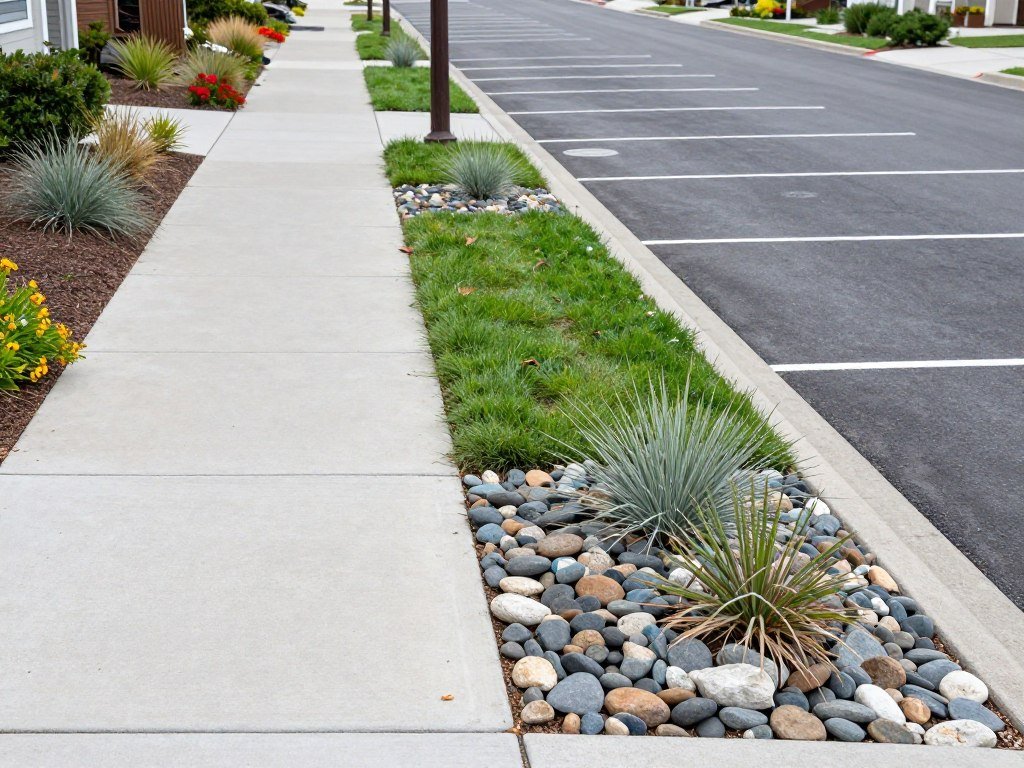
Parking strips benefit greatly from river rock landscaping. These narrow spaces receive heavy foot traffic and vehicle proximity. Rocks withstand these conditions far better than grass or mulch.
Remove grass completely before installing rocks in parking strips. Add thick landscape fabric to prevent weed breakthrough. Choose durable plants that tolerate road salt and exhaust.
This approach eliminates mowing in difficult narrow spaces. You’ll never need to edge along curbs again. The low-maintenance design stays attractive year-round without seasonal changes.
Complete Ground Cover Replacement
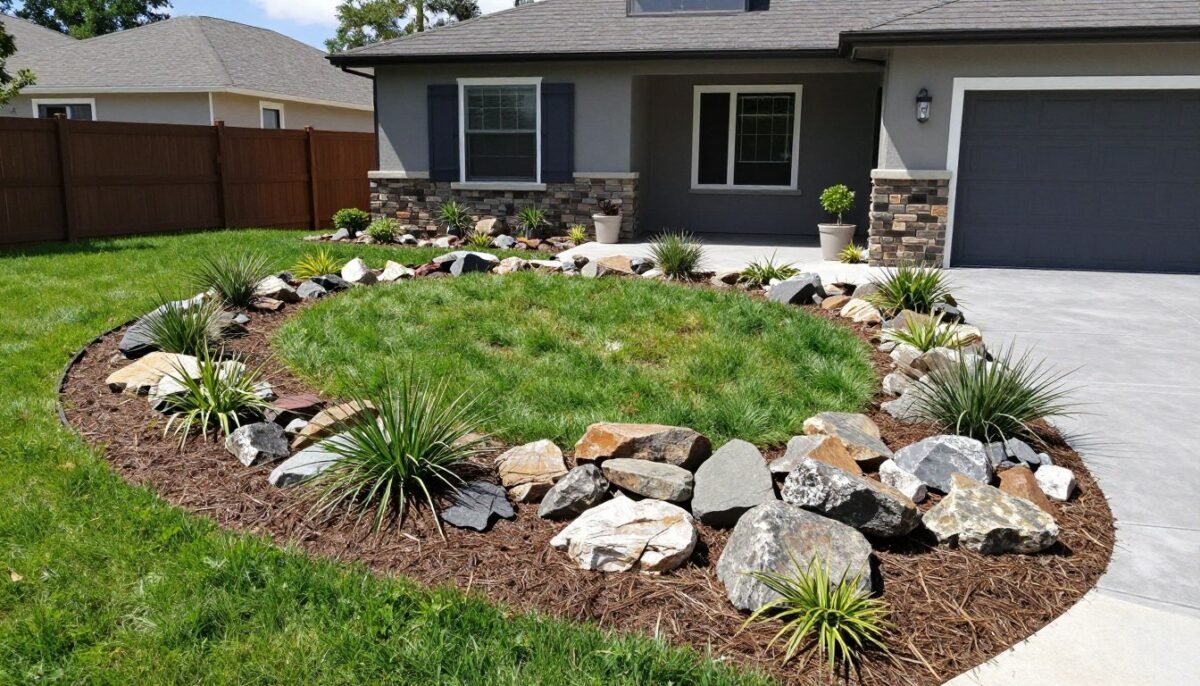
Some homeowners replace entire lawns with river rock coverage. This extreme approach eliminates lawn maintenance completely. You’ll save water, time, and money on yard care.
Check local regulations before removing all grass and vegetation. Some areas require minimum green space percentages. Plan for sufficient plant coverage to meet requirements.
This design works brilliantly in desert and drought-prone regions. The rocks reflect heat and create unique microclimates for plants. Choose this option for truly zero-maintenance front yards.
Full Coverage Considerations
- Calculate rock quantities based on total square footage
- Budget for landscape fabric across entire area
- Plan strategic plant placement for visual interest
- Consider heat reflection near home foundation
- Verify compliance with local landscaping ordinances
- Account for drainage patterns across property
Seasonal Planter Box Integration
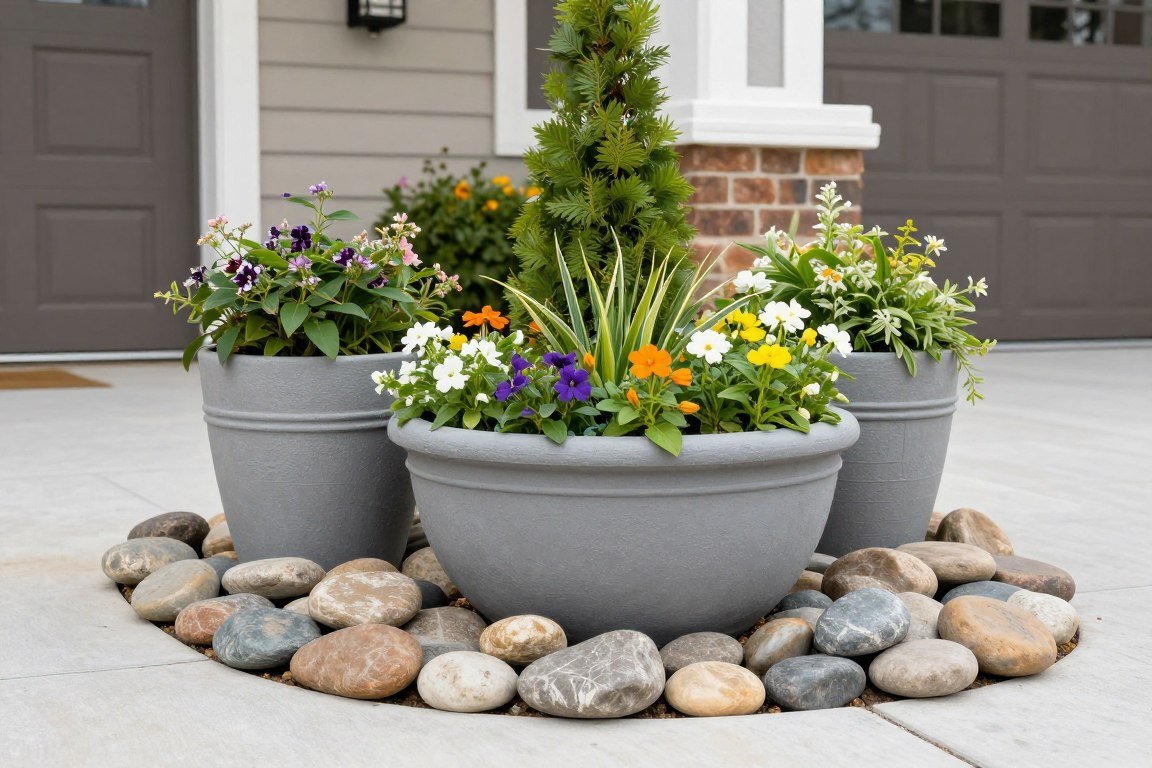
Container gardens gain impact when surrounded by river rocks. The stones create visual connection between scattered planters. This unifies your overall landscape design effectively.
Position planters at varying heights throughout the rock bed. Fill surrounding areas with complementary river rock colors. The containers become moveable focal points you can rearrange seasonally.
This approach allows seasonal color changes without redesigning permanently. Swap out planters as flowers fade or seasons change. The river rock background remains constant and attractive.
Geometric Pattern Rock Designs
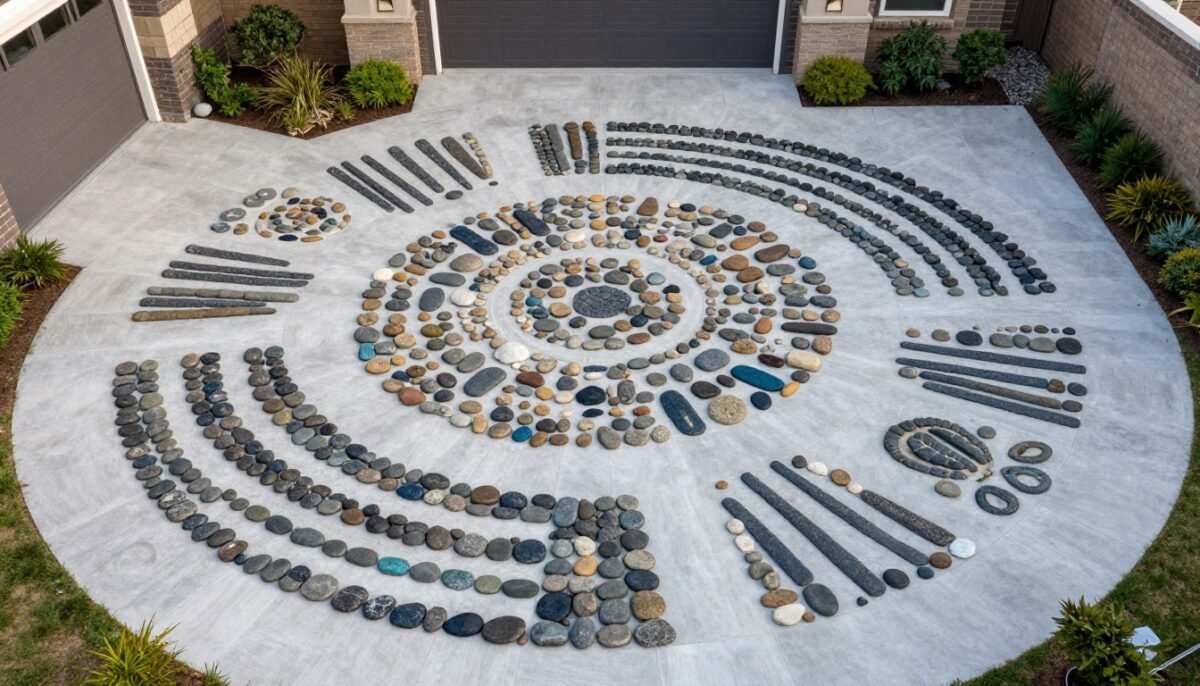
Creative homeowners use different colored rocks to create patterns. Geometric designs add artistic flair to standard rock beds. This transforms functional landscaping into outdoor art.
Plan patterns on paper before purchasing materials. Calculate quantities of each rock color needed. Use string lines and stakes to mark pattern outlines accurately.
Bold patterns work best when viewed from above or street level. Consider sight lines from windows and approaching angles. Your geometric rock garden becomes a neighborhood conversation piece.
Driveway Border Enhancement
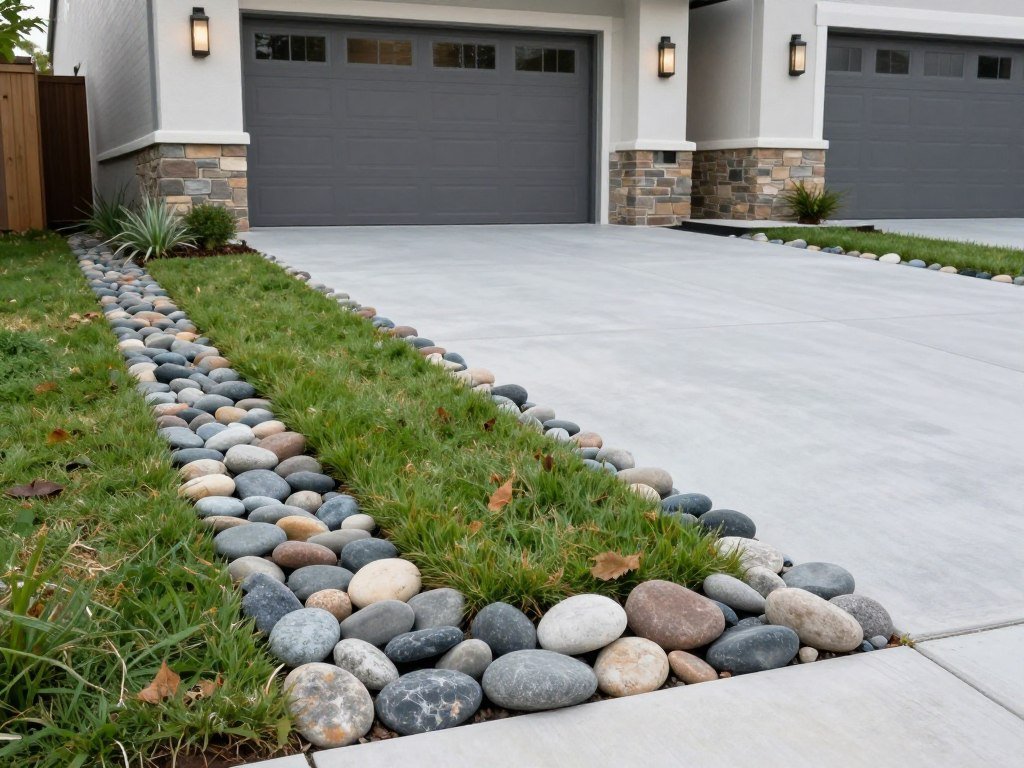
Driveway edges lined with river rocks look polished and professional. These borders prevent grass encroachment onto pavement. They eliminate tedious edging along long driveway stretches.
Install metal or plastic edging to contain rocks along driveways. This prevents rocks from migrating onto the paved surface. Choose darker rock colors to hide tire marks and oil stains.
The width of rock borders can vary based on property size. Wider borders create more dramatic impact and greater weed control. Narrow bands work well for smaller front yards.
Mailbox Landscape Feature
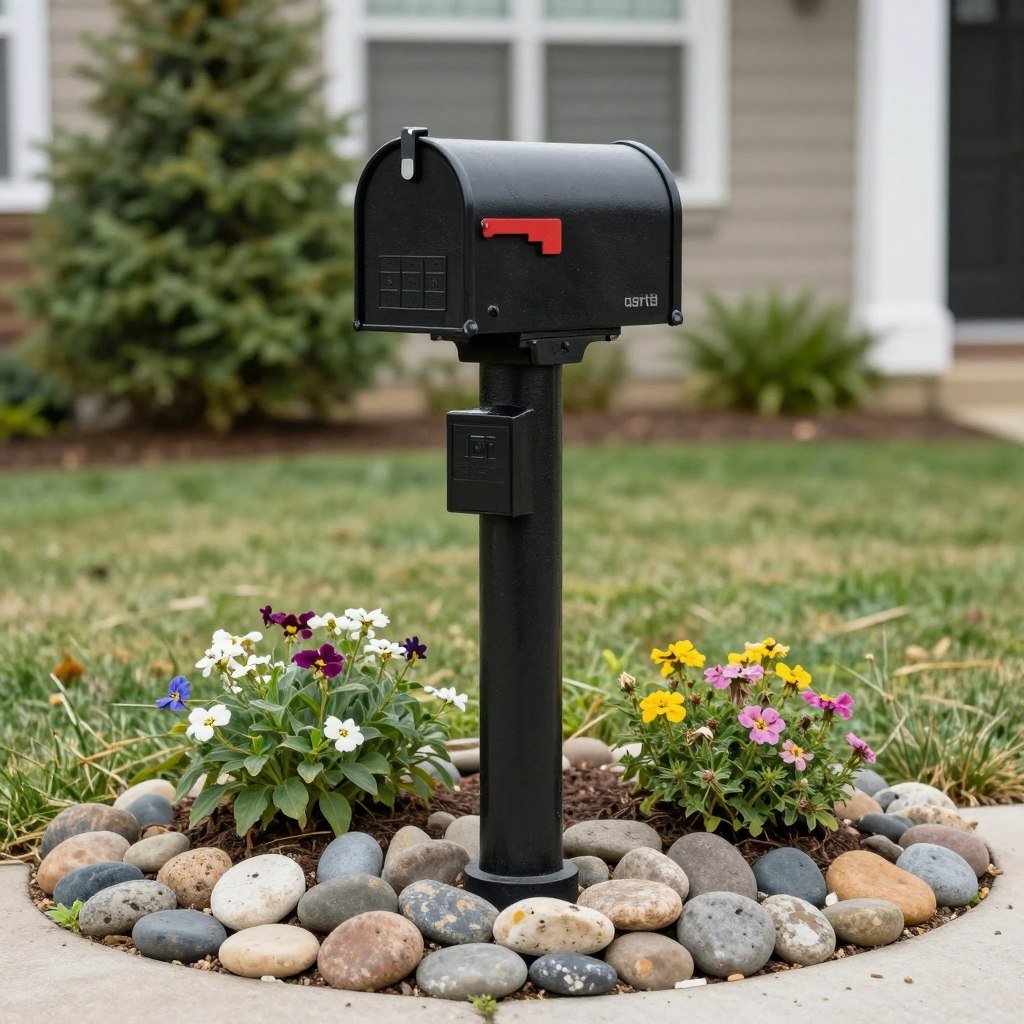
Transform your mailbox area into an attractive mini-landscape. River rocks around the post create instant curb appeal. This small investment makes a big first impression.
Create a circular or curved bed around the mailbox post. Fill with river rocks and add colorful perennial plants. The low-maintenance design stays attractive without constant attention.
Consider lighting the mailbox area for nighttime visibility and safety. Uplights positioned among rocks create dramatic shadows. Your address becomes easily visible after dark.
Mailbox Area Design Tips
- Size bed proportionally to mailbox post height
- Choose rock colors that complement post finish
- Add solar lights for illumination without wiring
- Select compact plants that won’t obstruct mail delivery
- Maintain clear access path to mailbox door
Layered Texture and Depth
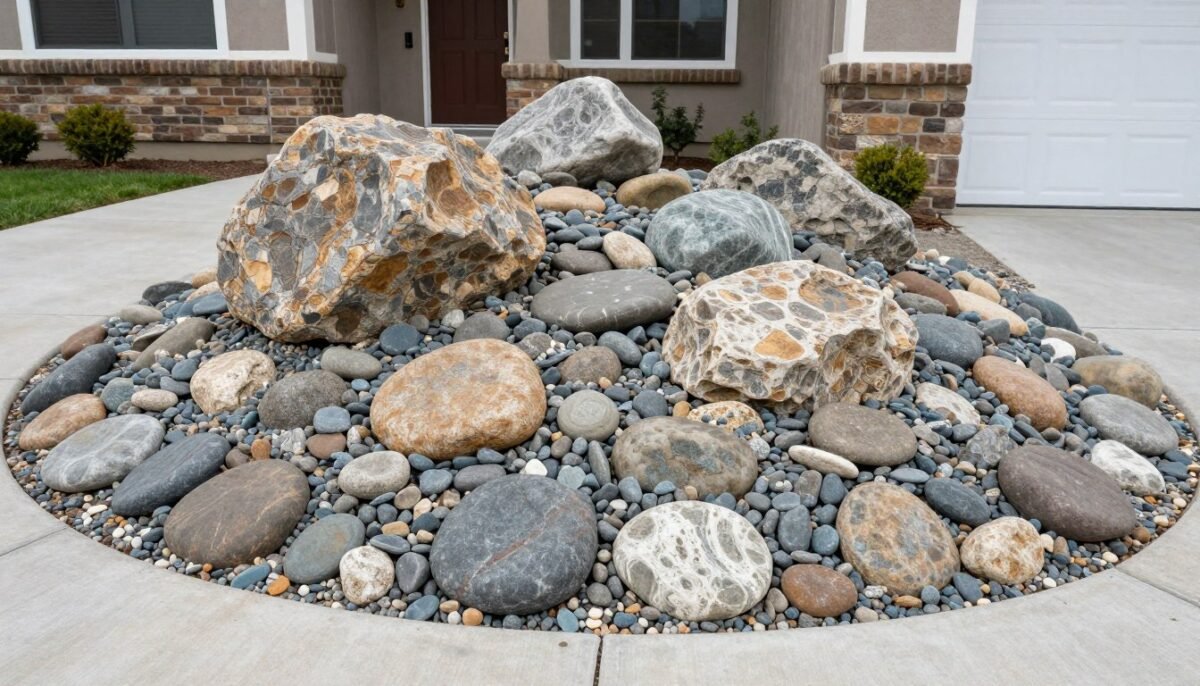
Layer rocks of different sizes to create three-dimensional interest. Start with large boulders as the foundation layer. Add medium river rocks to fill major spaces.
Finish with small stones to fill remaining gaps completely. This layering technique mimics natural riverbeds authentically. The varied textures catch light differently throughout the day.
Depth creates shadows and highlights that enhance visual appeal. Your landscape appears more dynamic and professionally designed. This approach justifies premium pricing when selling your home.
Creating Your Perfect River Rock Landscape
River rock landscaping offers endless creative possibilities for front yards. These twenty ideas demonstrate how rocks replace mulch beautifully and practically. Each approach reduces maintenance while enhancing property value.
Start with one small area to test rock landscaping on your property. Expand successful designs throughout your front yard gradually. The permanent nature means your investment lasts for decades.
Consider your climate, soil type, and available time for maintenance. River rocks adapt to virtually any environment and design style. Your front yard will stand out with these innovative mulch alternatives.
Professional installation ensures proper preparation and long-lasting results. Quality landscape fabric and correct rock depth prevent future problems. The initial investment pays dividends through reduced ongoing maintenance costs.