
Finding the right games for a large group can transform an ordinary gathering into an unforgettable experience. Whether you’re planning a party, organizing a team-building event, or coordinating a family reunion, the right game creates laughter, builds connections, and leaves everyone with lasting memories.
Large group games serve a unique purpose in bringing people together. They break the ice, energize participants, and create shared experiences that strengthen bonds. The best games work seamlessly with your group size, available space, and time constraints while matching the energy level you want to achieve.
This guide presents thirty carefully selected games that have proven successful with large groups across various settings. Each game includes clear instructions, required materials, ideal participant numbers, and practical tips for smooth execution. From high-energy physical challenges to clever mental puzzles, you’ll find options for every type of gathering and participant preference.
Table of Contents
Classic Active Large Group Games
Active games get everyone moving and create instant energy in any gathering. These classics have stood the test of time because they’re easy to explain, quick to start, and guaranteed to generate excitement. They work particularly well as icebreakers or when you need to shift the energy in a room.
1. Human Knot
Human Knot challenges your group to work together solving a physical puzzle that requires communication and cooperation. This game works brilliantly as a team-building exercise because success depends entirely on collaborative problem-solving.
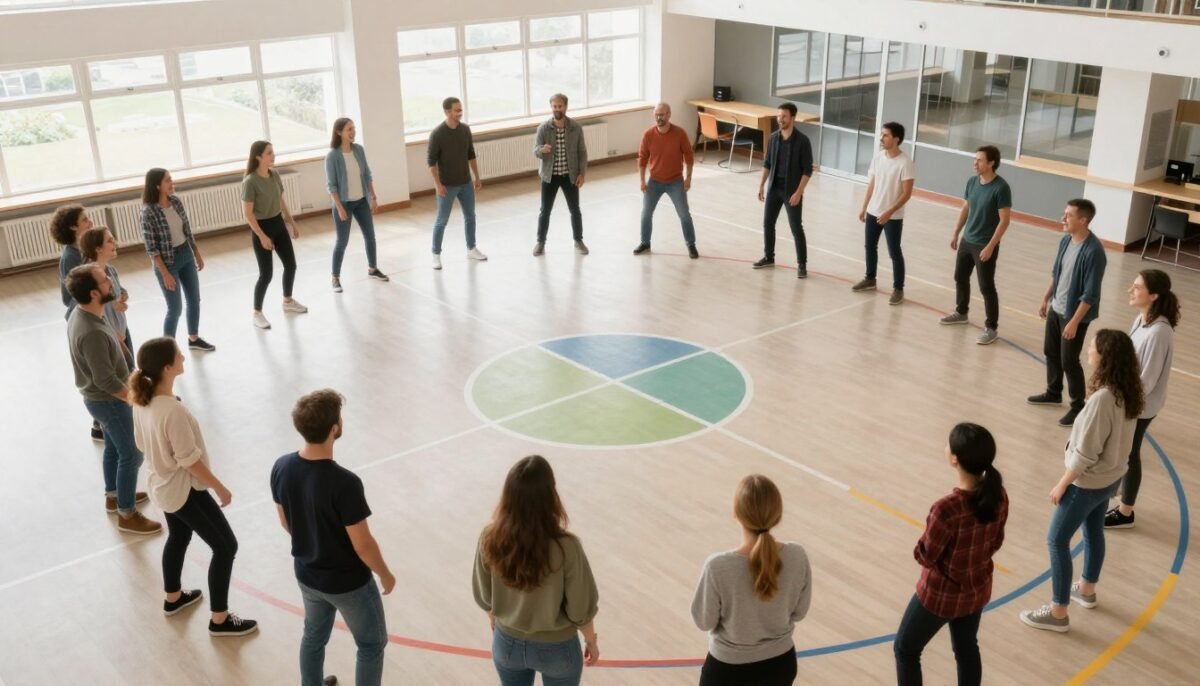
Gather your group in a tight circle with everyone standing shoulder to shoulder. Each person reaches across the circle with their right hand to grab someone else’s right hand. Then everyone extends their left hand to grasp a different person’s left hand. The goal is to untangle the human knot without releasing hands, working together to step over and under arms until the group forms a circle or linked circles.
Game Details
- Ideal group size: 8-20 people per circle
- Time required: 10-20 minutes
- Space needed: Clear area for circle formation
- Materials: None required
- Difficulty level: Medium
Why It’s Unforgettable
The physical closeness and shared challenge create immediate bonding. Participants must communicate constantly, offering suggestions and coordinating movements. The moment when the knot finally unravels brings genuine celebration and a sense of collective achievement that sets a positive tone for any event.
2. Capture the Flag
This outdoor classic transforms any large space into a battlefield of strategy and speed. Capture the Flag combines physical activity with tactical thinking, making it engaging for participants with different skill sets.
Divide your group into two teams, each with a home base and a flag to defend. Teams must cross into enemy territory to capture the opponent’s flag and return it to their base while protecting their own flag. Players tagged in enemy territory go to “jail” and can be freed by teammates. The first team to successfully capture the opposing flag and return it to their base wins the round.
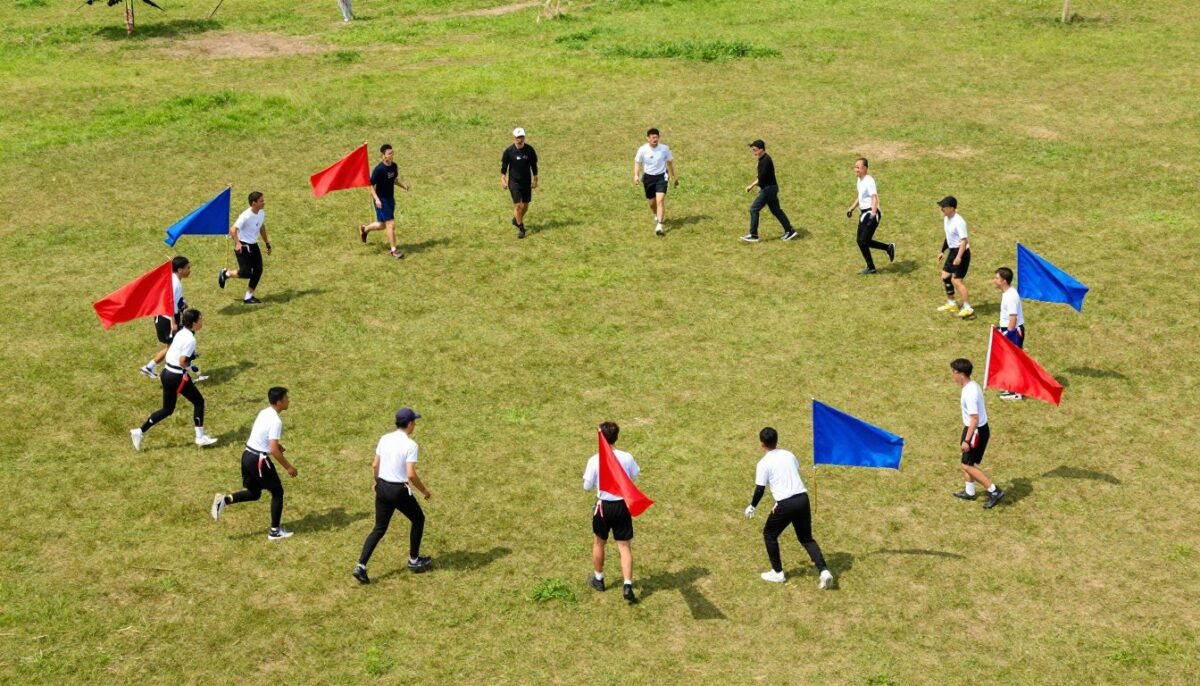
- Perfect for outdoor venues with distinct boundaries
- Accommodates 20-100+ participants easily
- Requires minimal equipment (two flags, boundary markers)
- Games typically last 20-30 minutes per round
- Encourages both athletic and strategic players
3. Sharks and Minnows
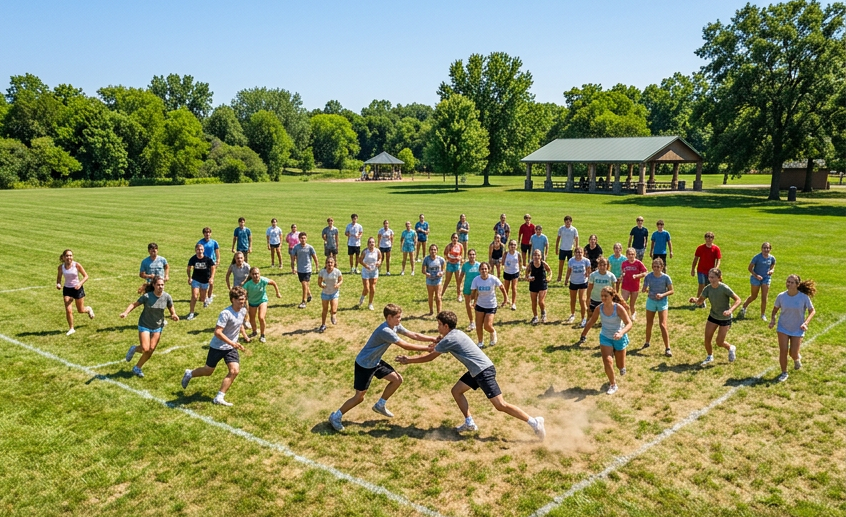
Sharks and Minnows creates excitement through simple chase mechanics that anyone can understand immediately. This game scales beautifully from small groups to crowds of hundreds.
Designate one or two players as sharks who stand in the middle of your playing area. All remaining players are minnows who line up at one end of the space. When the shark calls out “Swim,” all minnows must run to the opposite side while sharks try to tag them. Tagged minnows become sharks in subsequent rounds. The game continues until only one minnow remains.
Pro tip: Use a large gymnasium or field to give minnows enough room to dodge and weave. The game becomes more exciting when sharks must work together to corner the fastest minnows in final rounds.
4. Red Light Green Light
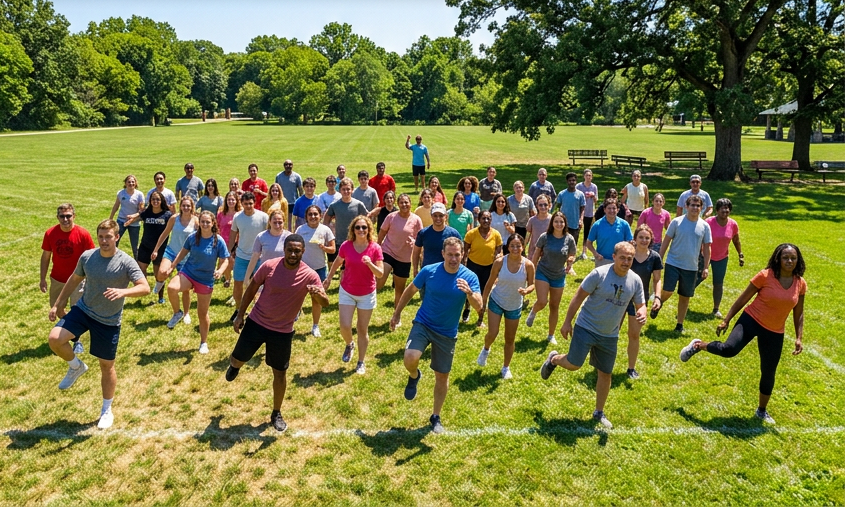
This childhood favorite translates perfectly to adult gatherings when you embrace the playful spirit. Red Light Green Light requires no equipment and works in almost any space, making it incredibly versatile for large group settings.
One person serves as the traffic light and stands at one end of the playing area while everyone else lines up at the opposite end. When the traffic light calls “Green light,” players move toward them. When they call “Red light” and turn around, everyone must freeze immediately. Anyone caught moving returns to the starting line. The first person to tag the traffic light wins and becomes the new traffic light.
The game creates memorable moments when competitive friends get caught making the tiniest movements. Adding silly movement requirements like hopping on one foot or walking backwards increases the challenge and laughter.
5. Ultimate Frisbee
Ultimate Frisbee combines elements of soccer, football, and basketball into a dynamic team sport perfect for large groups. The self-officiating nature of the game builds trust and sportsmanship among players.
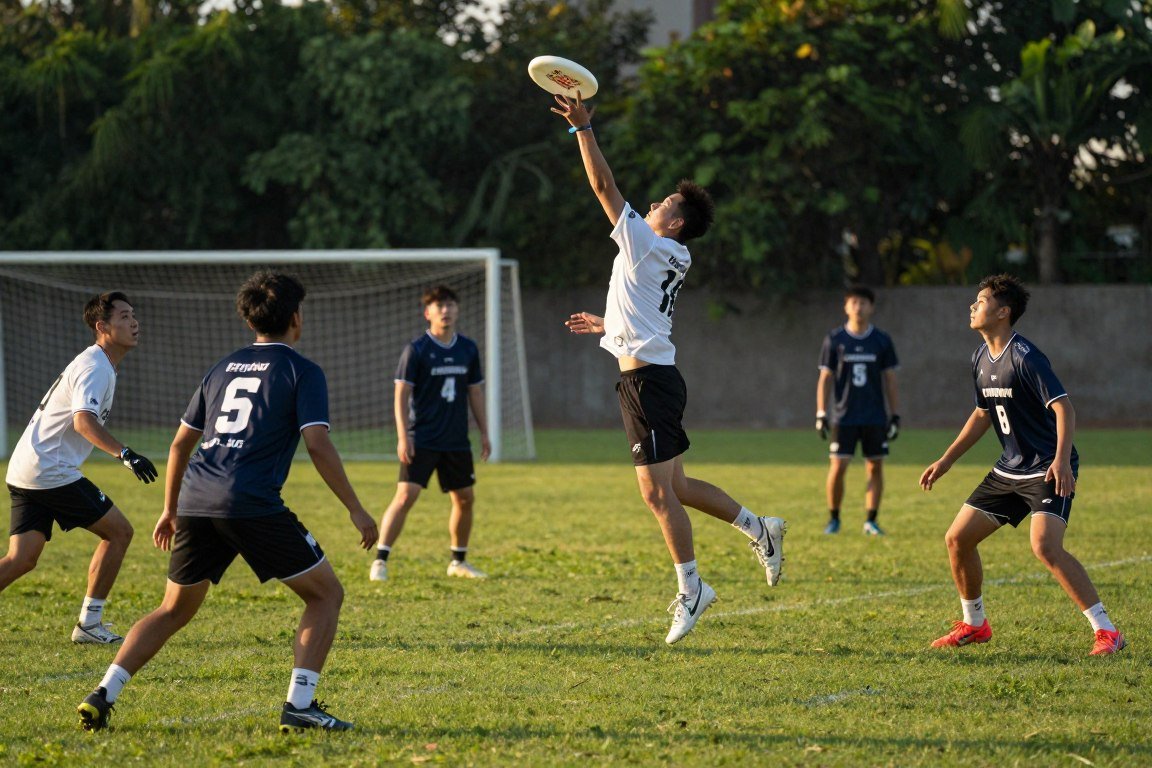
Two teams work to advance a frisbee down a field by passing to teammates. Players cannot move while holding the disc and must throw within ten seconds. Points are scored when a player catches the disc in the opposing end zone. Turnovers occur when passes are incomplete, intercepted, or go out of bounds.
- Accommodates 10-28 players (5-14 per team)
- Requires only a frisbee and open field space
- Games typically run 60-90 minutes
- Excellent cardiovascular workout
- Self-officiating promotes integrity and fair play
Strategic Team-Building Large Group Games
Strategic games engage minds rather than just bodies. These activities challenge groups to think collaboratively, communicate effectively, and solve problems together. They work exceptionally well for corporate team-building events or when you want to encourage deeper interaction among participants.
6. Werewolf (Mafia)
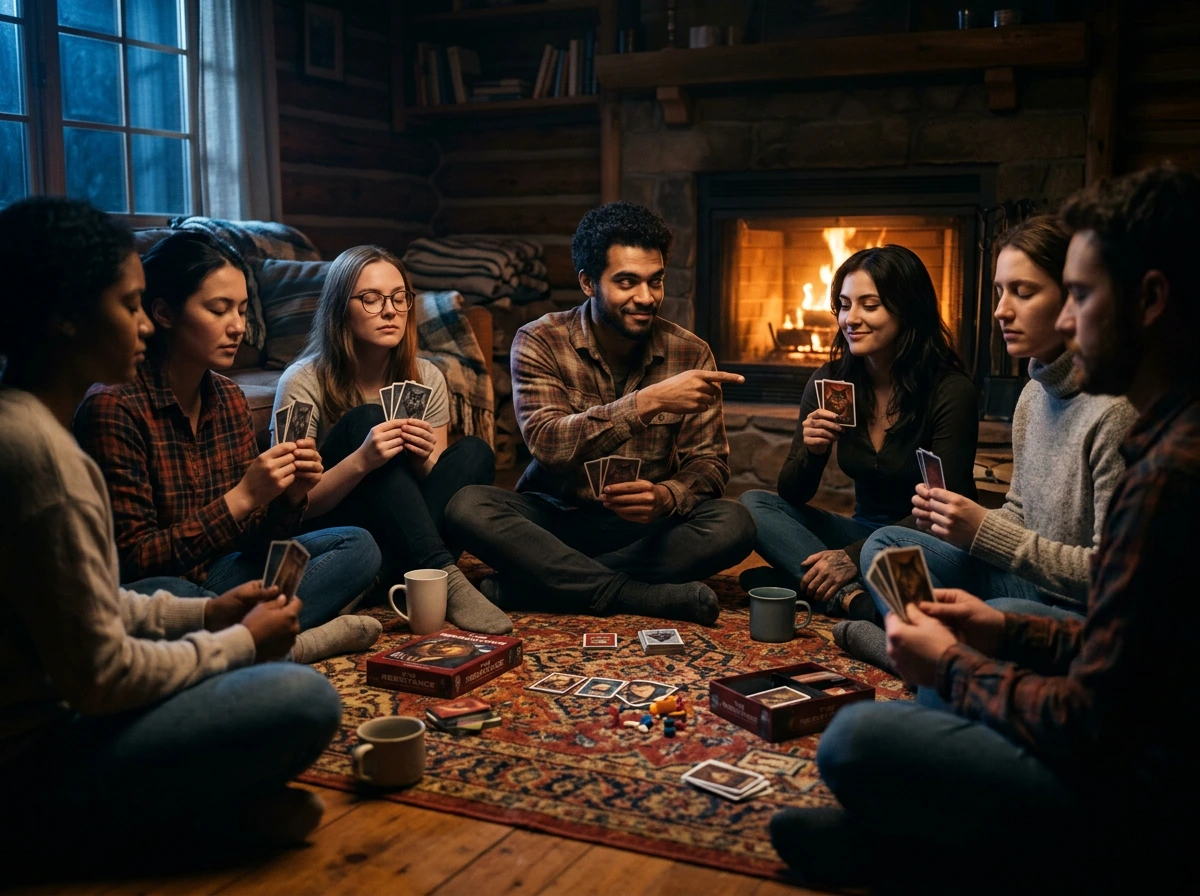
Werewolf creates a gripping social deduction experience where players must use logic, observation, and persuasion to identify hidden enemies among them. This party game has become a phenomenon because it generates genuine suspense and reveals personality traits as players defend themselves or accuse others.
Players receive secret role cards assigning them as villagers or werewolves. During night phases, werewolves silently choose a villager to eliminate while everyone has their eyes closed. During day phases, all surviving players debate and vote to eliminate someone they suspect is a werewolf. Villagers win by eliminating all werewolves; werewolves win by reducing villagers to equal or fewer numbers.
Essential Roles
- Werewolves: Hidden killers working together
- Villagers: Innocent citizens seeking werewolves
- Seer: Can learn one player’s true role each night
- Doctor: Can protect one player from elimination
- Moderator: Guides the game flow and narrative
Game Flow
A skilled moderator makes this game unforgettable by building atmosphere through dramatic narration. The alternating night and day cycle creates rhythm while mounting suspicion leads to increasingly intense debates. Games typically last 30-45 minutes with 8-20 players.
7. Two Truths and a Lie
This classic icebreaker works brilliantly with large groups because it reveals surprising facts about participants while encouraging active listening. The game creates natural conversation starters that help people connect beyond surface-level small talk.
Each person shares three statements about themselves, two true and one false. The group discusses and votes on which statement they believe is the lie. After everyone votes, the person reveals the truth and often shares the story behind the statements.
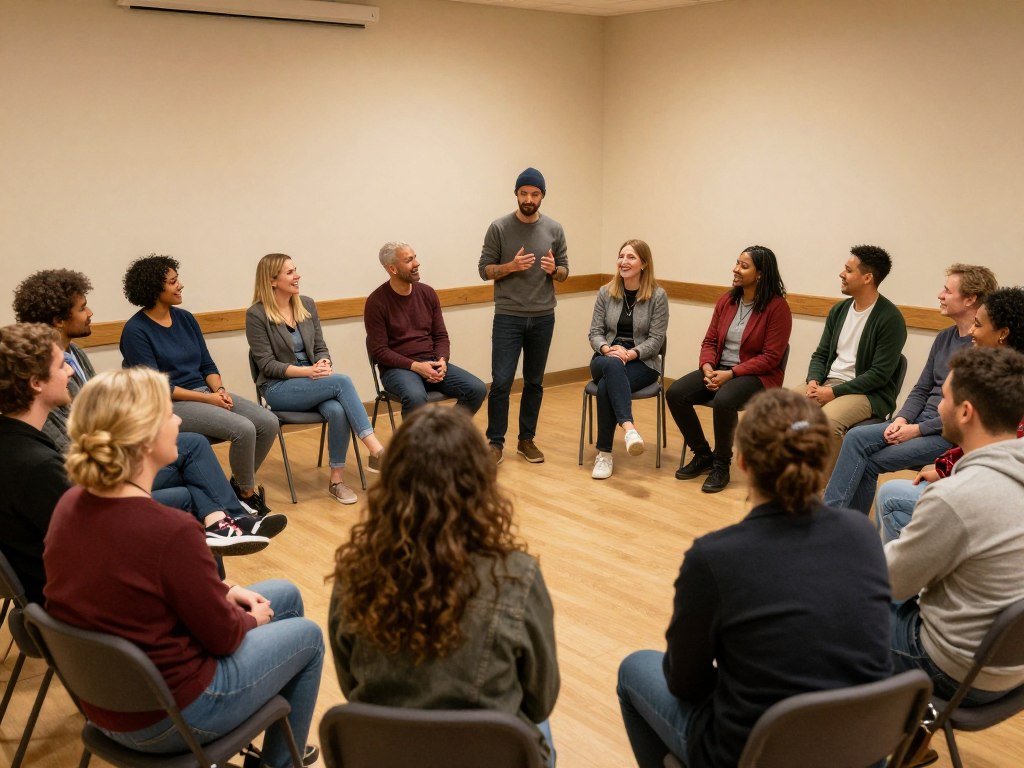
The game becomes more engaging when participants craft clever lies that sound believable and truths that seem impossible. One person might say they’ve never broken a bone, met a celebrity, and can speak four languages. The ensuing discussion reveals personalities as people explain their reasoning.
8. Escape Room Challenge
Creating an escape room experience for a large group requires dividing participants into smaller teams that rotate through different puzzle stations. This format maintains the escape room excitement while accommodating more people than traditional escape rooms allow.
Set up multiple puzzle stations throughout your venue, each requiring different skills like logic, pattern recognition, physical dexterity, or word play. Teams receive a time limit to solve as many puzzles as possible. The team with the highest score or fastest completion time wins.
- Divide large groups into teams of 4-6 people
- Create 5-8 different puzzle stations
- Allow 5-10 minutes per station
- Rotate teams simultaneously to new stations
- Use a theme to connect all puzzles narratively
9. Scavenger Hunt
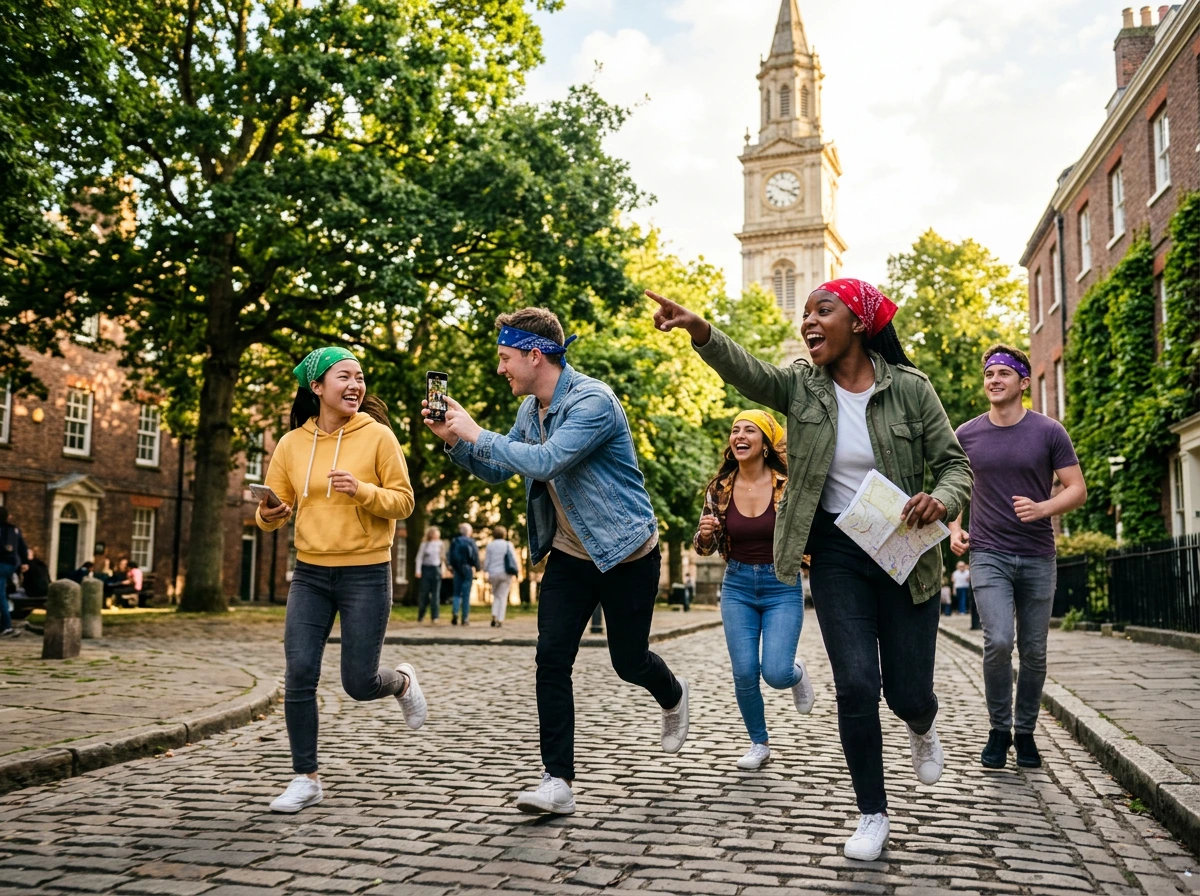
A well-designed scavenger hunt transforms any location into an adventure playground. The beauty of scavenger hunts lies in their adaptability to any theme, venue, or group size while encouraging exploration and creativity.
Teams receive a list of items to find, tasks to complete, or photos to take within a time limit. Points are awarded based on difficulty, with bonus points for creativity or speed. The hunt can be contained to a single building or spread across an entire neighborhood or park.
Traditional Item Hunt
Teams physically collect specific objects like a red leaf, business card from a local shop, or item starting with each letter of the alphabet. This version works great outdoors or in large venues where teams can spread out without disturbing others.
Photo Challenge Hunt
Teams take photos completing creative challenges like recreating a famous movie scene, forming the letters of your organization’s name with their bodies, or capturing the team with a stranger doing something silly. This version eliminates the need to carry items and encourages creative interpretation.
10. Trivia Tournament
A structured trivia tournament engages competitive spirits while celebrating knowledge across diverse topics. The team format ensures everyone contributes regardless of individual expertise because different questions play to different strengths.
Divide your large group into teams of 4-8 people. Create multiple rounds of questions on different topics like history, pop culture, science, sports, and geography. Teams write answers simultaneously, preventing one dominant voice from controlling all responses. Award points for correct answers with bonus points for particularly difficult questions.
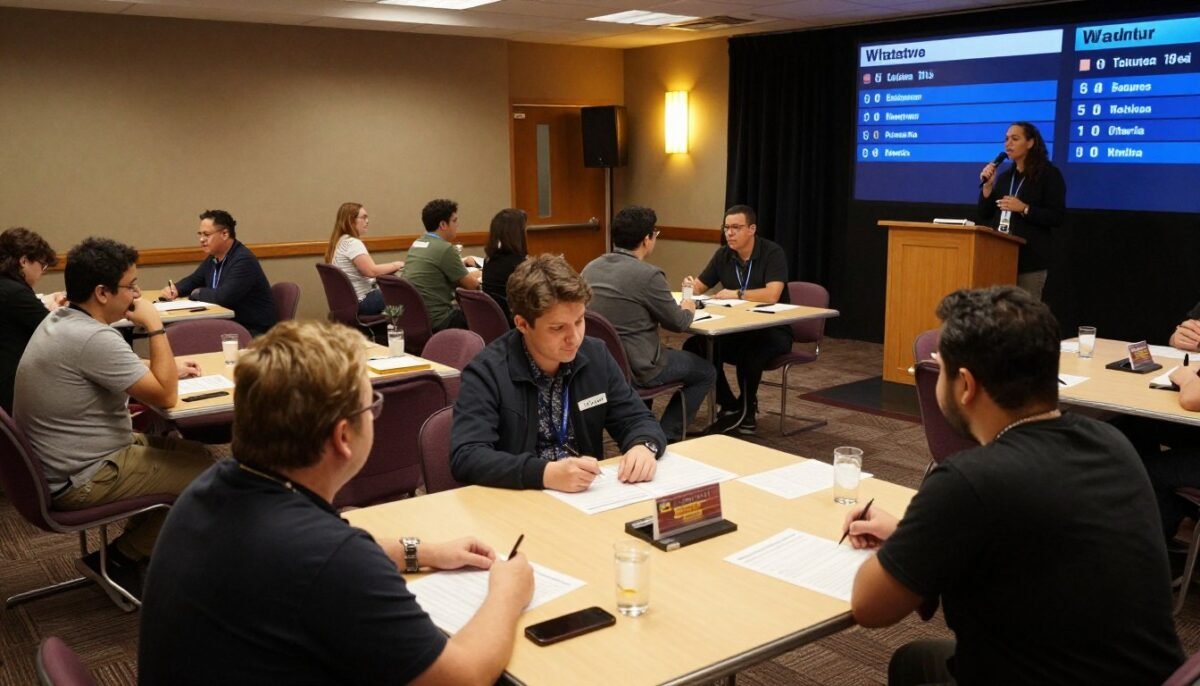
Make trivia unforgettable by including questions specific to your group, organization, or event. A company trivia might include questions about company history or inside jokes. A family reunion trivia could test knowledge of family stories and traditions. These personal touches create the most memorable moments and genuine connection.
Creative and Interactive Party Games
Creative games unleash imagination and artistic expression in your group. These activities work wonderfully when you want to encourage participants to step outside their comfort zones and create something together. The finished products often become cherished mementos of the event.
11. Pictionary Tournament
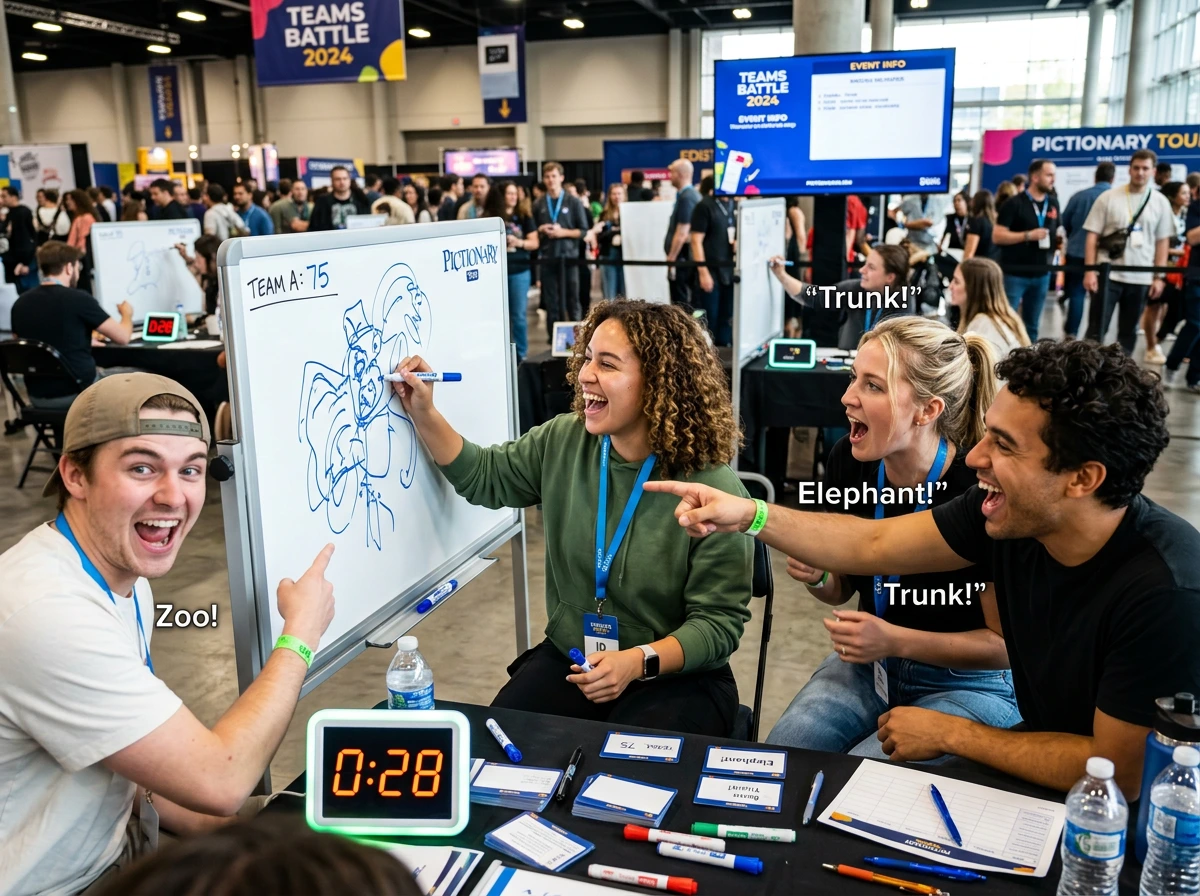
Pictionary scales beautifully for large groups when you organize it as a tournament with simultaneous games happening at different stations. The frantic drawing and wild guessing create infectious laughter that spreads throughout the entire venue.
Each station needs a drawing surface, markers, and a timer. Teams of 3-5 rotate the artist role. The artist draws a word from a card while teammates shout guesses. Teams score points for correct answers within the time limit. After several rounds at their station, teams rotate to compete against new opponents.
Create categories that match your event theme. Corporate events might include industry jargon or product names. Wedding receptions could feature relationship milestones or couple’s inside jokes. Themed categories make the game more meaningful and memorable.
12. Charades Championship
Charades brings out the performer in everyone as players act out words or phrases without speaking. The physical comedy that emerges creates hilarious memories and photo opportunities that people share long after the event ends.
One player draws a card and acts out the word or phrase for their team within a time limit. No sounds or props are allowed, only gestures and movements. Teams earn points for successful guesses. Categories can include movies, books, actions, famous people, or customized options relevant to your group.
The game becomes unforgettable when seemingly shy people deliver surprisingly animated performances. A reserved accountant acting out “riding a rollercoaster” or a serious executive miming “changing a baby’s diaper” creates moments that become legendary stories at future gatherings.
13. Murder Mystery Party
A murder mystery party transforms your entire group into actors in an unfolding drama. Each person receives a character with secrets, motives, and information. Throughout the event, they must stay in character while gathering clues to solve the crime.
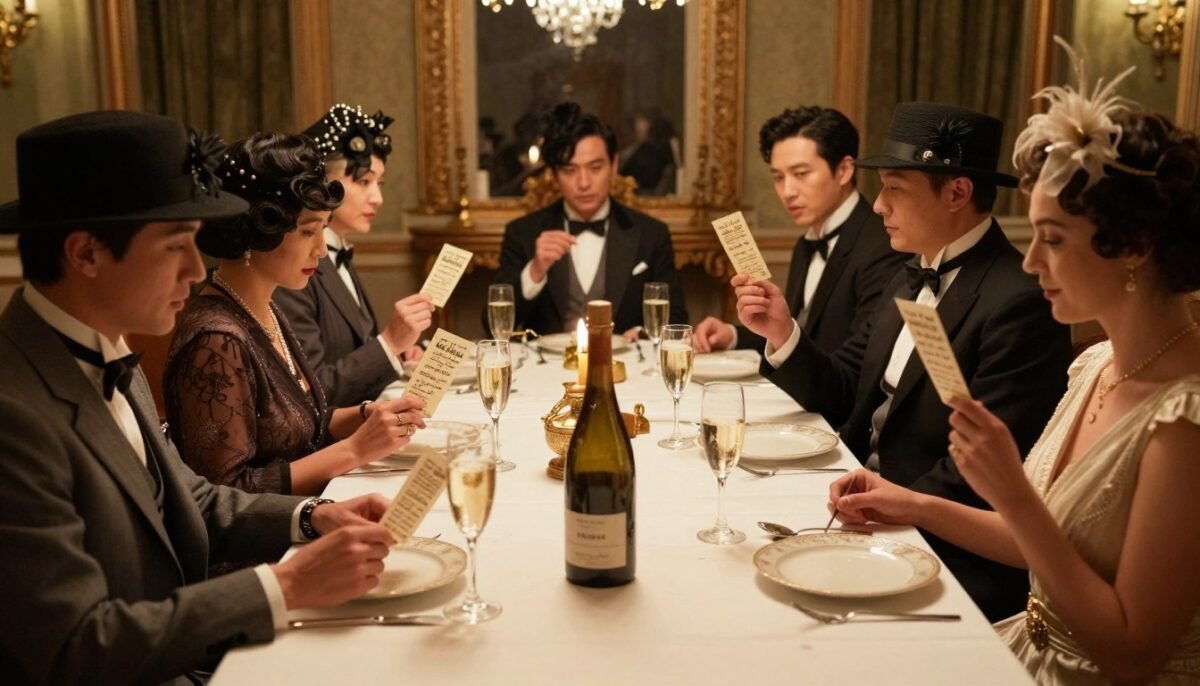
The host or facilitator guides the story through several acts, revealing new information and plot twists. Players question each other, form alliances, and present theories. The mystery concludes with players voting on the suspect and the dramatic reveal of the true culprit.
- Purchase pre-written mystery kits for 20-50+ players
- Assign characters based on personality matches
- Encourage costume wearing to enhance immersion
- Plan 2-3 hours for the complete experience
- Include dinner or refreshments between acts
14. Telephone Pictionary
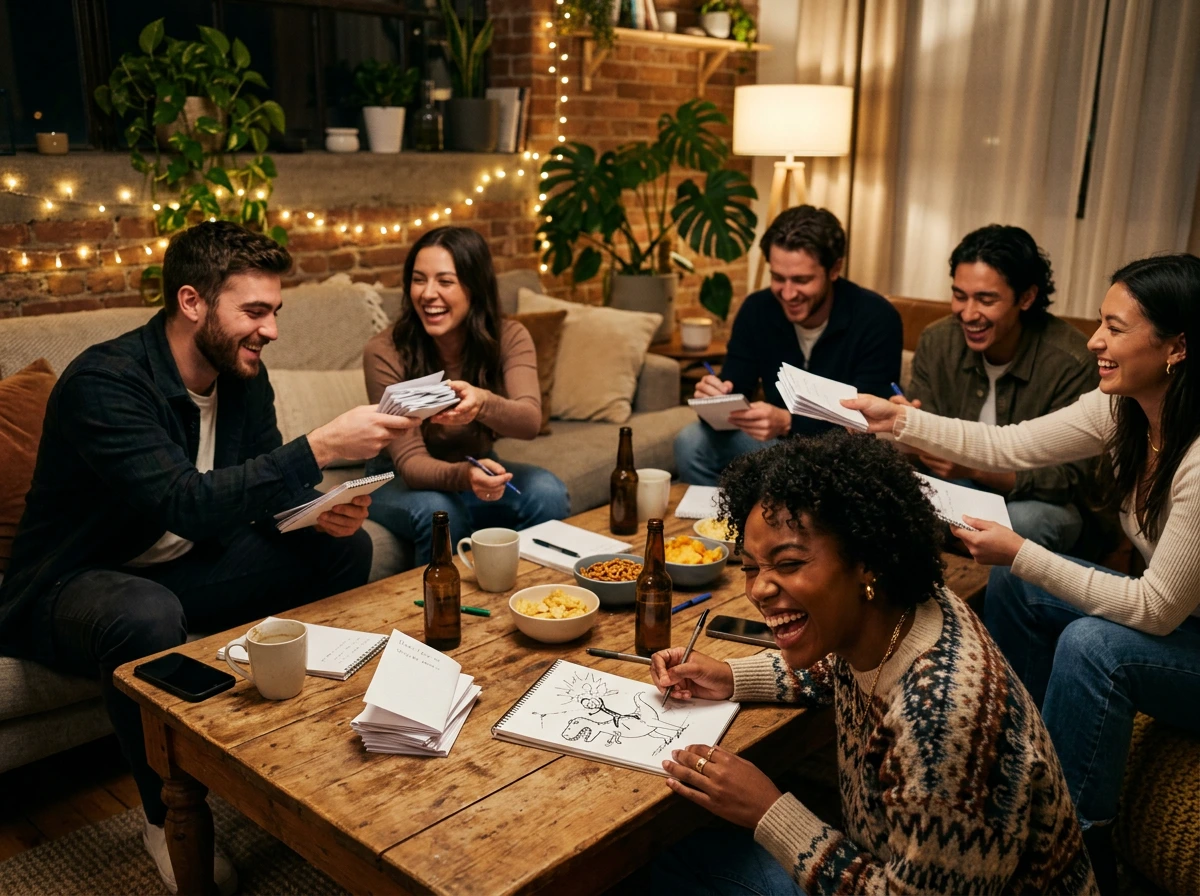
This brilliant combination of telephone and Pictionary creates increasingly absurd results as phrases transform through alternating writing and drawing. The final reveal of how drastically the original phrase changed provokes uncontrollable laughter.
Each player starts with a stack of paper equal to the number of players. Everyone writes a phrase on their top sheet, then passes their stack to the next person. That person reads the phrase, flips to the next sheet, and draws a picture representing it. They fold back the phrase so only their drawing shows before passing. The next person looks at the drawing, flips to a new sheet, and writes what they think it depicts. The process continues alternating between drawing and writing until stacks return to original owners.
The game concludes with everyone sharing their stack’s evolution from start to finish. “A elephant wearing a tutu” might become “A dancing gray blob” then “A storm cloud at a party” by the final round. The creative misinterpretations create the most memorable moments.
15. Karaoke Battle
Karaoke brings musical energy to any large gathering. While individual performances entertain, team karaoke battles add a competitive element that encourages even reluctant singers to participate supported by their teammates.
Divide your group into teams that select songs, assign parts, and rehearse briefly before performing. A panel of judges or audience vote determines winners based on criteria like entertainment value, teamwork, and song choice creativity. Categories might include best choreography, most dramatic performance, or most unexpected song choice.
Performance Categories
- Classic rock anthems for group singing
- Musical theater numbers with character roles
- Decade-specific throwbacks (80s, 90s, 2000s)
- Duets and trios for smaller team segments
- Comedic songs for maximum entertainment
Judging Criteria
Focus scoring on fun rather than vocal talent to encourage participation. Award points for creativity, team coordination, audience engagement, and commitment to the performance. This approach makes karaoke accessible and enjoyable for everyone rather than just skilled singers.