
A small laundry room doesn’t mean you have to sacrifice style or function. Many homeowners face the challenge of fitting a top loader washer into tight quarters.The good news? Compact spaces can work beautifully with smart planning. Your laundry room can become an organized spot that makes wash day easier.
This guide shares 25 practical top loader laundry room small spaces ideas. You’ll discover storage solutions that maximize every inch. Each idea includes clear steps you can use right away.
From vertical shelving to hidden cabinetry, these designs prove small laundry rooms can be both functional and attractive. Whether you’re working with a closet or a narrow room, you’ll find solutions that fit your space.
Table of Contents
1. Vertical Wall-Mounted Shelving Above Washer
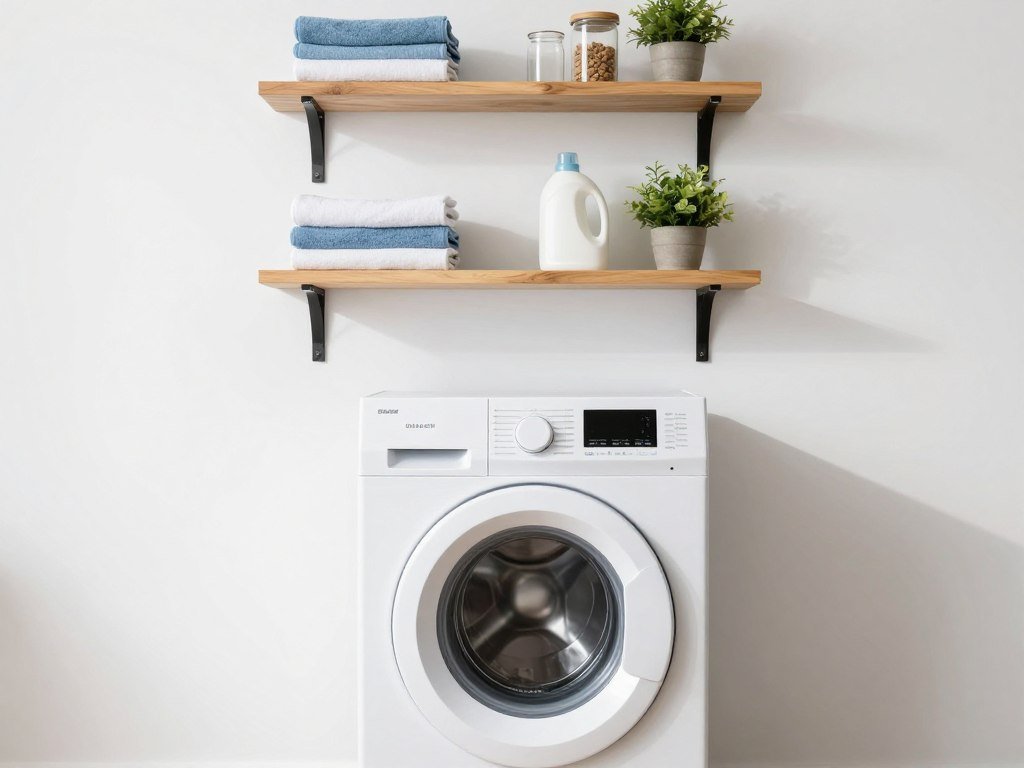
Vertical space offers your best opportunity in small laundry rooms. Wall-mounted shelving above your top loader creates instant storage without taking floor space.
Install floating shelves at least 18 inches above your washer lid. This height gives you room to load clothes comfortably. Use the shelves for detergent, fabric softener, and other laundry essentials.
Choose shelves that match your room design. White shelves keep the space bright. Wood shelves add warmth to the area.
Mount shelves directly into wall studs for safety. Use a level to ensure they’re straight. Three shelves typically provide enough storage for most laundry supplies.
2. Rolling Cart for Mobile Storage
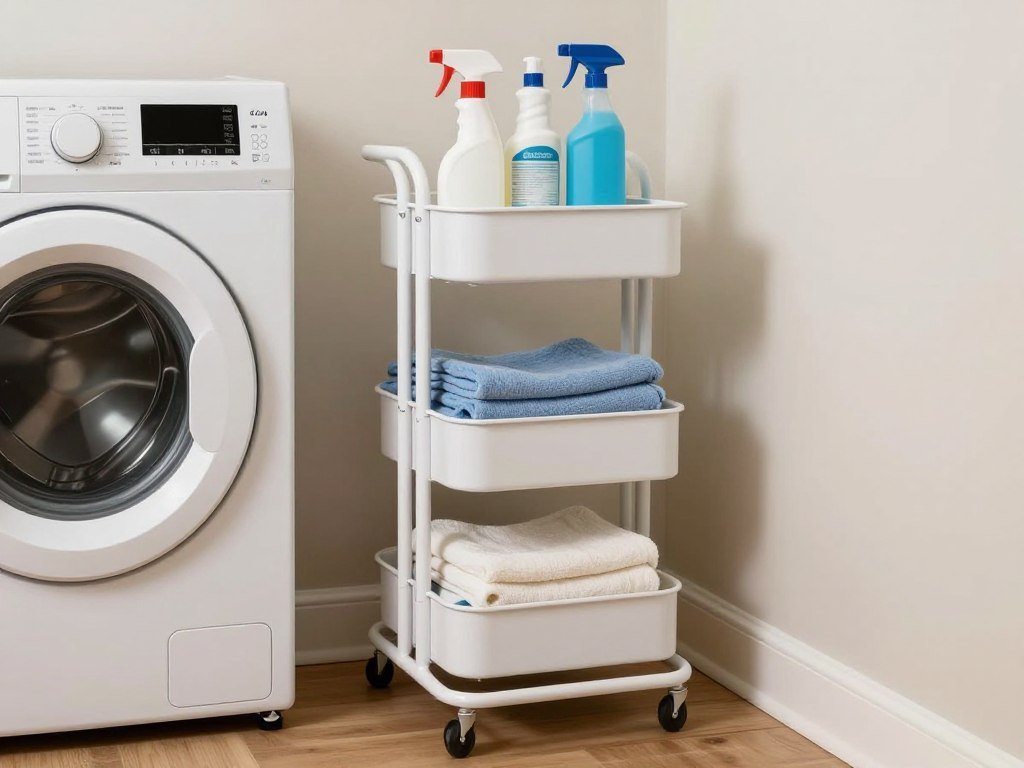
A rolling cart gives you flexible storage that moves where you need it. These slim racks fit beside your washer dryer without taking permanent floor space.
Look for carts between 6-10 inches wide. They slide into narrow gaps easily. Most carts have multiple tiers for different items.
Use the top level for frequently used items. Store backup supplies on lower shelves. The wheels let you pull the cart out when needed.
Metal carts work well in humid laundry rooms. They resist moisture better than wood or plastic options.
3. Wall-Mounted Fold-Down Drying Rack
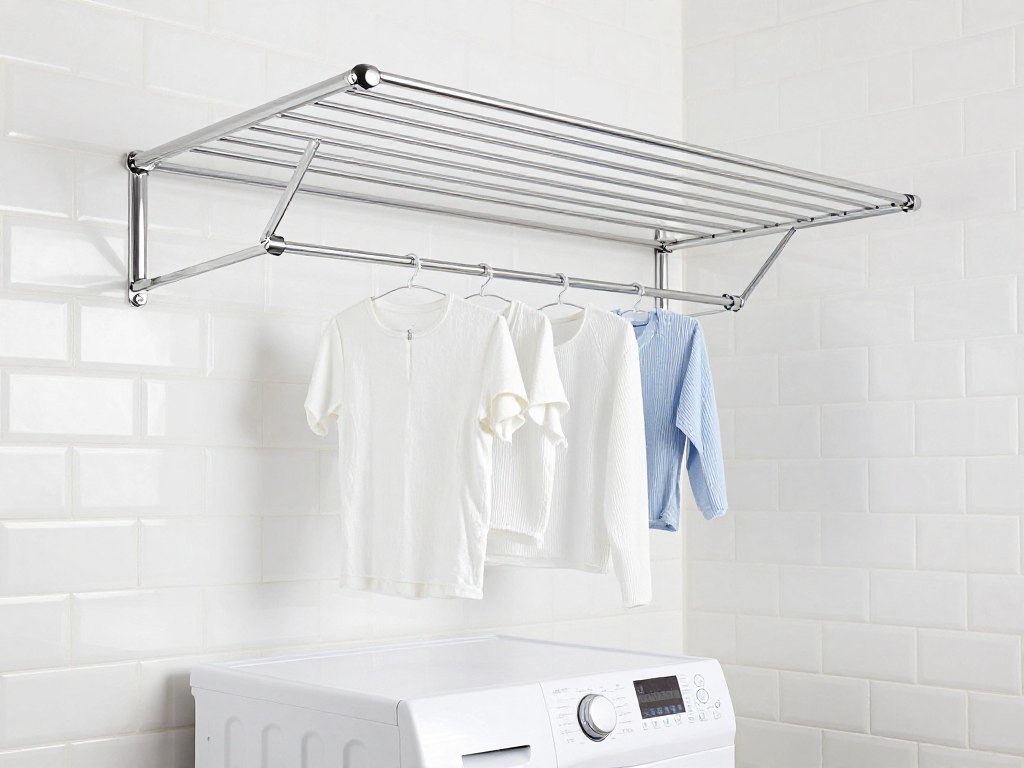
Air-drying clothes saves energy and extends clothing life. A fold-down wall rack provides drying space without permanent obstruction.
Mount the rack on a side wall near your washer. When not in use, it folds flat against the wall. This design keeps your small space open for movement.
Choose racks with multiple bars for hanging several items. Stainless steel racks resist rust in damp conditions. Install at shoulder height for easy access.
The rack can hold delicate items that shouldn’t go in the dryer. Sweaters, lingerie, and workout clothes dry safely here.
4. Custom Countertop Over Washer
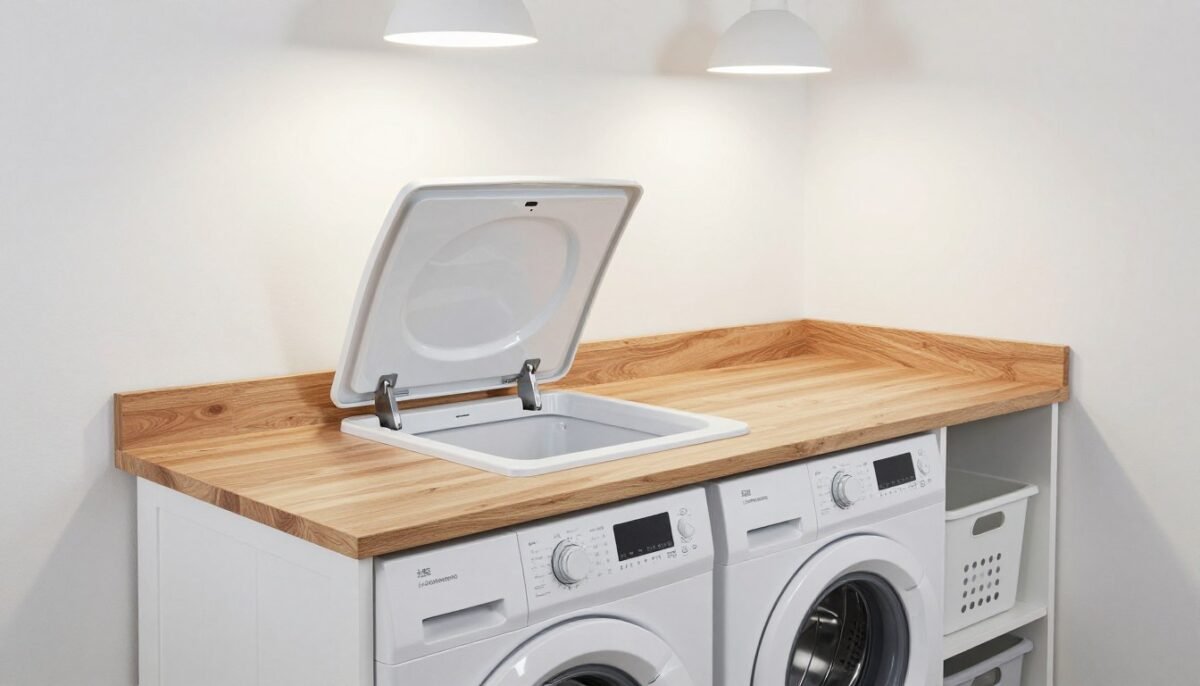
A hinged countertop over your top loader creates a folding station. The surface flips up when you need to load laundry. It stays down for sorting and folding clothes.
Use sturdy hinges rated for the countertop weight. Piano hinges work well for longer spans. Ensure the hinge allows full access to the washer lid.
Butcher block makes an excellent counter material. It’s durable and adds natural warmth. Laminate works too and costs less.
Leave a small gap around the counter edges for ventilation. Your washer needs airflow to prevent mildew. Add a prop stick to hold the counter open while loading.
5. Pegboard Organization Wall
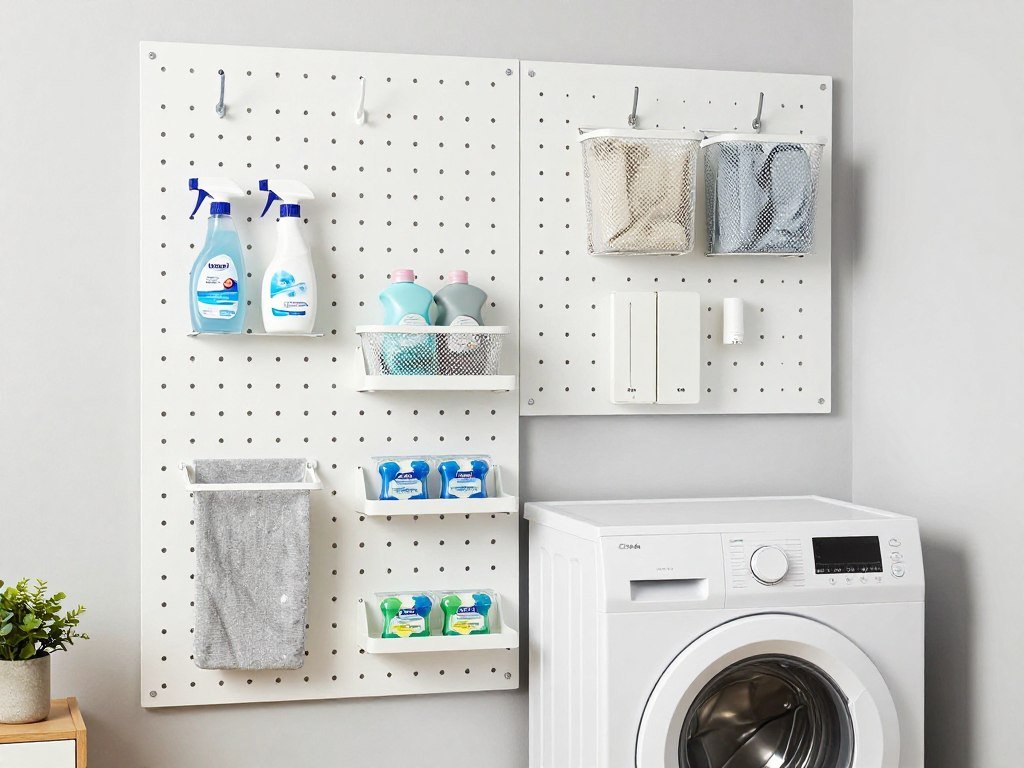
Pegboard turns blank walls into customizable storage. You can rearrange hooks and shelves as your needs change. This flexibility works perfectly in small laundry rooms.
Install pegboard on any wall with open space. Paint it to match your room color. White pegboard brightens dark spaces.
Add hooks for hanging items like scrub brushes and spray bottles. Small baskets hold clothespins and dryer sheets. Shelves can support heavier detergent bottles.
The perforated design allows endless configurations. Move accessories around until you find what works best. This system grows with your needs.
6. Slim Shelf Between Washer and Dryer
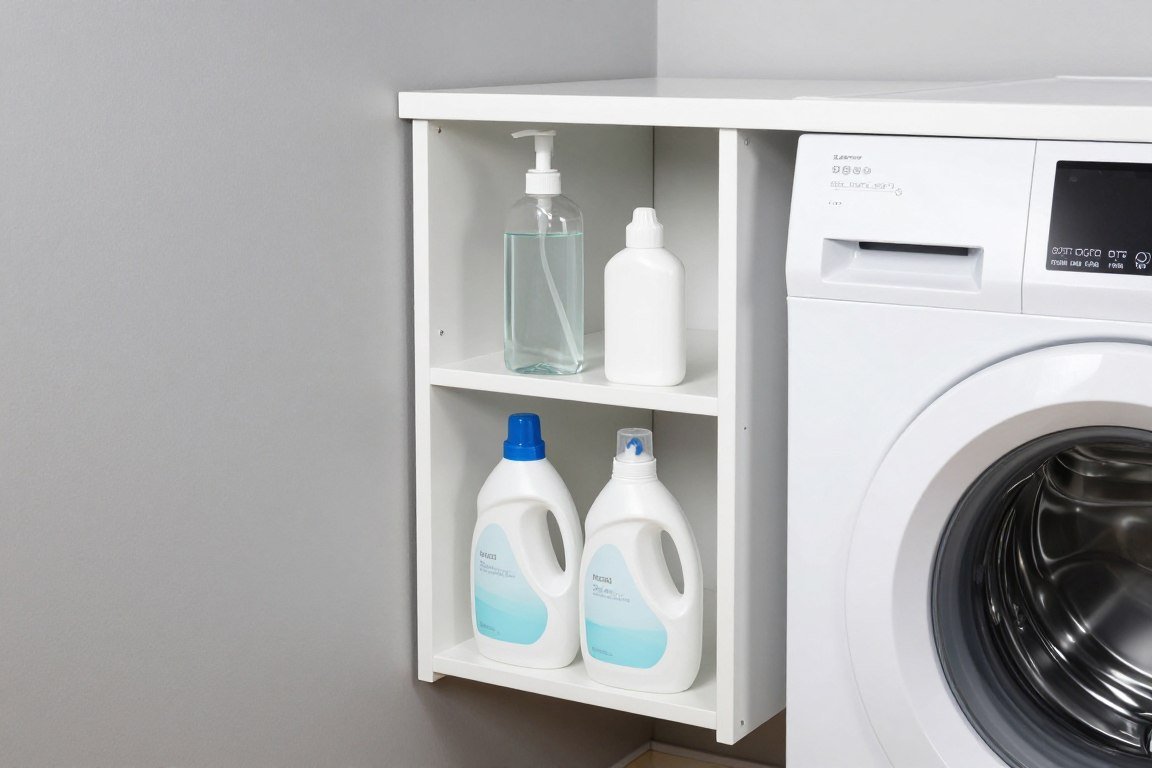
The gap between your washer dryer often goes unused. A slim pull-out shelf fills this space perfectly. Most gaps measure 6-8 inches wide.
These narrow shelves slide out when you need supplies. They tuck away when not in use. The vertical design holds surprising amounts of items.
Look for shelves with wheels or slides. They should move smoothly without sticking. Multiple tiers increase storage capacity.
Use this spot for tall bottles that don’t fit on regular shelves. Stain removers and bleach bottles work well here. Keep frequently used items on the top tier.
7. Ceiling-Mounted Drying Rod
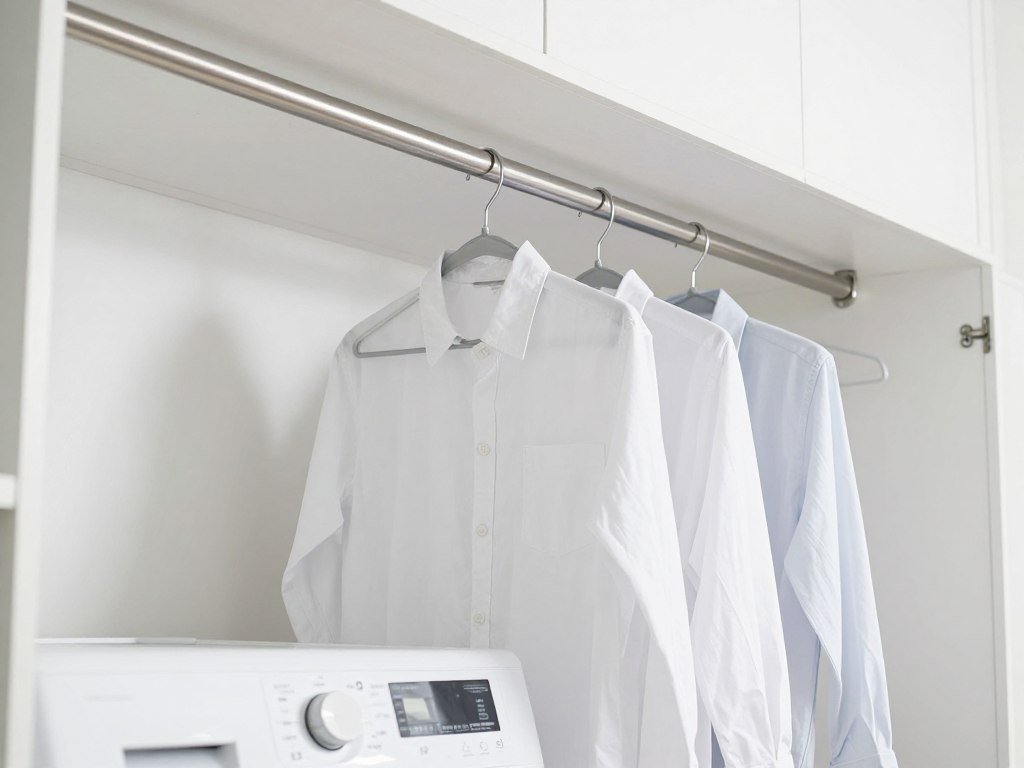
Ceiling space remains underused in most small laundry rooms. A mounted rod above your washer provides hanging space for clothes straight from the wash.
Install the rod high enough to clear the washer lid when open. Mount it into ceiling joists for strength. A rod should support wet clothes without sagging.
Stainless steel rods resist moisture and rust. They handle heavy wet garments better than plastic. Install brackets every 3 feet for stability.
Hang dress shirts, pants, and delicate items here. Clothes drip into the washer below. This method prevents wrinkles and saves dryer energy.
8. Over-Door Organizer System
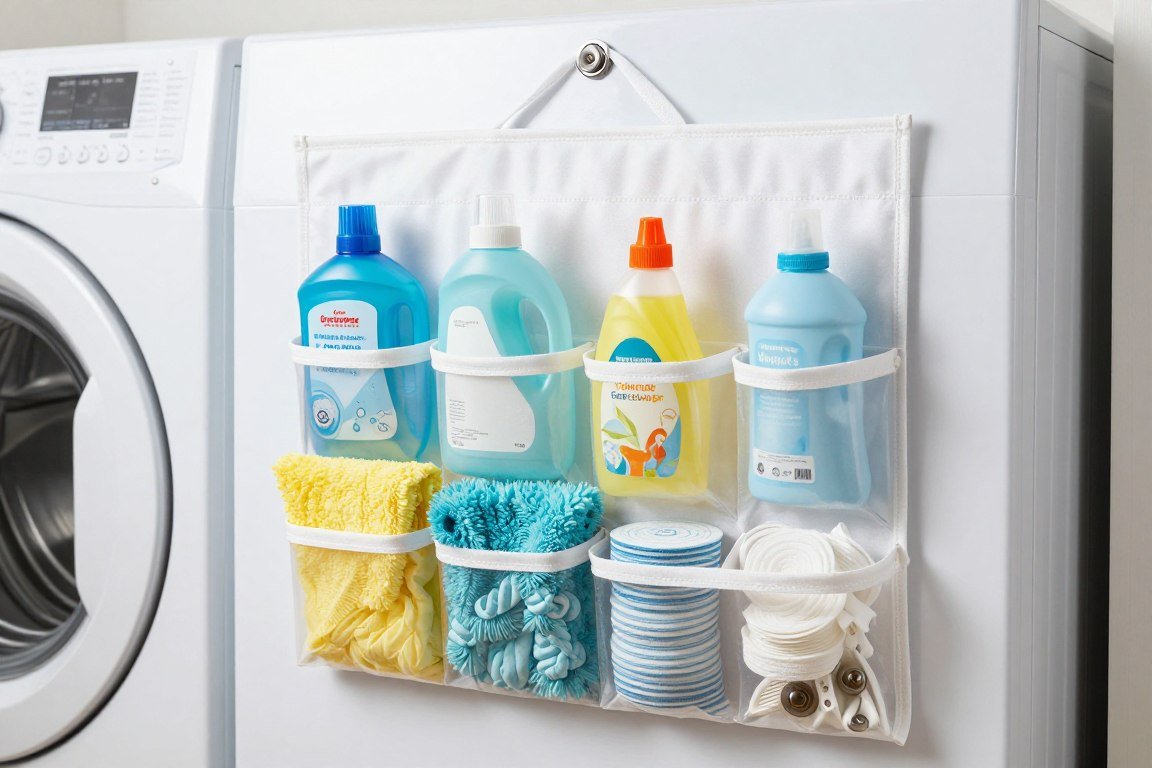
Your laundry room door offers valuable storage real estate. Over-door organizers add storage without drilling holes. They work on any standard door.
Choose organizers with clear pockets so you can see contents. Multiple pocket sizes accommodate different items. Small pockets hold dryer sheets and stain sticks.
Large pockets can store spray bottles and cleaning cloths. The weight distributes across the door top. Most doors handle these organizers without problems.
Hang the organizer on the room-side of the door. This placement keeps supplies accessible while you work. Remove it easily when you move.
9. Pull-Out Hamper Cabinet
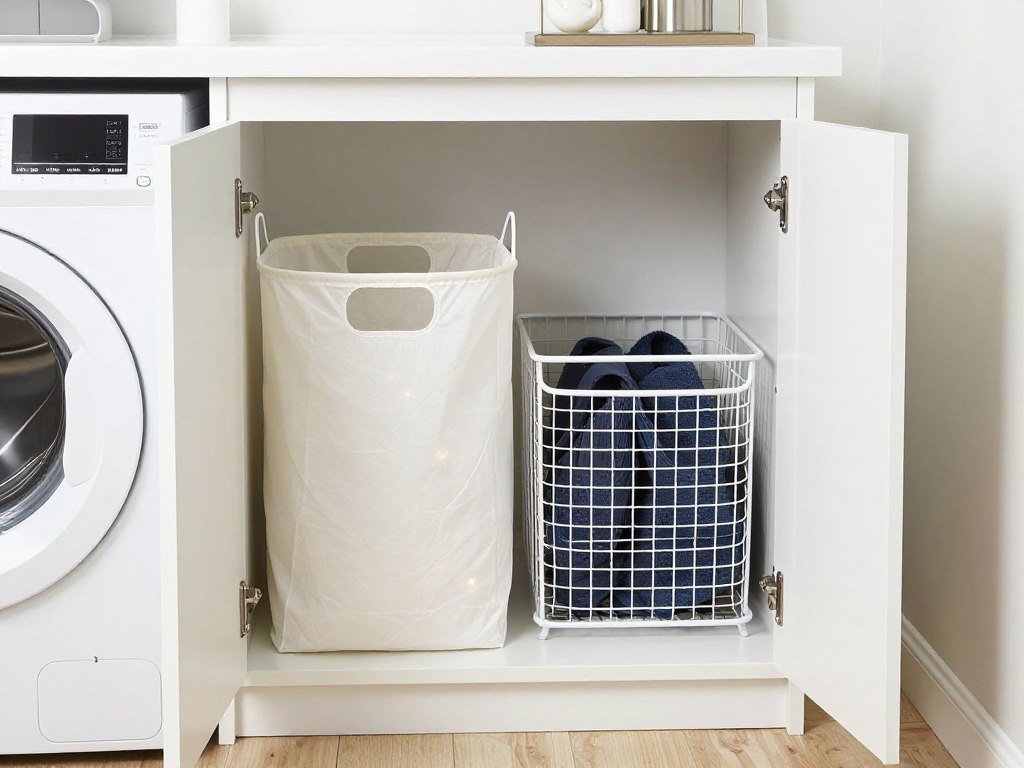
Dirty clothes need a home before wash day. A pull-out hamper cabinet keeps laundry sorted and hidden. This solution works especially well in small spaces.
Install a cabinet with slides next to your washer. Dual compartments let you sort lights and darks. Removable bags make transfer to the washer easy.
The cabinet doors hide clutter when closed. Your small laundry room looks clean and organized. Soft-close slides prevent slamming.
Choose a cabinet that fits your available floor space. Some models include top surfaces for folding. Ventilated designs prevent odors from building up.
10. Magnetic Strips for Small Tools
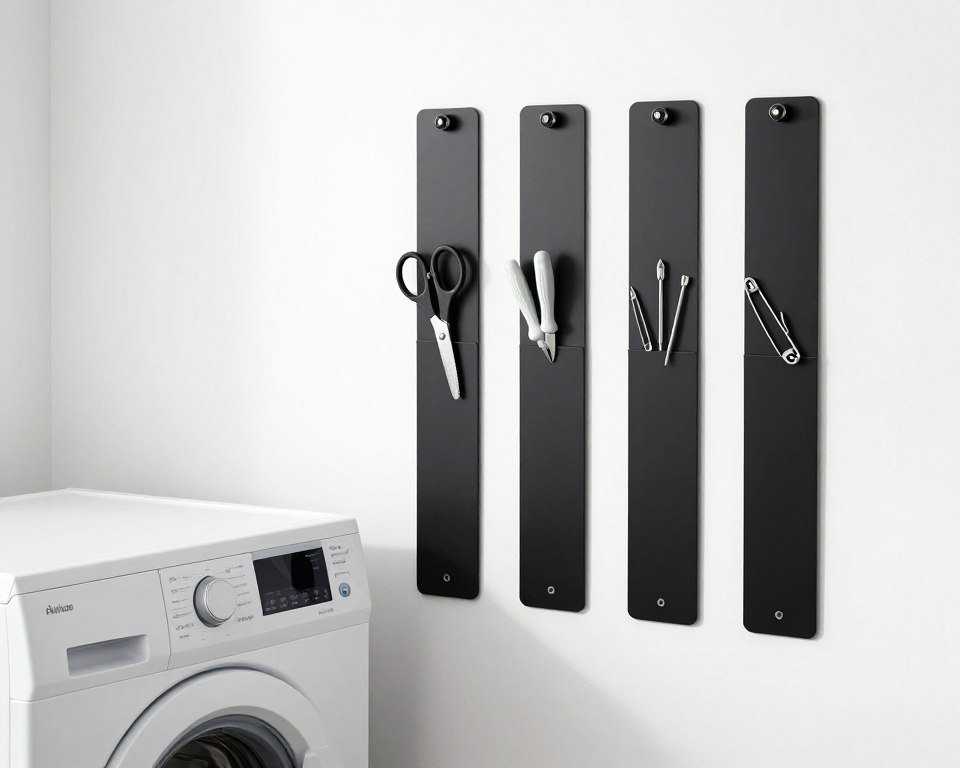
Small metal items get lost easily in laundry rooms. Magnetic strips keep scissors, safety pins, and small tools visible and accessible. These strips mount quickly on any wall.
Install strips at eye level near your work area. They hold surprising weight despite their slim profile. The magnetic surface grabs metal items securely.
Use these for sewing scissors, stain treatment brushes, and measuring scoops. Tweezers and small tools stay organized. You’ll always find what you need.
Magnetic strips cost less than other storage options. They install with screws or strong adhesive. Place them where you’ll use the items most.
11. Recessed Wall Shelving
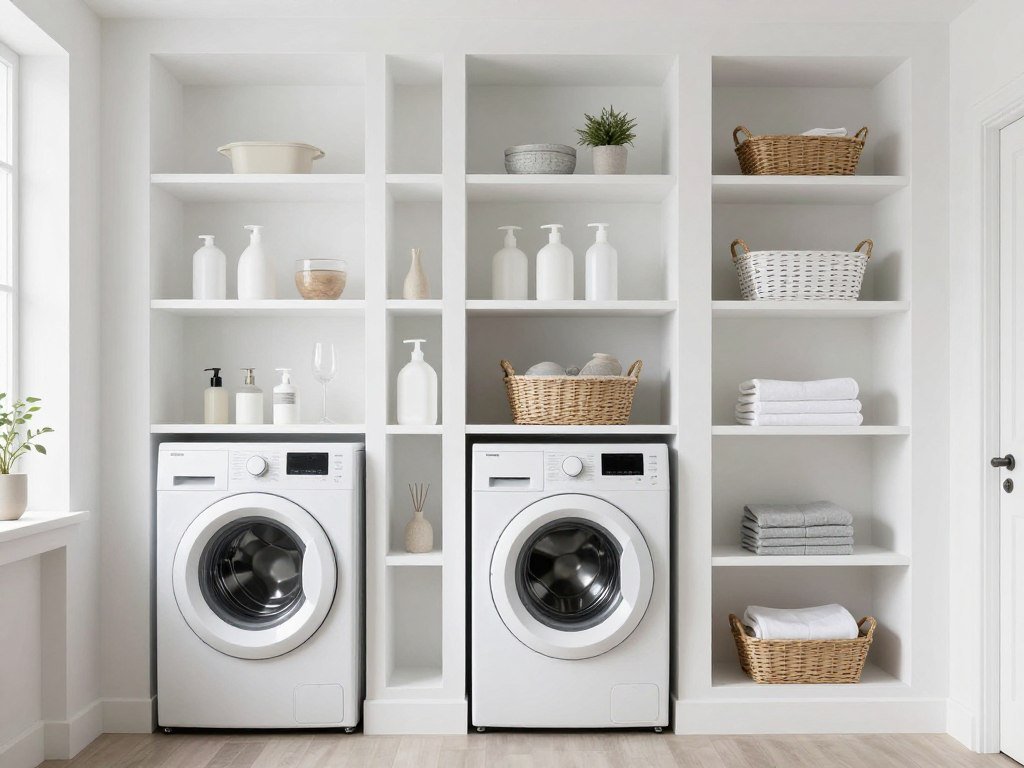
Recessed shelves fit between wall studs for storage that doesn’t protrude. This approach works perfectly when floor space is limited. The shelves sit flush with your wall.
Standard wall studs are 16 inches apart. This spacing creates shelf openings about 14.5 inches wide. You can build shelves any height you need.
Cut drywall between studs carefully. Frame the opening with wood. Add shelves at intervals that work for your supplies.
Paint the recess to match your walls or create contrast. These built-in shelves look custom without taking valuable floor space. Use them for detergent, softener, and cleaning supplies.
12. Corner Shelving Unit
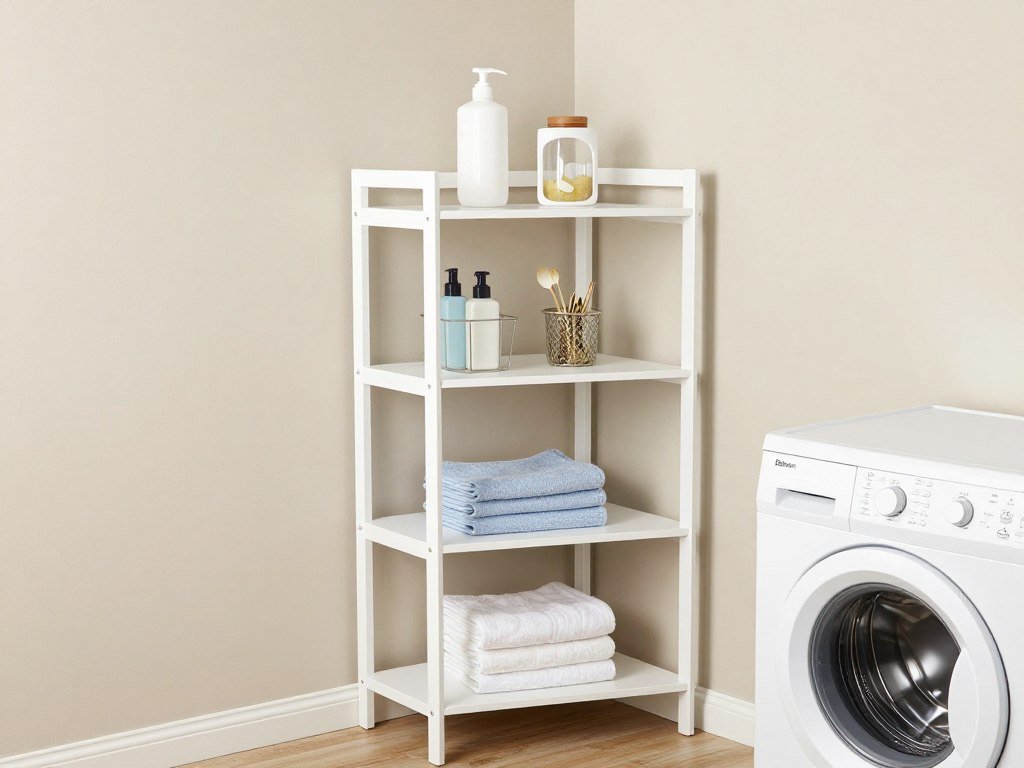
Corners often become dead space in small rooms. A corner shelf unit transforms this area into useful storage. These units fit snugly where two walls meet.
Choose units with multiple tiers for maximum storage. Five-shelf units provide ample space for supplies. Open designs keep the room feeling less cramped.
Metal or wood corner shelves work well in laundry rooms. Look for water-resistant finishes. The vertical design uses minimal floor space.
Place frequently used items on middle shelves for easy reach. Store backup supplies on top shelves. Lower shelves can hold heavier items like detergent jugs.
13. Tension Rod Under Shelf Storage
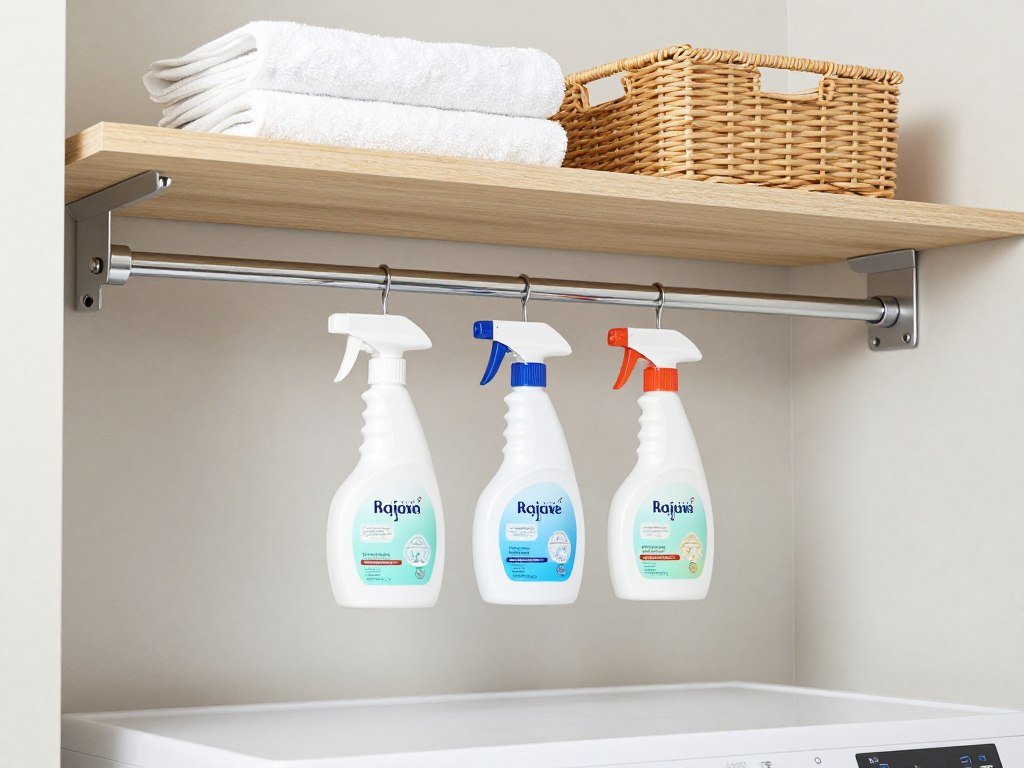
Tension rods require no installation and offer instant storage. Mount a rod under any shelf to hang spray bottles. This simple solution keeps bottles accessible but organized.
Choose rods that fit your shelf width. Most tension rods adjust between 16-48 inches. They hold firmly without damaging walls or shelves.
Spray bottles hang by their triggers. This method frees shelf space above for other items. You can see every bottle at a glance.
Use this trick under cabinets too. The rod removes easily when you want to change things. Replace it as your storage needs shift.
14. Stackable Storage Baskets
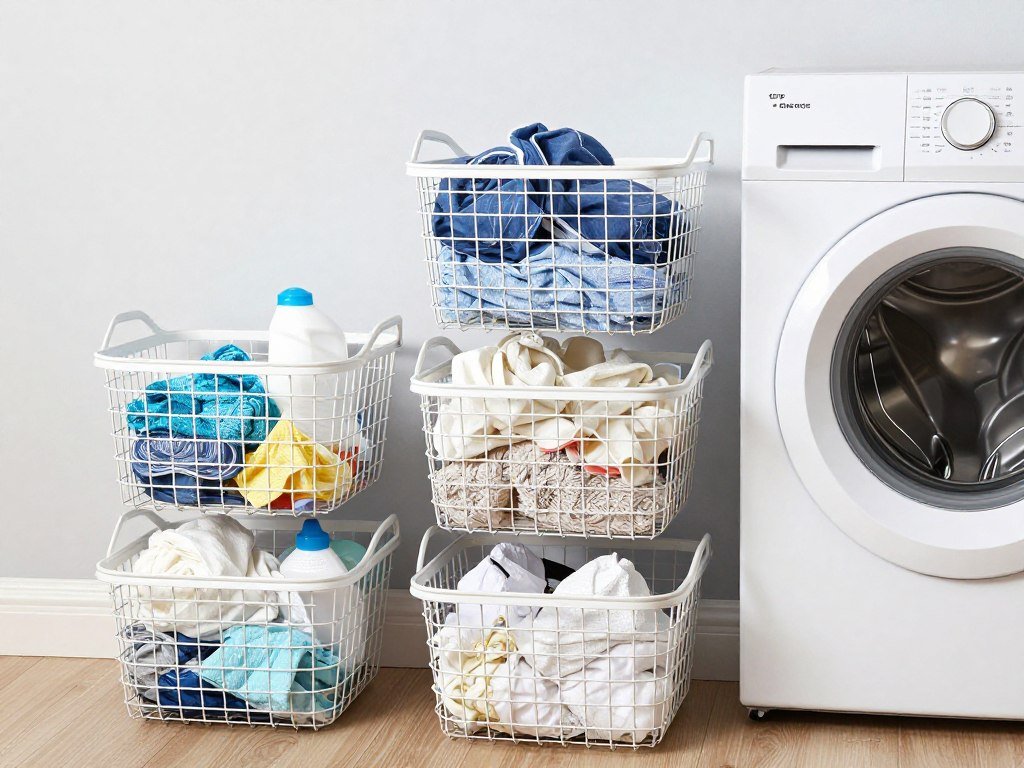
Stackable baskets create vertical storage from floor to ceiling. These containers organize small items while keeping them visible. Wire baskets allow air circulation around stored items.
Choose baskets with handles for easy removal. Stack them beside your washer or in nearby closets. Each basket can serve a different purpose.
One basket might hold cleaning cloths. Another stores dryer balls and fabric sheets. A third could contain stain treatment supplies.
Label baskets for quick identification. The stackable design adapts as your needs change. Add or remove baskets based on storage requirements.
15. Wall-Mounted Ironing Board
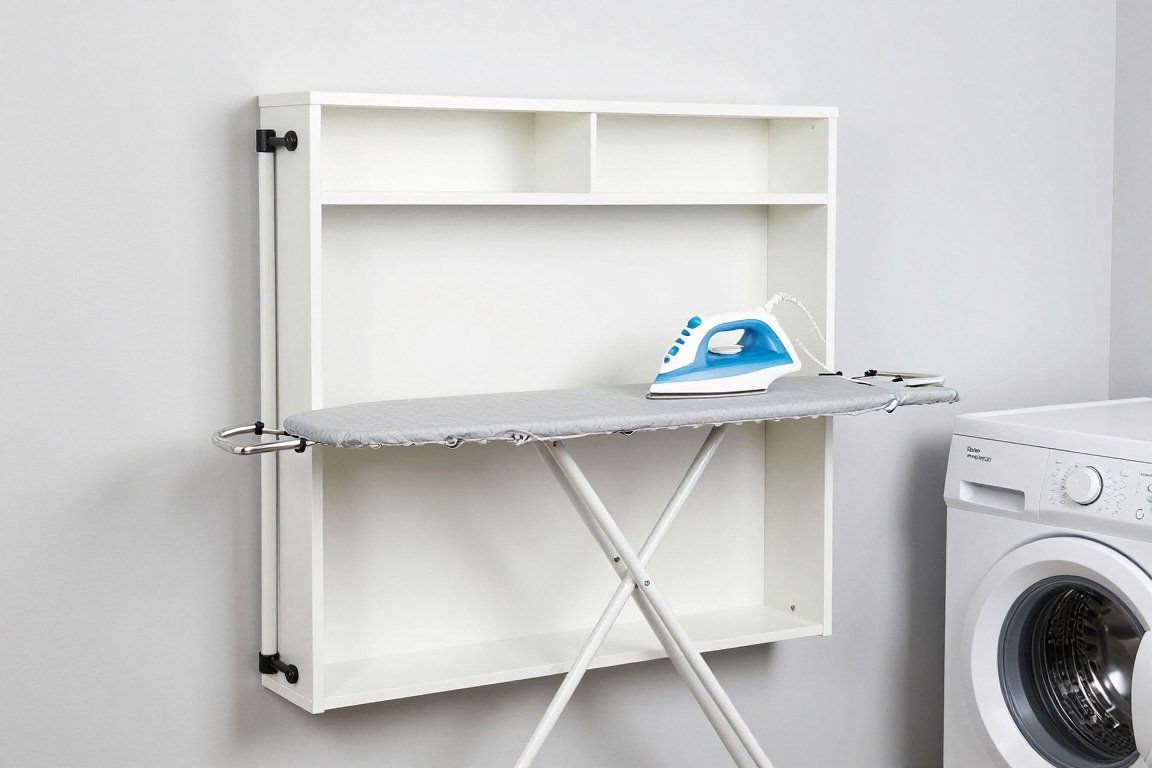
Ironing boards take up valuable floor space when stored traditionally. Wall-mounted versions fold into slim cabinets. They deploy when needed and disappear when done.
Mount the cabinet on a sturdy wall near an outlet. Most units include storage for the iron. Some models have built-in electrical outlets.
The closed cabinet looks like a decorative wall feature. It keeps your ironing supplies organized and hidden. The board extends quickly for use.
Choose a model with a solid locking mechanism. The board should stay secure while you iron. This solution works perfectly in small laundry rooms with limited floor space.
16. Hanging Mesh Bags for Delicates
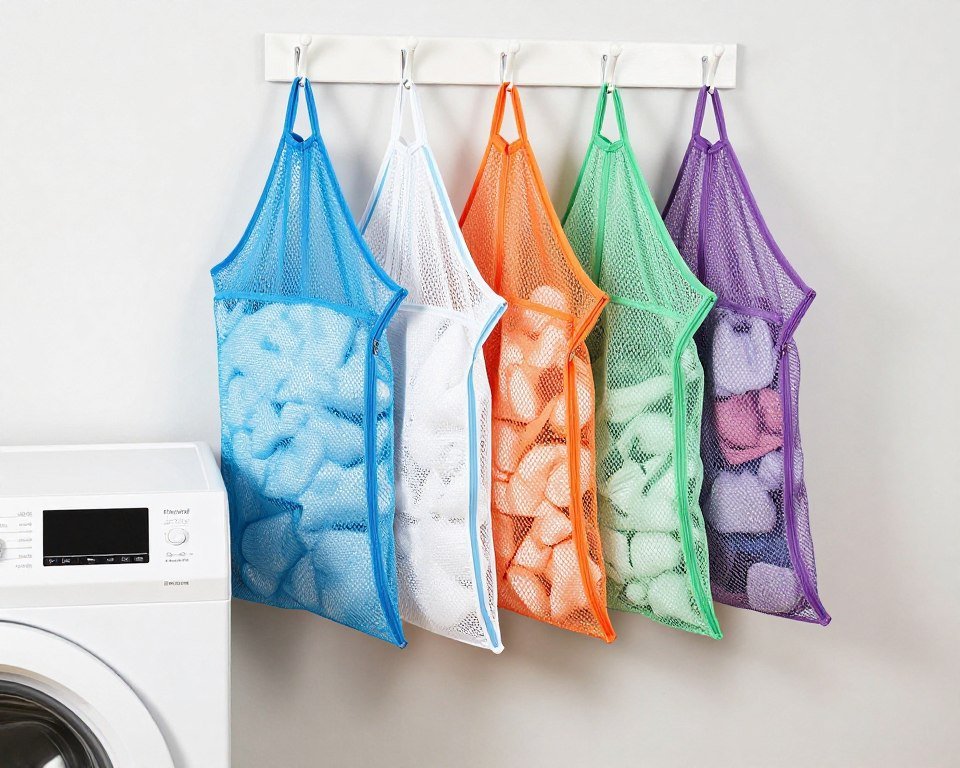
Delicate items need separation from regular laundry. Hanging mesh bags on wall hooks create a sorting system. Each bag can designate a different category.
Install hooks at a comfortable height on an empty wall. Space them about 6 inches apart. Use sturdy hooks that support wet fabric weight.
Assign bags to different purposes: delicates, hand-wash items, or items needing special treatment. When full, the entire bag goes into the washer.
Mesh allows water and detergent to reach clothes while protecting them. After washing, hang bags to dry. This system prevents delicates from getting lost or damaged.
17. Sliding Barn Door for Laundry Closet
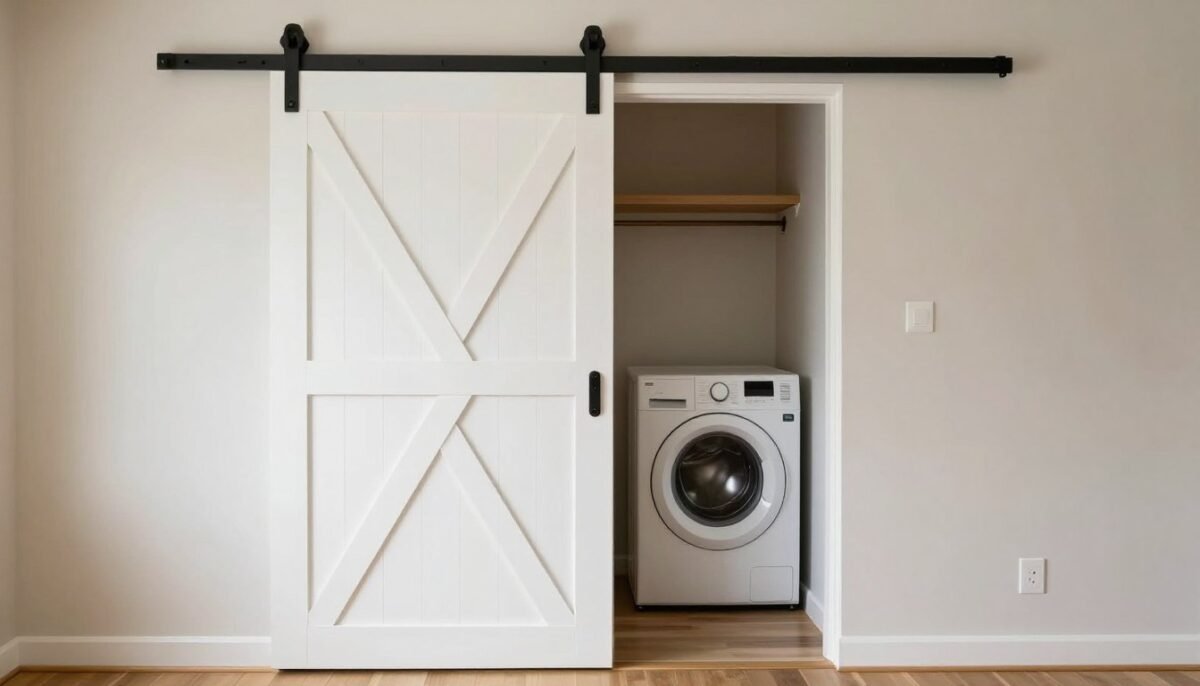
Traditional doors need clearance to swing open. This requirement wastes space in small laundry areas. Sliding barn doors solve this problem elegantly.
Barn doors slide along a wall-mounted track. They require no swing space. The door can be decorative while serving a practical purpose.
Install the track system above your laundry closet opening. Choose a door style that matches your home design. Modern, rustic, and traditional options all work.
The door slides to reveal your washer when needed. Close it to hide the laundry area from view. This solution works especially well in open-concept homes where the laundry closet is visible.
18. Adjustable Tension Shelf Above Washer
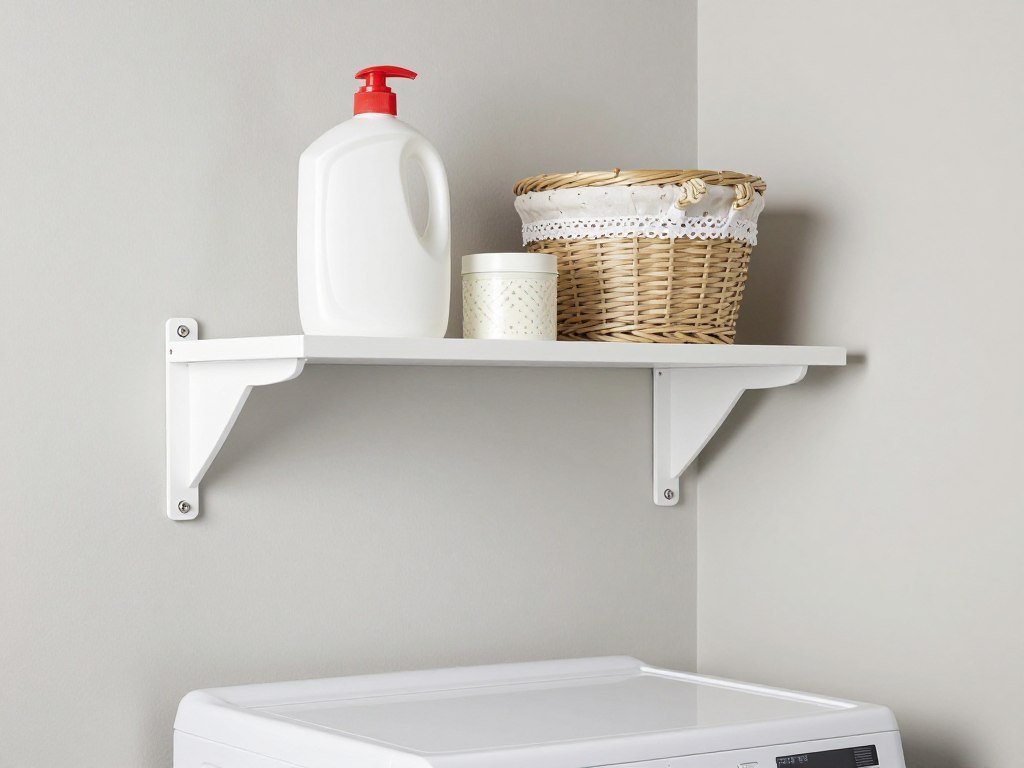
Renters and homeowners both appreciate no-drill solutions. Tension shelves wedge between walls without permanent mounting. They adjust to fit various widths.
Measure your space carefully before purchasing. Most tension shelves fit openings between 24-84 inches. They require sturdy walls on both sides.
The shelf sits above your top loader at a comfortable height. It holds laundry supplies without blocking washer access. Weight limits vary by model.
These shelves remove cleanly when you move. They leave no holes or marks. This flexibility makes them perfect for rental properties or frequently changing spaces.
19. Compact Utility Sink Beside Washer
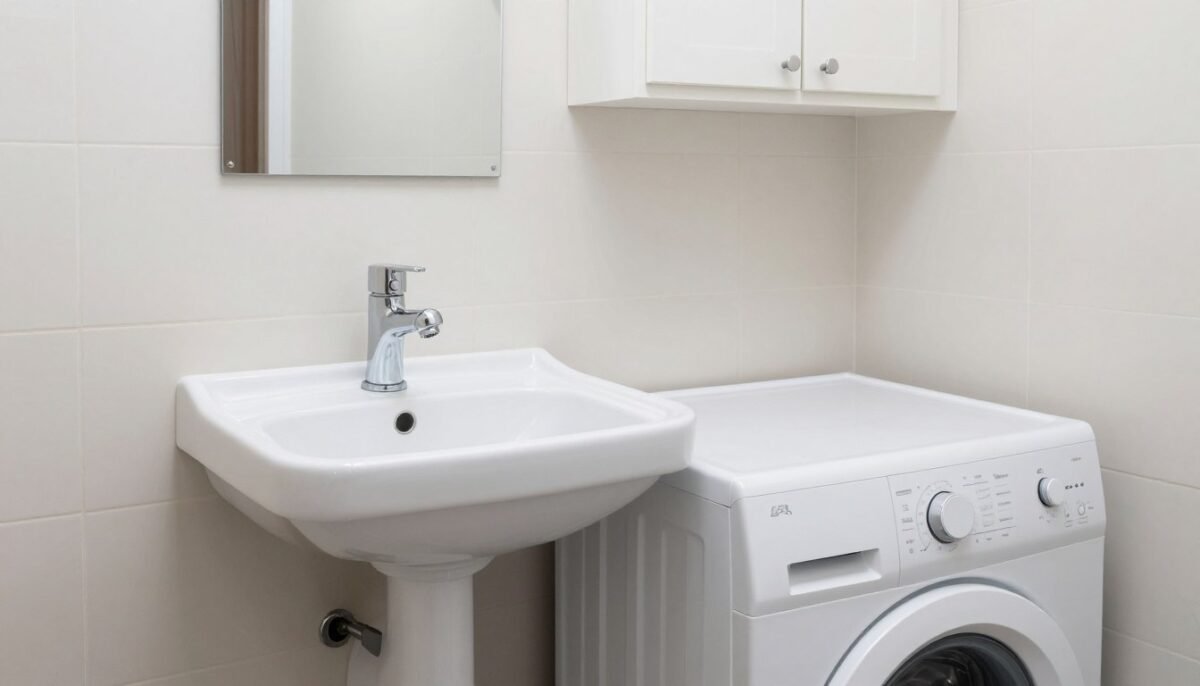
A small utility sink adds tremendous functionality to laundry rooms. It provides a spot for hand-washing, pre-treating stains, and filling cleaning buckets. Even small laundry rooms can accommodate compact sinks.
Wall-mounted sinks save floor space. They install at a height that works for your needs. Look for models 12-18 inches wide.
The sink sits beside your top loader washer. Plumbing often exists nearby already. A small cabinet under the sink provides bonus storage.
Use the sink for soaking stained items before washing. Rinse out muddy shoes or dirty rags. The functionality justifies the space investment in most small laundry rooms.
20. Upper Cabinet with Lift-Assist Doors
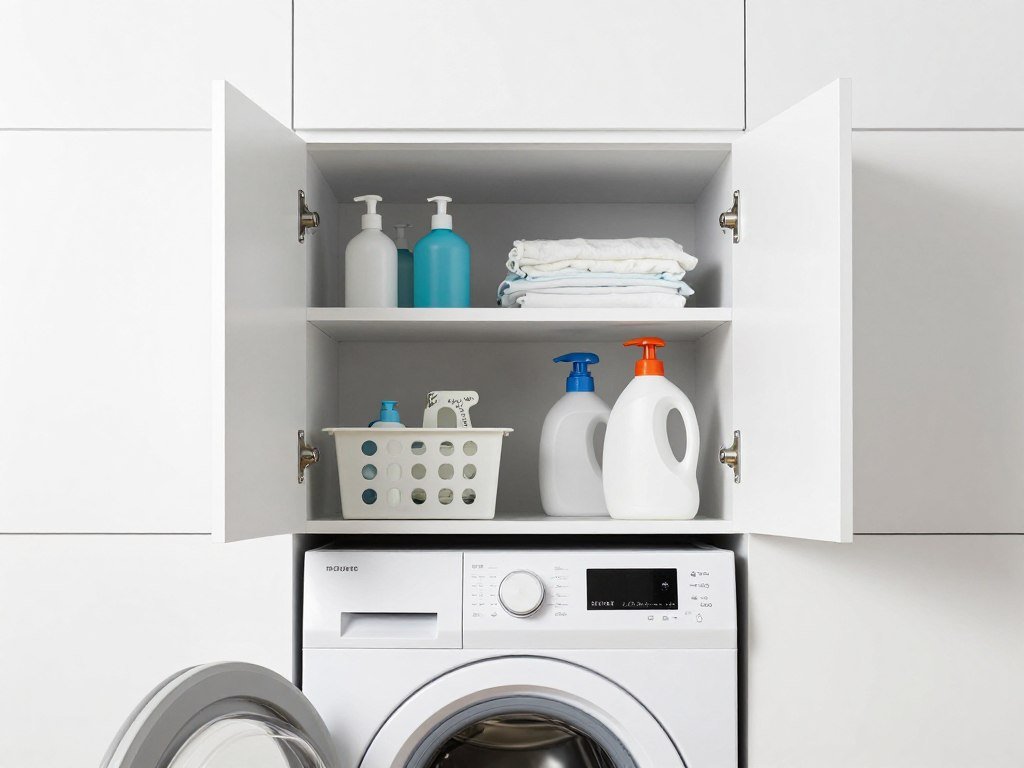
Upper cabinetry adds storage while concealing clutter. Lift-assist doors open upward instead of swinging out. This design prevents doors from blocking your workspace.
Install cabinets at least 18 inches above your washer lid. Mount them securely to wall studs. The lift-assist hardware helps heavy doors stay open.
Store items you use less frequently in upper cabinets. Seasonal supplies, backup products, and rarely needed tools work well here. Keep everyday items on lower shelves.
Choose cabinet finishes that match your home style. White cabinets brighten small spaces. Wood cabinets add warmth. The doors hide supplies while keeping them accessible.
21. Pull-Down Closet Rod System
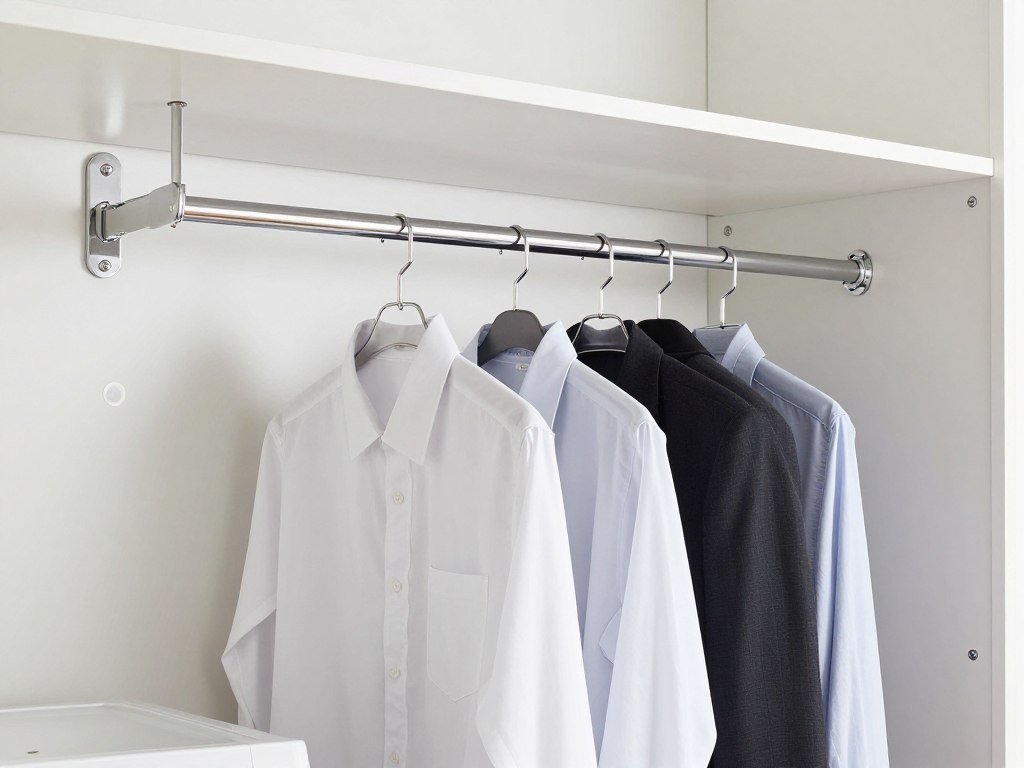
High ceilings offer storage potential often overlooked. Pull-down closet rods mount near the ceiling and lower for access. This system uses vertical space efficiently.
The rod stays elevated when not in use. Pull it down to hang or remove clothes. Spring-loaded mechanisms make operation smooth. Most systems hold 20-30 pounds.
Install the rod high enough that lowered position clears your washer. Use it for air-drying clothes or temporarily storing clean items. The rod raises to free floor space.
This solution works especially well in rooms with 8-foot or taller ceilings. It creates hanging space without permanent floor obstructions. The mechanism lasts years with minimal maintenance.
22. Fold-Up Wall Table for Folding
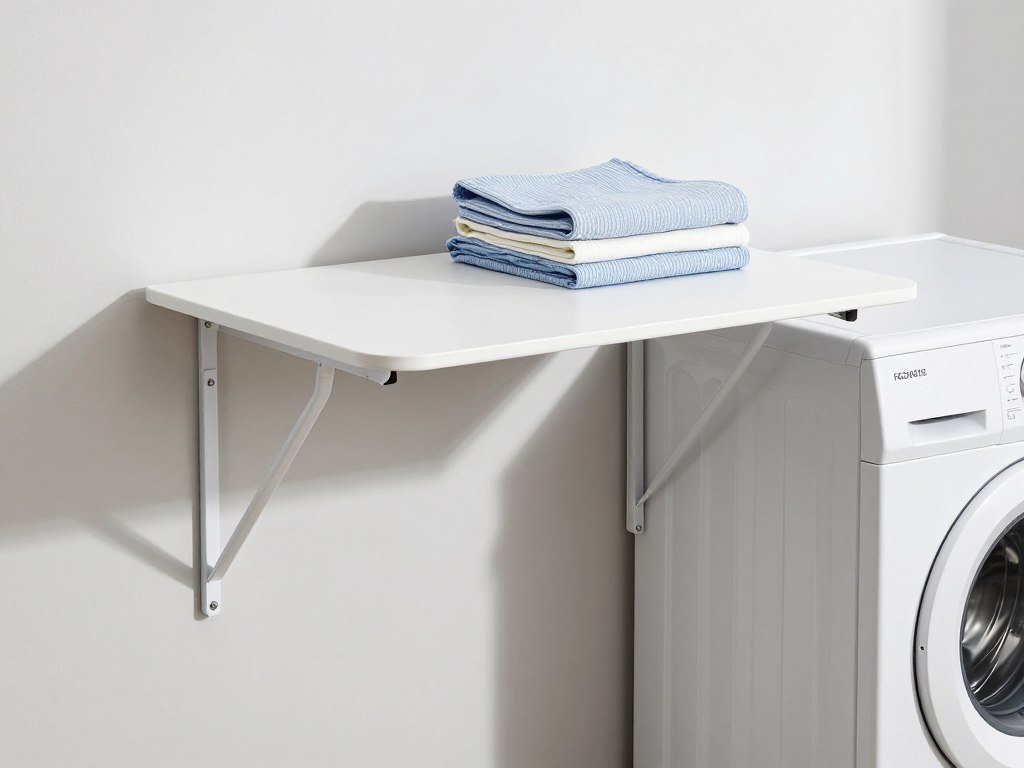
Folding clothes requires a flat surface. Wall-mounted fold-up tables provide workspace that disappears when not needed. These tables install on any sturdy wall.
Choose tables with strong brackets rated for the size. Most fold-up tables range from 20-40 inches wide. They project 12-20 inches from the wall when down.
Mount the table at a comfortable working height. Most people prefer 36-38 inches from the floor. The table folds flush against the wall between uses.
Use the surface for sorting, folding, and treating stains. Some models include small storage cubbies. When folded, the table takes almost no space in your small laundry room.
23. Wire Shelf Dividers for Vertical Organization
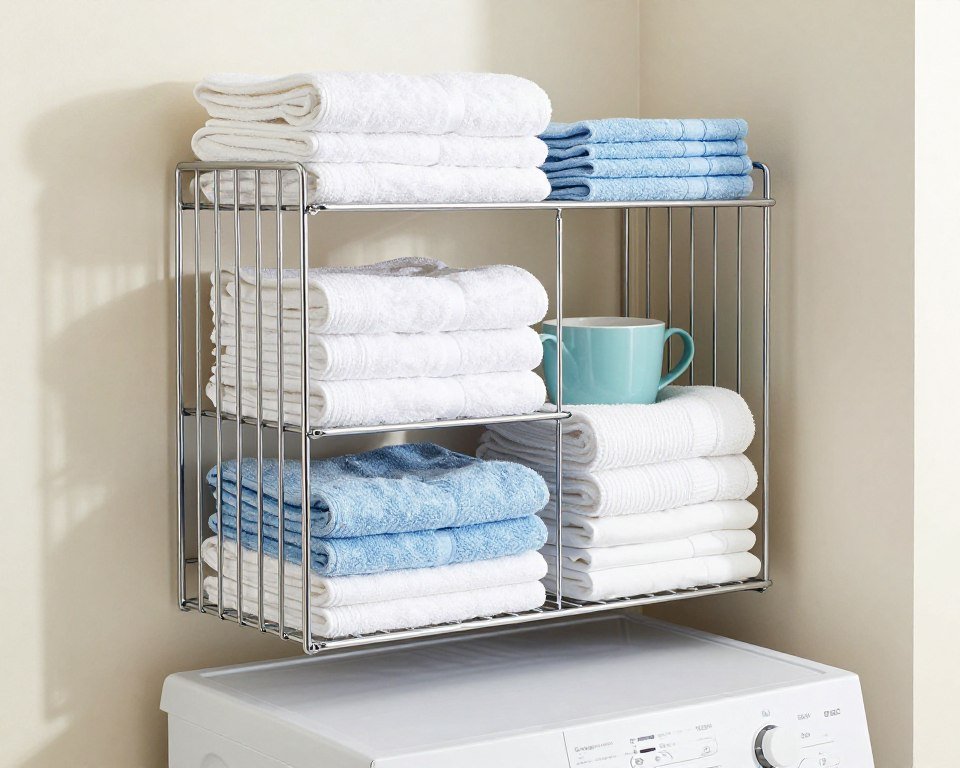
Shelves without dividers let items topple and mix together. Wire dividers create vertical sections that keep things upright. They work on any shelf in your laundry room.
Slide dividers onto shelves to create compartments. Adjust spacing based on what you store. Towels stay in one section, cleaning cloths in another.
These dividers prevent avalanches when you remove one item. Everything stays neat and organized. You can see all items at a glance.
Wire construction allows airflow around stored items. This feature prevents musty odors in damp laundry environments. Dividers remove easily for cleaning or rearranging.
24. Clear Bins with Label System
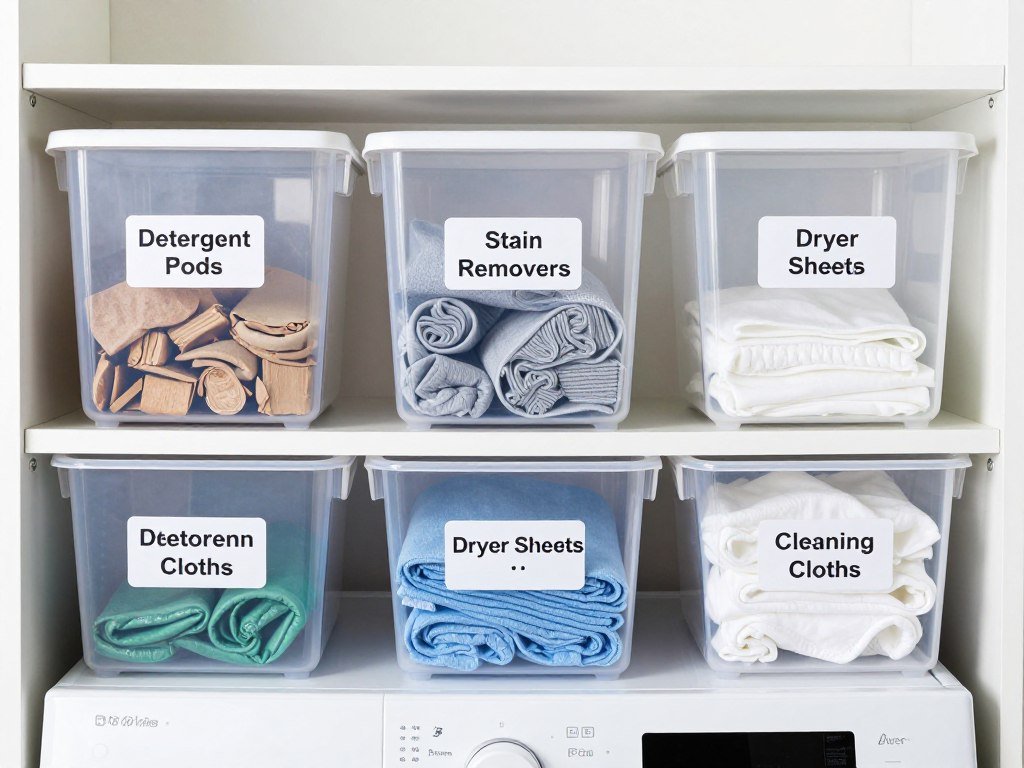
Clear containers let you see contents without opening them. Add labels for a professional organization system. This approach works in any size laundry room.
Use uniform container sizes when possible. Stack identical bins for maximum efficiency. Clear plastic resists moisture better than cardboard.
Label each bin clearly with contents. Include expiration dates on items that age. Place most-used items in easy-to-reach locations.
Group related items together: detergents in one bin, stain treatments in another, dryer products in a third. The system prevents searching through multiple containers. You’ll always know where to find what you need.
25. Mirror Backsplash to Expand Visual Space
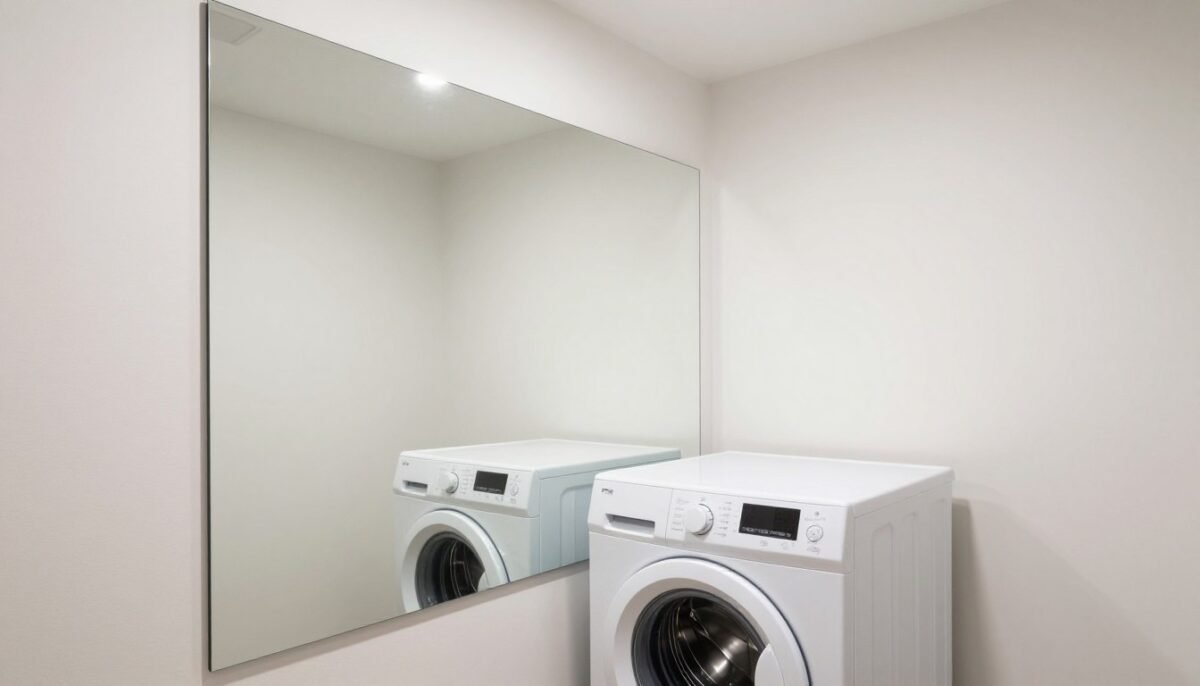
Mirrors make small spaces feel larger through reflection. A mirror backsplash behind your washer creates visual depth. This design trick costs less than you might expect.
Install mirror panels on the wall behind your top loader. Secure them properly to prevent accidents. The reflection doubles the perceived space.
Mirrors also improve lighting by reflecting existing light sources. Your small laundry room feels brighter and more open. Clean the mirror regularly to maintain its reflective properties.
Use tempered glass for safety near appliances. The mirror withstands humidity better than regular glass. This simple addition transforms how your laundry room feels without changing its actual size.
Choosing the Right Solutions for Your Space
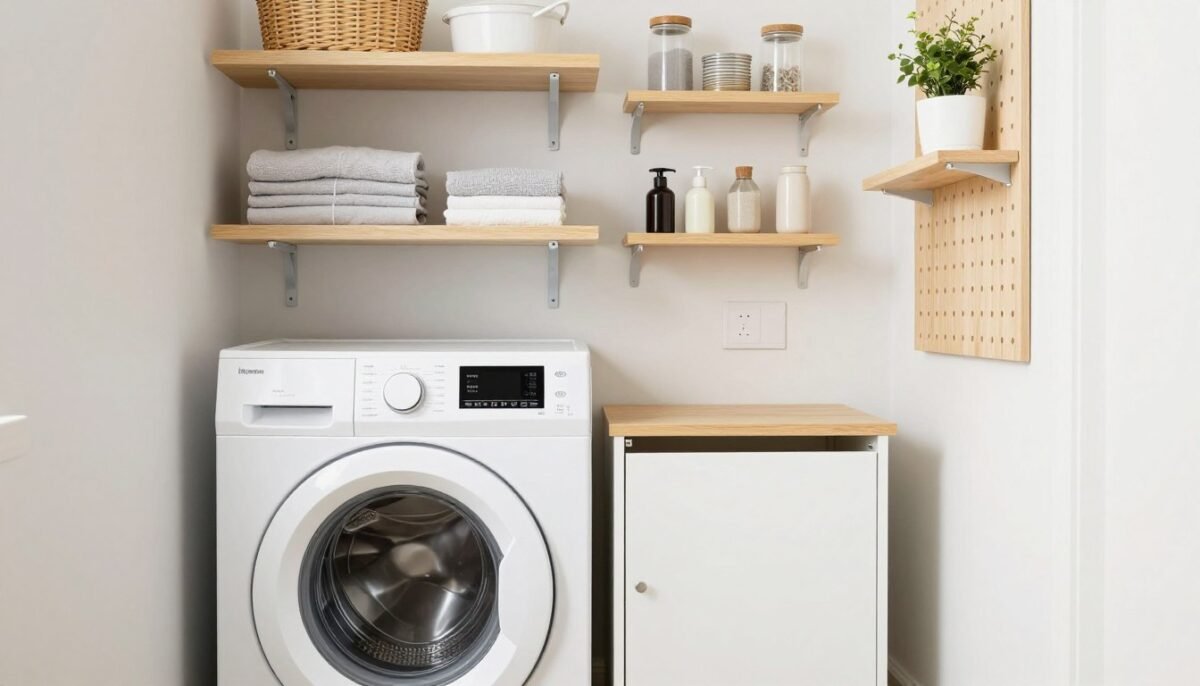
Not every idea works in every laundry room. Start by measuring your space carefully. Note ceiling height, wall lengths, and door clearances.
Identify your biggest challenges. Do you need more storage? Better organization? Additional workspace? Focus on solutions that address your specific problems.
Begin with one or two changes rather than overhauling everything at once. Wall-mounted shelves and organization systems require minimal investment. Test these before committing to larger projects.
Consider your daily laundry routine. Solutions should make tasks easier, not create new obstacles. The best small laundry room design balances function with available space.
Mix open and closed storage for versatility. Open shelves provide easy access to frequently used items. Closed cabinets hide clutter and less attractive necessities.
Remember that vertical space is your greatest asset in small rooms. Look up when planning storage. Walls and ceilings offer opportunities floor space doesn’t provide.
Maintaining Your Organized Laundry Room
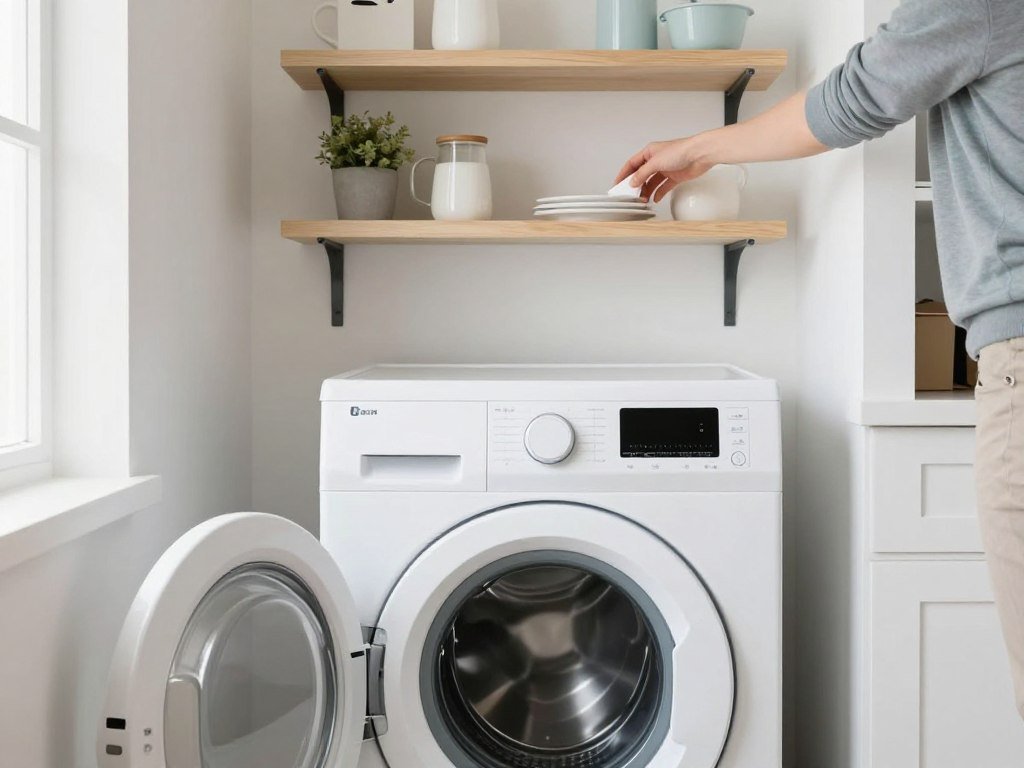
Organization requires ongoing maintenance. Set aside time monthly to reassess your system. Remove items you no longer use. Donate duplicates or excess supplies.
Keep surfaces clear when not actively working. Return items to designated spots immediately after use. This habit prevents clutter from accumulating.
Clean storage areas regularly. Wipe down shelves and cabinets to remove dust and spills. Check under and behind your washer for lint buildup.
Adjust your organization as needs change. What worked last year might not serve you now. Stay flexible and willing to modify your approach.
Label everything clearly so family members know where items belong. Consistent labeling helps everyone maintain the system. Make it easy for others to help with laundry tasks.
Budget-Friendly Implementation Strategies
Transforming your small laundry room doesn’t require huge investment. Many effective solutions cost under fifty dollars. Start with the least expensive options first.
Tension rods, over-door organizers, and pegboard systems offer big impact for small budgets. These items install quickly without professional help. They deliver immediate improvement.
Shop secondhand stores for baskets, shelving units, and cabinets. Clean and paint these finds to match your space. Used items often cost a fraction of new prices.
DIY projects save money on custom solutions. Build simple shelves from lumber. Paint existing cabinets instead of replacing them. Watch online tutorials for step-by-step guidance.
Tackle one project at a time as budget allows. Prioritize changes that solve your biggest problems first. Add decorative elements after functional needs are met.
Repurpose items from other areas of your home. An unused bookshelf might work perfectly in your laundry room. Kitchen organizers often transfer well to laundry spaces.
Creating Your Ideal Small Laundry Room
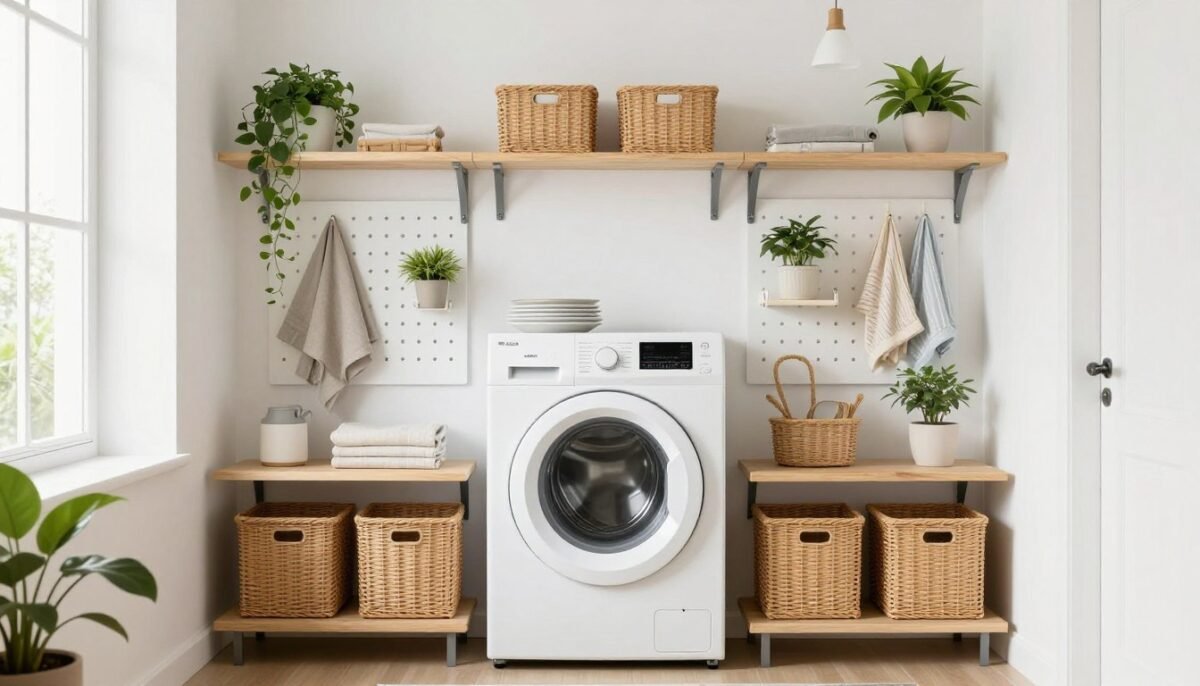
Small laundry rooms with top loaders can be both beautiful and functional. The 25 ideas in this guide prove that limited space doesn’t mean limited possibilities. Each solution addresses common challenges in compact areas.
Your perfect laundry room combines several strategies that work for your specific needs. Mix vertical storage with smart organization. Add surfaces where you need them. Hide clutter behind doors while keeping essentials accessible.
Start implementing changes today. Even small improvements make daily laundry tasks easier. Your small space can work harder with the right design approach.
Remember that organization is an ongoing process. Adjust solutions as your needs evolve. The time invested in creating an efficient laundry room pays back with every load you wash.