
Every sewist knows the struggle. Your fabric stash grows faster than you can complete projects. Pieces pile up in corners. Half-yard remnants hide in random bags. Before you know it, your sewing room becomes a chaotic mess.
Proper fabric storage changes everything. It protects your textiles from dust and fading. It helps you find exactly what you need when inspiration strikes. Most importantly, it transforms your creative space into an organized haven where ideas flow freely.
This guide presents twenty-five practical fabric storage ideas designed for modern crafters in 2026. Whether you work in a small space or a dedicated sewing room, these solutions will help you organize every piece, scrap, and fat quarter in your collection.
Table of Contents
Clear Plastic Bins for Visible Organization

Clear plastic bins revolutionize how you store fabric. You see every piece without opening a single container. This visibility saves time and sparks creativity when you’re planning your next quilt or sewing project.
Stack these bins on existing shelves or invest in dedicated shelving units. Label each bin by fabric type, color, or project category. The transparent design lets you quickly assess your stash at a glance.
Choose bins with secure lids to protect fabrics from dust. Stackable options maximize vertical space in small rooms. This storage method works exceptionally well for fat quarters and half-yard cuts.
Comic Book Boards for Flat Storage
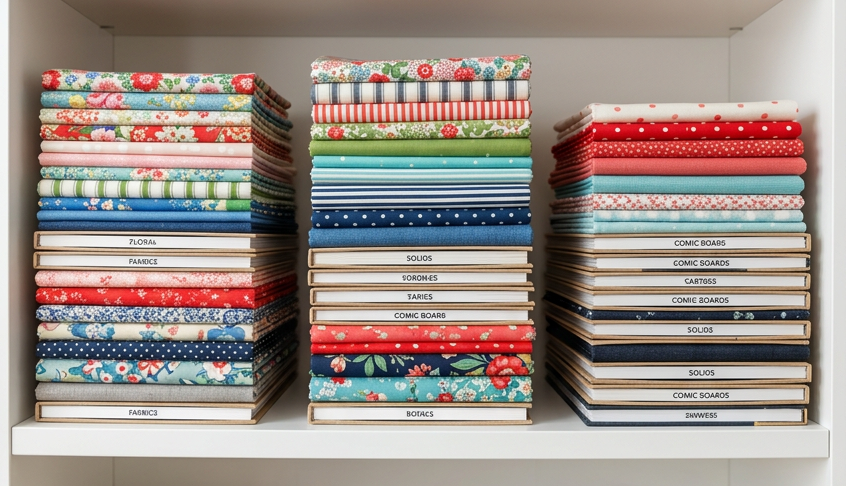
Comic book boards offer an ingenious solution for storing fabric flat and wrinkle-free. These sturdy boards, originally designed for preserving collectibles, work perfectly for organizing yardage and preventing creases.
Wrap your fabric around comic book boards to create uniform, stackable bundles. Each wrapped piece stores neatly in bins or on shelves. The boards maintain fabric shape and make it easy to see patterns and colors.
Book boards provide similar benefits. They prevent fabric from developing permanent fold lines. This method proves especially valuable for special occasion fabrics and delicate materials you want to preserve in pristine condition.
Group wrapped fabrics by color or project type. Stack them vertically in bins like files for easy browsing. This organization system turns your fabric stash into a beautiful, functional display.
Adjustable Shelf Dividers
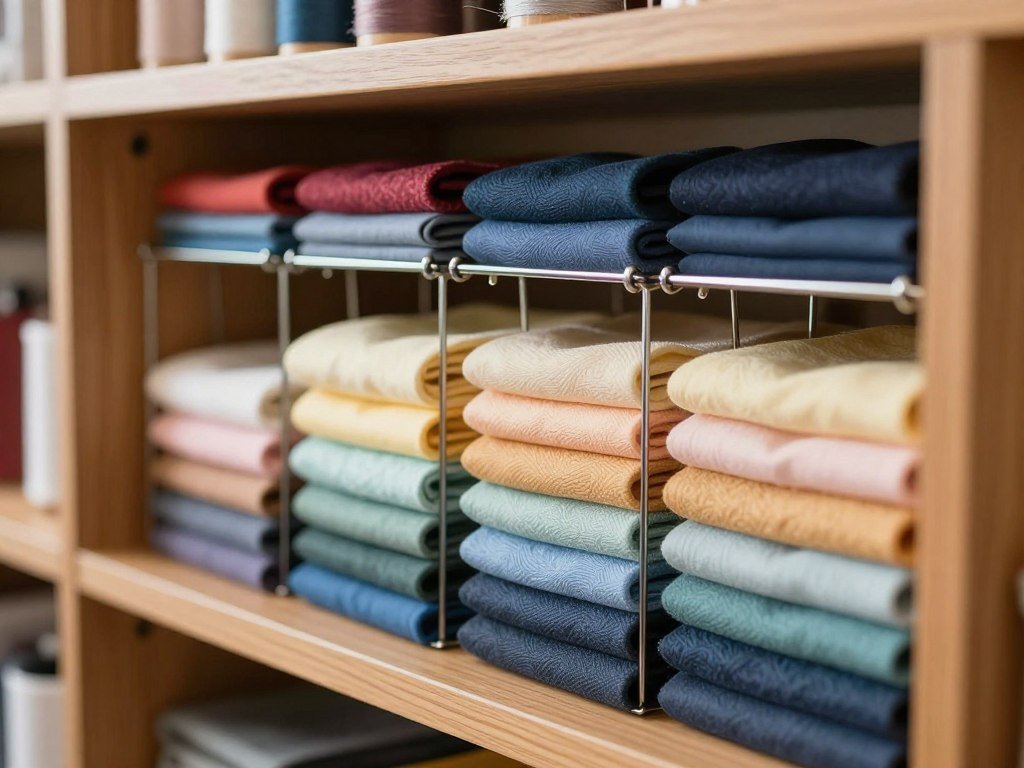
Shelf dividers transform ordinary shelves into organized fabric libraries. These simple tools create distinct sections that prevent fabric piles from toppling over. Your stash stays neat and accessible.
Install dividers to separate fabrics by color, weight, or project type. Adjustable versions adapt as your collection grows. Metal dividers offer durability, while acrylic options provide a modern aesthetic.
This storage idea works particularly well for storing larger yardage. Fold fabrics to uniform sizes and place them between dividers. The vertical organization makes it easy to pull out exactly what you need without disturbing other pieces.
Drawer Systems with Custom Inserts
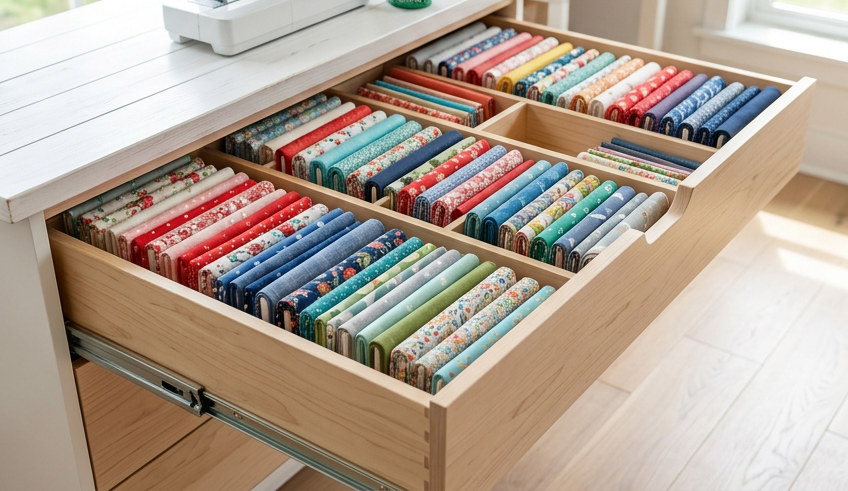
Drawer organization systems keep small fabric pieces and scraps from becoming an unmanageable mess. Custom inserts divide drawer space into compartments sized for your specific needs.
Use drawer dividers to create sections for different fabric types. Store fat quarters standing upright so you can see each pattern. Dedicate smaller compartments to fabric scraps sorted by color.
Rolling fabrics and storing them vertically maximizes drawer capacity. This method, inspired by closet organization techniques, lets you view your entire collection when you open the drawer. No more digging through piles to find that perfect piece.
Hanging Storage Solutions
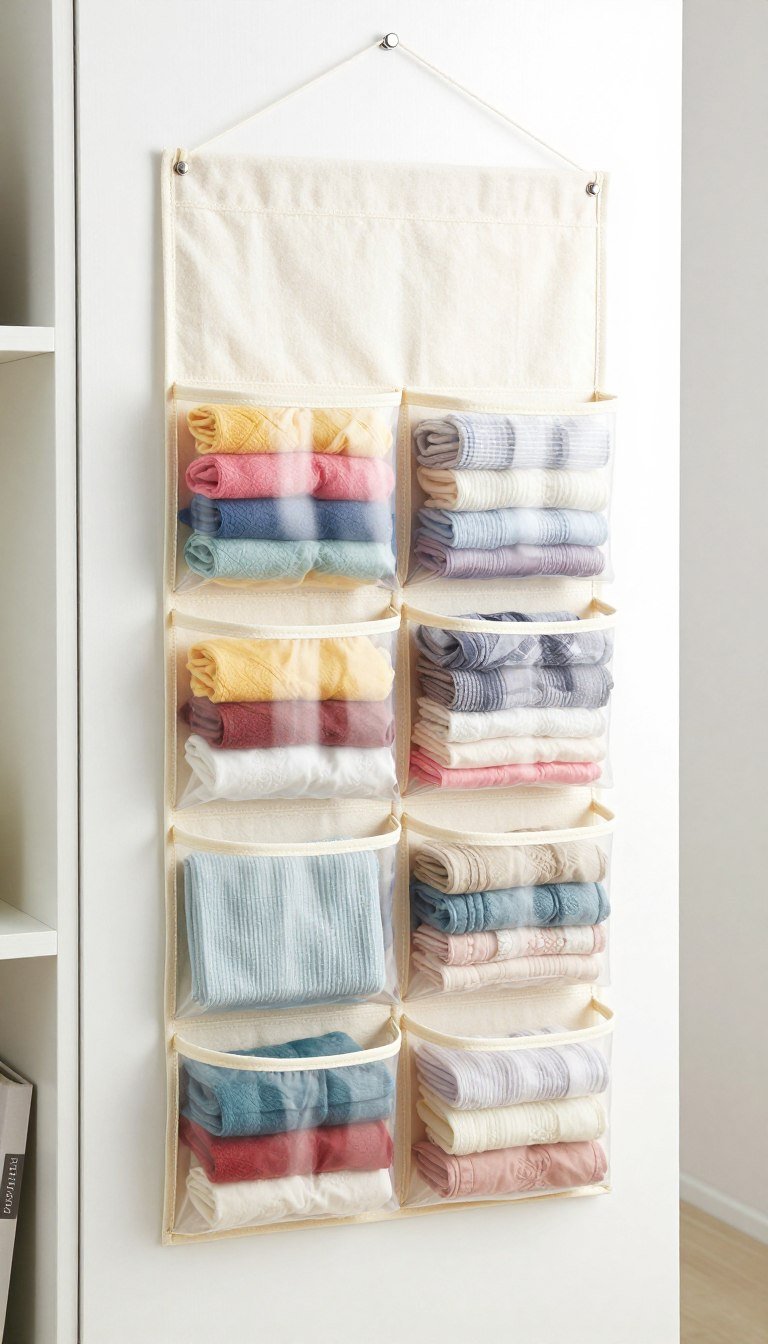
Hanging storage maximizes vertical space in your sewing room or closet. Over-door organizers, hanging shelves, and wall-mounted systems keep fabric accessible without consuming floor space.
Hang fabric pieces on pant hangers or skirt hangers. This method works beautifully for larger yardage and prevents wrinkles. Group fabrics by project or color on the same rod for easy coordination.
Hanging pocket organizers offer dozens of compartments for fat quarters and smaller pieces. Install them on closet doors or walls. The clear pocket design lets you see everything at once.
Rolling Carts for Mobile Organization
Rolling carts bring your fabric stash exactly where you need it. These mobile storage solutions work perfectly in small spaces where permanent shelving isn’t practical.
Fill cart shelves with fabric bins or baskets. Roll the cart to your cutting table when starting a project. Move it out of the way when you need floor space. This flexibility makes rolling carts ideal for multi-purpose rooms.
Use mesh or wire carts to maintain visibility. Store current project fabrics on top shelves for easy access. Keep frequently used basics on middle tiers. This organization system adapts to your workflow.
Decorative Basket Storage
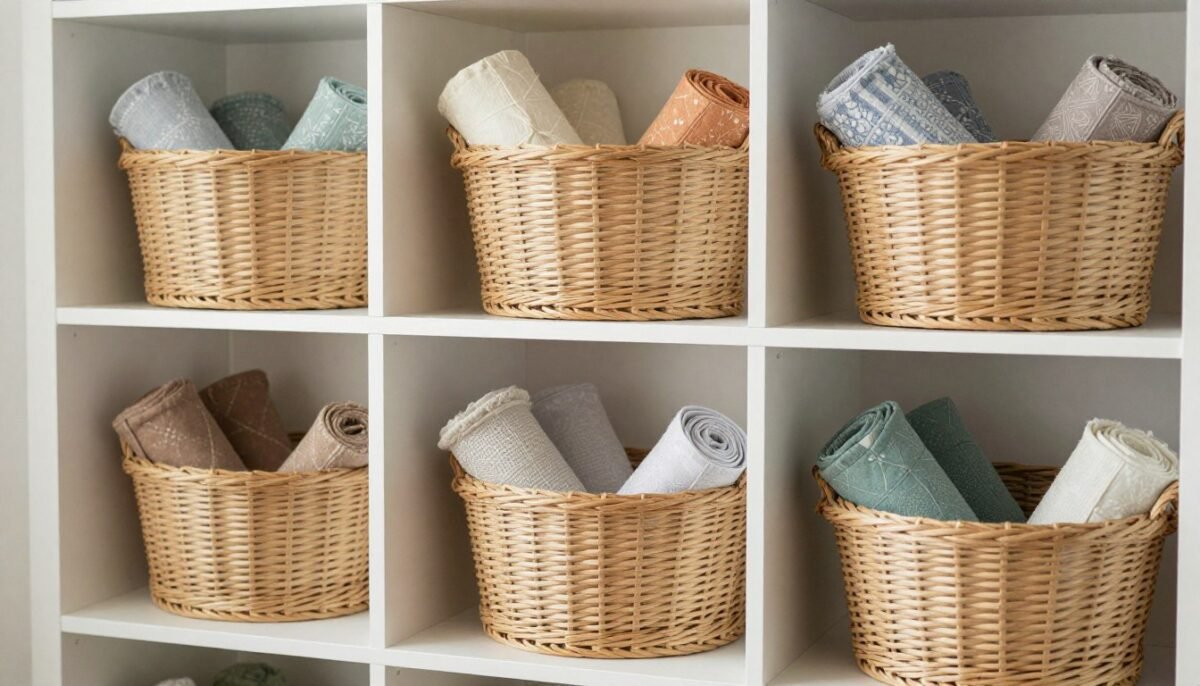
Baskets combine functionality with aesthetic appeal. These storage containers hide fabric clutter while adding warmth to your sewing space. They work equally well on shelves, under tables, or as standalone storage.
Choose baskets sized to your shelf dimensions. Wire baskets provide visibility and airflow. Woven options create a cozy, crafted atmosphere. Label each basket clearly to maintain organization.
Store fabric by project or color in separate baskets. This method makes it easy to grab everything you need for a specific quilt or sewing project. Baskets with handles offer portability for craft room flexibility.
Vacuum-Sealed Bags for Seasonal Storage
Vacuum-sealed bags compress fabric to a fraction of its original size. This storage method proves invaluable for seasonal fabrics or pieces you’re not currently using. Protect your stash while freeing up valuable space.
Store holiday fabrics, winter fleece, or summer cottons in labeled vacuum bags. Stack them flat under beds or in closet corners. The airtight seal protects against moisture, dust, and pests.
Avoid over-compressing delicate or special fabrics. Use this storage idea primarily for sturdy cottons and basic materials. When you need the fabric, simply open the bag and let it naturally expand.
Pegboard Wall Systems
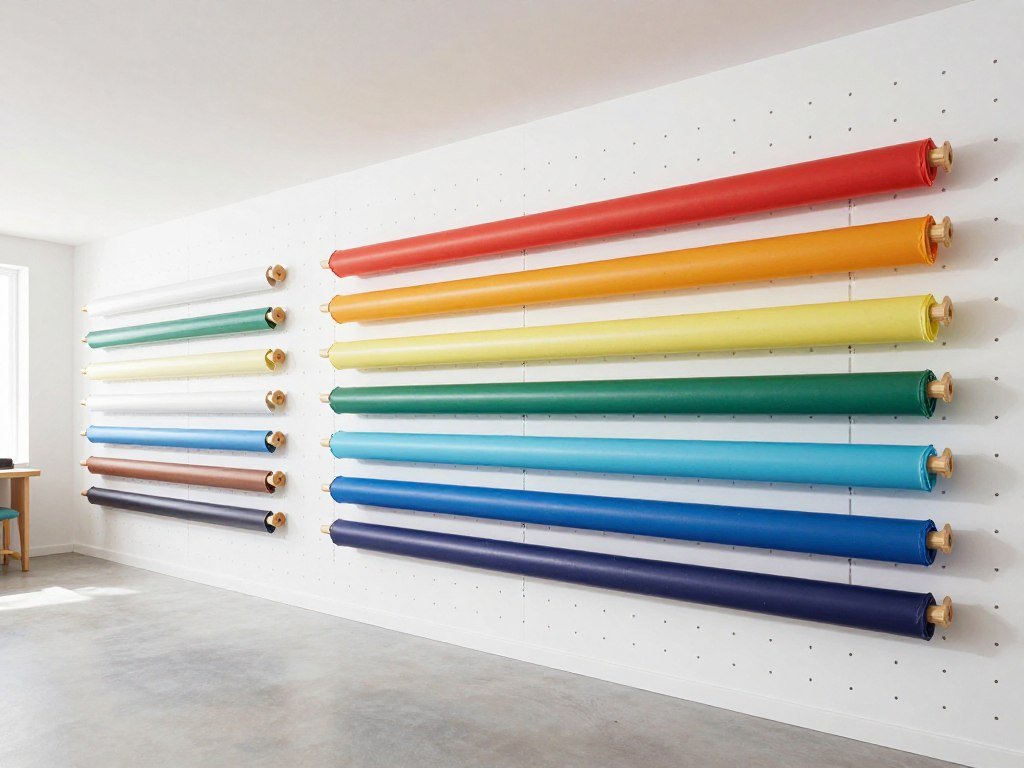
Pegboard walls turn fabric storage into functional art. This versatile system accommodates changing needs. Move pegs and accessories to create custom configurations that match your current projects.
Hang small baskets from pegboard hooks for scraps and notions. Install dowel rods to hold rolled fabric. Add shelves for bins or decorative displays. The customizable nature of pegboard makes it perfect for evolving storage needs.
Paint pegboard to match your room aesthetic. White creates a clean backdrop that highlights colorful fabrics. Bold colors make storage part of your room’s design scheme. This storage idea combines practicality with visual appeal.
Magazine Holders for Fat Quarter Storage
Magazine holders repurpose beautifully as fat quarter organizers. These inexpensive containers fit perfectly on shelves and keep quarter-yard cuts neatly separated and visible.
Fold fat quarters uniformly and stand them upright in magazine holders. Organize by color, pattern type, or collection. Label the front of each holder for quick identification.
Line up magazine holders on bookshelves or craft room shelves. This method creates a library-like organization system for your fabric stash. The upright storage lets you browse your collection like choosing a book.
Under-Bed Storage Containers
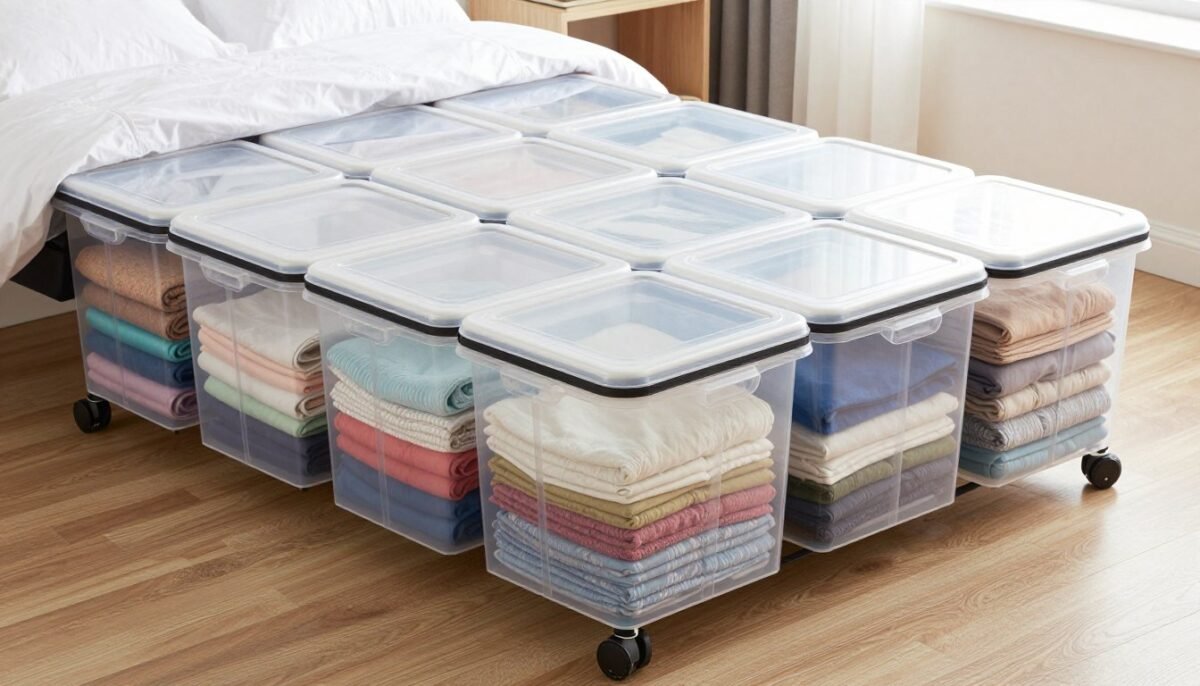
Under-bed space offers hidden storage potential. Shallow containers designed for this space protect fabrics while keeping them out of sight. This solution works perfectly in small apartments or dedicated sewing rooms.
Choose containers with wheels for easy access. Clear lids let you identify contents without pulling everything out. Store less-frequently-used fabrics or completed project materials in these convenient spots.
Organize under-bed bins by project type or fabric weight. Keep a written inventory attached to each container. This system ensures you remember what’s stored in hard-to-see places.
Floating Wall Shelves
Floating shelves maximize wall space while creating attractive displays. These sleek storage solutions hold fabric bins, baskets, or neatly folded stacks without the bulk of traditional bookcases.
Install shelves at varying heights to accommodate different storage containers. Deep shelves hold larger bins. Narrow shelves display smaller collections or works in progress. This layered approach adds visual interest while increasing storage capacity.
Style shelves with a mix of functional storage and decorative elements. Alternate fabric bins with small plants or sewing-themed decor. This balance creates a space that’s both organized and inspiring.
Dowel Rod Display System
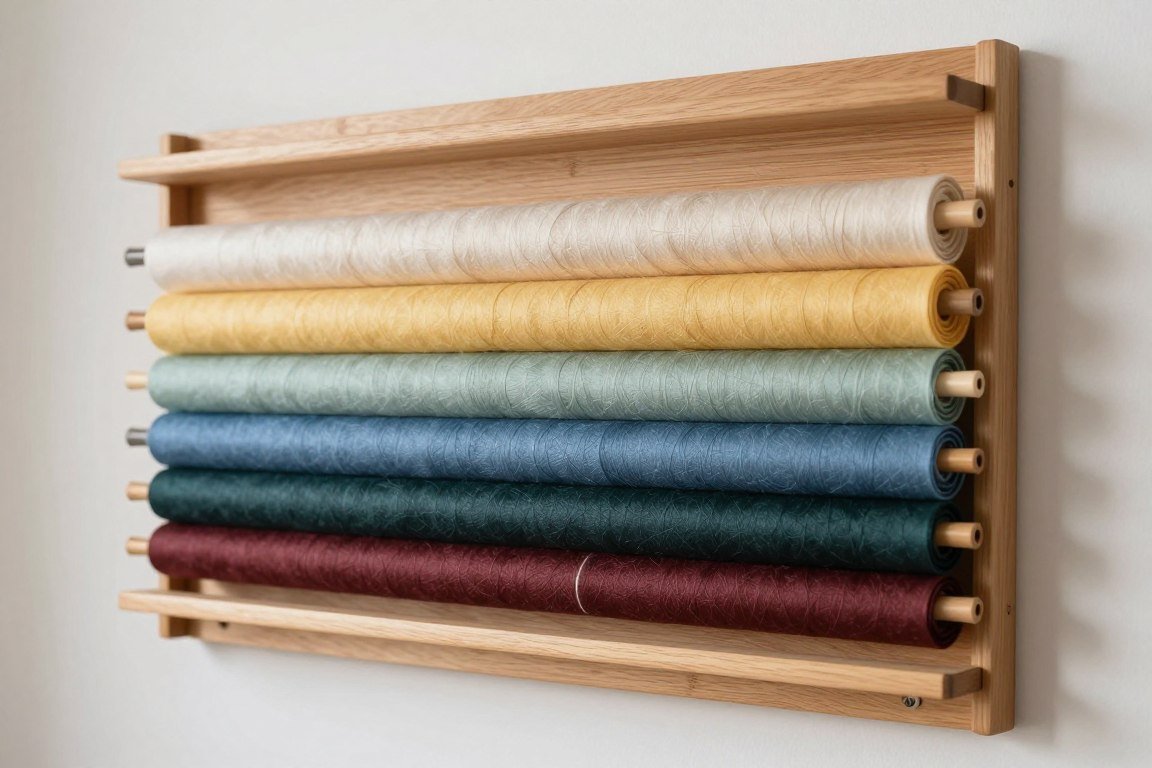
Dowel rods transform fabric storage into wall art. This display system works exceptionally well for frequently used fabrics. Roll yardage around rods and mount them horizontally on walls.
Install dowel rods at comfortable heights for easy access. Arrange fabrics by color to create a rainbow effect. This storage method keeps frequently used materials wrinkle-free and immediately visible.
Use different rod lengths to accommodate various fabric widths. Secure rods with decorative brackets that complement your room style. This open storage solution combines beauty with functionality.
Dedicated Fabric Closet
Transform a spare closet into fabric storage central. This dedicated space keeps your entire stash organized and protected. Customize the interior with a combination of storage solutions to maximize every inch.
Install shelving at multiple levels for bins and folded fabrics. Add a hanging rod for larger yardage. Mount pegboard on the inside of the door for notions and small tools. Use the floor space for rolling carts or large bins.
Organize your fabric closet by creating zones. Dedicate one area to quilting cottons, another to apparel fabrics. Keep works-in-progress accessible near the front. This zoned approach makes finding materials effortless.
Tension Rod Organization
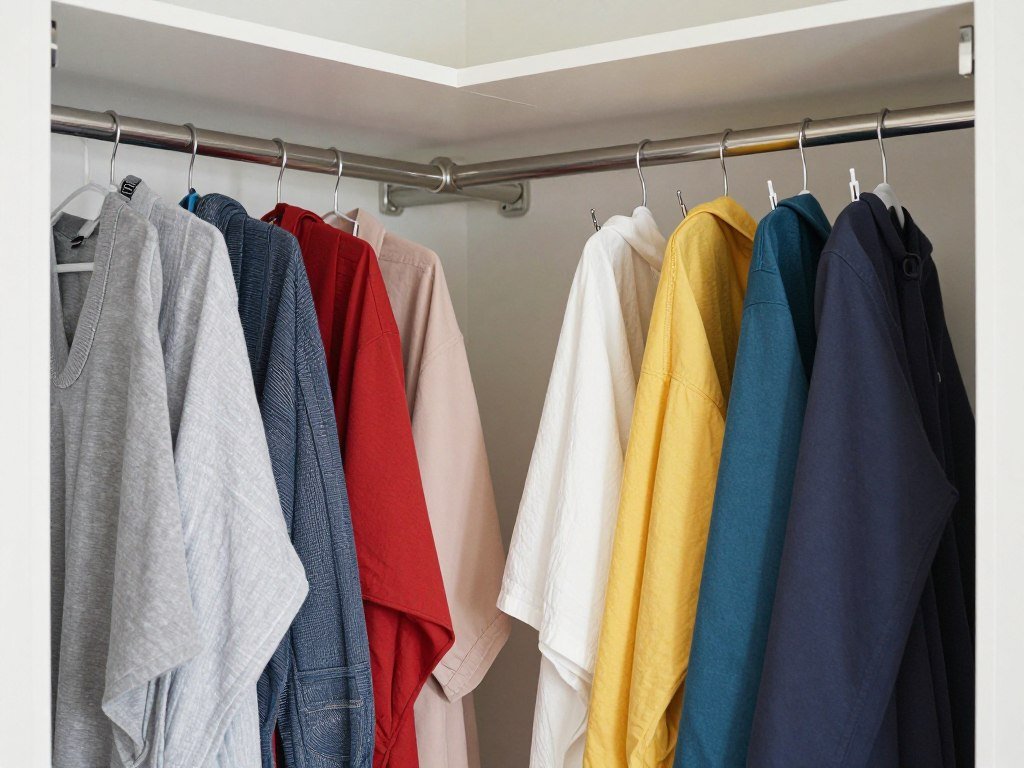
Tension rods install without hardware and adapt to various spaces. Use them in closets, between shelving units, or in awkward corners. This flexible storage idea accommodates changing needs.
Drape larger fabric pieces over tension rods. Install multiple rods at different heights to maximize vertical space. This method prevents wrinkles and keeps fabrics readily accessible for quick project decisions.
Pair tension rods with clip hangers for smaller pieces. Group fabrics by color or project on each rod. The easy installation makes this an ideal solution for renters or temporary craft spaces.
Recommended Storage Products
Stackable Clear Bins
Heavy-duty plastic bins with secure lids protect your fabric stash from dust while keeping everything visible. These stackable containers maximize vertical space and work perfectly on shelving units.
- Multiple size options for different fabric cuts
- Secure latching lids prevent dust accumulation
- Clear design for instant visibility
- Stackable design saves floor space
Comic Book Board Sets
Professional-grade boards designed for wrinkle-free fabric storage. These sturdy cards keep your yardage flat and organized while preventing permanent creases in special materials.
- Acid-free material protects fabrics
- Uniform size creates neat stacks
- Perfect for fat quarters and half yards
- Prevents fabric distortion over time
Adjustable Drawer Dividers
Customizable dividers transform chaotic drawers into organized fabric libraries. Adjust compartment sizes to fit your exact storage needs and keep scraps sorted by color or size.
- Expandable design fits various drawer sizes
- Creates custom compartments for fabric scraps
- Bamboo construction adds natural beauty
- Easy installation without tools
Clear Zipper Bags for Project Kits
Clear zipper bags organize complete project kits. Store all fabrics, patterns, and notions for a single project together. This organization method keeps your workspace clear while maintaining project momentum.
Use large bags for quilt projects with multiple fabric pieces. Smaller bags work perfectly for garment sewing kits. Label each bag with project details and target completion dates.
Stack project bags on shelves or in bins. The transparent material lets you see contents at a glance. This system prevents the frustration of gathering materials each time you sit down to sew.
Glass Jars for Scrap Organization
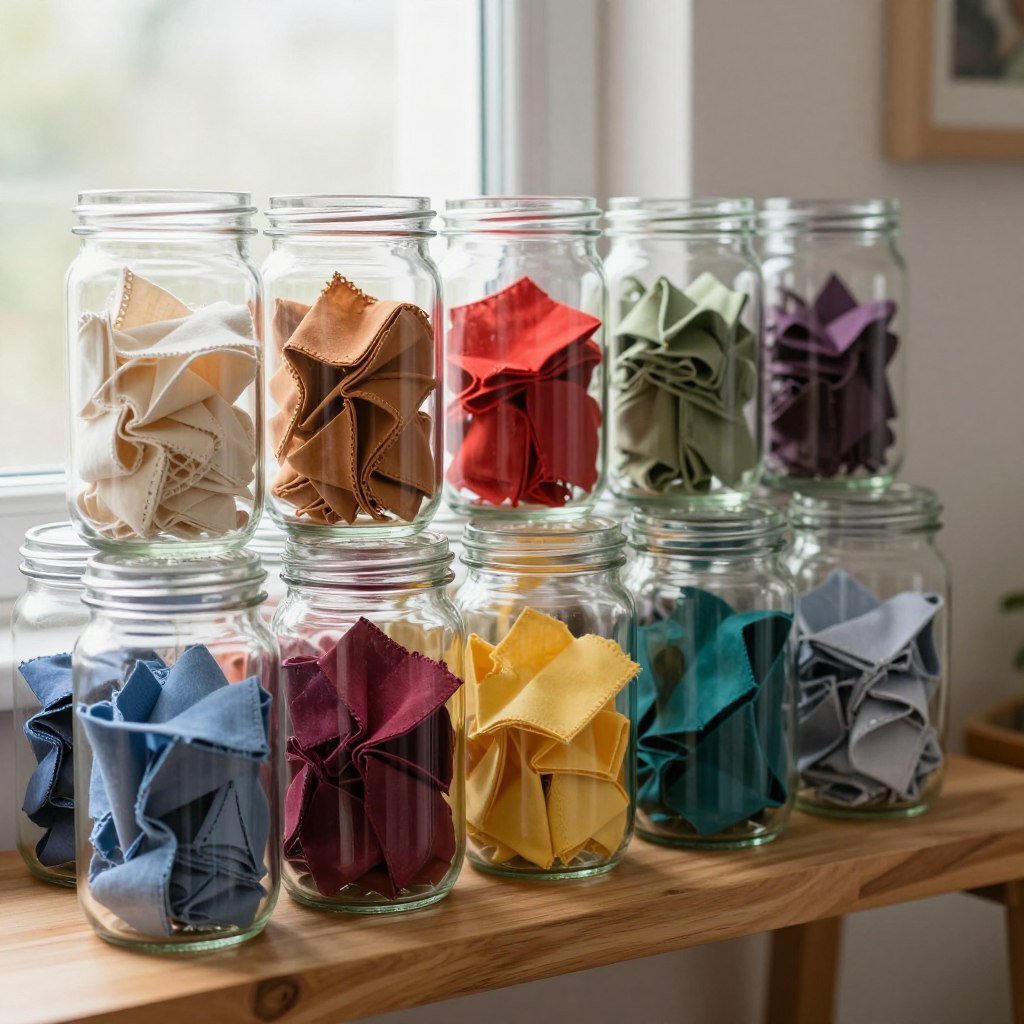
Glass jars turn fabric scraps into decorative storage. This method works beautifully for small pieces left over from projects. Sort scraps by color and display them on open shelving.
Fill jars with coordinating fabric scraps. Arrange them by color to create a rainbow display. These jars serve double duty as storage and room decoration. When you need a small piece, you know exactly where to look.
Use uniform jar sizes for a cohesive look. Mason jars work perfectly and come in various sizes. This storage idea proves that organization can be both functional and beautiful.
Binder Clips for Hanging Storage
Large binder clips create instant hanging storage. Clip fabric pieces and hang them from tension rods, pegboard hooks, or wall-mounted rails. This simple solution costs almost nothing and adapts to any space.
Attach binder clips to fabric selvages to avoid creating holes. Group related fabrics together on the same rod. Label clips with project names or fabric details for easy identification.
This method works particularly well for fabrics you use frequently. Keep current project materials front and center. The hanging display prevents wrinkles and saves valuable shelf space for other storage needs.
Cube Storage Shelving Units
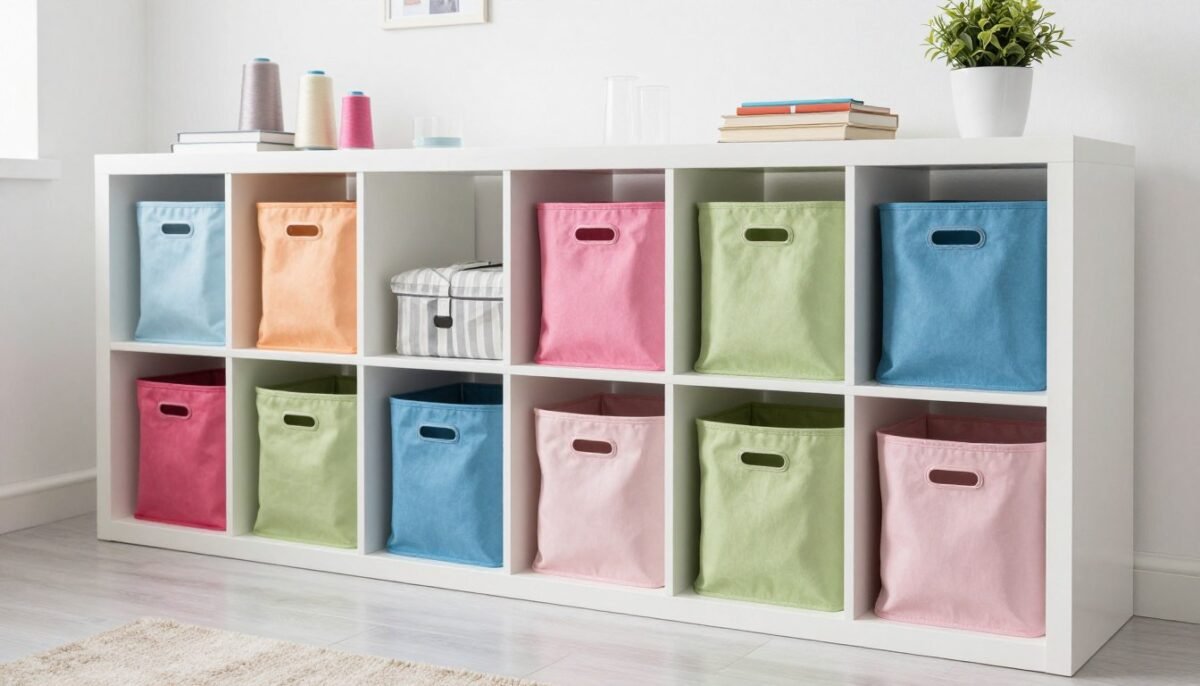
Cube storage units offer modular organization. These versatile shelving systems accommodate bins, baskets, or folded fabrics. Rearrange cubes to match your changing storage needs.
Fill cubes with matching bins for a streamlined look. Mix open and closed storage for visual interest. Store frequently used fabrics in open cubes for easy access. Keep less-used materials in bins with lids.
Stack cube units or arrange them horizontally. This flexibility makes cube storage ideal for rooms of any size. Add labels to bin fronts for foolproof organization that anyone can maintain.
File Folder Organization System
Vertical file folder storage adapts perfectly for fabric organization. Stand folded fabrics upright in bins or drawers like files. This method maximizes space and improves visibility.
Fold fabrics to uniform sizes that fit your storage containers. Store them vertically so you can flip through your collection. This organization system works exceptionally well for fat quarters and quarter-yard cuts.
Use cardboard dividers to separate fabric categories. Label dividers by color, pattern type, or project. This filing system brings order to even the largest fabric stash and makes finding materials effortless.
Hanging Shoe Organizers Repurposed
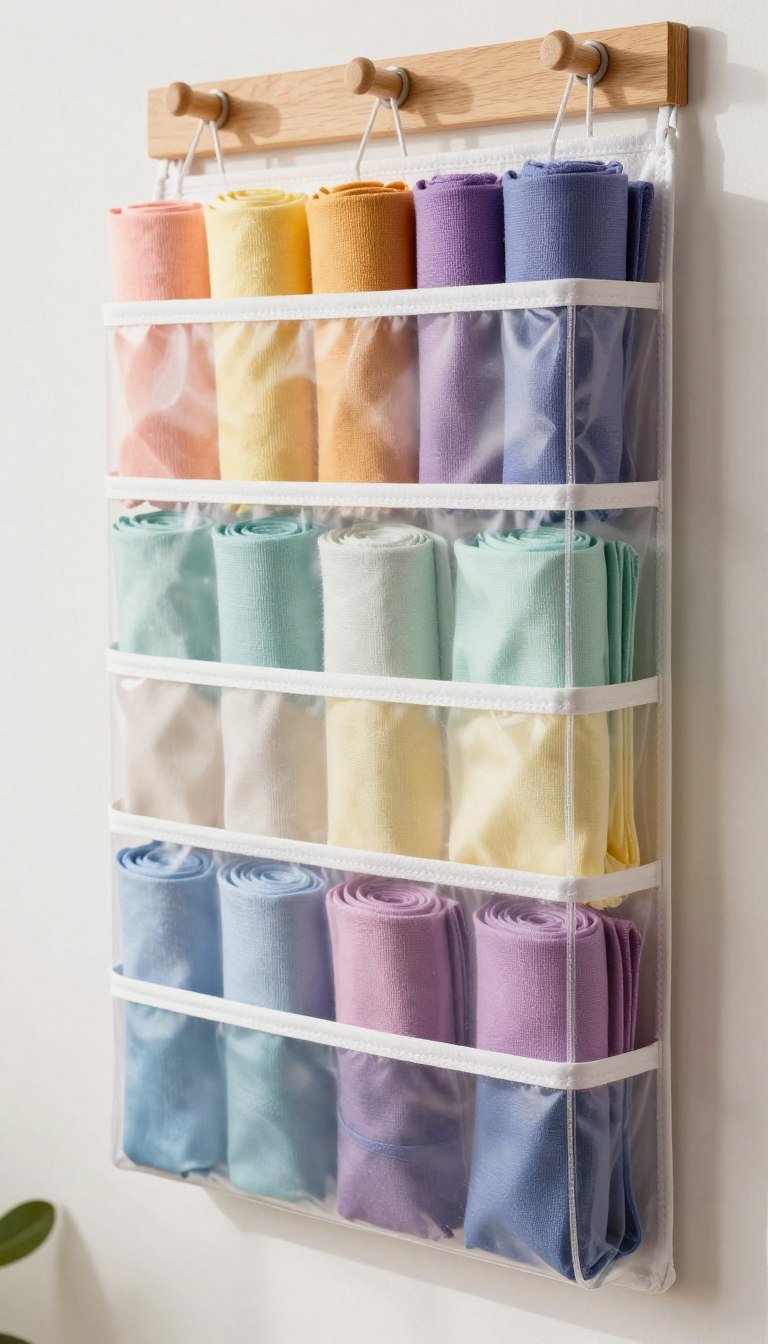
Shoe organizers designed for closets work brilliantly for fabric storage. Hang these multi-pocket organizers on doors or walls. Each pocket holds rolled fat quarters, fabric scraps, or small pieces perfectly.
Choose organizers with clear pockets to see contents immediately. Organize pockets by color for a pleasing rainbow effect. This storage solution maximizes vertical space without requiring permanent installation.
Use multiple organizers for extensive fabric collections. Dedicate one to solids, another to prints. The separated storage makes coordinating fabrics for projects quick and intuitive.
Color-Coded Label System
Labels transform basic storage into an organized system. Create a color-coded labeling scheme that matches your workflow. This visual system helps everyone in your household respect your organizational efforts.
Use colored labels for different fabric categories. Assign blue labels to quilting cottons, green to apparel fabrics, red to specialty materials. This coding system lets you locate materials instantly.
Include detailed information on labels. Note fabric type, yardage, and care instructions. Attach labels to bins, shelves, or individual fabric pieces. This thorough labeling prevents storage from becoming disorganized over time.
Storage Ottomans and Benches
Furniture with hidden storage serves dual purposes. Storage ottomans and benches provide seating while concealing fabric stash. This solution works perfectly in small spaces where every piece of furniture must multitask.
Fill storage ottomans with less-frequently-used fabrics or completed project materials. Keep the contents organized in smaller bins inside the ottoman. Label these internal bins for easy retrieval.
Place storage benches along walls in your sewing room. Use the top surface for current projects while storing backup materials inside. This furniture-based storage keeps fabric accessible without cluttering your creative space.
Creating Your Perfect Fabric Storage System
Organizing your fabric stash transforms your creative experience. These twenty-five storage ideas provide solutions for every space, budget, and organizational style. Start by assessing your current collection and available space.
Mix multiple storage methods to create a custom system. Combine shelving with bins, hanging storage with drawer organizers. The most effective fabric organization systems adapt to your specific needs and evolve as your stash grows.
Remember that organization is an ongoing process. Regular maintenance keeps your system functional. Dedicate time each month to returning fabrics to their designated places. This habit prevents storage from deteriorating into chaos.
The right storage system does more than contain clutter. It inspires creativity by showcasing your beautiful fabric collection. When you can see and access your materials easily, you spend less time searching and more time sewing.
Invest in quality storage solutions that protect your fabrics. Proper organization extends fabric life by preventing dust, fading, and wrinkles. Your carefully curated stash deserves storage that preserves its beauty for future projects.