
Open shelving transforms kitchen design in remarkable ways. More homeowners choose kitchen shelves instead of cabinets every year. This trend brings fresh air to cooking spaces.
The appeal goes beyond aesthetics. Open shelves create an illusion of more space. They showcase beautiful dishware and add personality to your kitchen.
Traditional cabinets hide everything behind closed doors. Open shelving puts your items on display. This design choice requires thoughtful organization.
This article presents 20 gorgeous ideas for kitchen shelves. Each concept includes design tips and practical considerations. You’ll find inspiration for every style and space.
Table of Contents
Rustic Wood Floating Shelves
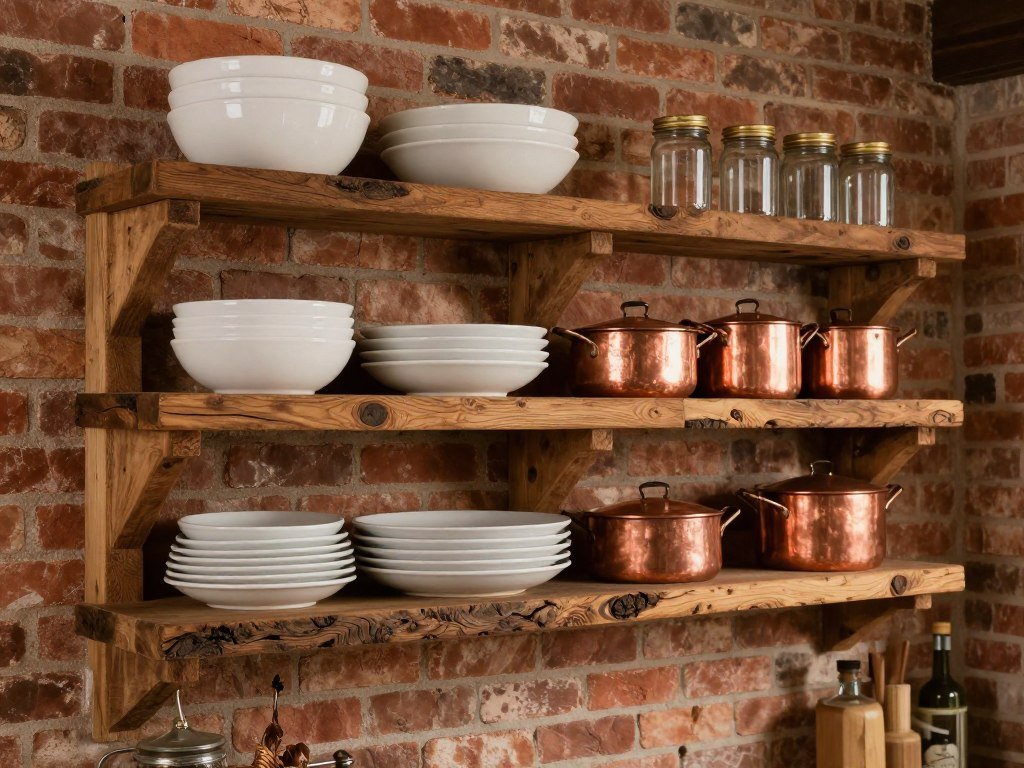
Rustic wood brings warmth to any kitchen. Floating shelves made from reclaimed wood create character. The natural grain patterns tell unique stories.
These shelves work beautifully in farmhouse kitchens. They complement modern spaces too. The wood texture adds organic beauty to your kitchen design.
Installation Tips
Proper installation ensures safety and longevity. Use heavy-duty brackets rated for your shelf weight. Wall studs provide the strongest support.
- Measure spacing between shelves carefully for functionality
- Seal wood to protect against kitchen grease and moisture
- Consider shelf depth based on your storage needs
- Match wood finish to other kitchen elements
Styling Recommendations
Display items with intention and balance. Mix functional pieces with decorative elements. Leave some breathing room between items.
Group similar items together for visual appeal. Use varying heights to create interest. Rotate seasonal decor to keep things fresh.
Industrial Metal Pipe Shelving
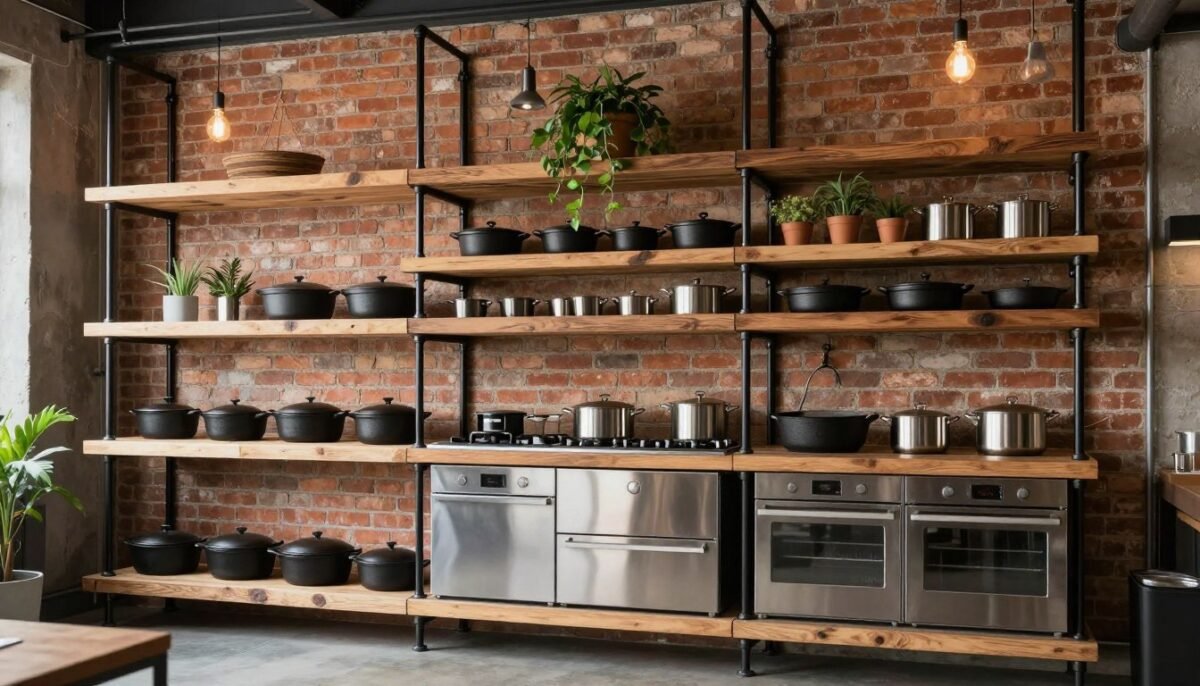
Industrial style brings edge to kitchen spaces. Metal pipe shelving combines form and function. This design works especially well in loft apartments.
The raw materials create an urban aesthetic. Black iron pipes contrast beautifully with wood. This combination offers both strength and style.
Material Selection
Choose pipes based on your desired look. Black iron offers classic industrial appeal. Copper pipes provide warmer tones.
Wood selection matters equally. Butcher block creates a professional kitchen look. Pine boards offer budget-friendly options.
Customization Options
- Adjust pipe length for custom shelf configurations
- Add multiple tiers for increased storage capacity
- Include hooks for hanging utensils and towels
- Paint pipes to match your kitchen color scheme
Glass Shelves for Modern Elegance
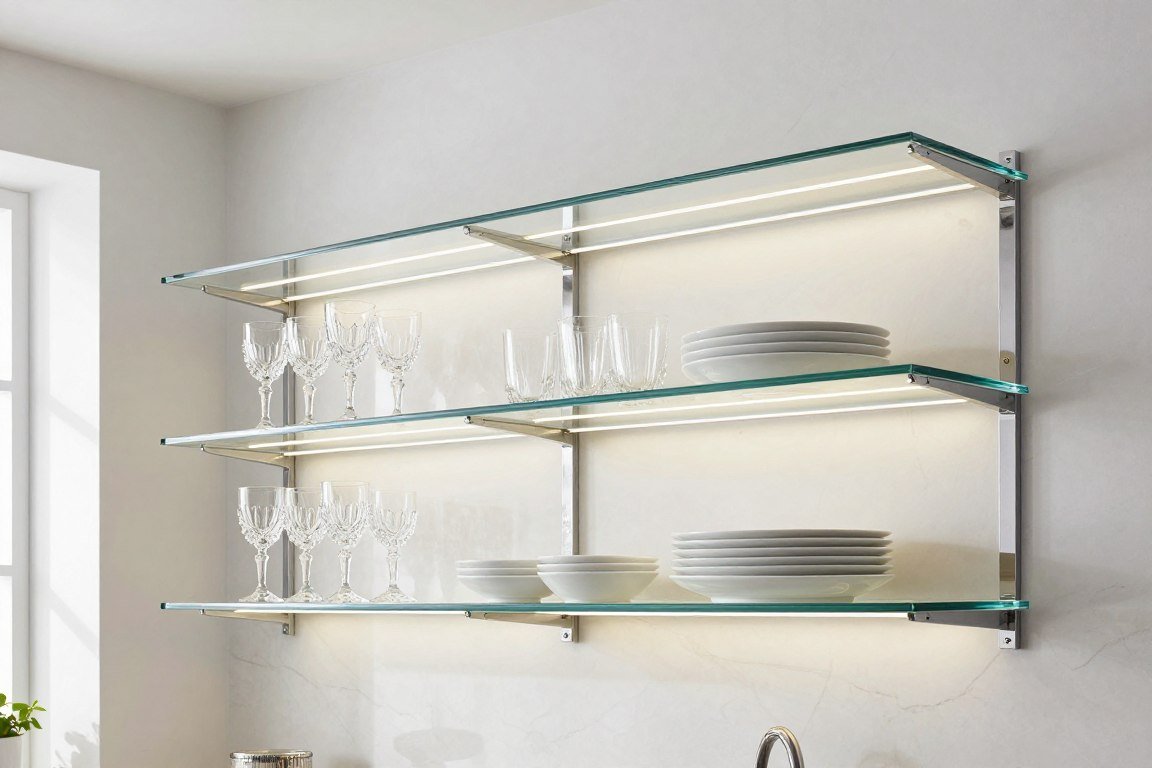
Glass shelving brings sophistication to kitchen design. These shelves appear to float in space. They maximize light flow throughout the area.
Tempered glass ensures safety and durability. This material withstands kitchen heat and moisture. The transparency keeps spaces feeling open.
Maintenance Considerations
Glass requires regular cleaning to maintain beauty. Fingerprints show more than on other materials. Keep glass cleaner handy for quick touch-ups.
Dust accumulates on glass surfaces quickly. Wipe shelves weekly to prevent buildup. This maintenance keeps your kitchen looking pristine.
Best Placement Ideas
Position glass shelves near windows for maximum effect. Natural light enhances the transparent quality. This placement makes small kitchens feel larger.
- Install LED strip lighting underneath for ambiance
- Use for displaying your finest glassware and dishes
- Keep items minimal to maintain clean lines
- Consider frosted glass for a softer look
Corner Shelving Solutions
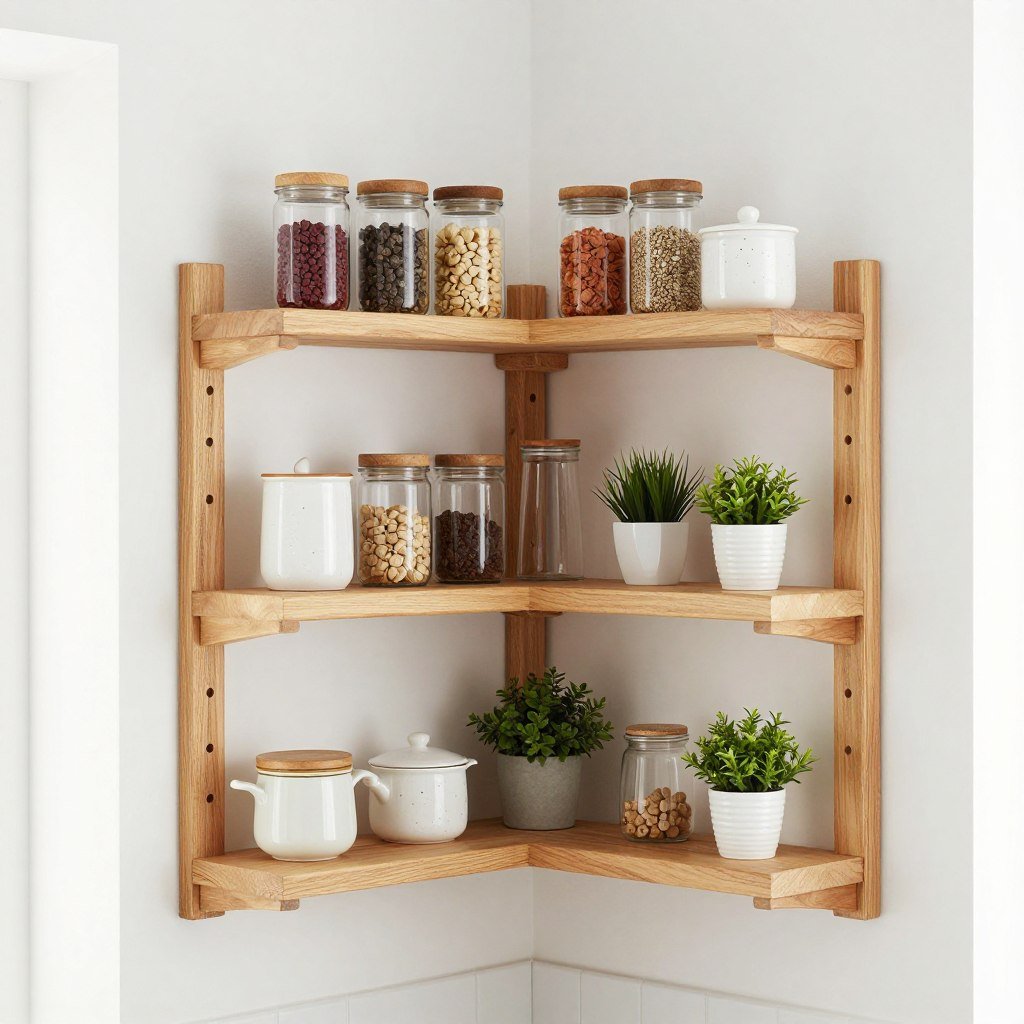
Corner spaces often go unused in kitchens. Smart shelving turns these areas into assets. Open corner shelves maximize every inch of space.
These solutions work in kitchens of all sizes. They provide easy access to items. Corner shelves can display or store cooking essentials.
Design Variations
Triangular shelves fit snugly into corners. Wraparound designs create continuous storage. Floating options maintain an airy feel.
Consider your kitchen layout when choosing styles. Some corners accommodate larger shelving units. Others require more compact solutions.
Practical Uses
- Store frequently used spices and cooking oils
- Display decorative items and plants
- Organize coffee and tea stations
- Keep cookbooks within easy reach
Ladder-Style Leaning Shelves
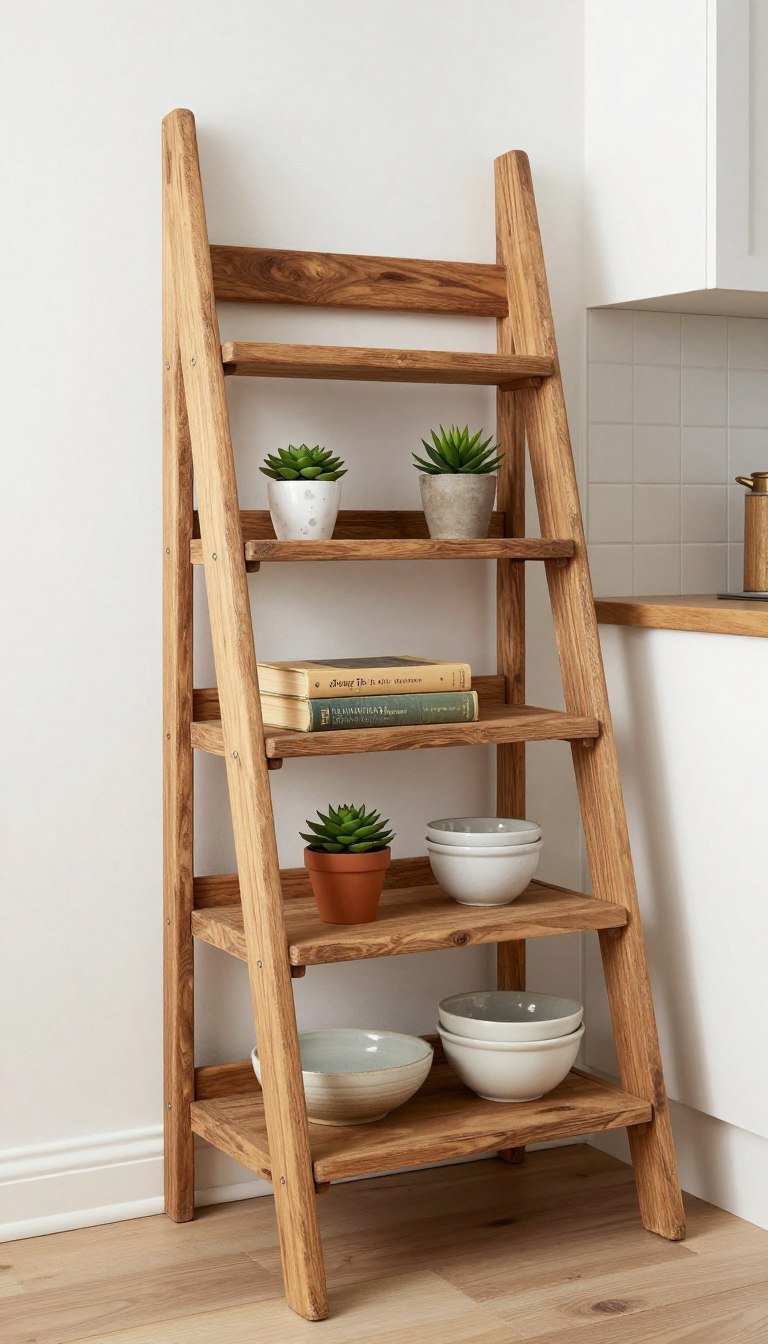
Ladder shelves offer unique visual interest. These units lean against walls without mounting. They provide flexibility in kitchen spaces.
The design allows easy relocation. You can move them as your needs change. This versatility appeals to renters and homeowners alike.
Stability and Safety
Ensure proper angle for stability. Most ladder shelves work best at 75-80 degrees. Some models include wall anchors for extra security.
Distribute weight evenly across shelves. Place heavier items on lower tiers. This arrangement prevents tipping.
Styling Tips
Start with larger items at the bottom. Progress to smaller pieces higher up. This creates natural visual flow.
- Mix books with decorative kitchen items
- Add small plants for life and color
- Use baskets for concealed storage
- Rotate displays seasonally
Built-In Cubby Shelving
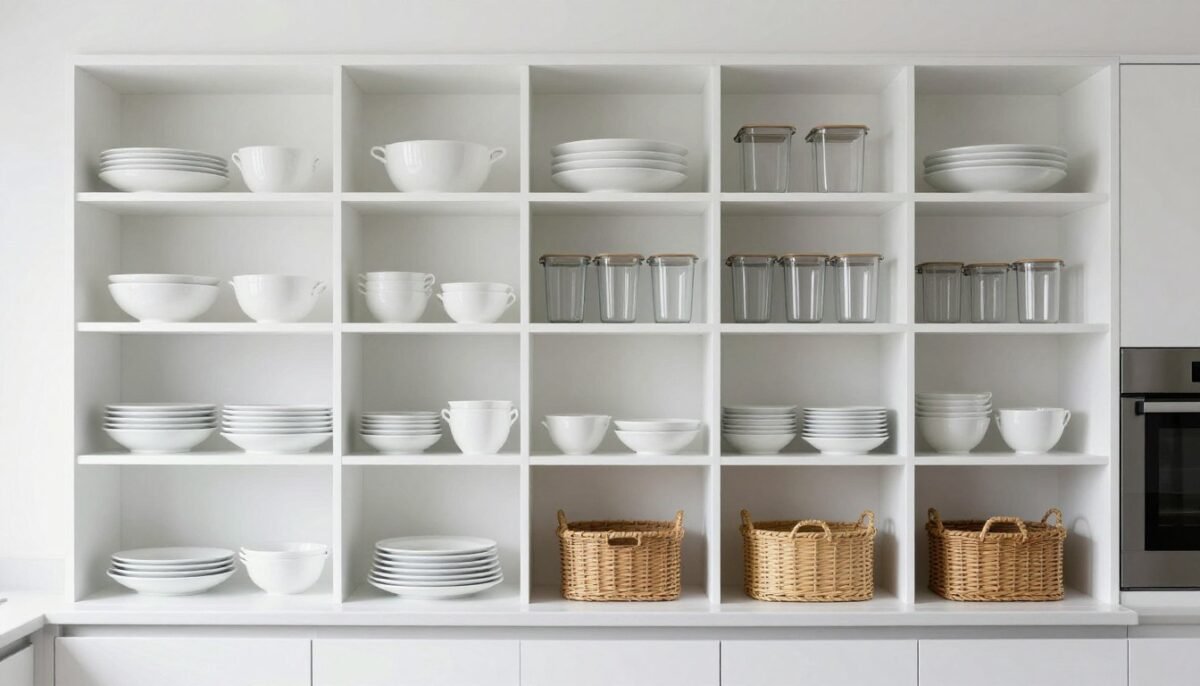
Cubby-style shelving creates organized compartments. Each space serves a specific purpose. This design brings order to busy kitchens.
Built-in cubbies integrate seamlessly with walls. They appear as permanent kitchen features. Custom sizing accommodates your exact needs.
Organization Strategies
Assign each cubby a category. Keep baking supplies in one section. Store dishes in another area.
Use uniform containers for cohesive appearance. Label bins for easy identification. This system simplifies kitchen organization.
Customization Options
- Vary cubby sizes for different storage needs
- Add backing for depth and interest
- Paint interior spaces in accent colors
- Include lighting within cubbies
Open Shelving Above the Sink
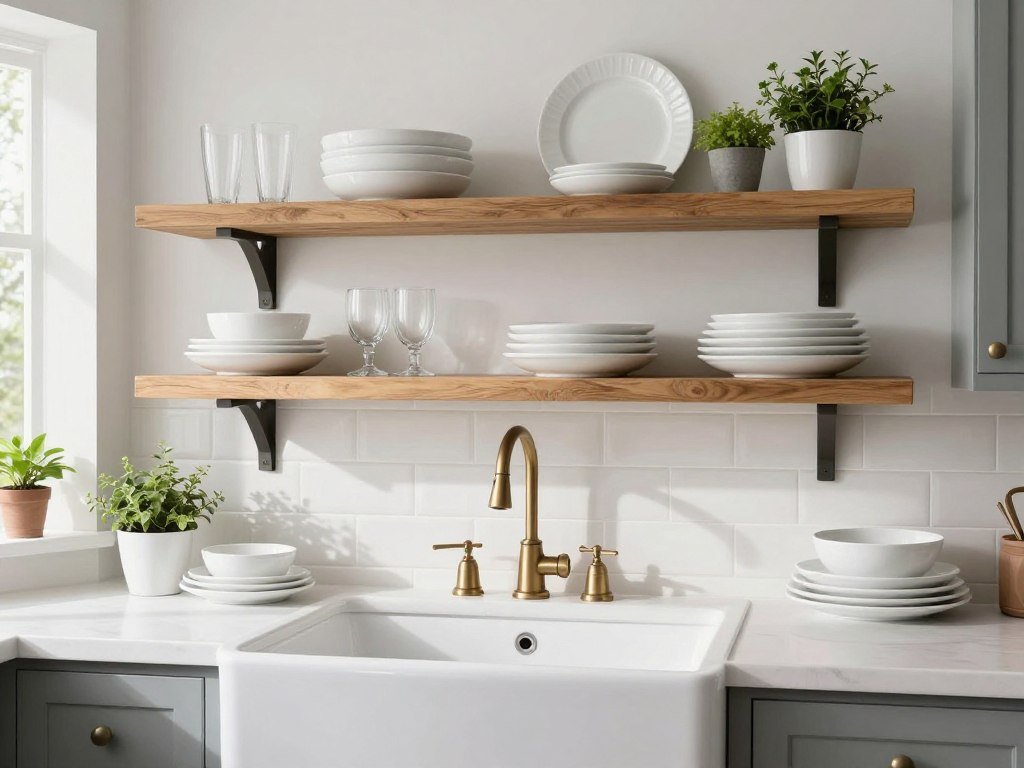
The area above your sink offers prime real estate. Open shelves here provide easy access. You can reach items while working at the sink.
This placement works naturally in kitchen workflow. Store frequently used dishes within arm’s reach. Display items you use during food preparation.
Practical Considerations
Consider splash and moisture exposure. Seal wood shelves thoroughly. Choose materials that handle humidity well.
Keep shelves high enough above the sink. This prevents water damage to stored items. Standard height ranges from 18 to 24 inches.
What to Store
- Everyday dishes and glassware
- Dish soap and cleaning supplies in decorative containers
- Fresh herbs in small pots
- Hand towels on small hooks
Ceiling-Mounted Hanging Shelves
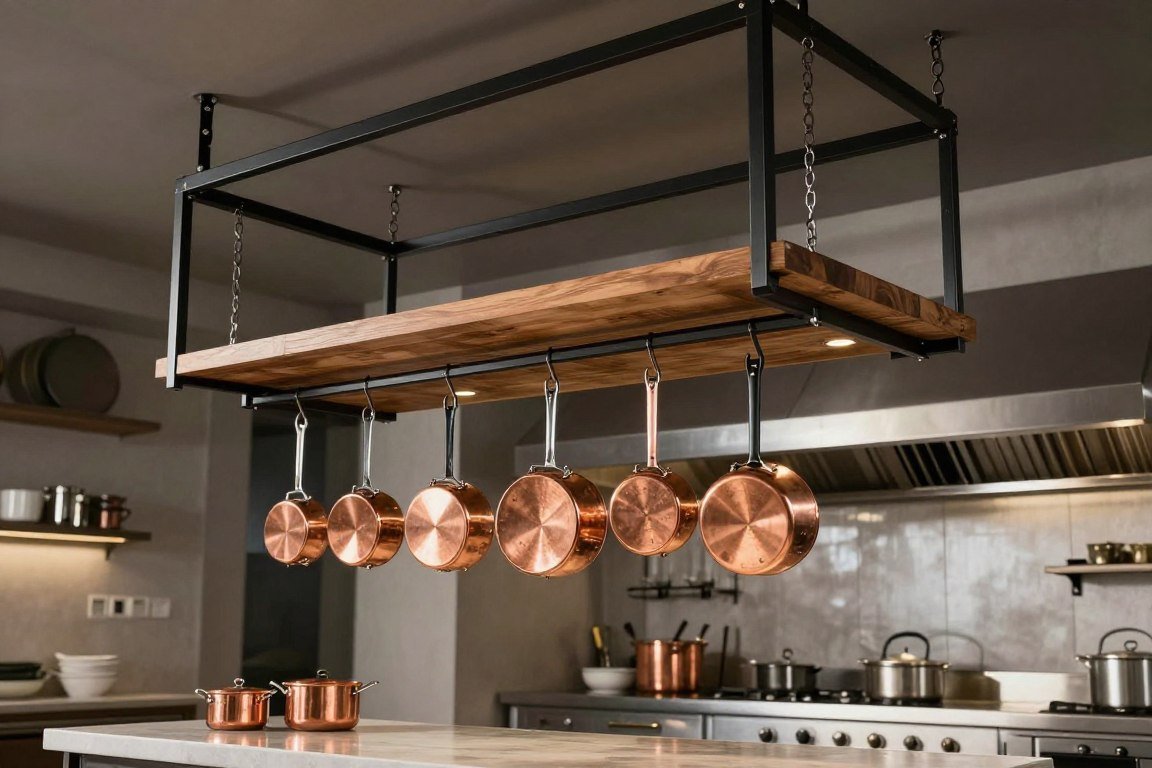
Ceiling shelves create dramatic impact. These suspended units float in space. They work especially well in kitchens with high ceilings.
This design frees up wall space entirely. You gain storage without sacrificing counter area. The unique look becomes a conversation piece.
Installation Requirements
Ceiling joists must support the weight. Professional installation ensures safety. Never hang heavy items without proper anchoring.
Calculate total weight including shelf and items. Add a safety margin to your calculations. Use heavy-duty hardware rated for the load.
Best Uses
Hang frequently used pots and pans. Store items you grab regularly while cooking. Keep space beneath clear for work areas.
- Position above kitchen islands for easy access
- Include hooks for hanging utensils
- Add lighting to illuminate work surfaces below
- Choose finishes that complement other fixtures
Narrow Plate Rack Shelves
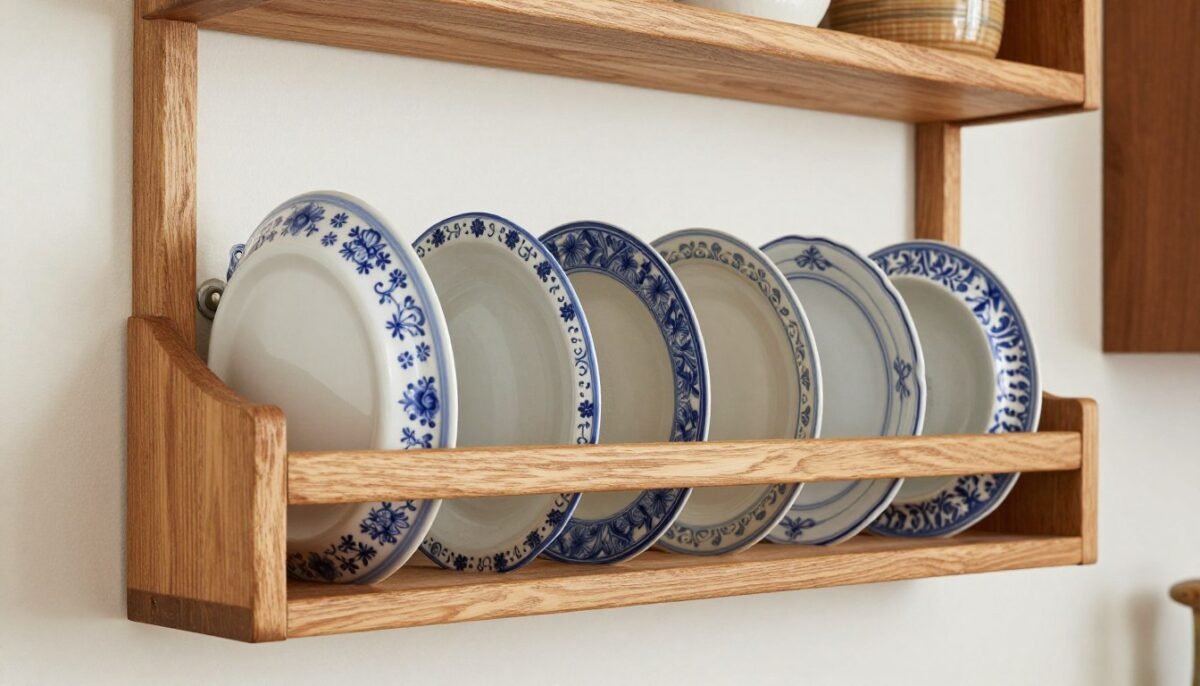
Plate racks showcase dishes beautifully. These specialized shelves hold plates vertically. Your finest china becomes wall art.
The vertical storage saves significant space. You can fit more dishes in less area. This design protects plates from chipping.
Design Features
Grooves hold plates securely upright. Spacing accommodates different plate sizes. Some designs include additional flat storage above.
Choose depth based on your plate collection. Standard racks work for most dishes. Deeper versions handle larger serving platters.
Styling Advice
- Arrange plates by color for visual impact
- Mix patterns for eclectic charm
- Use uniform sets for clean, modern look
- Leave some slots empty to avoid crowding
Minimalist Single-Shelf Design
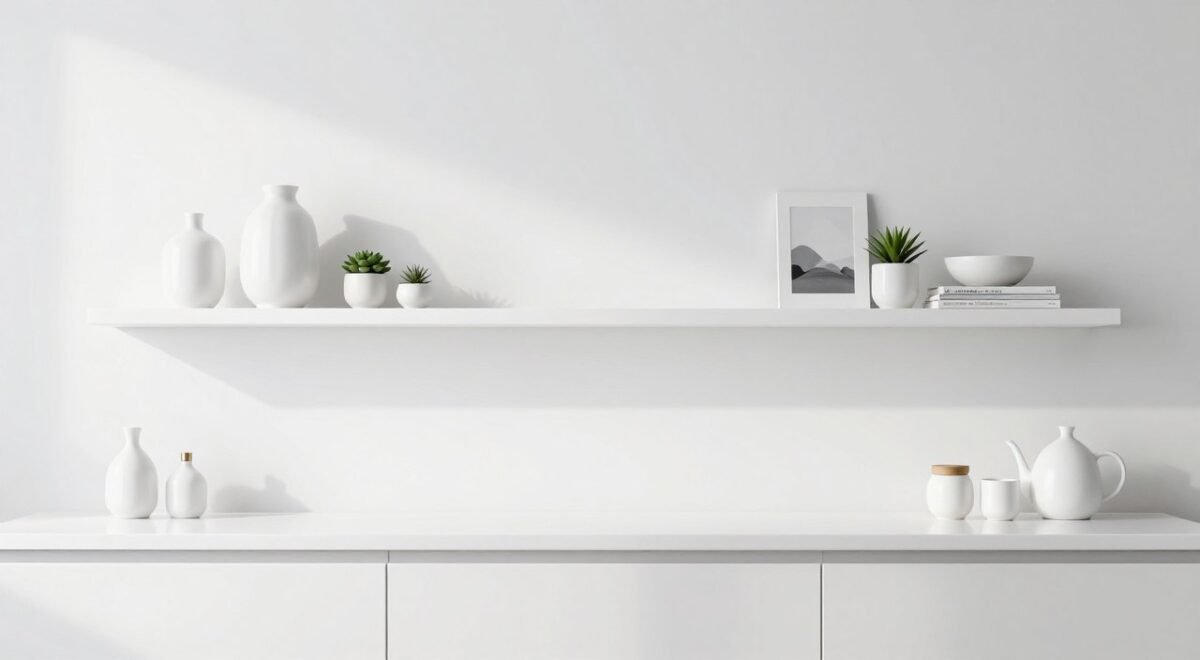
Sometimes less truly is more. A single shelf makes a bold statement. This approach works perfectly in small kitchens.
One well-placed shelf draws the eye. It creates a focal point without overwhelming. The simplicity enhances modern kitchen aesthetics.
Maximizing Impact
Position your shelf at eye level. This creates the strongest visual effect. Choose a substantial length for presence.
Curate items carefully for this shelf. Each piece should earn its place. Quality matters more than quantity here.
Item Selection
Display items that bring you joy. Choose pieces with meaning or beauty. Rotate selections to maintain interest.
- Feature a small collection of similar items
- Include one statement piece as a focal point
- Add a small plant for life
- Keep spacing generous between objects
Mixed-Material Shelving
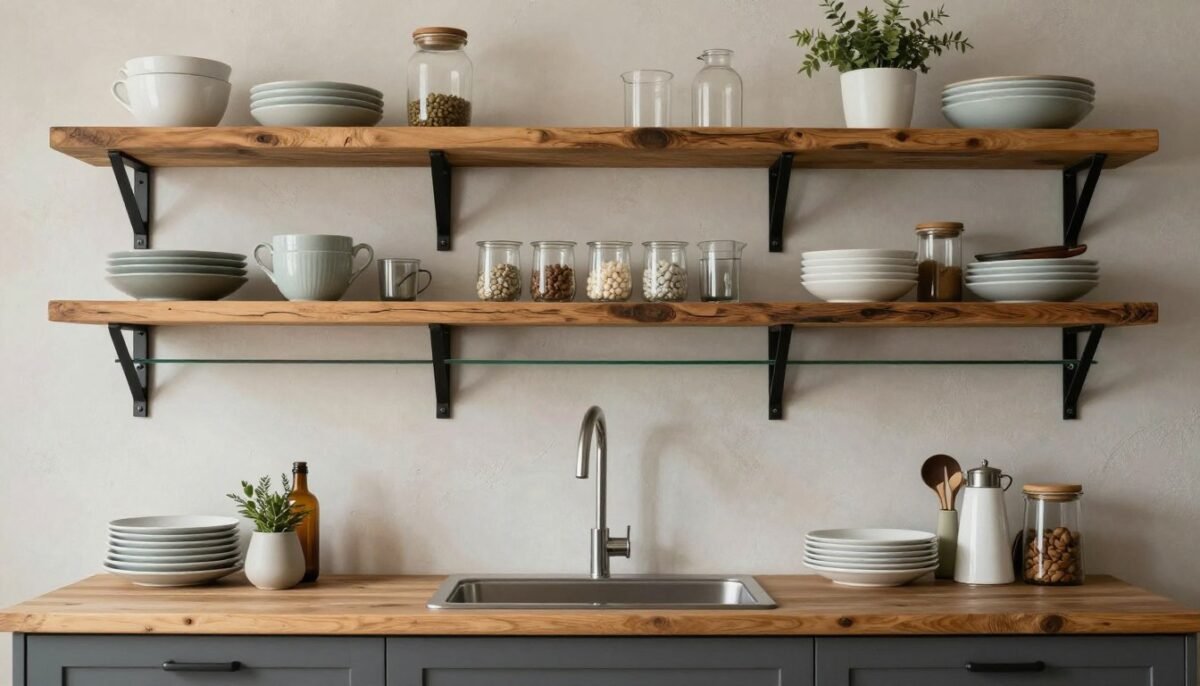
Combining materials creates visual interest. Wood and metal pairings offer timeless appeal. Glass and wood bring modern elegance.
Mixed materials add depth to kitchen design. They allow you to bridge different style elements. This approach creates unique, personalized looks.
Material Combinations
Wood provides warmth and tradition. Metal adds contemporary edge. Glass contributes lightness and transparency.
Balance materials throughout your kitchen. Echo shelving materials in other elements. This creates cohesive design flow.
Design Harmony
- Match metal finishes to hardware and fixtures
- Use consistent wood tones across elements
- Limit yourself to three materials maximum
- Consider texture as well as color
Thick Slab Shelving
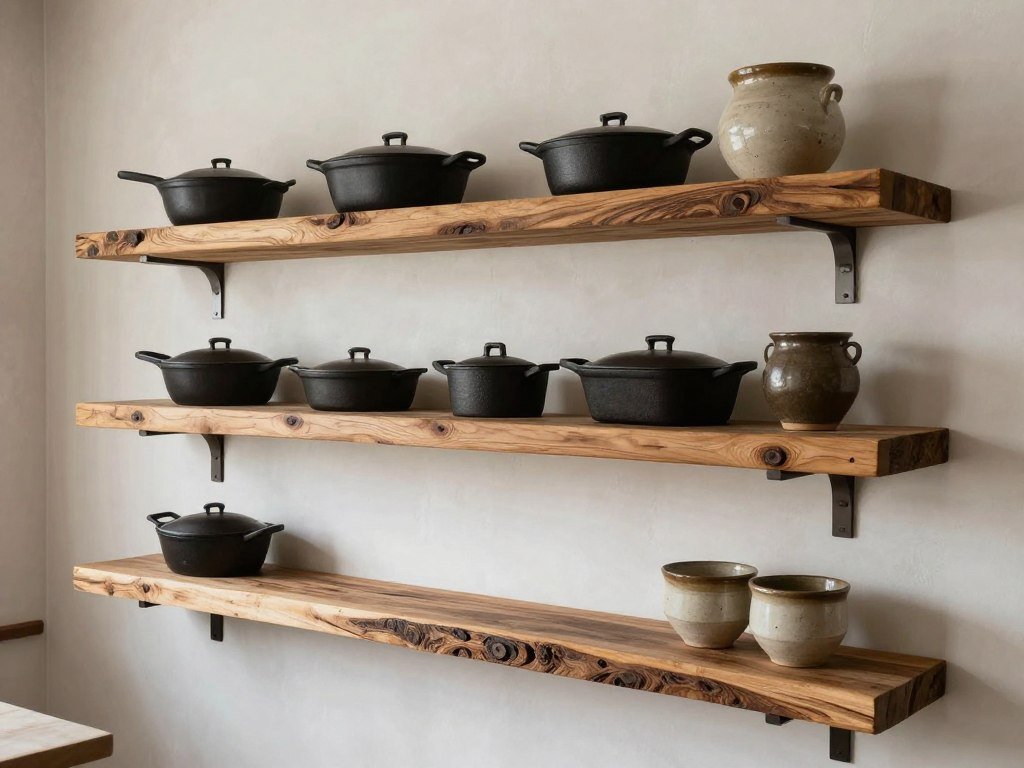
Substantial shelves make powerful statements. Thick wood slabs convey permanence and quality. These shelves become architectural features.
The hefty appearance provides visual weight. This grounds your kitchen design beautifully. Thick shelves support heavier items with ease.
Wood Selection
Live edge slabs preserve natural beauty. Smooth-finished slabs offer refined elegance. Both styles work in various kitchen designs.
Consider wood species carefully. Oak provides durability and classic grain. Walnut offers rich, dark tones.
Installation Considerations
Heavy shelves require robust support systems. Invest in quality mounting hardware. Professional installation may be worthwhile.
- Ensure wall studs can support the weight
- Use multiple brackets for longer shelves
- Seal wood properly against moisture
- Allow wood to acclimate before installation
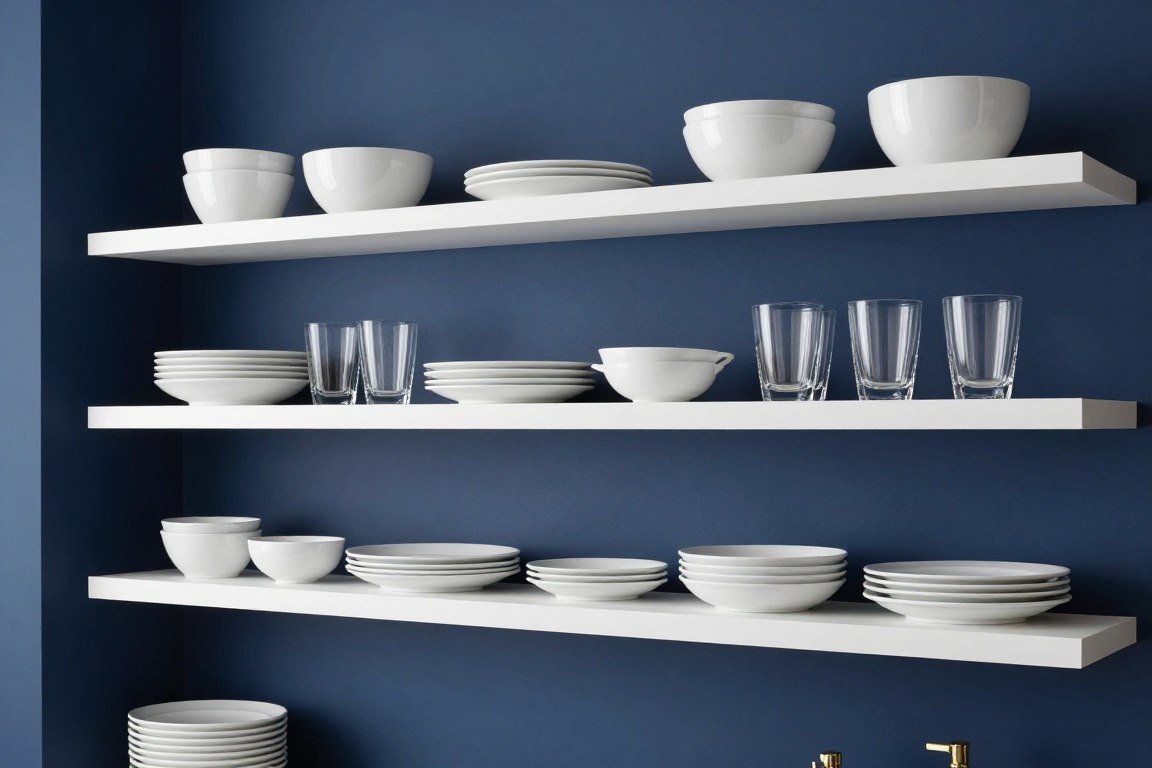
Colored Background Shelving
Background color transforms shelf displays. Painted walls behind shelving create depth. Bold colors make items pop visually.
This technique works with any shelf style. The color becomes part of the design. Your shelving gains dimension and character.
Color Selection
Dark backgrounds create dramatic contrast. Light colors offer subtle sophistication. Choose based on your overall kitchen palette.
Consider how colors affect your items. White dishes shine against dark walls. Colorful pieces need neutral backgrounds.
Design Impact
- Test paint colors in your lighting conditions
- Use color to define the shelving zone
- Coordinate with other kitchen accent colors
- Consider painting just the wall recess
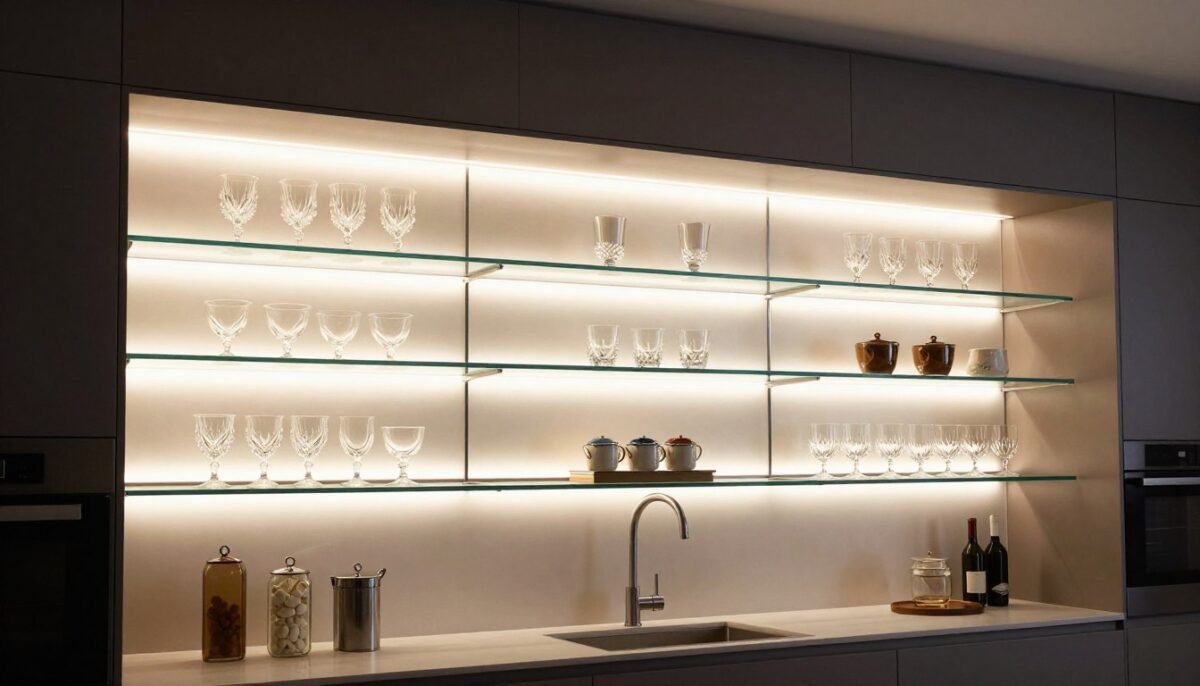
Backlighted Shelving
Lighting transforms shelving from functional to spectacular. LED strips create ambient glow. Backlit shelves become kitchen focal points.
This design works beautifully at night. The illumination showcases your items. Glass and translucent pieces particularly shine.
Lighting Options
LED strips offer energy-efficient solutions. They produce minimal heat. Choose between warm and cool tones.
Programmable LEDs allow color changes. Some systems connect to smart home controls. This adds flexibility to your kitchen lighting.
Installation Tips
Plan electrical work during installation. Conceal wiring within walls when possible. Battery-operated options work for existing shelves.
- Position lights to avoid glare
- Use dimmer switches for control
- Choose waterproof LED strips for kitchen safety
- Match light temperature to kitchen lighting
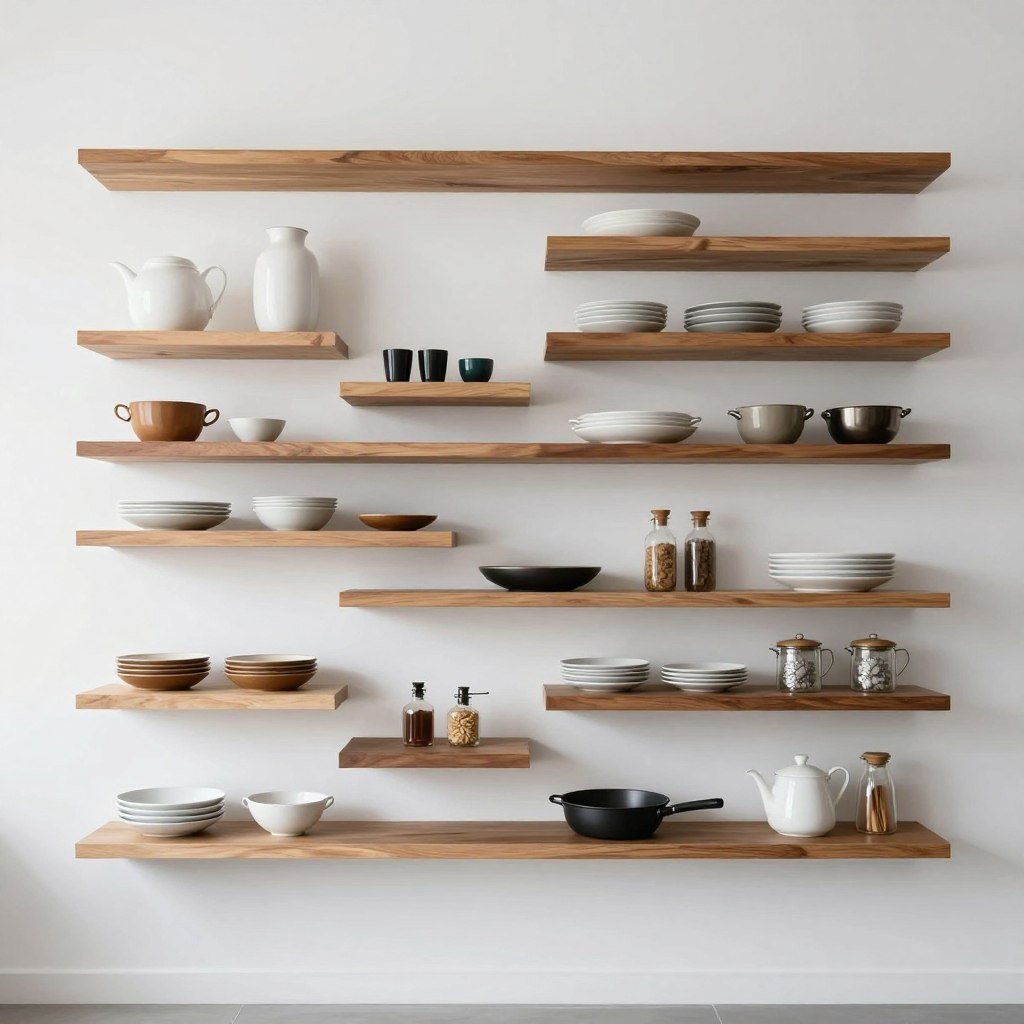
Asymmetrical Shelf Arrangements
Breaking from symmetry creates visual excitement. Staggered shelves add modern flair. This approach allows creative expression.
Asymmetrical designs feel less formal. They bring personality to kitchen spaces. The unexpected placement catches the eye.
Planning Your Layout
Sketch arrangements before drilling holes. Consider balance even in asymmetry. Some visual weight distribution still matters.
Use odd numbers of shelves. Three or five shelves work better than even numbers. This creates more pleasing compositions.
Styling Asymmetric Shelves
- Vary shelf lengths for interest
- Keep spacing irregular but intentional
- Balance visual weight across the arrangement
- Use the rule of thirds for placement
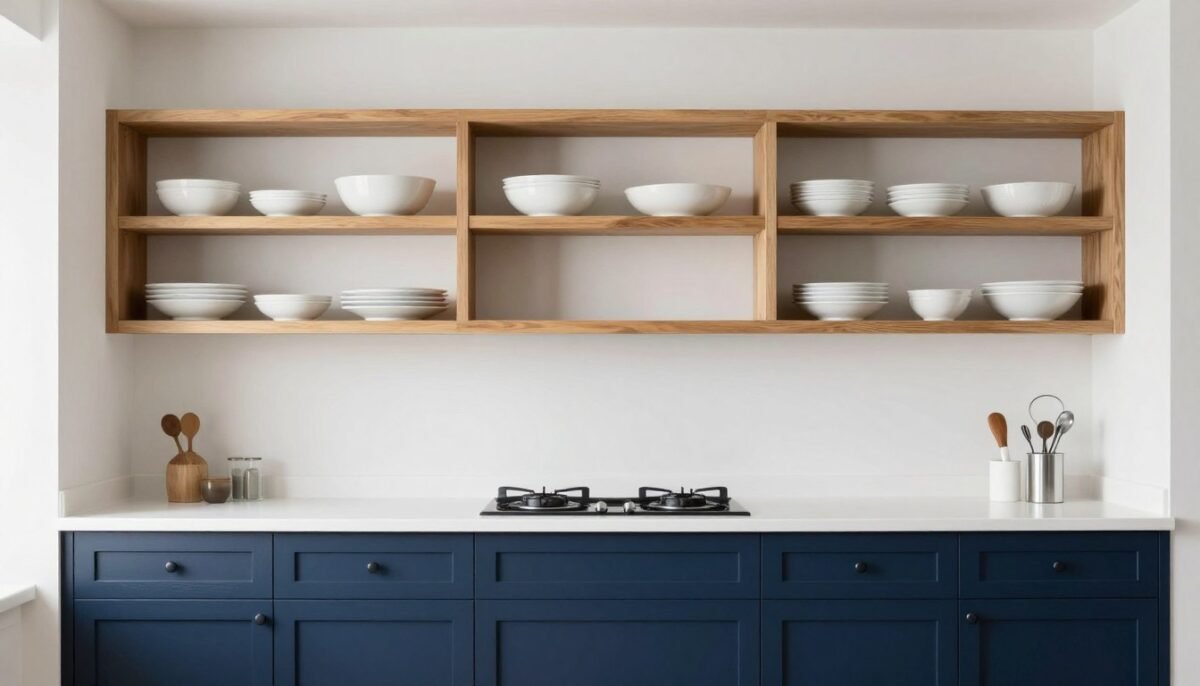
Open Shelving with Closed Base Cabinets
Combining open and closed storage balances aesthetics with practicality. Upper open shelves showcase beautiful items. Lower cabinets hide clutter and appliances.
This hybrid approach offers the best of both worlds. You gain display space without sacrificing storage capacity. The combination works in most kitchen layouts.
Design Balance
Coordinate shelf and cabinet colors. Matching wood tones create cohesion. Contrasting finishes add visual interest.
Consider proportions carefully. Upper shelves should feel lighter than base cabinets. This maintains visual balance in your kitchen.
Functionality Tips
- Store everyday items on open shelves
- Keep cleaning supplies in base cabinets
- Use lower cabinets for small appliances
- Display decorative pieces on upper shelves
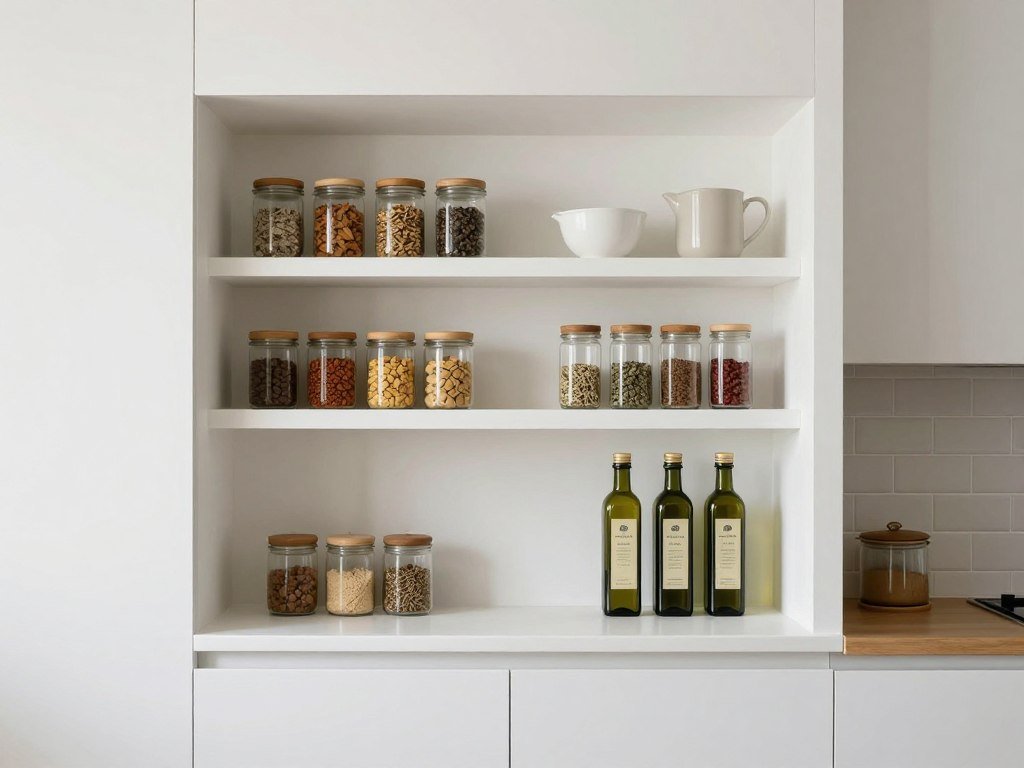
Recessed Wall Niche Shelves
Built-in niches utilize wall depth. These recessed shelves don’t protrude into your kitchen. They maximize space in compact areas.
Wall niches work best during construction or renovation. Creating them requires opening walls. The result provides seamless storage.
Construction Considerations
Work with wall studs to determine dimensions. Standard stud spacing limits niche width. Plan around electrical and plumbing lines.
Finish niches with quality materials. Tile creates easy-to-clean surfaces. Paint offers budget-friendly options.
Best Uses
Store frequently used cooking items. Display spices within easy reach. Keep oils and vinegars organized.
- Install near cooking areas for convenience
- Add small LED puck lights for visibility
- Use matching materials to kitchen backsplash
- Keep niche depth proportional to items stored
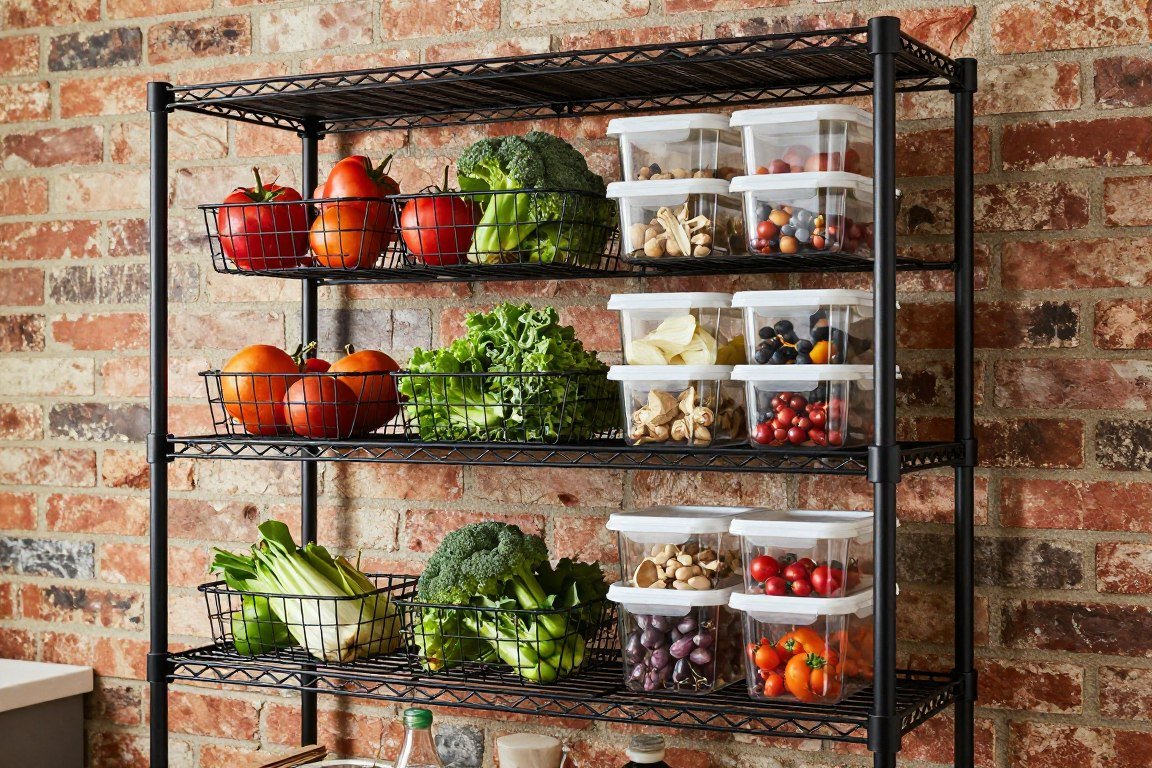
Wire Basket Shelving
Wire shelving offers industrial charm. The open design promotes air circulation. This prevents dust and grease buildup.
Metal wire creates lightweight storage solutions. They work well in pantries and kitchen areas. The see-through design helps locate items quickly.
Material Options
Powder-coated wire resists rust. Chrome finishes offer sleek appearance. Black wire provides modern industrial look.
Choose wire thickness based on weight requirements. Heavier gauge supports more substantial items. Lighter wire works for decorative purposes.
Organization Ideas
- Use baskets for root vegetables and onions
- Store frequently used pantry items
- Organize kitchen towels and linens
- Keep cleaning supplies contained and visible
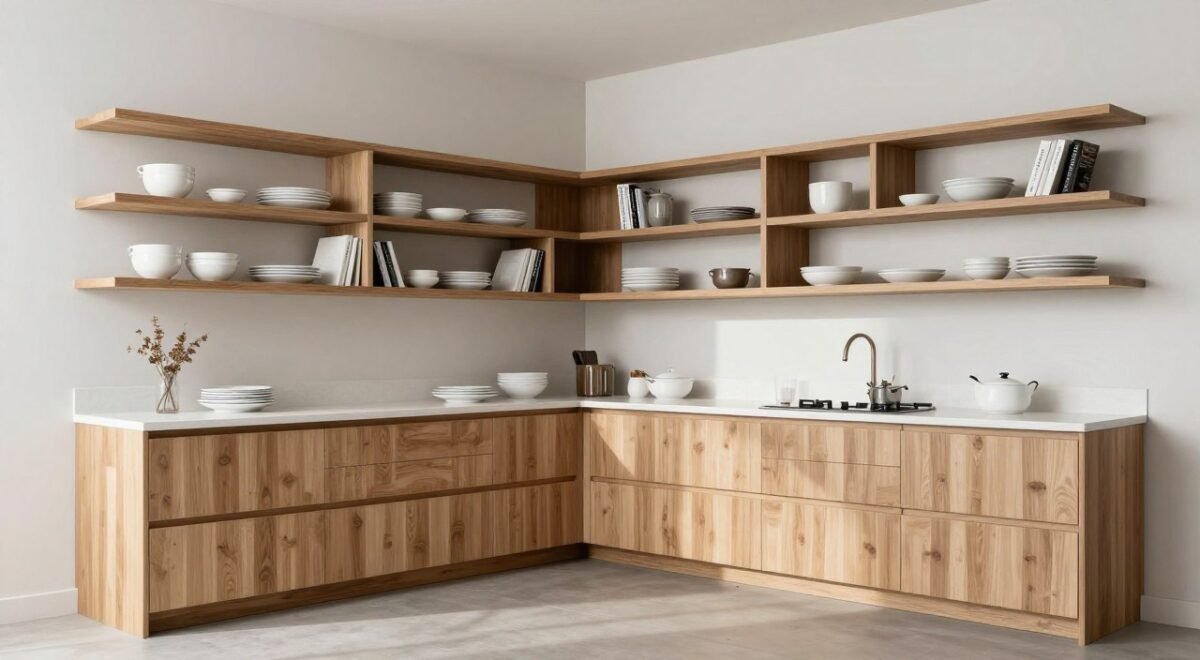
Wraparound Corner Shelving
Continuous shelving flows around corners. This design creates visual continuity. Corner transitions feel natural and intentional.
Wraparound shelves maximize wall space usage. They work particularly well in L-shaped kitchens. The continuous line draws the eye around the space.
Planning the Layout
Measure both walls carefully. Ensure shelves align at the same height. Professional installation helps achieve seamless corners.
Consider how items will display at corners. Some pieces work better than others. Plan your display before installation.
Corner Treatment Options
Mitered corners create clean angles. Overlapping shelves offer rustic charm. Choose based on your skill level and style preference.
- Maintain consistent shelf depth around corners
- Use corner as focal point for special items
- Ensure brackets support weight at corners
- Plan electrical outlets if adding lighting
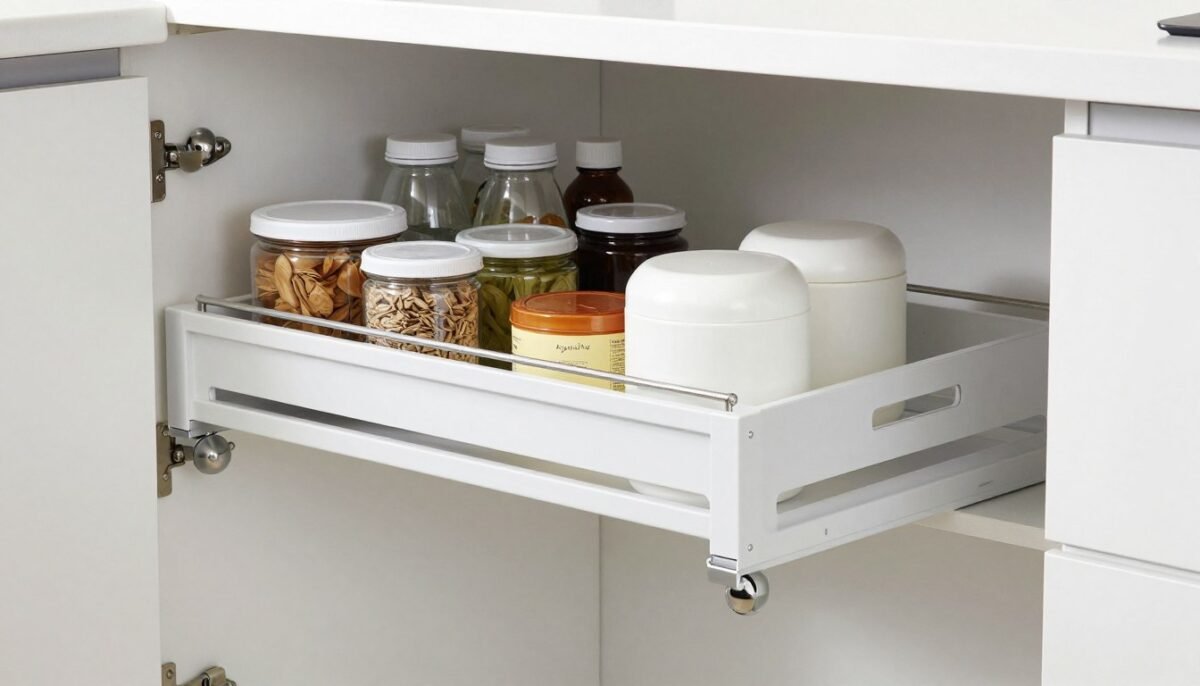
Pull-Out Sliding Shelves
Sliding shelves combine cabinet functionality with open shelving aesthetics. These clever designs pull out when needed. They slide back to create clean lines.
This solution works perfectly for small kitchens. You gain access to deep storage easily. The sliding mechanism prevents items from getting lost.
Hardware Selection
Quality slides ensure smooth operation. Ball-bearing glides handle heavier loads. Soft-close mechanisms prevent slamming.
Choose slides rated for your weight needs. Check extension length capabilities. Full-extension slides provide best access.
Installation Requirements
- Ensure level installation for smooth operation
- Leave adequate clearance for full extension
- Secure slides to solid surfaces
- Test weight capacity before loading
Comparing Open Shelves vs. Traditional Cabinets
Understanding the differences helps make informed decisions. Open shelving and traditional cabinets each offer distinct advantages. Your choice depends on lifestyle and priorities.
Open shelves create airy, spacious feelings. Traditional upper cabinets provide enclosed storage. Both have valid places in kitchen design.
Key Differences
Open Shelving Benefits
- Creates illusion of more space in kitchen
- Provides easy access to frequently used items
- Showcases beautiful dishware and decor
- Costs less than traditional cabinets
- Allows for quick identification of items
- Encourages organization and tidiness
Open Shelving Challenges
- Requires regular dusting and maintenance
- Exposes items to cooking grease and dust
- Offers less total storage capacity
- Demands constant organization
- Provides no concealment for clutter
- May not suit all kitchen styles
Making Your Decision
Consider your cooking habits first. Frequent cooking generates more grease. This requires additional shelf maintenance.
Evaluate your organizational skills honestly. Open shelving works best for naturally tidy people. Traditional cabinets hide occasional messes better.
Storage Needs Assessment
Calculate your actual storage requirements before committing to open shelves. Measure your current cabinet contents.
- Count dishes and glassware you use regularly
- List items that must remain hidden
- Consider seasonal storage requirements
- Plan for future kitchen additions
Maintenance Commitment
Open shelving requires consistent upkeep. Be realistic about time available for keeping kitchen shelves clean and organized.
- Weekly dusting becomes necessary
- Grease removal needs regular attention
- Organization requires daily maintenance
- Dishware stays cleaner in cabinets
Aesthetic Considerations
Open shelves dramatically change kitchen look and feel. They work beautifully in certain design styles and spaces.
- Best suited for modern and farmhouse styles
- Creates focal points in kitchen design
- Requires curated, matching dishware
- Makes small kitchens feel larger
Budget Analysis
Open shelving typically costs less than traditional upper cabinets. Factor in all expenses when planning your kitchen.
- Materials generally cost 40-60% less
- Installation often simpler and cheaper
- May need to purchase display-worthy items
- Long-term maintenance costs vary
Essential Design Tips and Styling Strategies
Successful open shelving requires thoughtful planning. Design choices impact both functionality and aesthetics. These tips help create beautiful, practical results.
Color Coordination
Color schemes dramatically affect shelf appearance. Coordinated colors create visual harmony. Strategic pops of color add personality.
Start with a base color palette. White dishes offer versatility and brightness. They work in virtually any kitchen design.
- Stick to three main colors maximum
- Use wood tones as neutral elements
- Add metallic accents sparingly
- Group similar colors together
Creating Visual Balance
Balance prevents shelves from feeling chaotic. Distribute visual weight evenly across space. Mix heights and textures intentionally.
Apply the rule of thirds to shelf styling. Divide shelf space into three sections. Vary the density of items in each area.
Pro Tip: Leave approximately 30% of shelf space empty. This breathing room prevents cluttered appearance and allows room for new additions to your kitchen.
Functional Zones
Organize shelves by function and frequency of use. Keep everyday items at eye level. Store less-used pieces higher or lower.
- Place coffee items near coffee maker
- Store cooking oils near stove area
- Keep baking supplies together in one zone
- Group serving pieces by meal type
Incorporating Greenery
Plants bring life to open shelving. Small herbs serve dual purposes. They add beauty while remaining functional.
Choose low-maintenance plants for kitchen environments. Succulents tolerate varying conditions well. Pothos thrives in most kitchen settings.
Maintenance and Care for Kitchen Shelves
Proper maintenance keeps shelving beautiful and functional. Regular care prevents major cleaning projects. Establish routines that work for your life.
Daily Maintenance
Quick daily attention prevents buildup. Wipe spills immediately to avoid stains. Return items to designated spots after use.
Spend five minutes daily organizing. This small investment prevents overwhelming mess. Your kitchen stays consistently presentable.
Quick Daily Checklist: Return all items to proper places, wipe visible spills or splashes, straighten items that shifted during cooking, check for items needing washing.
Weekly Deep Cleaning
Set aside time weekly for thorough cleaning. Remove all items from one shelf section. Clean the shelf surface completely.
Dust accumulates quickly in cooking spaces. Grease particles settle on surfaces. Weekly attention manages both issues effectively.
- Use microfiber cloths for dust removal
- Mix mild dish soap with warm water
- Dry shelves thoroughly after cleaning
- Inspect items for damage while cleaning
Seasonal Organization
Review your shelving arrangement quarterly. Rotate seasonal items in and out of storage. Reassess what deserves prime shelf space.
This regular evaluation keeps things fresh. You’ll discover items no longer needed. Make space for new favorites.
Preventing Common Issues
Dust and Grease Control
Kitchen environments generate particulates constantly. Cooking activities produce airborne grease. These settle on open shelves inevitably.
- Install proper ventilation above cooking areas
- Use range hood at high settings when cooking
- Keep items you rarely use in closed storage
- Seal wood shelves with food-safe finish
Shelf Stability
Monitor shelf condition regularly. Check brackets and mounting points. Address issues before they become serious problems.
- Tighten loose brackets promptly
- Watch for sagging in longer shelves
- Redistribute weight if shelves bow
- Reinforce as needed for safety
Choosing the Right Materials
Material selection impacts durability and appearance. Different materials suit different needs. Understanding options helps make smart choices.
Wood Options
Wood remains the most popular shelving choice. Natural beauty and versatility explain this preference. Different wood species offer varied characteristics.
Hardwoods like oak and maple provide exceptional durability. They resist warping and support heavy loads. Softer woods like pine cost less but dent more easily.
| Wood Type | Durability | Cost | Best For |
| Oak | Excellent | Medium-High | Heavy items, long-term use |
| Maple | Excellent | High | Fine finish, smooth appearance |
| Pine | Good | Low-Medium | Budget projects, light loads |
| Walnut | Very Good | High | Luxury appearance, statement pieces |
| Reclaimed Wood | Varies | Medium-High | Character, unique appearance |
Alternative Materials
Modern materials expand design possibilities. Each offers unique benefits for kitchen shelves. Consider your specific needs when choosing.
Metal shelving provides industrial aesthetic. Glass creates lightness and transparency. Composite materials offer budget-friendly durability.
- Stainless steel resists moisture and heat
- Tempered glass handles kitchen conditions safely
- Bamboo provides sustainable option
- Powder-coated metal resists rust
Finish Considerations
Proper finishing protects shelving materials. Sealed wood resists moisture and staining. Unfinished materials require more maintenance.
Choose food-safe finishes for kitchen applications. Some finishes emit odors initially. Plan installation timing accordingly.
Bringing Your Kitchen Vision to Life
Open shelving transforms kitchens in remarkable ways. These 20 ideas demonstrate the versatility of kitchen shelves instead of cabinets. Each design offers unique benefits for your home.
Consider your lifestyle when planning shelving. Think about maintenance commitment and storage needs. Balance aesthetics with functionality throughout your kitchen design.
Start small if you’re uncertain about open shelving. Replace one section of upper cabinets first. This allows you to test the concept before committing fully.
The right shelving enhances both beauty and function. Your kitchen becomes a space that truly reflects your style. Open shelves invite creativity and personalization.
Take time to plan your shelving project carefully. Measure spaces accurately and choose quality materials. Proper installation ensures safety and longevity.