
Creating the perfect outdoor living space starts with choosing the right patio design. Concrete patios offer endless possibilities for transforming your backyard into a beautiful and functional area. Whether you prefer modern minimalism or rustic charm, stamped concrete and decorative finishes provide solutions for every style and budget.
This comprehensive guide showcases twenty inspiring concrete patio designs. Each option includes practical details about materials, colors, patterns, and installation considerations. You’ll discover how different concrete techniques create unique looks that complement your home’s exterior while meeting your outdoor living needs.
From simple brushed finishes to intricate stamped patterns mimicking natural stone, these designs demonstrate concrete’s versatility. Let’s explore options that will help you make an informed decision for your backyard transformation.
Table of Contents
Ashlar Slate Pattern Elegance
The ashlar slate pattern remains one of the most popular stamped concrete choices for patios. This design replicates the appearance of cut natural stone with rectangular shapes in varying sizes. The pattern creates an upscale look that works beautifully with both traditional and contemporary homes.
Light gray tones dominate this design, offering a neutral backdrop that complements various outdoor furniture styles. The color won’t show dirt as easily as darker shades. Many homeowners appreciate how light gray concrete stays cooler underfoot during summer months compared to darker alternatives.
Installation involves pressing specialized stamps into fresh concrete to create the stone texture. Contractors apply release agents in complementary colors to enhance the dimensional appearance. The result mimics expensive flagstone or slate at a fraction of the cost.
This pattern works exceptionally well for medium to large patio areas. The varying stone sizes create visual interest without overwhelming smaller spaces. Consider adding a contrasting border to define the patio edges and enhance the overall design impact.
Design Benefits
- Timeless aesthetic appeal
- Complements multiple architectural styles
- Highly durable surface
- Lower maintenance than natural stone
- Excellent value for investment
Best Applications
- Main entertaining patios
- Pool deck surrounds
- Walkway connections
- Covered outdoor living areas
- Large backyard installations
Modern Geometric Patterns
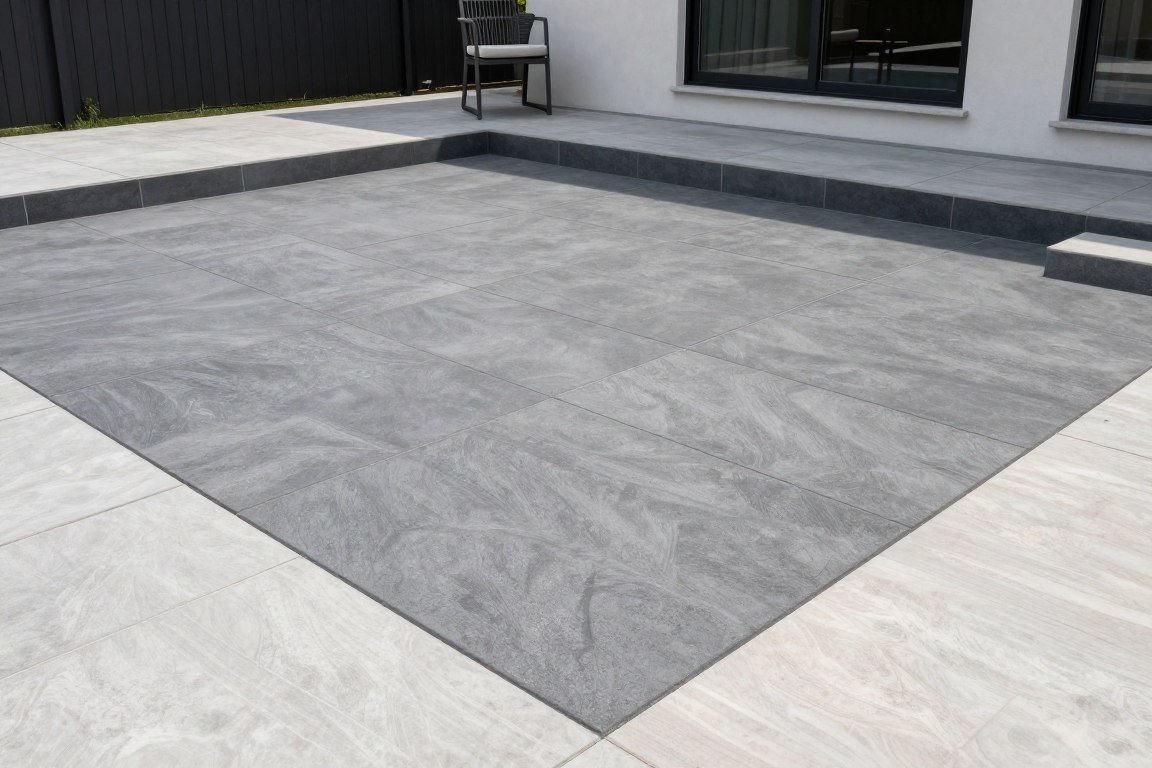
Geometric patterns bring contemporary flair to concrete patio designs. These clean-lined stamps create squares, rectangles, and other angular shapes that appeal to modern aesthetics. The sharp edges and uniform spacing deliver a sophisticated appearance that complements contemporary architecture.
Charcoal and dark gray colors work particularly well with geometric designs. These deeper tones create dramatic contrast against lighter home exteriors. The darker concrete also provides an excellent backdrop for colorful outdoor furniture and decorative elements.
This style suits homeowners who appreciate minimalist design principles. The pattern’s simplicity allows other backyard features to shine. Consider pairing geometric concrete with metal furniture, glass fire pit tables, and sculptural planters for a cohesive modern look.
Installation requires precise stamping to maintain the geometric integrity. Experienced contractors ensure consistent spacing and alignment throughout the surface. Proper sealing enhances the color depth and protects the concrete from weathering over years of use.
Color Combinations for Geometric Designs
Monochrome Scheme
Single charcoal tone with lighter gray grout lines creates subtle definition. This approach emphasizes the pattern without color distraction.
Contrasting Borders
Dark gray field with light gray border frames the space. The contrast defines patio boundaries and adds visual interest.
Multi-Tone Blend
Varying shades of gray within the pattern add depth. This technique creates dimension while maintaining the modern aesthetic.
Brick Pattern Traditional Charm
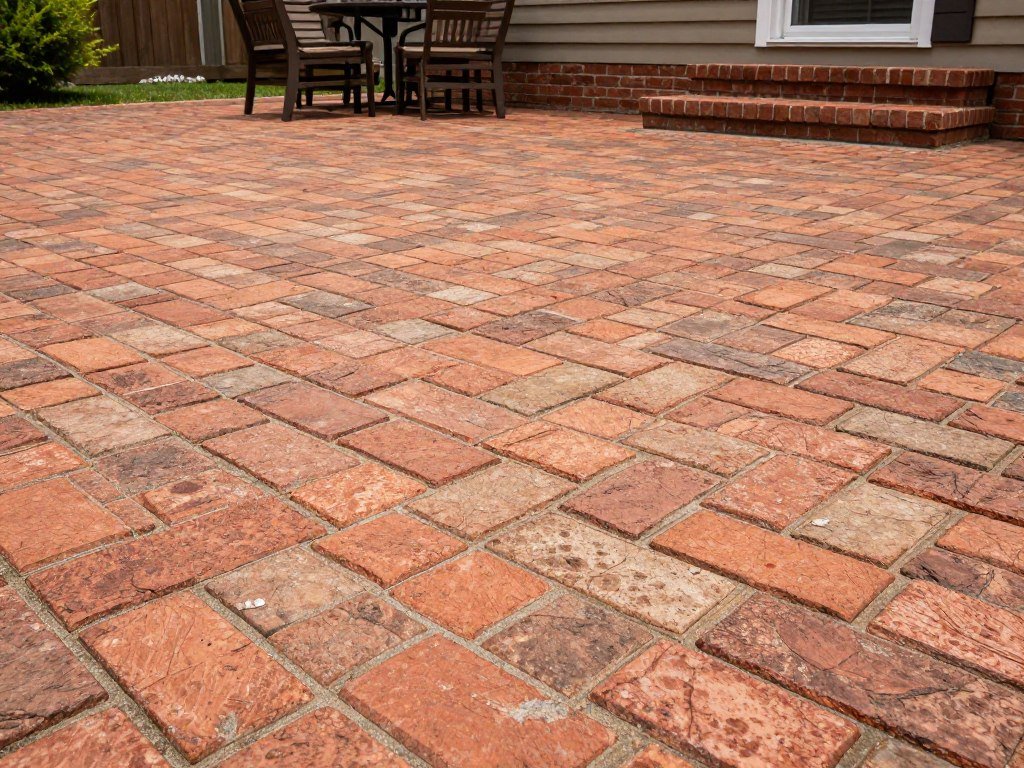
The brick pattern stamped concrete design offers timeless appeal for traditional homes. This classic look replicates the appearance of individual clay bricks laid in various configurations. Running bond, herringbone, and basket weave patterns provide different visual effects while maintaining the familiar brick aesthetic.
Red and terracotta tones dominate traditional brick designs. These warm colors create inviting outdoor spaces that feel comfortable and established. The earthy palette complements brick home exteriors beautifully and blends naturally with garden landscaping.
Stamped concrete brick costs significantly less than installing actual pavers. The continuous surface eliminates issues with settling, weed growth between joints, and individual brick replacement. Maintenance involves simple cleaning and periodic resealing to maintain the fresh appearance.
This pattern works well for patios of any size. Smaller courtyards benefit from the detailed texture, while larger areas showcase the pattern’s versatility. Consider using different brick laying patterns to define separate functional zones within your outdoor space.
Professional Tip: When selecting brick colors for stamped concrete, bring samples of your home’s exterior brick to ensure color coordination. Contractors can blend custom tones to achieve perfect matches with existing masonry elements.
Natural Flagstone Replica
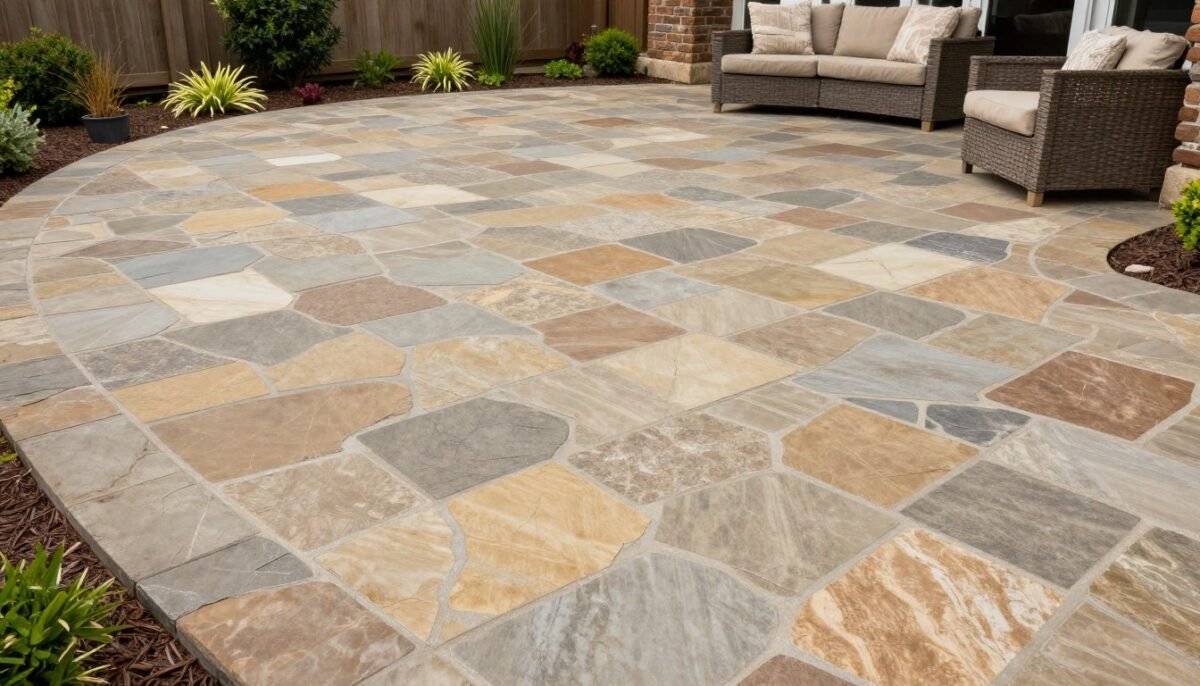
Flagstone patterns create organic, natural-looking patios that blend seamlessly with landscaping. This design features irregular stone shapes that mimic the random beauty of natural flagstone installations. The varied stone sizes and shapes deliver an authentic appearance that appeals to homeowners seeking rustic or organic aesthetics.
Earth tone color blends work best for flagstone designs. Combining tans, browns, grays, and subtle red tones creates realistic stone variation. Professional installers apply multiple release agent colors to achieve natural depth and character that closely resembles quarried stone.
The irregular pattern disguises minor surface imperfections better than geometric designs. This characteristic makes flagstone stamps forgiving for various installation conditions. The natural randomness also means no two flagstone concrete patios look identical.
This style complements homes with natural wood, stone, or stucco exteriors. The organic appearance pairs beautifully with cottage gardens, native plantings, and rustic outdoor furniture. Consider incorporating a fire pit or natural stone border to enhance the outdoor living experience.
Flagstone Pattern Variations
- Large irregular stones with wide joints for dramatic effect
- Smaller stones with tight spacing for detailed texture
- Mixed size combinations for authentic quarried appearance
- Single-tone applications for subtle sophistication
- Multi-color blends for maximum natural variation
Wood Plank Stamped Concrete
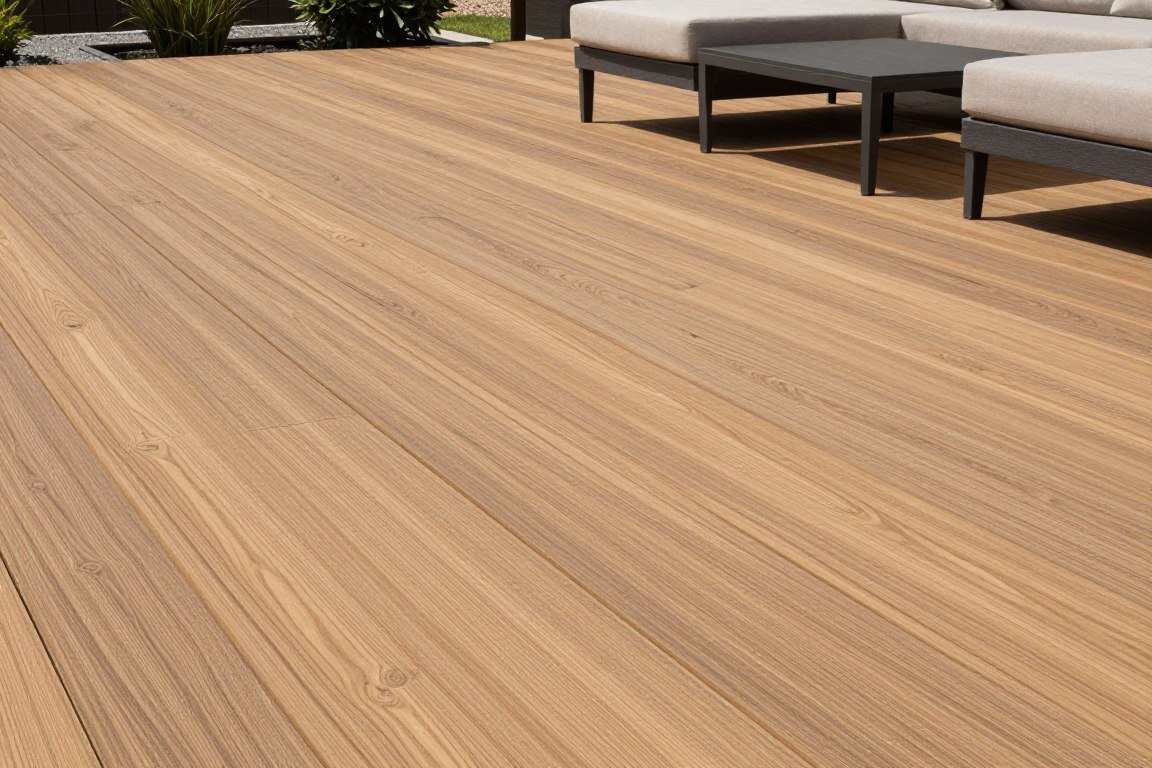
Wood plank stamped concrete delivers the aesthetic of hardwood decking without maintenance headaches. This innovative design replicates wood grain textures and plank configurations in durable concrete. The result provides natural wood beauty with concrete’s longevity and weather resistance.
Natural wood tones ranging from light oak to rich walnut create authentic appearances. The stamping process captures fine wood grain details, knot patterns, and plank end variations. Advanced coloring techniques add depth and realism that convincingly mimics actual lumber.
This option appeals to homeowners who love wood deck aesthetics but want to avoid regular staining, sealing, and board replacement. The concrete surface won’t splinter, rot, or attract termites. It maintains its appearance with minimal maintenance over many years.
Wood plank patterns work exceptionally well for covered patios and areas adjacent to home interiors. The design creates visual continuity between indoor flooring and outdoor spaces. Consider running the planks perpendicular to your home to visually expand the patio area.
Cobblestone European Style
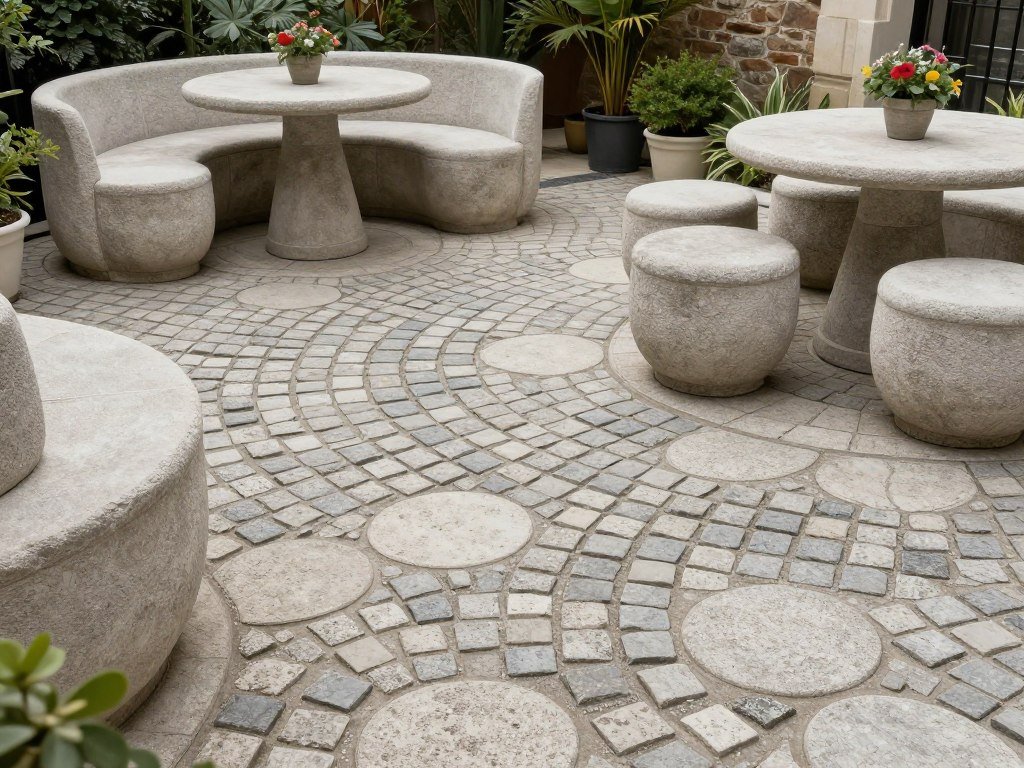
Cobblestone patterns bring old-world European charm to American backyards. This design features rounded stones in varying sizes that create the look of ancient street pavers. The time-worn aesthetic adds character and sophistication to outdoor living areas.
Gray color variations dominate cobblestone designs. Mixing light gray, medium gray, and charcoal tones within the same installation creates authentic depth. Some homeowners add subtle tan or brown accents to warm the overall appearance and complement home exterior colors.
The rounded stone shapes create interesting visual texture that works well for both formal and casual outdoor settings. The pattern pairs beautifully with wrought iron furniture, classical statuary, and formal garden designs. It also complements cottage-style homes and English garden landscapes.
Installation involves careful attention to color blending and stone orientation. Skilled contractors vary the stamp placement to avoid repetitive patterns. The three-dimensional appearance comes from strategic color application that highlights the rounded stone surfaces.
Seamless Slate Texture
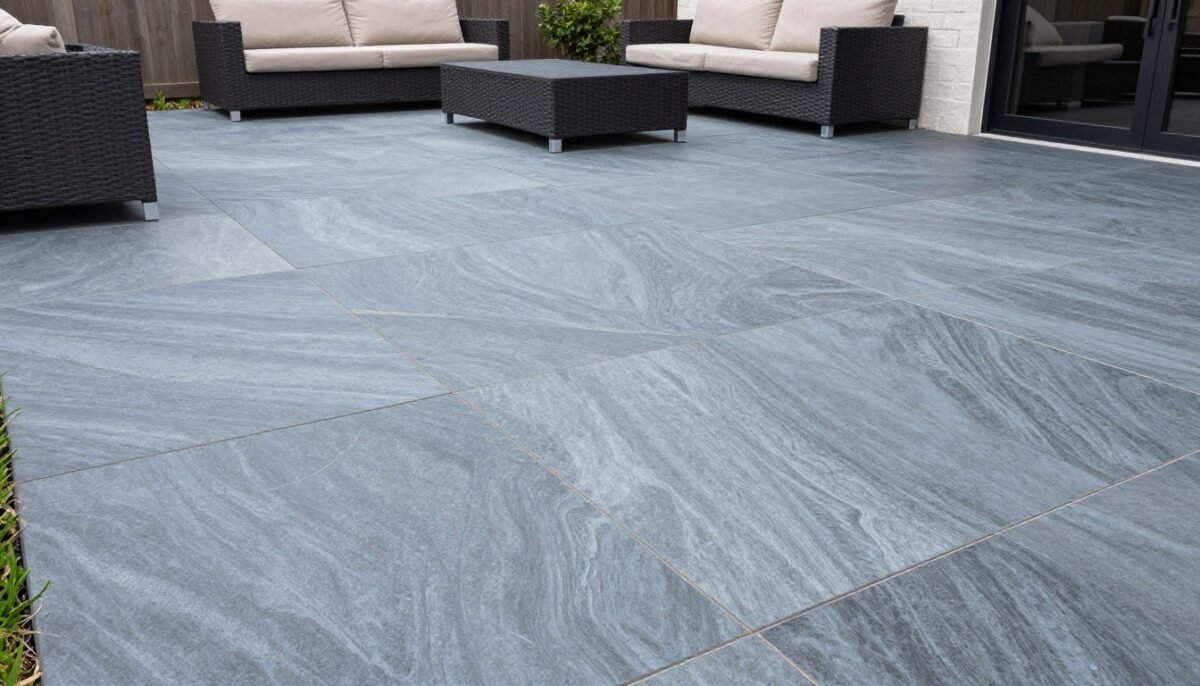
Seamless slate designs create smooth, sophisticated surfaces with subtle texture. Unlike heavily textured patterns, this style emphasizes gentle surface variation that suggests slate without pronounced stamp lines. The refined appearance suits contemporary and transitional home styles.
Blue-gray and charcoal colors enhance the slate aesthetic. These cooler tones create calming outdoor environments that pair well with water features and modern landscaping. The subtle color variation adds interest without overwhelming the design.
This pattern works particularly well around pool areas. The smoother surface feels comfortable underfoot while still providing adequate slip resistance. The continuous appearance creates a clean backdrop that doesn’t compete with pool water reflections or tile accents.
Maintenance for seamless slate remains minimal. The subtle texture doesn’t trap debris like deeper patterns. Regular sweeping and occasional pressure washing keep the surface looking fresh. Resealing every few years maintains the color depth and surface protection.
Herringbone Brick Layout
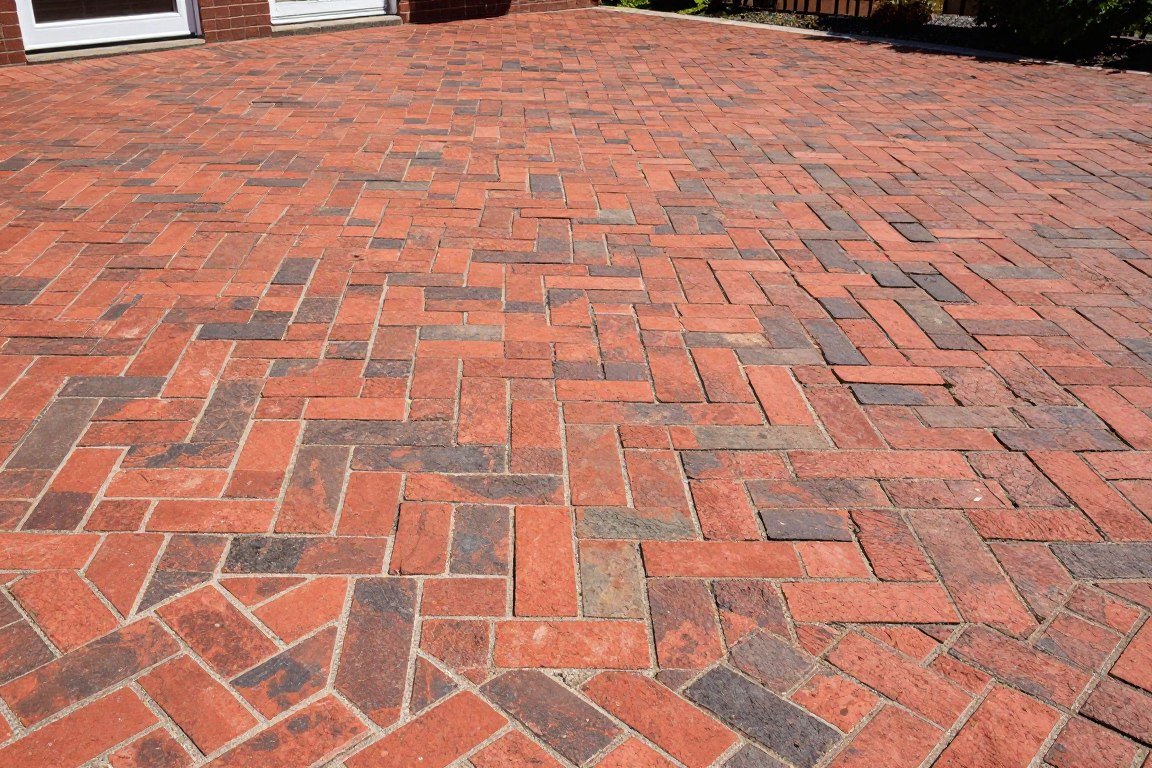
The herringbone brick pattern offers dynamic visual movement through its distinctive diagonal layout. Individual brick shapes arrange in alternating 45-degree angles that create the signature zigzag effect. This classic configuration adds energy and sophistication to any patio design.
Traditional brick red colors work beautifully with herringbone patterns. The diagonal layout showcases color variations effectively, making multi-tone applications particularly striking. Some installers add darker mortar lines to emphasize the individual brick shapes and enhance pattern definition.
This pattern requires skilled installation to maintain proper angles and spacing. The diagonal orientation makes the patio appear larger than straight-laid patterns. Consider the viewing angle when planning your herringbone layout to maximize the visual impact from primary viewing points.
Herringbone designs complement formal outdoor spaces beautifully. The pattern pairs well with classical architecture, formal gardens, and traditional outdoor furniture. It also works for walkways connecting different backyard areas, creating cohesive design flow throughout your property.
Herringbone Installation Considerations
Pattern Direction
The herringbone orientation affects how viewers perceive the space. Running the pattern parallel to your home’s longest wall makes the patio appear wider. Positioning it perpendicular creates depth and draws the eye toward focal points like gardens or views.
Border Options
Adding a soldier course border frames herringbone patios beautifully. This involves running a row of bricks perpendicular to the herringbone field. The border defines edges and provides clean transition points to lawns or garden beds.
River Rock Natural Design
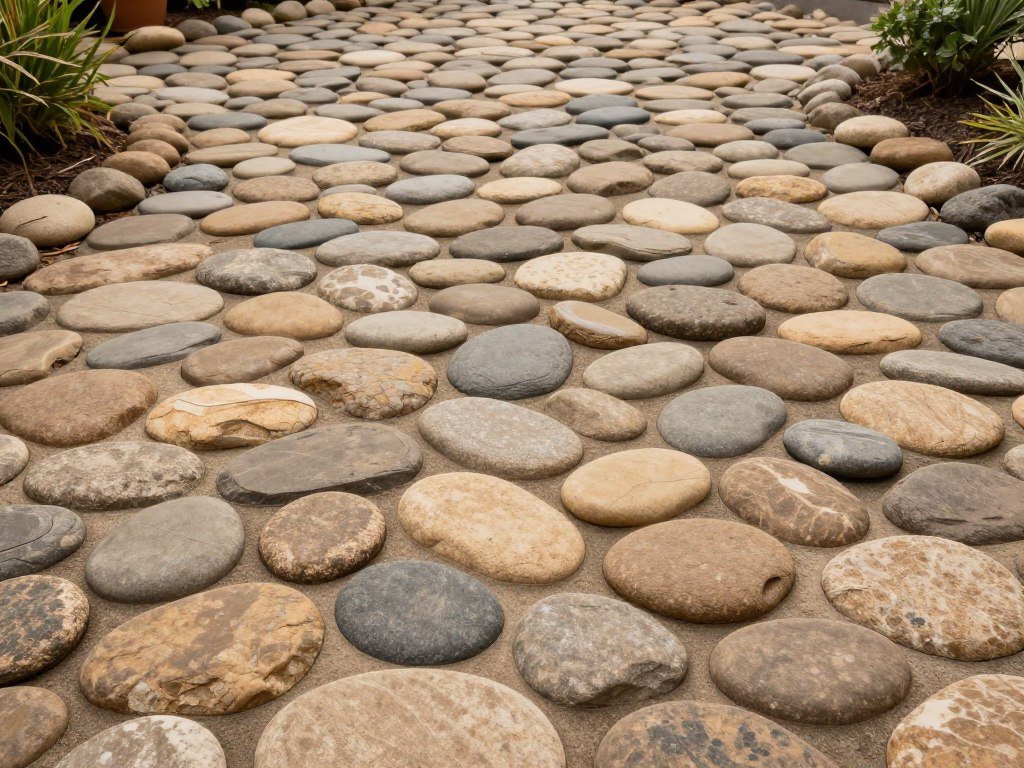
River rock patterns create organic, nature-inspired surfaces that blend beautifully with natural landscaping. This design replicates smooth stones worn by water over time. The rounded shapes in various sizes deliver an authentic riverbed appearance that brings natural tranquility to outdoor spaces.
Earth tone palettes work best for river rock designs. Combining tan, brown, gray, and cream colors creates realistic stone variation. The smooth stone surfaces contrast nicely with surrounding plantings and work particularly well near water features or koi ponds.
This pattern suits informal outdoor living areas and meditation gardens. The natural appearance creates peaceful environments that encourage relaxation. Consider incorporating the river rock design into pathways that wind through garden areas for cohesive landscape integration.
The rounded stone shapes make this pattern comfortable for bare feet. This characteristic makes river rock stamped concrete excellent for pool decks and spa surrounds. The textured surface provides good traction when wet while maintaining a natural aesthetic.
Grand Ashlar Slate with Border
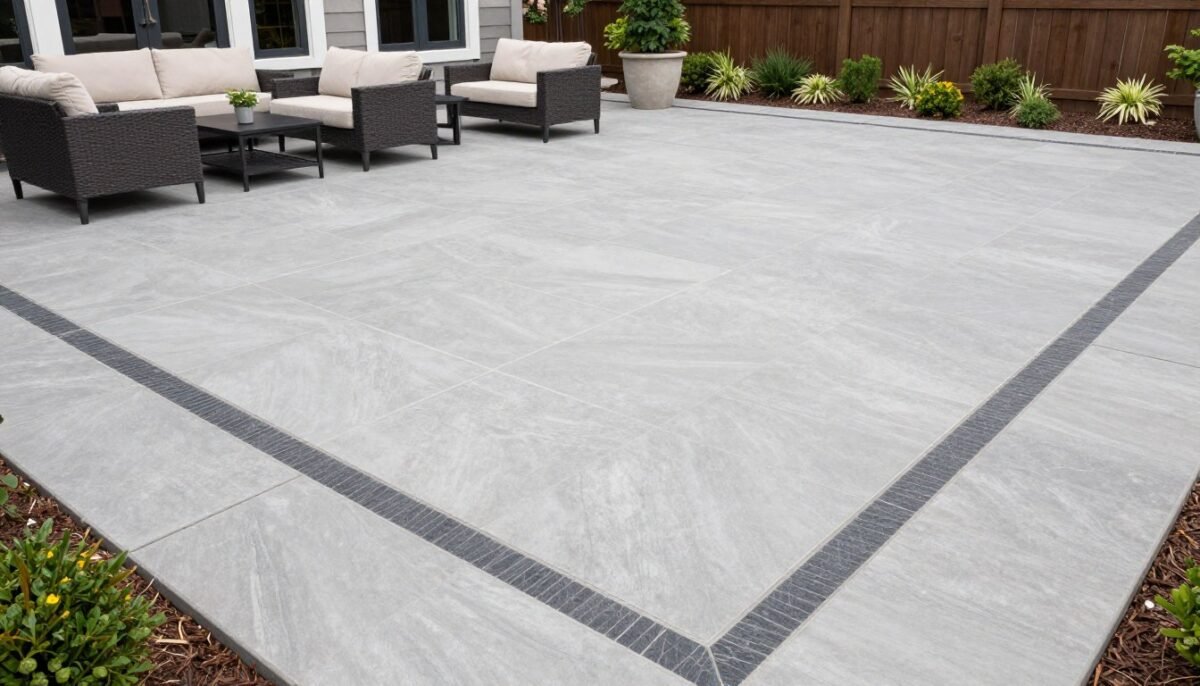
Combining ashlar slate patterns with contrasting borders creates sophisticated outdoor spaces. The border defines patio boundaries and adds visual interest through color or pattern variation. This approach works particularly well for large patio installations where defined edges enhance the overall design.
Light gray fields with charcoal borders provide classic contrast that never goes out of style. The darker border frames the space and creates clear transitions to surrounding lawns or garden beds. Some designs reverse this color scheme for different visual effects.
The border width typically ranges from twelve to twenty-four inches. Wider borders make stronger design statements and work well for large patios. Narrower borders provide subtle definition suitable for smaller spaces or budget-conscious projects.
Installation requires careful planning to ensure borders remain level and consistent. Professional contractors establish proper layout lines before stamping begins. The border often uses different stamp patterns or solid bands to create clear separation from the main field.
Design Enhancement: Complex border designs require professional installation to achieve the desired results. Experienced contractors ensure proper color transitions, pattern alignment, and dimensional accuracy that make bordered patios stand out.
Textured Broom Finish
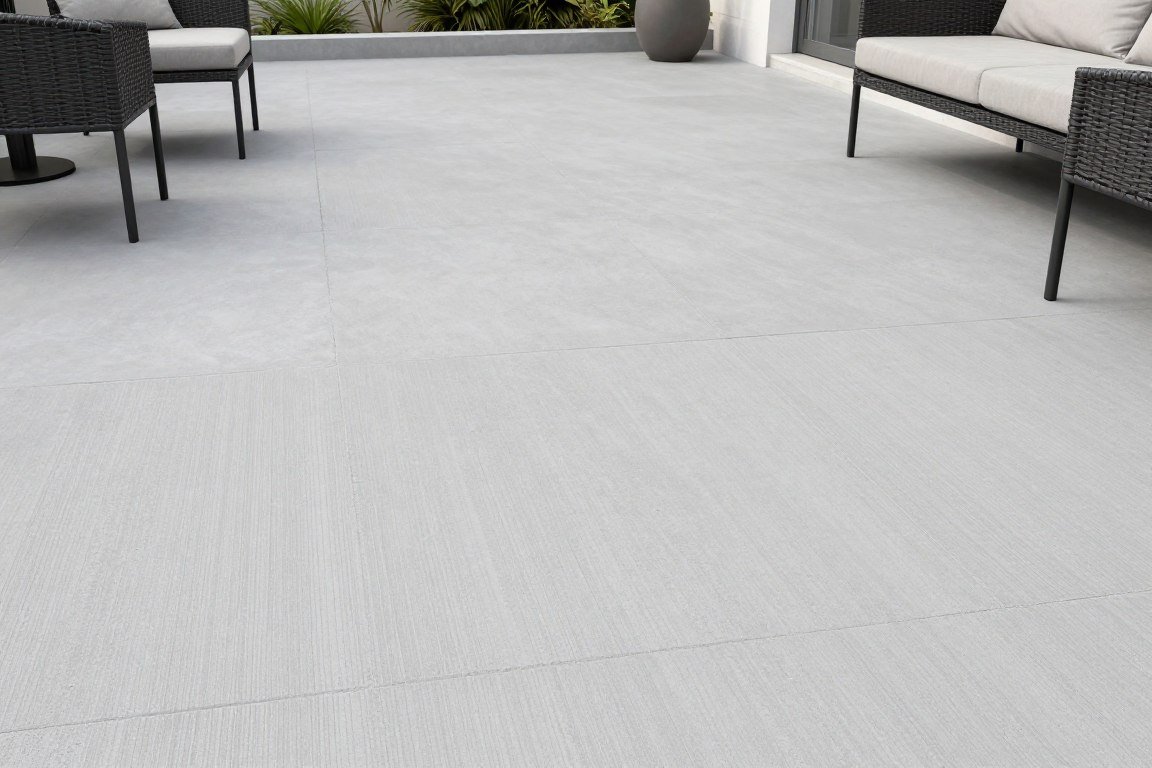
Broom finish concrete offers budget-friendly simplicity with excellent functionality. This classic technique involves dragging a broom across fresh concrete to create subtle linear texture. The result provides slip resistance and visual interest without the complexity of stamped patterns.
Natural gray remains the most popular color choice for broom finish patios. The simple appearance allows other backyard elements to take visual priority. Some homeowners add integral color to achieve custom tones while maintaining the straightforward broom texture.
This finish works exceptionally well for contemporary minimalist designs. The clean lines and uniform texture complement modern architecture and furnishings. Broom finish also serves as an economical base that homeowners can enhance later with decorative scoring or staining.
Installation costs significantly less than stamped alternatives. The straightforward application process reduces labor time and material expenses. Despite the lower price point, properly sealed broom finish concrete delivers decades of reliable service with minimal maintenance requirements.
Random Stone Multi-Pattern
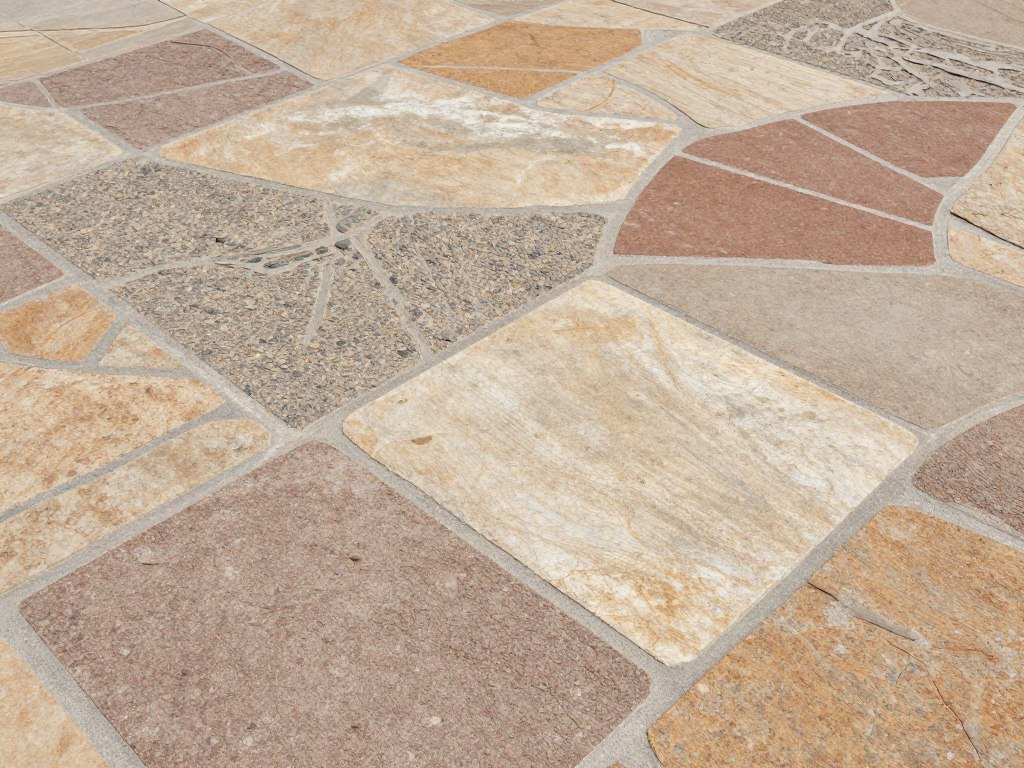
Multi-pattern random stone designs combine several stamp patterns within a single installation. This creative approach mimics natural stone installations where various stone types create organic complexity. The result delivers unique one-of-a-kind patios that showcase concrete’s design versatility.
Color blending becomes crucial for multi-pattern success. Combining complementary earth tones throughout different patterns creates cohesive appearance despite pattern variety. Professional installers strategically place colors to enhance the natural stone illusion and maintain visual harmony.
This design style suits homeowners wanting distinctive outdoor spaces. No two multi-pattern installations look alike due to the random nature of pattern and color placement. The complexity creates visual interest that remains engaging over time.
Installation requires experienced contractors who understand pattern transitions and color application. The random nature demands artistic sensibility along with technical skill. When executed properly, multi-pattern designs rival expensive natural stone installations at a fraction of the cost.
Contemporary Scored Concrete
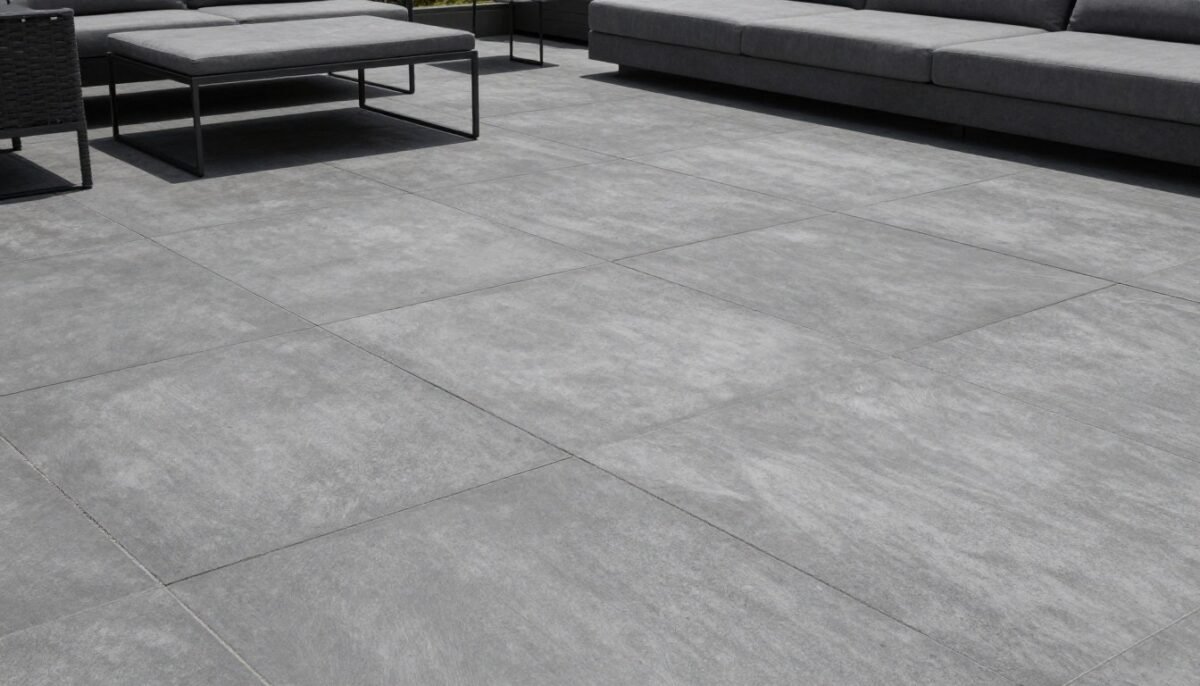
Scored concrete creates modern geometric designs through saw-cut lines in cured concrete. This technique divides large slabs into defined sections that suggest individual pavers or tiles. The clean, precise lines appeal to contemporary design sensibilities and complement modern architecture.
Charcoal gray and dark concrete tones enhance scored designs. The darker colors make the score lines less visible while creating sophisticated backdrops. Some installers fill score lines with contrasting colored grout or sealant to emphasize the geometric grid.
This approach works well for those seeking modern aesthetics on a budget. Scoring costs less than stamping while delivering contemporary appearance. The technique also allows customization of grid sizes and patterns to suit specific design visions and space dimensions.
Maintenance involves keeping score lines clear of debris and vegetation. The cuts provide natural expansion points that help prevent random cracking. Resealing the surface periodically protects the concrete and maintains the clean appearance over many years.
Exposed Aggregate Finish
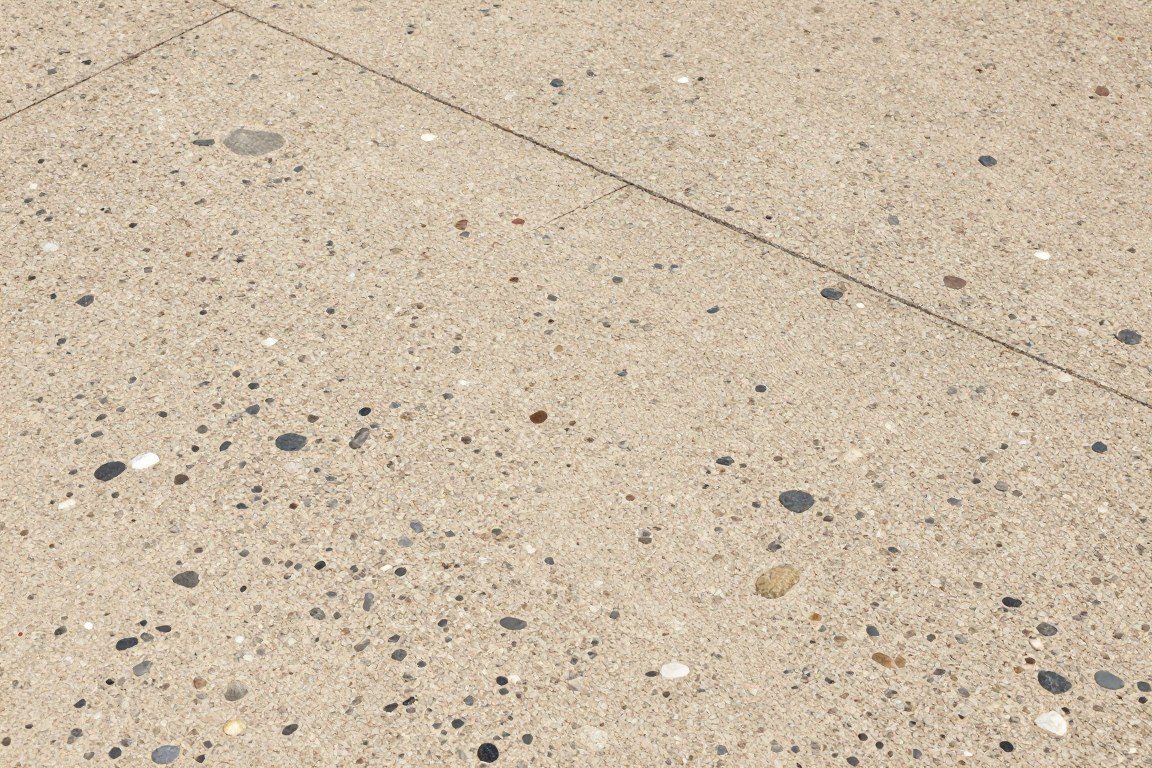
Exposed aggregate finishes reveal decorative stones embedded within concrete surfaces. Contractors remove the top cement layer to expose colorful aggregates that create natural-looking, highly textured surfaces. This technique delivers excellent traction and distinctive visual appeal.
Stone color and size selection determine the final appearance. Options range from small pea gravel to larger river rocks in various color combinations. Popular choices include earth tone river rock, white quartz, and multi-colored granite aggregates that create custom looks.
This finish excels around pool areas due to its superior slip resistance. The textured surface provides secure footing when wet without feeling uncomfortable underfoot. The durable nature stands up well to pool chemicals, weather extremes, and heavy use over many years.
Installation timing matters significantly for exposed aggregate work. Contractors must remove the surface layer at precisely the right moment during the curing process. Too early risks washing away too much material, while waiting too long makes removal difficult and can damage the aggregate.
Aggregate Selection Guide
- Natural river rock creates warm, earth-tone appearances with smooth stones
- Crushed granite delivers sparkle and reflects light for brighter surfaces
- Recycled glass aggregates provide eco-friendly options in various colors
- Quartz stones offer pure white or colored options for custom designs
- Mixed aggregates combine different stone types for unique results
Stamped Tile Pattern
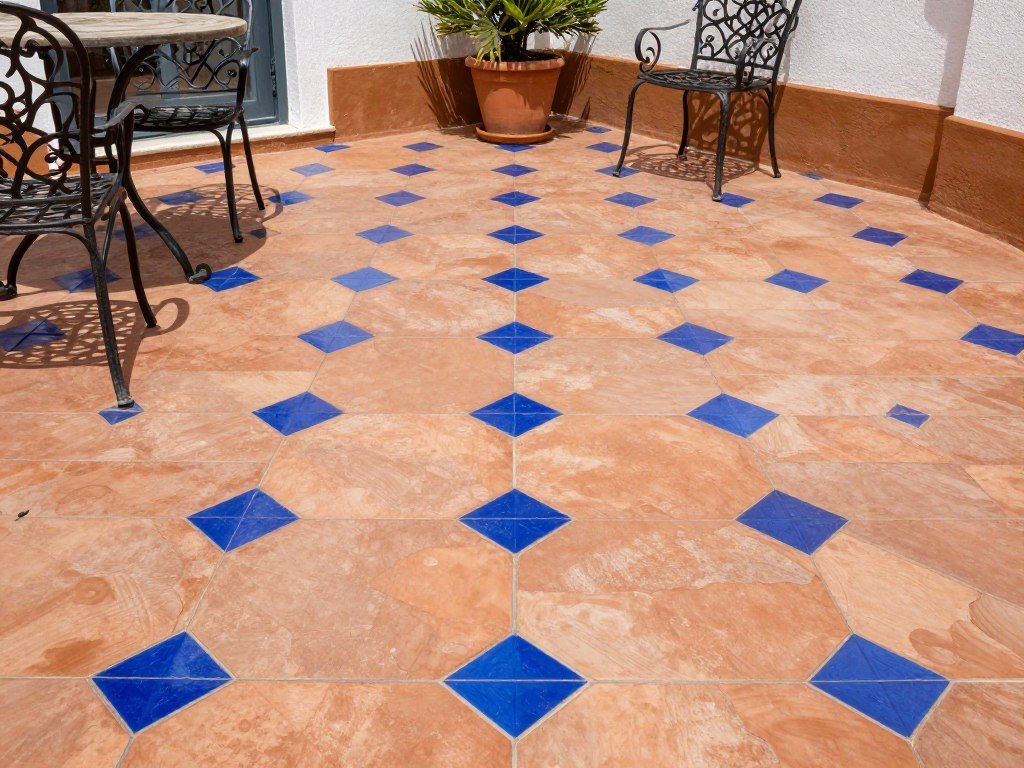
Tile pattern stamped concrete recreates the appearance of ceramic or terracotta tiles without installation complexity. This Mediterranean-inspired design brings warmth and visual richness to outdoor spaces. The stamped impressions mimic individual tiles complete with grout lines and surface texture.
Terra cotta base colors with accent tiles in complementary shades create authentic appearances. Some designs incorporate blue, green, or yellow accent tiles to suggest hand-painted ceramics. The color combinations evoke Spanish courtyards and Mediterranean villas.
This pattern works beautifully for covered patios and courtyard spaces. The detailed tile impressions create intimate, room-like feelings in outdoor areas. Consider pairing tile patterns with stucco walls, wrought iron details, and potted Mediterranean plants for cohesive design themes.
Installation requires careful attention to color placement and tile alignment. Contractors use multiple stamp mats to create the repeating tile grid. Strategic color application creates realistic grout lines and tile variation that enhance the authentic appearance.
Stamped Concrete with Fire Pit Integration
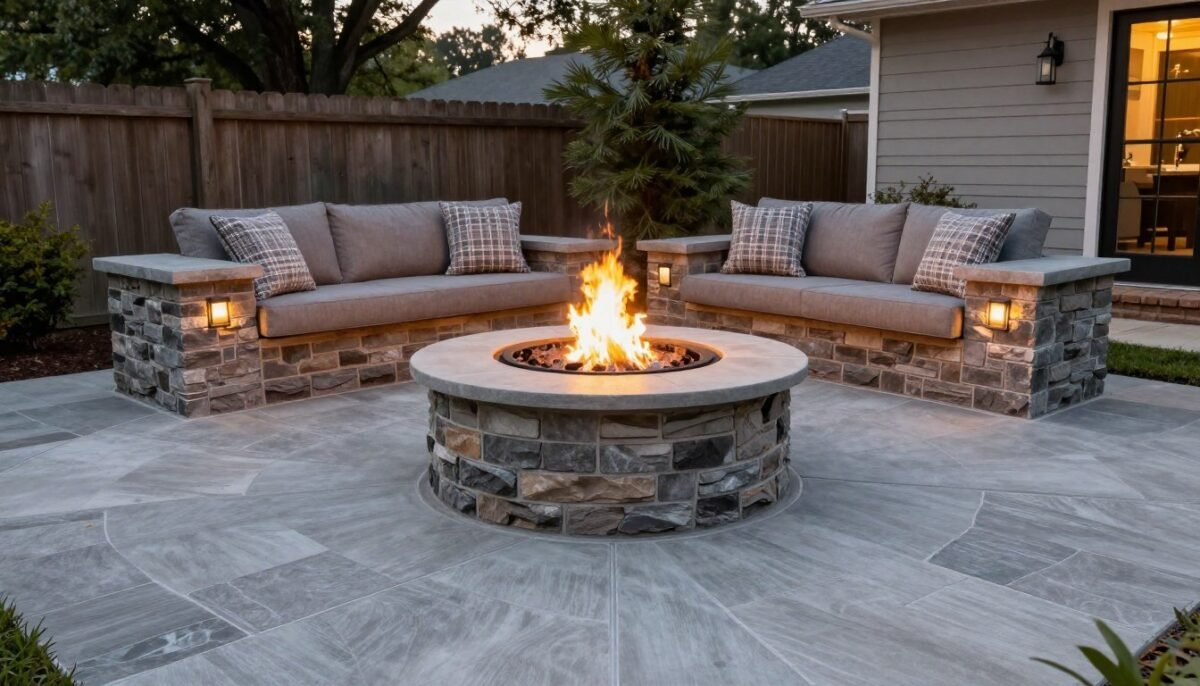
Integrating fire pits into stamped concrete patios creates complete outdoor living environments. The concrete surrounds fire features with durable, heat-resistant surfaces that define gathering spaces. This design approach establishes clear zones for dining, lounging, and fireside conversations within unified outdoor areas.
Flagstone or ashlar slate patterns work particularly well around fire pits. The natural stone appearance complements fire features and creates rustic warmth. Some homeowners choose contrasting concrete colors around the fire pit to visually define the gathering area.
Fire pit placement requires careful planning during the concrete installation phase. Contractors must account for utility lines, proper drainage, and adequate clearance from structures. The concrete installation occurs around the fire pit foundation, creating seamless integration between elements.
This design maximizes patio functionality by creating destination points within outdoor spaces. The fire pit draws people together while the surrounding stamped concrete provides comfortable surfaces for furniture placement. Consider adding lighting and built-in seating walls to enhance the fire pit area further.
Fire Pit Design Options
- Round fire pits for intimate gatherings
- Square or rectangular designs for modern aesthetics
- Custom shapes matching patio geometry
- Raised fire pit walls for seating edges
- Flush fire pits for cleaner appearances
Safety Considerations
- Minimum clearance from structures and trees
- Proper ventilation for gas fire features
- Heat-resistant concrete sealing near fire
- Adequate seating distance from flames
- Local code compliance verification
Stamped Overlay Refinishing
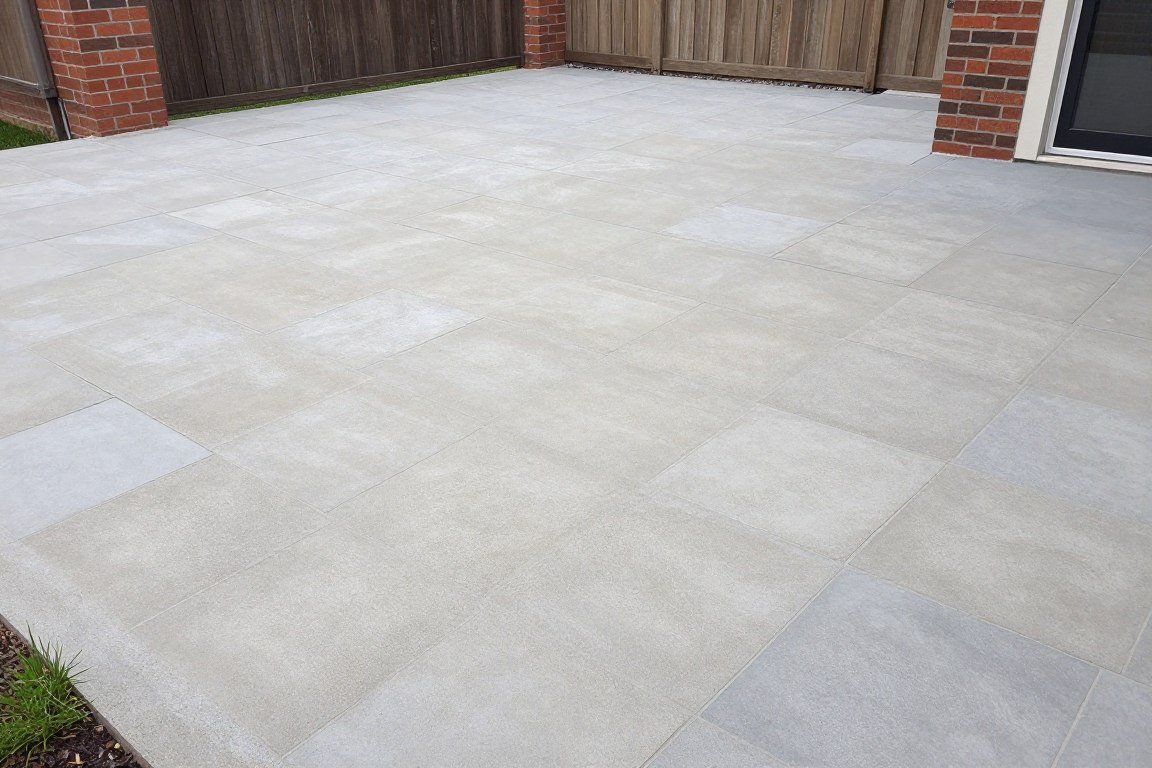
Stamped overlays offer solutions for refreshing existing concrete patios. This technique applies thin decorative concrete layers over sound existing surfaces. Contractors stamp the fresh overlay to create new patterns and colors without removing the original concrete.
Light gray and earth tone colors remain popular for overlay projects. The new surface completely transforms tired, stained, or outdated patios. Overlays cost considerably less than complete removal and replacement while delivering comparable aesthetic results.
This approach works well when existing concrete remains structurally sound but looks worn or outdated. The overlay bonds to the existing surface, creating a unified structure. Proper surface preparation ensures strong adhesion and long-lasting results.
Installation requires expertise in surface preparation and overlay application. Contractors must assess existing concrete condition, prepare surfaces properly, and apply overlays at correct thickness. When done correctly, stamped overlays last many years while revitalizing outdoor living spaces.
Pool Deck Stamped Concrete
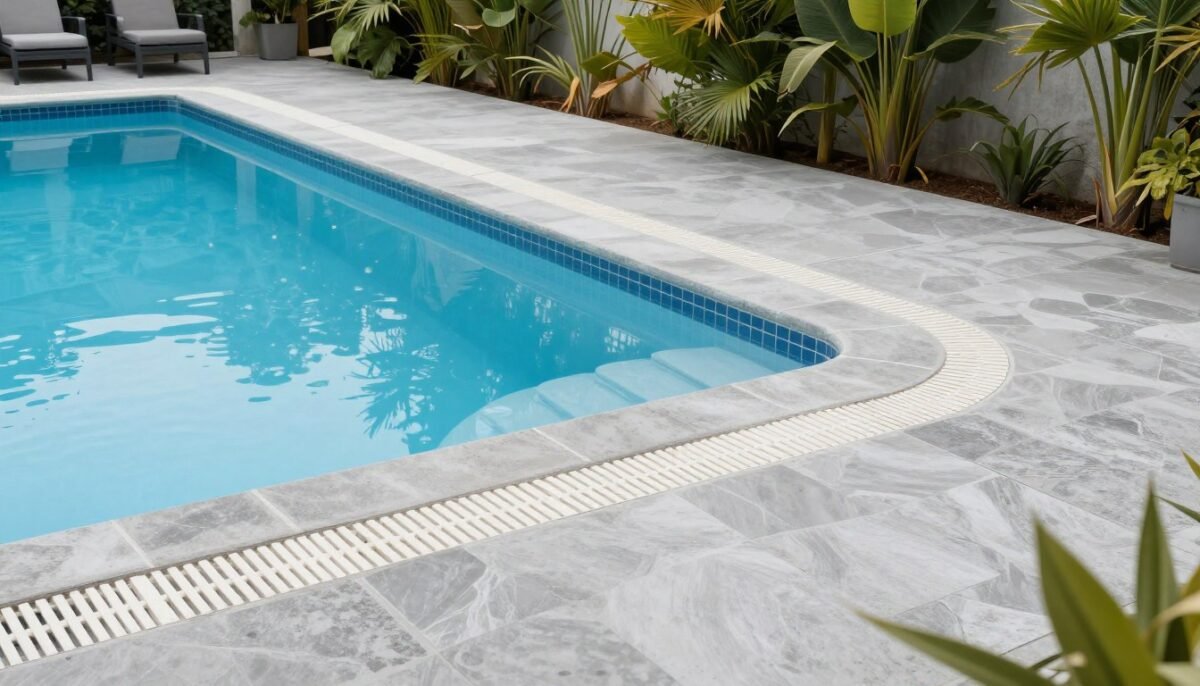
Pool deck applications demand specific considerations for stamped concrete designs. The surface must provide excellent slip resistance when wet while remaining comfortable for bare feet. Cool-toned colors help keep surfaces cooler under direct sunlight compared to darker alternatives.
Light gray, cream, and light blue tones work exceptionally well for pool decks. These colors reflect heat rather than absorbing it, maintaining more comfortable surface temperatures. The lighter palette also complements pool water colors and creates resort-like atmospheres.
Texture selection matters significantly for pool safety. Patterns with adequate surface variation provide good traction without feeling excessively rough. Flagstone, ashlar slate, and certain tile patterns deliver appropriate texture levels for wet areas.
Sealing pool deck concrete with products designed for wet environments provides essential protection. Pool chemicals, sunscreen, and constant moisture exposure demand high-quality sealers. Regular resealing maintains slip resistance, color vibrancy, and surface integrity over time.
Pool Deck Design Tips
Color Selection
Choose lighter colors that reflect sunlight and stay cooler. Avoid dark tones that absorb heat and become uncomfortable for bare feet during summer months.
Drainage Planning
Ensure proper slope away from pool edges for water runoff. Good drainage prevents standing water and reduces slip hazards around pool areas.
Expansion Joints
Include adequate expansion joints to accommodate concrete movement. Proper joint placement prevents random cracking from temperature changes and ground movement.
Budget-Friendly Basic Stamp
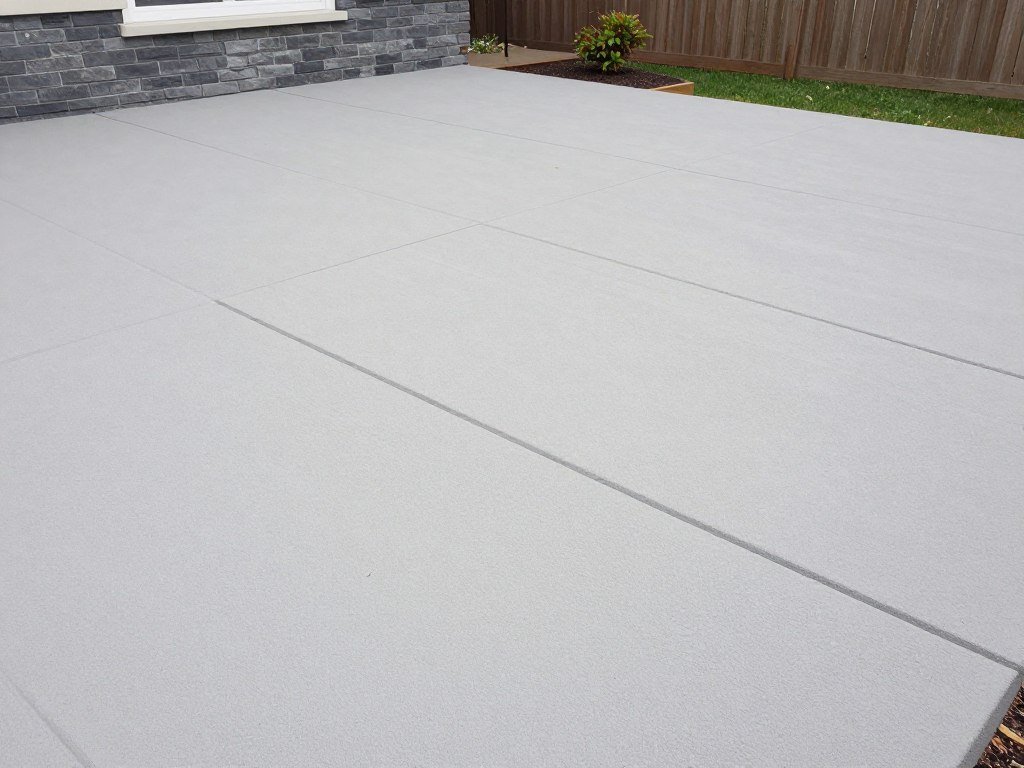
Budget-conscious homeowners can achieve attractive stamped concrete patios through simplified approaches. Single-pattern installations with minimal color variation reduce material and labor costs. The result still delivers the stamped concrete look while respecting tighter budgets.
Natural gray or single earth tone applications minimize coloring expenses. These straightforward color choices provide clean, timeless appearances that work with various home styles. Adding a sealer enhances the color and protects the surface without additional coloring costs.
Basic stamp patterns like simple ashlar or running bond brick cost less than complex multi-pattern installations. The simpler stamps require less labor time and technical expertise. The finished appearance still surpasses plain concrete while remaining affordable.
Cost savings come from reduced color applications, simpler patterns, and efficient installation. Homeowners sacrifice some design complexity but gain stamped concrete benefits. This approach works well for those prioritizing function and durability over elaborate aesthetics.
Luxury Custom Concrete Art
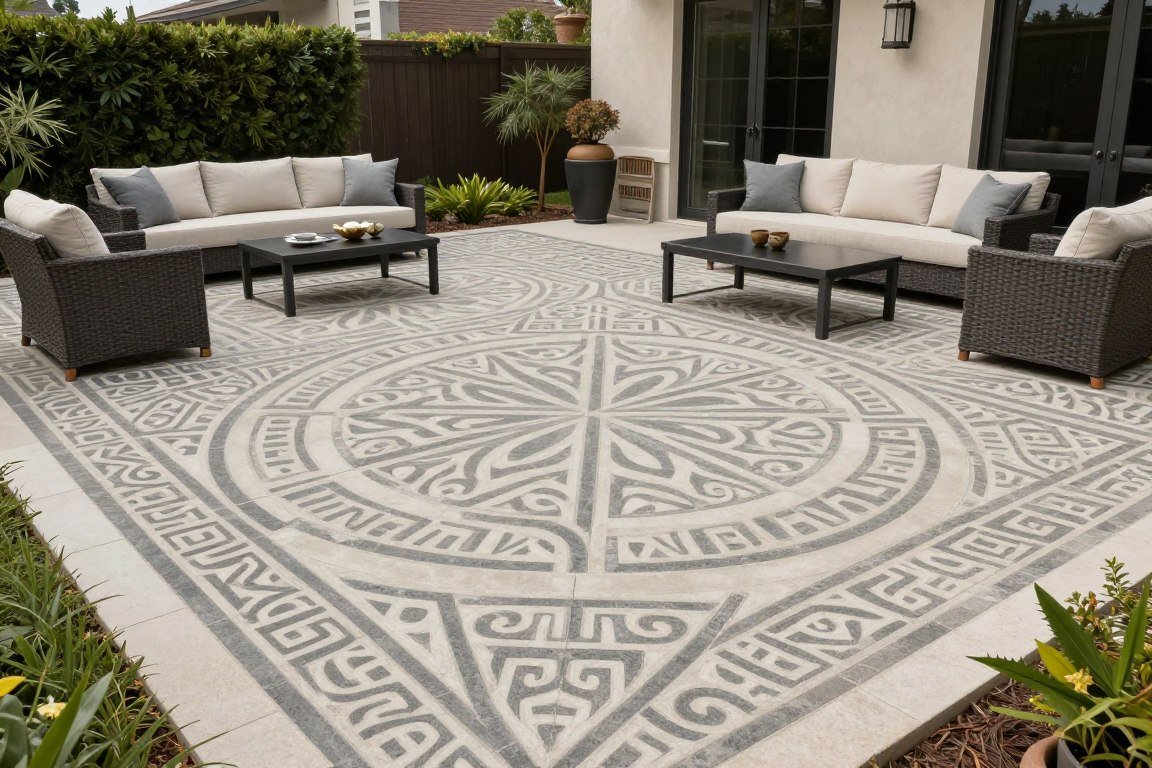
Premium stamped concrete installations push artistic boundaries through custom designs and exceptional craftsmanship. These luxury projects combine multiple patterns, custom color formulations, and artistic techniques that create one-of-a-kind outdoor spaces. The results rival high-end natural stone at more accessible price points.
Custom color blending creates unique palettes unavailable in standard options. Professional artisans mix integral colors and apply hand-troweled highlights that enhance dimensional effects. The attention to color detail produces depth and character that standard applications cannot match.
Pattern combinations in luxury installations often include custom borders, medallions, and artistic inlays. Contractors may incorporate company logos, family crests, or custom geometric designs within the broader pattern field. These personalized touches make the patio truly unique to the homeowner.
Installation requires master-level craftspeople with artistic sensibilities and technical expertise. The extended installation time and specialized materials increase project costs. For discerning homeowners seeking exceptional outdoor spaces, the investment delivers unmatched results and lasting satisfaction.
Choosing the Right Concrete Patio Design
Selecting the perfect concrete patio design involves considering multiple factors beyond aesthetic preferences. Your home’s architectural style should guide pattern and color choices. Traditional homes pair well with brick and cobblestone patterns, while contemporary architecture suits geometric and minimalist designs.
Climate considerations affect color selection significantly. Lighter colors stay cooler in hot climates and reduce heat absorption. Textured surfaces provide better traction in regions with frequent rain or snow. Discuss climate-appropriate options with experienced local contractors familiar with regional conditions.
Budget constraints influence pattern complexity and color choices. Simple single-pattern installations cost less than elaborate multi-pattern designs. Overlay applications provide mid-range options for refreshing existing concrete. Establish clear budget parameters before making design selections to avoid disappointment.
Patio size impacts pattern selection effectiveness. Large open areas showcase expansive patterns beautifully, while smaller patios benefit from scaled-down designs. Consider how furniture placement will affect pattern visibility. Some areas remain hidden under permanent fixtures, making elaborate patterns unnecessary in those zones.
Design Selection Factors
Practical Considerations
- Intended use and furniture placement
- Maintenance commitment level
- Climate and weather patterns
- Existing landscape features
- Budget and timeline constraints
- Future expansion plans
Aesthetic Factors
- Home architectural style
- Preferred color palette
- Desired outdoor atmosphere
- Coordination with exterior materials
- Pattern complexity preferences
- Personal style expression
Concrete Patio Maintenance and Longevity
Proper maintenance extends stamped concrete patio life for decades. Regular cleaning with mild detergent and water removes dirt and prevents staining. Avoid harsh chemicals that damage sealers or discolor concrete surfaces. Pressure washing works well for deep cleaning but requires appropriate pressure settings to avoid surface damage.
Resealing stamped concrete every two to three years maintains protection and color vibrancy. The sealer shields concrete from moisture penetration, freeze-thaw damage, and UV fading. Application timing depends on wear levels, climate exposure, and product specifications. Many homeowners schedule resealing as part of annual home maintenance routines.
Address cracks promptly to prevent water infiltration and expansion. Small hairline cracks can be filled with specialized concrete repair products. Larger structural issues require professional evaluation and repair. Proper drainage around patio edges helps prevent water accumulation that causes freeze-thaw damage in cold climates.
Winter care in cold regions includes avoiding deicing salts that damage concrete surfaces. Use sand or calcium chloride alternatives for traction. Remove snow promptly but avoid metal shovels that scratch decorative finishes. Plastic shovels or snow blowers with rubber blades protect stamped patterns.
Annual Maintenance Checklist
- Sweep and clean surface thoroughly in spring
- Inspect for cracks or damage requiring repair
- Pressure wash if needed, using appropriate settings
- Apply fresh sealer coat according to manufacturer instructions
- Check drainage and clear any blocked areas
- Remove stains promptly with appropriate cleaners
- Trim vegetation away from patio edges
- Inspect and maintain expansion joints
Cost Considerations and Value
Stamped concrete patio costs vary based on pattern complexity, color choices, and project size. Basic installations typically range from eight to twelve dollars per square foot. Complex multi-pattern designs with custom colors can reach fifteen to twenty-five dollars per square foot. These prices generally include material, labor, and sealing.
Comparing stamped concrete to alternatives demonstrates its value proposition. Natural stone patios cost twenty-five to fifty dollars per square foot installed. Brick pavers range from fifteen to thirty dollars per square foot. Stamped concrete delivers comparable aesthetics at lower price points with reduced maintenance requirements.
Long-term value considerations include durability and maintenance costs. Properly installed stamped concrete lasts thirty to forty years with appropriate care. Maintenance expenses remain minimal compared to wood decks requiring regular staining or pavers needing periodic releveling and joint sand replacement.
Return on investment for concrete patios adds value to home resale potential. Outdoor living spaces appeal to buyers and increase property marketability. Quality concrete patios typically return sixty to seventy percent of installation costs in added home value, making them sound financial investments.
Cost-Saving Strategies
- Choose simpler single-pattern designs
- Limit color applications to one or two tones
- Plan installation during contractor off-season
- Prepare the base yourself if capable
- Combine multiple projects for volume discounts
- Consider overlay instead of removal and replacement
Worth the Investment
- Quality sealer for long-term protection
- Proper base preparation and compaction
- Experienced contractor with portfolio
- Adequate concrete thickness for durability
- Professional color application techniques
- Warranty coverage for workmanship
Transform Your Outdoor Living Space
Concrete patio designs offer unlimited possibilities for creating beautiful and functional outdoor living areas. From classic brick patterns to contemporary geometric designs, stamped concrete delivers the aesthetics you desire with durability that lasts decades. The twenty designs presented demonstrate concrete’s versatility across style preferences and budget ranges.
Your perfect patio design exists among these options or in creative combinations that suit your unique vision. Consider your home’s architectural style, climate conditions, intended use, and budget when making selections. Professional contractors help refine your choices and ensure successful installations that exceed expectations.
The investment in quality concrete patio design pays dividends through years of outdoor enjoyment. Whether hosting gatherings around fire pits, relaxing by pools, or simply enjoying morning coffee in beautiful surroundings, your new patio becomes an extension of your home. Start planning your backyard transformation today and create the outdoor space you’ve always wanted.