
Many people think that the secret to a truly rich and full-bodied flavor is in traditional methods. Learning to stove top coffee brew lets you control every step of the process. It turns your morning coffee into a special ritual.
This detailed coffee brewing guide will help you understand heat and water balance. Knowing these basics will help you make the perfect cup of coffee at home.
Ever wondered How to Brew Coffee on Stove Top? We’ll dive into the details that make this method so great. Get ready to improve your coffee game with precision and patience.
Table of Contents
Understanding the Stove Top Brewing Method
The history of coffee is tied to heating water over an open flame. Many still choose manual coffee brewing methods for the control they offer. This method connects the brewer deeply with the beans.
Unlike electric drip machines, stove top brewing requires active participation from the user. You need to watch the heat and timing to get the best flavor. This lets you adjust things in real-time, making a cup that suits your taste.
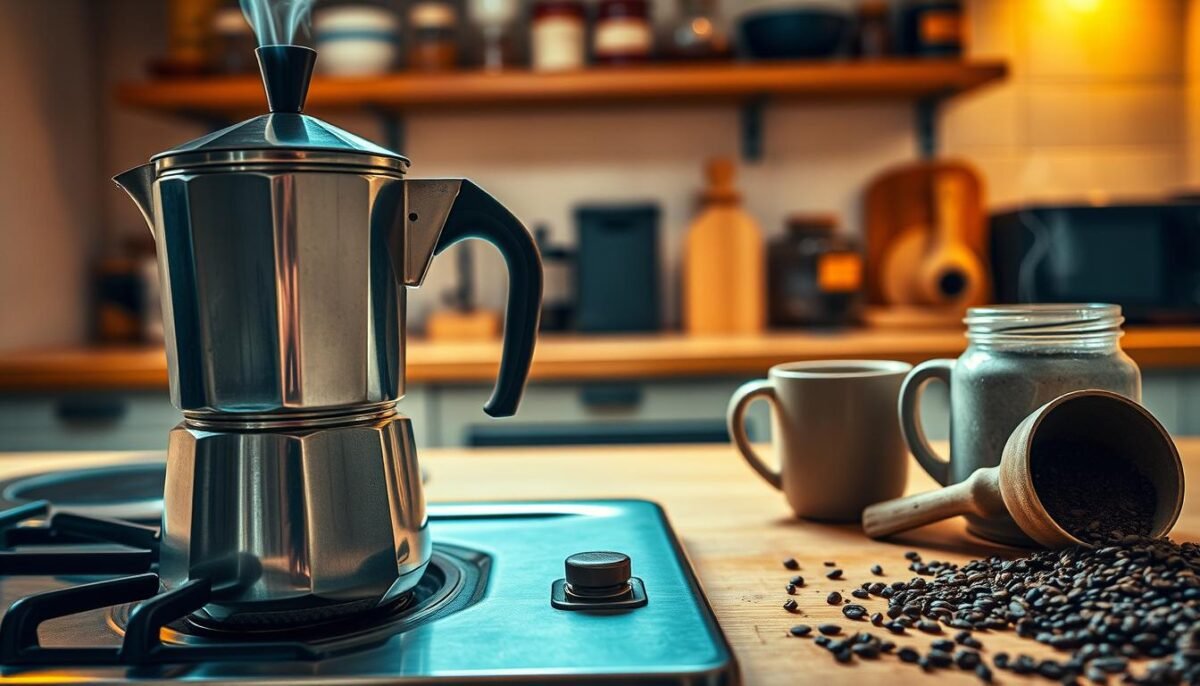
The way water heats up is key in manual coffee brewing methods. As water warms, its molecules move faster, pulling out coffee’s oils and flavors. Because of direct heat, the temperature changes quickly, so you must watch closely to avoid over-extraction.
Patience is crucial when using open-flame or electric stove heating. Keeping the heat steady prevents water from boiling too hard, which can burn the coffee. Here’s a table showing how stove top brewing differs from modern machines.
| Feature | Stove Top Brewing | Electric Drip Machine |
|---|---|---|
| User Control | High | Low |
| Heat Source | Direct (Flame/Coil) | Internal Element |
| Complexity | Moderate | Simple |
| Flavor Customization | Extensive | Limited |
Essential Equipment and Ingredients
Mastering stove top coffee needs the right equipment and top-notch ingredients. The right coffee brewing equipment is key for a great daily coffee ritual.
Selecting the Right Coffee Beans
The taste of your coffee starts with the beans. For stove top brewing, choose medium to dark roasts. These best coffee beans for stove top methods handle heat well.
It’s also important to use fresh beans. Beans roasted in the last few weeks will have the best oils and aromas.
Water Quality and Temperature Considerations
Water is the main part of your coffee, so it must be good. Use filtered water to avoid mineral tastes that can hide your coffee’s flavors.
The perfect water temperature for coffee is just below boiling. Too hot water can burn the grounds, making your coffee bitter.
Choosing Your Brewing Vessel
The vessel you choose affects how well it heats and extracts flavors. Stainless steel is a top pick because it’s highly durable and doesn’t rust.
Aluminum is also popular for its excellent heat conductivity. But, it needs careful cleaning to avoid flavor changes from oxidation.
| Material | Heat Conductivity | Durability |
|---|---|---|
| Stainless Steel | Moderate | High |
| Aluminum | High | Moderate |
How to Brew Coffee on Stove Top?
Learning how to brew coffee on stove top is a rewarding skill. It makes your morning routine better. This method lets you control the coffee’s taste with simple changes.
By following a structured approach, you can make a cafe-quality cup at home.
Preparing the Coffee Grounds
The quality and size of your coffee grounds are key. For most stove top devices, a medium-coarse grind is best. This prevents sediment from getting through the filter.
Make sure your grounds are all the same size. This helps them get saturated evenly during brewing.
Measuring the Water and Coffee Ratio
Getting the coffee to water ratio right is crucial for flavor. Start with one gram of coffee for every 15 to 17 grams of water. You can tweak this to make your coffee stronger or milder.
Heating and Extraction Process
The stove top extraction process needs careful heat management. Begin with medium heat to avoid scorching the grounds. As the water flows through the coffee, keep the heat steady for a smooth extraction.
Monitoring the Brewing Time
Timing is key for the coffee’s strength and clarity. Even a small mistake can make the coffee too bitter. Use a timer to keep track and stop the heat when you reach the right volume.
| Variable | Adjustment | Flavor Impact |
|---|---|---|
| Grind Size | Finer | Increased Strength |
| Water Ratio | More Coffee | Higher Intensity |
| Brew Time | Longer | Deeper Body |
| Heat Level | Lower | Smoother Finish |
Adjusting Variables for Flavor Control
Getting the perfect stove top coffee flavor is about balancing extraction variables. By controlling your brewing, you can bring out the best in your coffee beans. Small tweaks let you tailor every cup to your liking.
Impact of Grind Size on Extraction
The size of your coffee grounds affects how fast water extracts flavor. Adjusting coffee grind size changes the strength and body of your coffee. A finer grind means faster extraction and a bolder taste.
A coarser grind, on the other hand, makes the coffee cleaner and lighter. If your coffee tastes sour, try a finer grind next time. The right grind balance ensures a perfect extraction.
Managing Heat Intensity
Keeping the temperature stable is crucial when controlling heat for coffee. High heat can make the coffee taste harsh or burnt. A steady, moderate flame is best for a balanced brew.
If your coffee tastes astringent, the heat might be too high. Lowering the heat lets the coffee’s oils and sugars release more evenly. Consistency is key for perfect coffee every day.
The Role of Agitation
Stirring is a key coffee extraction tip. It ensures all grounds are saturated with water. This prevents dry spots and ensures even extraction.
But don’t stir too much, as it can make the coffee bitter. A gentle stir at the start is enough for even results. Learning these small movements helps you control your coffee’s flavor.
Troubleshooting Common Brewing Issues
Even the most skilled home baristas sometimes face problems when brewing coffee. If your coffee doesn’t taste right, it’s time to tweak your method. Finding the cause helps you improve your brewing.
Fixing Bitter or Over-extracted Coffee
If your coffee tastes harsh, you might be dealing with troubleshooting bitter coffee. This can happen if the water is too hot or the grind is too fine. Try using a slightly coarser grind to slow down the extraction.
Also, watch the heat closely. Boiling water can pull out unwanted flavors. Lower the flame once it reaches the right temperature for a gentle extraction.
Correcting Weak or Under-extracted Brews
A sour or watery coffee means you need to fix weak coffee. This often comes from water moving too fast or too little coffee. Adding more coffee grounds will strengthen your brew.
Try letting the coffee steep a bit longer. An extra thirty seconds can make a big difference. Adjusting these small things can get your coffee just right.
Managing Sediment in the Cup
Many struggle with coffee particles in their cup, especially with metal filters. Removing coffee sediment is more about technique than equipment. Pour slowly and leave the last bit in the pot.
If it still happens, think about using a paper filter or a finer mesh. Keeping your gear clean also helps avoid old grounds in your coffee. Here’s a quick guide to solving these common problems.
| Issue | Primary Cause | Recommended Fix |
|---|---|---|
| Bitter Taste | Over-extraction | Use coarser grind |
| Weak Flavor | Under-extraction | Increase coffee ratio |
| Excess Sediment | Filter bypass | Pour more slowly |
Cleaning and Maintenance of Your Equipment
Proper care of your brewing equipment ensures every cup tastes fresh. Neglecting your gear leads to old coffee oils and mineral deposits. These can make your coffee taste bitter or metallic. Regular coffee brewing maintenance keeps your equipment in top shape and ensures quality every time.
Daily Cleaning Procedures
Creating a routine for daily coffee care is key. Always wait for the vessel to cool down before cleaning. This prevents burns or warping the metal. Once cool, disassemble and rinse the parts with warm water.
- Rinse the base, funnel, and upper chamber under running water.
- Use a soft sponge to wipe away any loose grounds or residue.
- Avoid harsh detergents, as they can leave a soapy film that alters the taste of your coffee.
- Always dry the components completely with a clean cloth before reassembling to prevent moisture buildup.
Deep Cleaning for Long-term Care
Even with daily cleaning, mineral deposits can build up. A deep clean once or twice a month removes these stains. Regular maintenance prevents scale buildup that can restrict water flow and impact extraction.
To deep clean, fill the bottom chamber with a mixture of equal parts white vinegar and water. Run the brewer as if making coffee, then discard the solution. Follow with two cycles of plain water to remove all vinegar.
Inspecting Seals and Filters
The rubber gasket and metal filter are crucial. They maintain the pressure needed for proper extraction. If you see steam escaping, it’s time to check these parts for wear or cracking.
Effective cleaning coffee equipment practices include checking these seals after every deep clean. If the gasket feels hard or shows damage, replace it to restore the seal. Keeping these parts in good condition ensures consistent performance and prevents weak or uneven brews.
Conclusion
Stove top brewing turns simple beans into a rich experience. This guide helps you control your kitchen’s variables.
You can now adjust grind size, heat, and timing with precision. These small changes make a perfect cup of coffee for you.
Getting consistent results needs care for your equipment and attention to detail. Treat your Moka pot or percolator well for long-lasting flavor.
Keep trying new things to get better. Try different roasts from Stumptown or Intelligentsia to see how they work with direct heat.
Share your favorite brewing tips with others. Your quest for the perfect coffee is a journey of discovery and joy.
FAQ
What is the main difference between a Bialetti Moka Express and a standard French Press?
The main difference is in how they extract coffee. French Press uses immersion, while the Bialetti Moka Express uses steam pressure. This makes the Moka Express coffee taste more like espresso, much bolder than French Press.
Which roast profile works best for stove top coffee brewing?
Choose a medium to dark roast for the best taste. Starbucks Espresso Roast or Peet’s Coffee Major Dickason’s Blend are great. They hold up well to heat, giving a rich, full-bodied coffee without being too acidic.
How does grind size influence the final stove top coffee flavor?
Grind size is key for the right flavor. Aim for a medium-fine grind, like table salt. Too fine and it tastes bitter, too coarse and it’s weak.
Why should I use filtered water instead of tap water for brewing?
Better water means better flavor. Use filtered water to avoid chlorine and minerals. It tastes better and keeps your brewer clean, lasting longer.
What can I do if my coffee tastes scorched or burnt?
Scorching happens when grounds get too hot too soon. Try pre-heating the water before adding it. This helps the coffee extract smoothly without burning.
How often should I replace the seals and gaskets in my brewing vessel?
Check the seals and gaskets every three to six months. If they’re worn or leaking, replace them. This keeps your brewer working well and safely.
What is the best way to handle sediment in the cup?
Sediment is normal with metal filters. Use a good burr grinder for even grinds. Avoid pressing down too hard on the grounds to keep sediment out.
Is it safe to clean an aluminum Moka pot with dish soap?
Clean aluminum pots with hot water only daily. Avoid harsh detergents to keep the coffee oils and prevent a metallic taste. For deep cleaning, use Urnex Cafiza or a mild citric acid solution.