
When you clean out your kitchen, you often find old spatulas, bent whisks, and dull knives. It’s hard to know the best way to get rid of them without throwing them away. Responsible management of your kitchen items is key to living more sustainably.
To dispose of your kitchen tools right, you need to think about their material and condition. You can sort them to see if they can be donated, recycled, or upcycled.
This guide will show you how to clear out your kitchen without harming the environment. By following these steps, you can make sure your old items get a new life or are handled in an eco-friendly way. Let’s make your kitchen more organized and efficient today.
Table of Contents
Assessing Your Kitchen Utensils for Disposal
Effective kitchen utensil disposal starts with checking your tools. Before tossing anything, see if they’re really done for. This way, you avoid waste and give useful items a second chance.
Determining Condition and Usability
First, take out all your kitchen tools to check them. Look for rust, deep cracks, or melted parts. Safety is key when dealing with food tools.
If a tool is just stained or a bit worn, it’s probably still good. But, tools with loose parts, sharp edges, or bad coatings need to go. Sorting kitchen items means being honest about when you last used something.
Categorizing Materials for Proper Sorting
After sorting the good from the bad, group your tools by material. This is important because different materials need different ways to be thrown away. For example, stainless steel and aluminum can be recycled, but some plastics might not.
Make three piles to help with your kitchen utensil disposal:
- Metal: Stainless steel, aluminum, and copper tools.
- Plastic: Spatulas, measuring cups, and nylon turners.
- Organic/Composite: Wooden spoons, bamboo boards, and silicone items.
By sorting kitchen items this way, you can easily see what can be recycled and what can’t. This method helps you dispose of materials responsibly and declutters your kitchen.
How to Dispose of Old Kitchen Utensils Through Donation
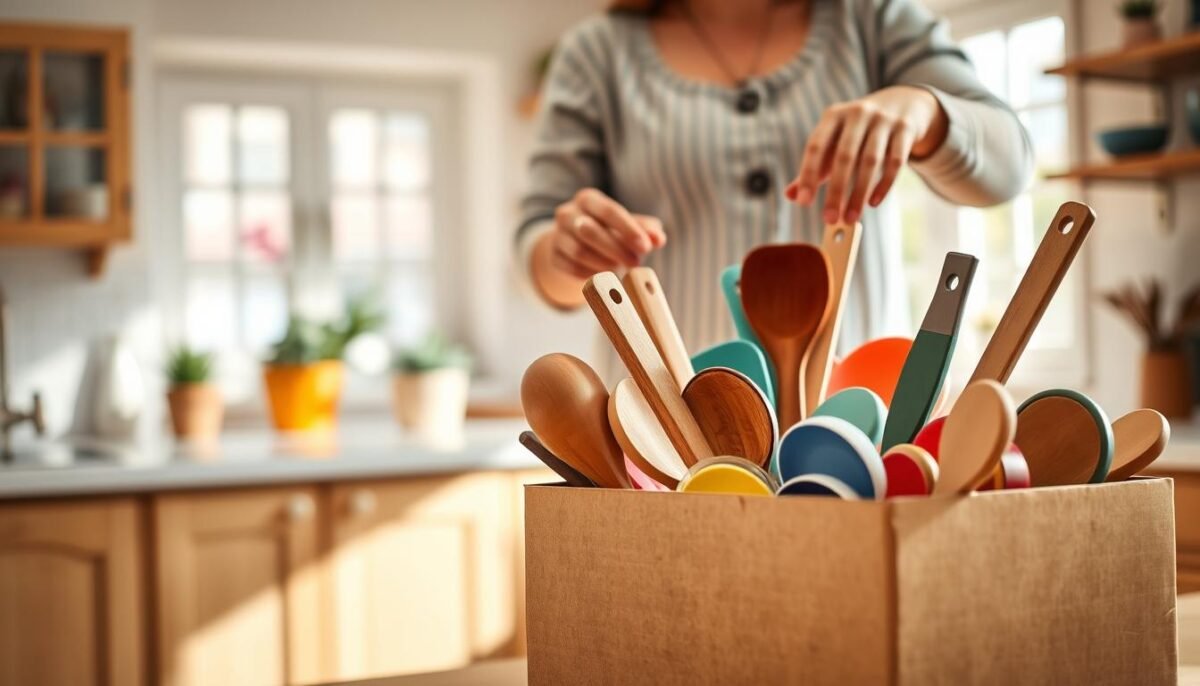
Before you throw away your old spatulas, think about charity kitchen donations. Donating your used kitchenware helps local organizations and keeps items out of landfills. Many families in need use these donations to set up their homes.
Identifying Items Suitable for Charity
Not every kitchen item is good for donation. Only donate kitchen tools that work well and are safe for food. Look for items without deep rust, big cracks, or broken handles.
Don’t donate tools missing parts or with peeling non-stick coatings. Shelters and thrift stores often look for stainless steel, solid wood, and heavy-duty silicone items.
Preparing Utensils for Donation Centers
After picking your items, prepare them well for donation centers. A little extra effort helps both you and the charity staff.
Cleaning and Sanitizing Requirements
Every item must be clean before it goes to a new home. Wash them with hot, soapy water to remove grease and food. If they’re dishwasher safe, a full cycle is best for proper sanitizing.
Packaging for Safe Transport
When you’re ready to donate, pack your items safely. Use strong boxes or bags to keep sets together. Wrap sharp items like peelers in paper to protect volunteers.
| Item Type | Condition Status | Donation Ready |
|---|---|---|
| Stainless Steel Spatula | Minor Scratches | Yes |
| Non-stick Pan | Peeling Coating | No |
| Wooden Spoon | Smooth Surface | Yes |
| Plastic Ladle | Cracked Handle | No |
Recycling Metal and Plastic Kitchen Tools
Managing kitchen waste starts with knowing how to recycle metal utensils and plastic tools. Many items seem recyclable, but local rules often differ. Learning these rules helps prevent contamination and ensures waste is processed right.
Understanding Local Recycling Guidelines
Every city has its own rules for waste collection. Before throwing items away, check your city’s website for accepted materials. Some places take all metals, while others have restrictions.
If you’re sorting kitchen items, keep non-accepted materials separate. This makes disposal easier and more efficient. You can find more information on sorting kitchen items online.
Handling Stainless Steel and Aluminum Items
Most stainless steel and aluminum tools are recyclable. These metals are valuable and easily processed. If items are too big, take them to a scrap yard instead of the landfill.
Always ensure metal tools are clean before recycling. A quick rinse prevents odors and keeps recycling streams clean.
Managing Plastic Utensils and Spatulas
Effective plastic utensil recycling needs detective work. Not all plastics are recyclable, especially small kitchen tools. Check the materials of your spatulas and spoons before recycling.
Identifying Resin Identification Codes
Look for the triangle symbol on plastic tools, which shows a number from 1 to 7. Curbside programs usually accept plastics with codes 1 or 2. If it’s a 7, it’s trash.
Separating Mixed-Material Utensils
Many kitchen tools have mixed materials, like silicone and metal. These can’t be recycled together. Try to disassemble these tools to recycle each part correctly.
| Material Type | Recyclability | Disposal Method |
|---|---|---|
| Stainless Steel | High | Curbside or Scrap Yard |
| Aluminum | High | Curbside or Scrap Yard |
| Hard Plastic (Code 1-2) | Moderate | Curbside Bin |
| Mixed Silicone/Metal | Low | Disassemble or Trash |
Safe Disposal of Sharp or Damaged Utensils
Proper disposal of hazardous kitchenware keeps you and sanitation workers safe. When cleaning your drawers, kitchen waste management is crucial. It ensures everyone stays safe during collection.
Preventing Injuries During Waste Management
Preventing accidents starts with preparation. Always wear thick gloves for jagged or broken items. Never throw loose blades or broken glass into trash bags, as they can pierce them.
Use a puncture-resistant container like a heavy cardboard box or plastic tub for these items. Label it clearly as “Sharp” or “Broken Glass.” This warning helps keep waste collectors safe.
Wrapping Knives and Blades for Trash Collection
When disposing of sharp knives, you must dull the blade. Wrap the blade in thick cardboard or bubble wrap. Use heavy-duty duct tape to keep it in place.
For large knives, put them in a rigid plastic sleeve or a modified cereal box. This creates a protective barrier that keeps the edge from cutting through the bag. Make sure the handle is visible or clearly marked to avoid accidents.
Handling Broken Glass or Ceramic Tools
Broken glass and ceramic tools need special care for safe disposal of kitchenware. If a plate or glass bowl breaks, don’t pick up shards with your hands. Use a broom and dustpan to collect them, then put them in a sturdy container.
If you don’t have a spare box, wrap the broken pieces in newspaper or paper towels. Secure the bundle with tape to keep shards from spilling. These cautious steps help keep your community safe and waste collection efficient.
Upcycling and Repurposing Old Kitchenware
Using upcycling kitchenware is a great way to cut down on waste. It also adds a personal touch to your home. Many items that seem like trash can get a new life through creative projects. This turns waste into useful decor or tools.
Creative Ways to Reuse Metal Whisks and Ladles
Metal tools are very durable, making them perfect for DIY projects. You can turn old ladles into unique planters by mounting them on a wooden board. Or, hang them in the kitchen to hold spices or small items.
- Turn old whisks into hanging light fixtures for a rustic look.
- Use ladles as bird feeders by filling them with seeds and hanging them in the garden.
- Transform metal whisks into decorative candle holders for your patio.
Transforming Wooden Spoons into Garden Markers
Wooden spoons may lose their finish, but they’re still great for the garden. Paint the handles or use a wood burner to label your plants. These markers are a charming example of sustainable kitchen practices for your backyard.
| Utensil Type | Project Idea | Benefit |
|---|---|---|
| Wooden Spoon | Garden Marker | Eco-friendly labeling |
| Metal Whisk | Hanging Planter | Durable decor |
| Old Ladle | Wall Organizer | Space saving |
Giving Old Utensils a Second Life in the Workshop
Your garage or workshop is a great place for upcycling kitchenware. Metal spatulas can be bent into hooks for hanging tools or cords. Old muffin tins are perfect for organizing small hardware like screws and nails.
Think creatively about each item before throwing it away. Even a damaged whisk can be useful for mixing paint or cleaning corners. Repurposing these items helps create a more circular and mindful lifestyle.
Environmental Impact of Kitchen Waste
Managing household waste starts with knowing its environmental impact. Every item you throw away affects our natural resources. By using sustainable kitchen practices, you can reduce your impact on the planet.
Reducing Landfill Contributions
Discarding items without thinking about their future often ends up in landfills. These sites are filling up fast. It’s crucial to divert as much material as we can. By adopting eco-friendly kitchen cleanup habits, we keep non-biodegradable materials out of landfills.
Here are some benefits of reducing waste:
- Less methane emissions from decomposing organic matter.
- More raw materials available by keeping metals in use.
- Less energy needed to make new products from scratch.
The Importance of Proper Material Separation
Good kitchen waste management starts with sorting items before throwing them away. Mixing materials makes it hard for facilities to process them right. By recycling metal utensils, we ensure valuable resources like stainless steel are reused.
The table below shows why sorting kitchen tools is good for the environment:
| Material Type | Disposal Method | Environmental Benefit |
|---|---|---|
| Stainless Steel | Recycling | Saves energy and mining resources |
| Hard Plastics | Specialized Recycling | Reduces microplastic pollution |
| Wooden Tools | Composting | Returns nutrients to the soil |
Proper sorting is a simple yet powerful step in sustainable kitchen practices. By improving kitchen waste management, you help create a cleaner future. Remember, the effort to recycle metal utensils and other materials is key to eco-friendly kitchen cleanup.
Common Mistakes to Avoid When Clearing Out Kitchen Drawers
When you decide to clean out your kitchen, it’s key to know what to avoid. Many people accidentally make extra work for waste management by labeling trash wrong. Making sure you safe disposal of kitchenware helps keep your cleaning process efficient and good for your community.
Avoiding Contamination in Recycling Bins
One big mistake is putting non-recyclable items in curbside bins. Plastic utensil recycling is often misunderstood. Many lightweight plastics are not accepted by local programs. Always check your local guidelines before recycling items like spatulas or plastic spoons.
Contamination happens when food or non-recyclable materials mix with clean plastics. This can ruin entire batches of recyclables. Always rinse your items well and check the resin codes before recycling.
Why You Should Not Donate Heavily Damaged Items
Donating kitchen tools is noble, but not every item is right for donation. Sending broken or rusted equipment to charities can cost them money. If an item is no longer useful, it’s better to recycle or throw it away properly.
When disposing of sharp knives that are dull or damaged, be careful. Never put loose blades in a donation box, as it’s a safety risk. Wrap them in cardboard or newspaper before throwing them away.
| Item Condition | Best Disposal Method | Reasoning |
|---|---|---|
| Gently Used | Charity Donation | Supports community needs |
| Worn Plastic | Recycling Bin | Reduces landfill waste |
| Broken/Sharp | Secure Trash | Prevents injury risks |
| Rusted Metal | Scrap Metal Yard | Ensures material recovery |
Conclusion
Learning how to get rid of old kitchen tools makes your cooking space better. It’s all about keeping things organized and clutter-free. This way, every tool has a purpose.
To have a well-organized kitchen, check your tools regularly. Getting rid of broken or useless items makes room for better ones. This makes cooking easier every day.
Think about upcycling your kitchenware to cut down on waste. Turning old ladles into planters or garden decorations adds charm to your home. It’s a small step towards living more sustainably.
Choose to donate or recycle your kitchen items instead of throwing them away. Many local charities accept used kitchen tools. This helps the environment and supports your community.
Take some time this weekend to review your kitchen tools. Even small changes can make a big difference. Begin your journey to a more efficient and green kitchen today.
FAQ
What is the first step in deciding how to dispose of my kitchen utensils?
First, take a close look at your kitchen tools. Sort them by material, like stainless steel, aluminum, wood, or plastic. Check their condition too. Tools that still work but are a bit worn out are great for donation.
But, if something is really damaged, think about recycling or safe disposal.
Where can I donate gently used kitchenware like spatulas and ladles?
Many local centers and big organizations like Goodwill and The Salvation Army take kitchen tools. Make sure to clean and sanitize them well before donating. This keeps everyone healthy and ensures they get to their new home safely.
How do I know if my plastic kitchen tools are recyclable?
Look for resin identification codes on your plastic tools, from brands like OXO or Rubbermaid. Recycling rules change by place, so check what your local recycling accepts. This helps keep your recycling bin clean.
Can I recycle kitchen utensils made of mixed materials?
Recycling mixed materials, like a spatula with a metal handle and plastic head, can be tricky. You might need to take it apart. This way, the metal can be recycled with other metals, and the plastic or silicone can be recycled separately.
What is the safest way to throw away sharp knives or broken ceramic tools?
Wrap sharp knives in thick cardboard or newspaper, then tape it up. For broken glass or ceramic, use a strong container to hold it before throwing it away. This keeps workers safe.
How can I upcycle old kitchenware that is no longer food-safe?
Upcycling is a fun way to reuse old tools. Turn wooden spoons into garden markers or metal whisks into candle holders. You can even use old ladles as planters. It’s good for the planet and creative.
Why is it important to avoid donating heavily damaged kitchen utensils?
Don’t donate tools that are broken or unsafe. It’s too much for charities like Habitat for Humanity ReStore. If something can’t be used anymore, recycle it instead.
What environmental impact does proper kitchen waste management have?
Properly sorting and disposing of waste reduces landfill volume. This eco-friendly approach lowers your environmental impact. It also helps recycle materials like aluminum and steel.