
Learning to keep your greens fresh is key for any home cook. Knowing how to keep bok choy fresh helps it stay crisp and flavorful. The right handling can cut down on kitchen waste.
Many face the problem of bok choy wilting fast. But, the right moisture and temperature can solve this. By using effective techniques, you can make bok choy shelf life last longer. This makes long-term food storage easy and dependable.
Knowing how to store bok choy long term lets you enjoy healthy meals all week. These expert tips help keep your produce in top shape. By following these steps, your bok choy will stay fresh until you’re ready to cook.
Table of Contents
Preparing Bok Choy for Optimal Storage
Learning how to prepare bok choy is key before you store it. A few minutes of extra care can greatly extend its freshness. Follow these bok choy storage tips to keep your veggies fresh for longer.
Selecting the Freshest Heads at the Market
Start by choosing the right bok choy at the store. Look for heads that are firm and heavy. The stems should be bright white or light green, with no browning or soft spots.
The leaves should be vibrant and crisp, not wilted or yellowed. Fresh produce care is easier with high-quality, fresh ingredients. Steer clear of heads with slime or too much bruising, as they spoil quickly.
Cleaning and Drying Techniques to Prevent Decay
After buying your greens, cleaning them right is crucial for storing leafy greens. It’s tempting to wash them immediately, but moisture is the enemy. If you wash them, make sure they’re dry before storing.
Use a salad spinner or a clean towel to dry the leaves. Excess moisture can cause rot and bacterial growth. Keeping the vegetable dry helps preserve its crunch and nutrients for days.
How to Store Bok Choy Long Term in the Refrigerator
Storing bok choy in the fridge is easier than you think. By controlling the fridge’s climate, you can keep your greens fresh longer. The right way to store cruciferous vegetables keeps them crisp and tasty for your next meal.
To store bok choy for a long time, balance air and moisture. Dry air in a regular fridge makes leaves wilt fast. With a few simple steps, you can keep your veggies fresh for over a week.
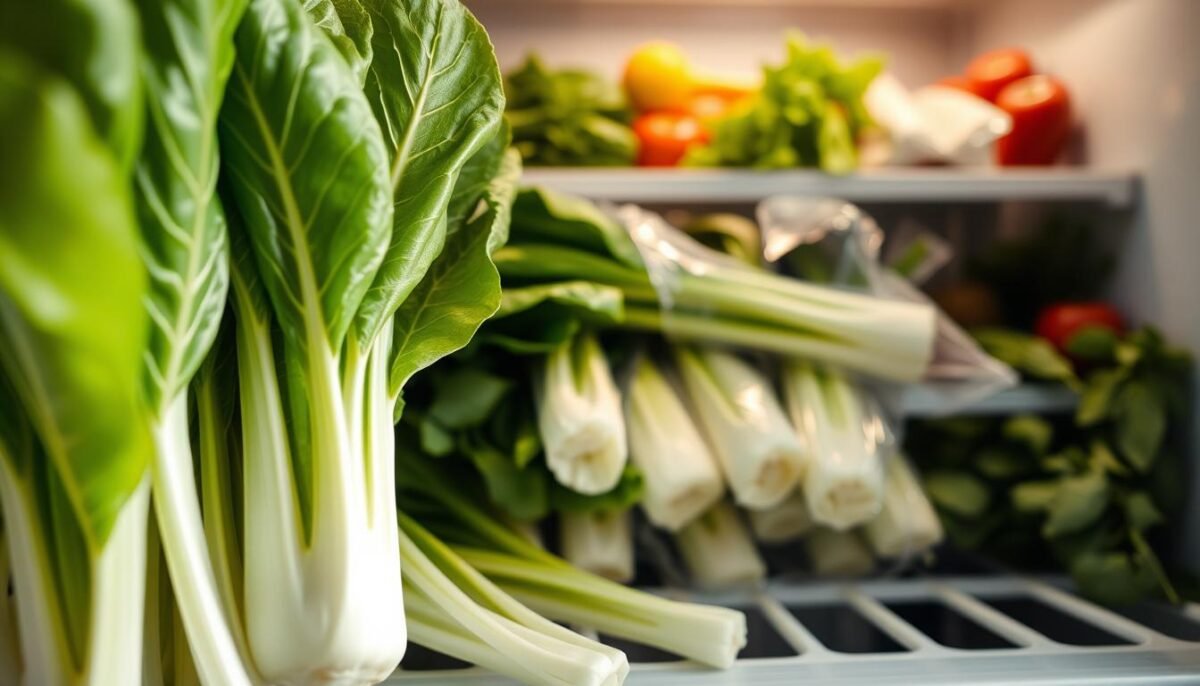
Wrapping for Moisture Control
Good bok choy storage tips begin with wrapping it right. Plastic bags trap too much moisture, making leaves slimy. Use breathable wraps to keep the plant intact.
- Wrap the head loosely in a dry paper towel.
- Place the wrapped bok choy inside a perforated plastic bag.
- Make sure there’s enough air around the leaves.
Utilizing the Crisper Drawer Effectively
The best way to store bok choy is in the crisper drawer. This drawer controls humidity better than other shelves. Using crisper drawer storage stops greens from drying out too fast.
Set the drawer’s humidity to medium-to-high if you can adjust it. This keeps stems firm and leaves bright. Don’t overcrowd the drawer to avoid bad air flow and decay.
Monitoring Temperature and Humidity Levels
Keeping your fridge consistent is crucial for storing leafy greens. Aim for a temperature between 34°F and 40°F. Temperature changes cause condensation, which harms the veggies.
Check your greens often to avoid moisture buildup. If it’s damp, change the paper towel to keep it dry. This way, your bok choy stays fresh for longer.
Freezing Techniques for Extended Preservation
Want to keep your bok choy fresh for months? Learning how to freeze it right is key. This is the best way to store bok choy. Preserving bok choy through freezing keeps nutrients and flavor for later meals.
Step 1: Blanching to Maintain Texture and Color
Blanching bok choy stops enzymes that cause color and texture loss. Without it, your greens might become mushy or lose color. Here’s how to prepare them:
- Bring a large pot of water to a rolling boil.
- Submerge the cleaned leaves and stems for exactly 90 seconds.
- Immediately remove the greens using a slotted spoon.
Step 2: Cooling and Draining the Greens
After blanching, stop the cooking process right away. Put the bok choy into a bowl of ice water for 90 seconds. This shocking step is crucial for storing cruciferous vegetables well.
Drain the greens well in a colander. Use a clean towel or paper towels to remove extra moisture. Too much water can cause ice crystals, harming your frozen produce.
Step 3: Packaging for Freezer Burn Prevention
Proper packaging stops freezer burn and keeps your greens fresh. Use heavy-duty freezer bags or airtight containers. Make sure to remove as much air as you can before sealing.
Mark each package with the date to track your stock. When stored right, your frozen greens stay good for up to six months. This easy method keeps healthy ingredients ready for your favorite dishes.
Alternative Preservation Methods for Long-Term Storage
Creative vegetable preservation methods let you enjoy your harvest long after it’s in season. These methods add unique textures and flavors to your greens. They change how you use them in the kitchen.
By exploring beyond cold storage, you can extend your bok choy shelf life a lot. These techniques are great for those who want to cut down on food waste. They also help build a versatile pantry.
Dehydrating Bok Choy for Soups and Stews
Dehydrating vegetables is a smart way to save space and concentrate flavor. When you dry out the leaves, they become light and brittle. This makes them easy to store in airtight jars.
These dried greens are perfect for adding to winter soups and stews. They soak up liquid quickly, adding nutrients and a nice texture to your favorite meals.
Pickling Bok Choy Stems for Extended Shelf Life
If you’re into preserving bok choy, don’t skip the stems. Pickling them turns the stems into a tangy, long-lasting condiment. It’s great with savory dishes.
Just soak the cleaned stems in a brine of vinegar, salt, and spices. This makes a delicious, crunchy snack that stays fresh for weeks. It adds a bright contrast to heavy meals.
Conclusion
Learning how to preserve food changes how you manage your kitchen. You can enjoy fresh greens and cut down on waste. These habits make a big difference in your daily life.
To keep vegetables fresh, you need to be proactive with your groceries. Using the right cooling and drying methods helps keep your ingredients in top shape. This care is key to a more efficient kitchen.
Keeping food fresh for a long time takes dedication to simple steps. With practice, you’ll find it easier to keep food good for weeks. Start using these tips today to see the difference in your cooking. With consistent effort, your pantry will always have healthy, fresh food for every meal.
FAQ
How can I identify the freshest bok choy at the grocery store for long-term storage?
Look for bok choy with firm stems and vibrant, crisp leaves at places like Whole Foods Market or farmers’ markets. Avoid any with yellowing edges or wilted leaves. These signs mean the bok choy is old and will not last long at home.
Why is moisture control so important when refrigerating cruciferous vegetables?
Too much moisture can cause rot and decay. Even though cruciferous vegetables need some humidity, too much makes leaves slimy. Use breathable materials like a Ziploc bag with holes or a damp paper towel to keep them fresh.
Is it necessary to blanch bok choy before placing it in the freezer?
Yes, blanching is key for preservation. Briefly boiling the greens stops enzymes that cause color, flavor, and texture loss. This way, your frozen greens stay good for months without getting tough or bitter.
How does the crisper drawer help extend the life of leafy greens?
The crisper drawer controls humidity for fresh produce. It keeps the leaves from drying out, making the bok choy crisp and preventing early wilting.
Can bok choy stems be preserved separately from the leaves?
Definitely. You can pickling the stems for a tangy condiment. The leaves are better for dehydrating or using in winter soups and stews.
What is the best way to prevent freezer burn on preserved vegetables?
Remove as much air as you can from packaging to avoid freezer burn. Use a FoodSaver or heavy-duty freezer bags to keep the air out. This protects the vegetable’s cells from ice crystals.
How long can I expect bok choy to last using different storage methods?
In the refrigerator with good moisture control, bok choy lasts about a week. Freezing or dehydrating can keep it fresh for six to twelve months, reducing food waste.