
Choosing the right cutlery is key for any home cook wanting to get better. It doesn’t matter if you’re new or have years of experience. Knowing about blade shape and handle feel is crucial.
This guide will show you the differences in materials and designs. Learning these basics helps you pick the right knife for your needs.
Getting the best kitchen knives makes cooking easier. Quality gear boosts safety and lets you cut more accurately. Learning these basics helps your tools help you grow in cooking.
Table of Contents
Understanding Knife Anatomy and Materials
To pick the right blade, you need to know the chef knife anatomy. Choosing top-notch kitchen knife materials means looking into the parts that affect how well a knife works and lasts in your kitchen.
The Anatomy of a Chef Knife
A pro knife is a detailed tool made from different parts. Each part has its role in making the knife balanced and effective, even when used a lot.
Blade, Bolster, and Tang
The blade is the main cutting area, but its quality depends on the tang. A full tang, where the metal goes through the handle, gives better balance and strength than a partial tang.
The bolster is the thick part between the blade and handle. It protects your fingers and adds weight to the knife’s center. This helps prevent hand fatigue during long cooking times.
Handle and Rivets
The handle is where you grip the knife, and the rivets hold the scales to the tang. Good knives often have triple-riveted handles. This keeps the handle tight and stable for many years.
Common Blade Materials
The type of material used in a blade affects how sharp it stays and how easy it is to keep clean. Knowing these differences is key for anyone looking to buy reliable kitchen tools.
High-Carbon Stainless Steel
High-carbon stainless steel is the top choice for today’s knives. It combines stainless steel’s resistance to stains with carbon’s hardness. This makes the blade sharper and keeps it sharp longer.
Ceramic vs. Damascus Steel
Deciding between special materials depends on what you need. Ceramic blades stay sharp but are fragile and can chip. On the other hand, Damascus steel knives are known for their beauty and flexibility.
| Material | Durability | Edge Retention | Maintenance |
|---|---|---|---|
| High-Carbon Stainless | High | Excellent | Moderate |
| Ceramic | Low | Very High | Difficult |
| Damascus Steel | High | High | High |
The best choice depends on how often you’re ready to sharpen your knife. Always think about how often you’ll sharpen before buying.
How to Pick Kitchen Knives? – Essential Cutting Tools for Your Collection
Choosing kitchen knives is key to your cooking success. You don’t need a huge set of knives to cook great meals at home. Instead, focus on a few top-quality knives for better results and control.
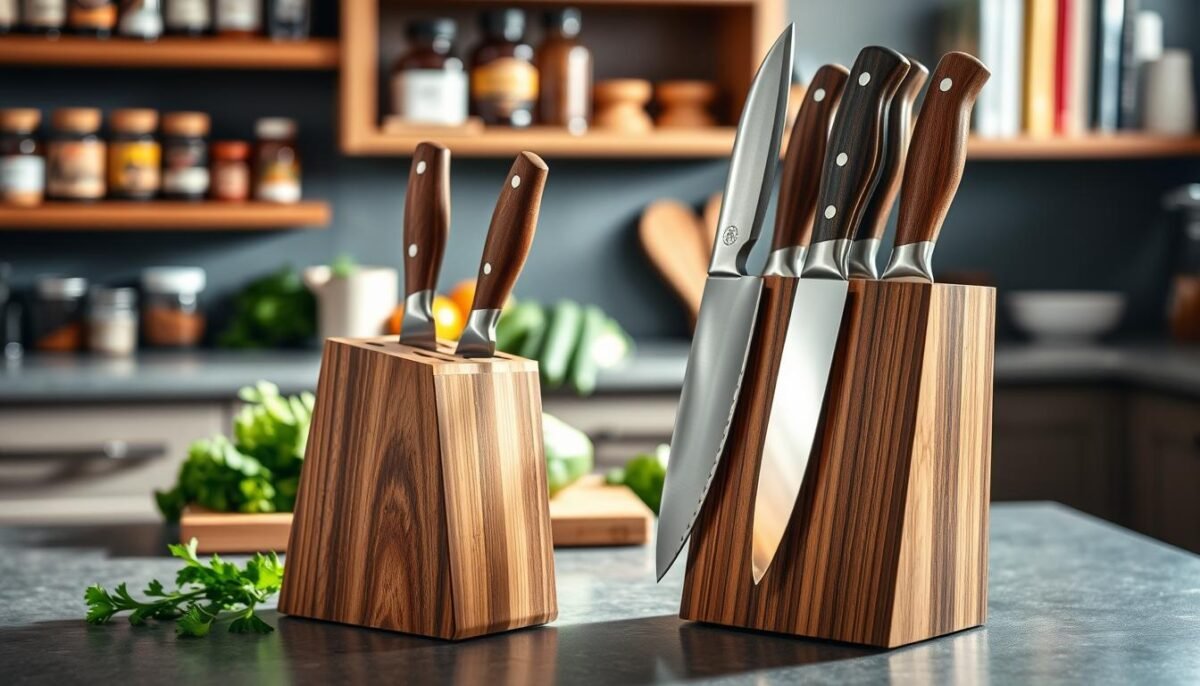
The Must-Have Trio
Most chefs agree on a must-have kitchen knives trio. These three shapes cover about 90% of food prep tasks, from chopping veggies to slicing bread.
The Versatile Chef Knife
The chef knife is your kitchen’s workhorse. Its broad, curved blade allows for a rocking motion. This makes it perfect for mincing herbs or dicing onions quickly.
The Precision Paring Knife
For paring knife uses, think of small tasks. This short blade is great for peeling fruits, deveining shrimp, or removing blemishes from produce.
The Serrated Bread Knife
A top-notch serrated bread knife is key for cutting through hard exteriors and soft interiors. Its saw-like teeth grip the crust without crushing the soft crumb inside.
Specialty Knives Worth Considering
After mastering the basics, look for best kitchen knives for specific ingredients. These specialty tools make tough tasks easy.
Utility Knives for Mid-Sized Tasks
A utility knife is between the chef knife and paring knife in size. It’s perfect for tasks too big for a paring knife but not heavy-duty enough for a chef knife.
Boning and Fillet Knives
These knives are crucial for working with raw proteins. A boning knife has a stiff, narrow blade for navigating joints. A fillet knife is flexible for smooth fish bone removal.
| Knife Type | Primary Function | Key Advantage |
|---|---|---|
| Chef Knife | General chopping and dicing | Versatility |
| Paring Knife | Detailed peeling and trimming | Control |
| Bread Knife | Slicing crusty loaves | Serrated grip |
| Boning Knife | Removing meat from bone | Precision |
Evaluating Blade Construction and Edge Geometry
The way a knife is built affects how it works in your kitchen. The material and how it’s made impact the knife’s weight, balance, and strength. Knowing these details helps you choose the right knife for cooking.
Forged vs. Stamped Blades
When you compare forged vs stamped knives, you see two different making methods. Forged blades are made from one piece of metal that’s hammered into shape. Stamped blades are cut from a sheet of metal, like a cookie cutter, and then heat-treated.
Benefits of Forged Construction
Forged knives are known for their superior durability and weight. The forging process makes a bolster, which helps balance the knife. This also protects your fingers when chopping hard.
Advantages of Stamped Knives
Stamped knives are lighter and cheaper for home cooks. They don’t have a bolster, making them easier to sharpen. Many modern stamped blades perform as well as forged ones.
| Feature | Forged | Stamped |
|---|---|---|
| Weight | Heavier | Lighter |
| Balance | Bolster-weighted | Blade-focused |
| Cost | Higher | Budget-friendly |
Understanding Edge Angles
The shape of your blade is key. Kitchen knife edge angles affect how well the blade cuts. Sharper angles mean cleaner cuts but need more sharpening.
Double-Bevel vs. Single-Bevel Edges
Most Western knives have a double-bevel edge, sharpened on both sides. This makes the blade versatile and easy to maintain. Japanese knives often have a single-bevel edge for precise cuts.
The Importance of Edge Retention
Edge retention is how long a blade stays sharp. Good steel and the right edge angle keep your knife sharp longer. A blade with superior edge retention means less sharpening, making cooking smoother.
Selecting the Right Handle Material and Ergonomics
Choosing the right handle material changes how you work with your ingredients. Knife handle ergonomics help prevent hand fatigue during long cooking sessions. When your tool feels like an extension of your arm, you work more efficiently in the kitchen.
Common Handle Materials
Manufacturers use different materials to mix looks with durability. Each material feels unique and needs special care to last long.
Wood Handles and Maintenance
Wood handles offer a natural grip that many chefs like. But, they need regular care to avoid cracking or warping.
- Oil regularly: Use food-safe mineral oil to keep the wood moist.
- Hand wash only: Don’t soak wooden handles in water or put them in the dishwasher.
- Dry immediately: Dry the handle after each use to keep the finish good.
Synthetic and Composite Materials
Modern synthetic handles, like G10 or POM, resist moisture and heat well. They’re great for busy kitchens where durability matters.
Testing for Balance and Grip
Finding the right kitchen knife balance is key for precise cuts. A balanced knife should feel even in your hand, not pulling towards the blade or handle.
| Material Type | Durability | Maintenance |
|---|---|---|
| Hardwood | Moderate | High |
| Composite | High | Low |
| Stainless Steel | Very High | Very Low |
The Pinch Grip Technique
Learning how to hold a chef knife right is crucial. The pinch grip puts your thumb and index finger on the blade, just before the handle.
This grip gives you control and stability. It helps prevent the knife from shaking during tasks like mincing herbs or slicing onions.
Weight Distribution and Comfort
How a knife is weighted affects your effort in repetitive tasks. A heavy handle can strain your wrist, while a blade-heavy knife might be hard to handle.
Always test the weight in your preferred grip. Comfort is personal, so pick a handle shape that fits your hand naturally without pressure points.
Determining Your Skill Level and Usage Needs
Choosing the right cutlery is about finding a balance. It depends on your skill level and the foods you cook most. Your cooking style decides what features are most important to you.
Knives for Home Cooks
For beginners, focus on knives that are versatile and comfortable. You want tools that feel right in your hand. They should be easy to use without needing constant upkeep.
Prioritizing Durability and Ease of Care
Home cooks often prefer stainless steel blades. These resist corrosion and staining well. They are forgiving, letting you learn basic skills like dicing without worrying about edge maintenance.
Choosing knives that are dishwasher-safe or easy to clean can also make your life easier.
Knives for Culinary Enthusiasts
As you get better, you might want sharper knives. This is when many cooks look for professional kitchen knives. These knives have better geometry and balance.
Investing in Professional-Grade Steel
High-carbon steel or Japanese alloys offer a level of refinement. They make complex tasks easier. These blades need more honing and hand-washing but offer a sharp edge.
Matching Knives to Your Cooking Style
Your menu choices should guide your knife choices. Different tools are needed for different cooking styles.
Vegetable-Heavy Prep vs. Meat Processing
For plant-based meals, a thin, flat blade like a Nakiri is best. It’s great for clean cuts. For meat, a heavier, curved blade is better. It helps with trimming and portioning.
| User Profile | Primary Focus | Recommended Steel | Maintenance Level |
|---|---|---|---|
| Home Cook | General Prep | Stainless Steel | Low |
| Culinary Enthusiast | Precision Tasks | High-Carbon Steel | High |
| Vegetable Specialist | Chopping/Dicing | Hardened Alloy | Medium |
| Meat Processor | Trimming/Slicing | Durable Stainless | Medium |
Essential Maintenance and Safety Practices
Keeping your knives sharp is key to kitchen knife safety. Sharp blades mean fewer accidents. Regular kitchen knife maintenance makes your knives last longer.
Proper Sharpening Techniques
Sharpening knives needs patience and the right tools. Honing keeps the edge sharp, while sharpening trims metal for a new edge.
Using Whetstones vs. Pull-Through Sharpeners
Whetstones give you control for perfect edges. They’re better for quality steel but harder to learn. Pull-through sharpeners are quick and easy for casual cooks.
Daily Care and Storage
How you care for knives after use is crucial. Good habits prevent wear and keep them sharp for the next meal.
Hand Washing vs. Dishwasher Risks
Always hand wash knives in warm, soapy water. Dishwashers can dull and damage blades. The dishwasher’s harsh environment and utensil movement can also cause harm.
Safe Storage Solutions
Good knife storage solutions protect your blades and fingers. Avoid loose storage in drawers. Use a wooden block, magnetic strip, or blade guards for safety and organization.
| Method | Pros | Cons |
|---|---|---|
| Whetstone | Precision control | Requires practice |
| Pull-Through | Fast and easy | Removes more metal |
| Magnetic Strip | Space-saving | Exposes blades |
| Knife Block | Safe storage | Can harbor bacteria |
Conclusion
Choosing the right kitchen knives is about finding the right mix. It’s about understanding materials, construction, and what you need in the kitchen. It’s also about how a knife feels in your hand and how it cuts.
Investing in quality knives from brands like Wüsthof or Shun is worth it. These brands make knives that last, helping you grow as a cook. Taking care of your knives keeps them sharp and ready for every meal.
Building a collection of knives is a journey that grows with you. Start with the basics and add more as you learn new things. Having the right tools makes cooking better.
Share your favorite knife brands or ask about different types in the comments. Talking with other cooks helps everyone get better. We’re excited to hear about the knives that make your kitchen special.
FAQ
Why is high-carbon stainless steel considered the standard for quality kitchen knives?
High-carbon stainless steel is loved by pros like Wüsthof. It’s durable and sharp. It resists rust and keeps its edge well, making it perfect for heavy use.
What are the primary differences between a forged blade and a stamped blade?
Forged blades are made from one piece of steel, hammered into shape. They have a full tang and bolster for strength. Stamped blades are laser-cut and lighter, but not as durable as forged ones.
How do the bolster and tang affect the performance of a chef knife?
The bolster makes the transition from blade to handle smooth. The tang is the steel part in the handle. A full tang knife is strong and balanced, preventing it from breaking.
Is a Damascus steel blade better than a ceramic knife?
Damascus steel is hard and beautiful, found in Shun knives. Ceramic knives, like Kyocera, are sharp and light but can chip easily.
Which three knives should every home cook own to handle most culinary tasks?
You need a Must-Have Trio: an 8-inch chef knife, a 3.5-inch paring knife, and a serrated bread knife. They cover most kitchen tasks.
When should I use a Santoku knife instead of a traditional Western chef knife?
Use a Santoku for its short, light design and flat edge. It’s great for slicing with a push-cut motion. A Western chef knife is better for rocking motions.
What is the benefit of using a whetstone over a pull-through sharpener?
Whetstones let you control the edge angle, important for sharp blades. Pull-through sharpeners can be too aggressive, shortening your knife’s life.
Why is the pinch grip technique recommended for professional-grade knives?
The pinch grip gives you control and comfort. It’s good for tasks like chopping veggies, reducing hand fatigue.
Can I wash my kitchen knives in the dishwasher to save time?
No, hand wash your knives with mild soap and dry them right away. Dishwasher heat and detergents can damage the steel and handles.
What is the best way to store knives to ensure safety and edge protection?
Store knives on a magnetic strip, in a block, or with guards. Avoid loose storage to prevent nicks and dulling.