
Keeping your kitchen clean is key for every cook. Wooden cutting boards can get damp, leading to mold if not dried right. Knowing how to remove mold from cutting board is crucial for keeping your tools in good shape and your family healthy.
Regular care is the best way to protect your kitchen. Spotting mold early stops bigger problems that can damage your tools. By acting now, you’ll make your kitchen safe and clean for a long time.
Table of Contents
Understanding Mold Growth on Kitchen Surfaces
Many homeowners face the challenge of mold on wood kitchen tools without knowing why. Kitchens are humid, which is perfect for mold to grow. Knowing what causes it helps you keep your kitchen clean.
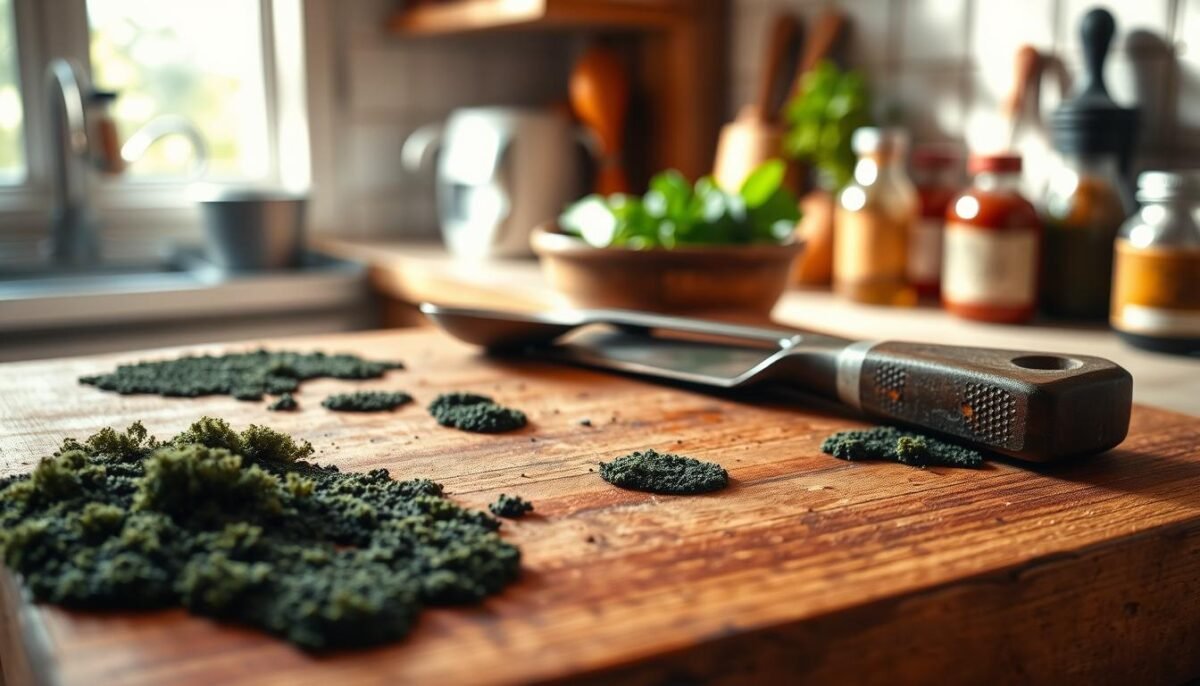
Why Wood Cutting Boards Are Susceptible to Mold
Wood absorbs liquids and food, making it a feast for mold. If you don’t seal your wood-burned cutting board, it’s easy for mold to get in.
High humidity in kitchens makes things worse. Wood stays damp, inviting mold spores in kitchen air to settle. Regular care is key to prevent mold growth.
Identifying Signs of Mold Versus Natural Wood Staining
It’s easy to mistake wood stains for mold. Wood stains come from tannins reacting to moisture or acidic foods. These stains are smooth and don’t change.
Mold, on the other hand, looks fuzzy, raised, or powdery. It smells musty and doesn’t go away after washing. Knowing the difference is crucial.
| Feature | Natural Wood Staining | Active Mold Growth |
|---|---|---|
| Texture | Smooth and flat | Fuzzy or raised |
| Odor | Neutral or woody | Musty or damp |
| Spread | Static | Expands over time |
| Removal | Permanent discoloration | Requires deep cleaning |
Spotting these differences early helps you prevent mold growth. While stains are just cosmetic, mold needs quick cleaning. Keeping your boards dry and well-oiled is the best way to fight mold on wood kitchen tools.
Essential Supplies for Deep Cleaning
Getting your kitchen surfaces clean is easy with the right tools. The right materials keep your tools in great shape and free from harmful bacteria. Using food-safe cleaning methods keeps your family safe and your tools lasting longer.
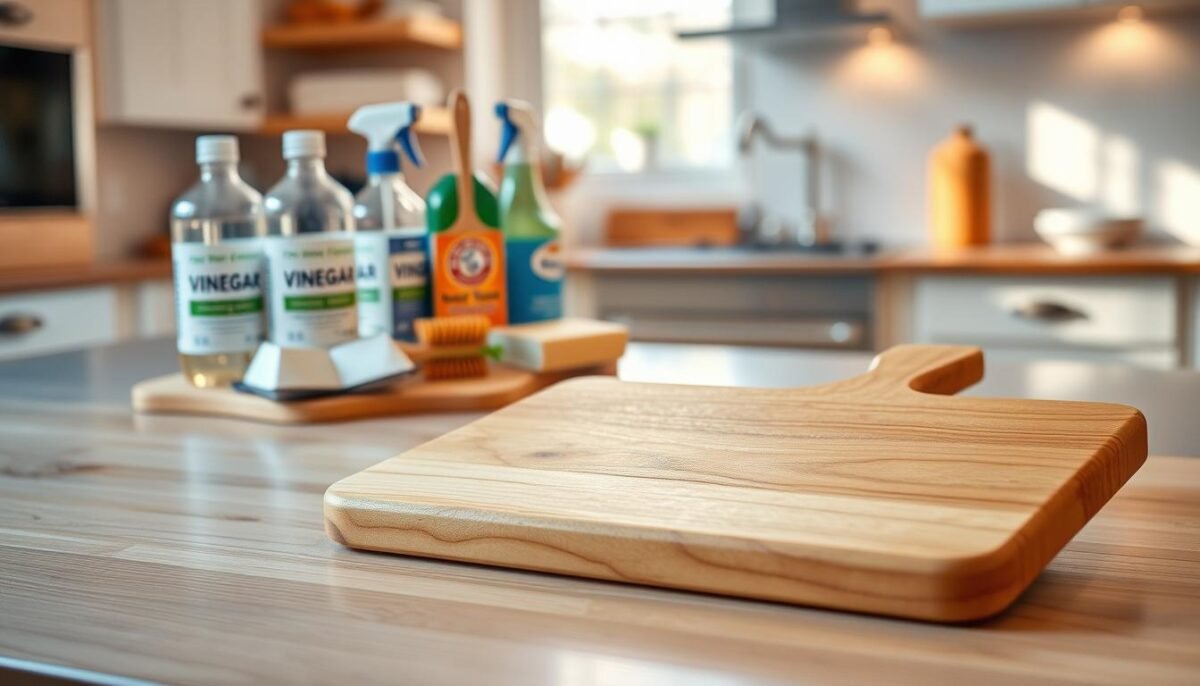
Safe Cleaning Agents for Food-Contact Surfaces
When cleaning your wooden cutting board, stay away from harsh chemicals. Instead, use items you likely have at home. Distilled white vinegar is great for killing germs, and baking soda helps remove tough stains and smells.
Lemon juice is also good for cleaning because of its acidity and fresh smell. For a deeper clean, use food-grade hydrogen peroxide. These options are safe for surfaces that come into contact with your food.
Tools Required for Scrubbing and Sanitizing
Having the right tools is as important as the right cleaners. You’ll need a stiff-bristled brush to get into the wood grain. A plastic or metal scraper is also handy for removing surface dirt before cleaning.
To sanitize cutting board surfaces, keep clean, lint-free cloths or paper towels ready. These help spread cleaners evenly and dry surfaces well. Having these supplies dedicated to cleaning keeps your kitchen clean and safe for cooking.
How to Remove Mold from Cutting Board Using Natural Methods
Restoring your kitchen tools is simple with natural ingredients from your pantry. You don’t need harsh chemicals to remove mold from wood effectively. Common household staples can sanitize your surfaces safely for food prep.
Preparing the Board for Treatment
First, clear the surface of loose debris or food particles. Use a stiff-bristled brush or a plastic scraper for this. It ensures your cleaning agents reach the wood fibers.
After clearing, wipe the board dry with a cloth. A clean, dry surface absorbs treatment solutions better. Proper preparation is key to successful mold removal.
Applying Distilled White Vinegar to Kill Spores
Vinegar is great for natural mold removal due to its acidity. It breaks down mold spores on contact. Here’s how to use vinegar for mold treatment:
- Pour undiluted distilled white vinegar into a spray bottle.
- Mist the entire surface of the cutting board generously.
- Let the vinegar sit for at least ten minutes for deep penetration.
Using Baking Soda and Lemon for Deodorizing and Scrubbing
After vinegar treatment, you might notice odors or spots. Baking soda is a mild abrasive that lifts stains without harming the wood. Lemon adds a fresh, sanitized finish.
Sprinkle baking soda over the damp board. Use half a lemon as a scrubber, rubbing the cut side against the baking soda. This combo removes mold stains and leaves a clean scent.
Rinsing and Drying Procedures to Prevent Re-growth
The final stage is crucial for long-term maintenance. Rinse the board with warm water to remove all cleaning paste. Make sure to clean all wood grooves.
After rinsing, dry the board with a clean towel. Never leave your wooden board soaking in water, as it causes mold growth. Stand the board upright in a well-ventilated area for air circulation.
Specialized Techniques for Stubborn Mold Stains
When mold gets into your cutting board’s fibers, you need a stronger approach. Simple cleaning might not remove mold stains deeply embedded in the wood. You must use advanced methods to sanitize the board and make it safe for food.
Utilizing Hydrogen Peroxide for Deep Disinfection
Hydrogen peroxide cleaning is great for tough mold. It’s a mild bleach that goes deep to kill spores. Just apply a 3% solution, wait a few minutes, and then wipe it off.
Make sure to rinse the board well after using hydrogen peroxide. This is especially good for light-colored woods where stains are easy to see. It gives a deep clean that vinegar might not.
Sanding Down Surface Damage
If mold has damaged the wood, sanding wood boards is the best fix. Sanding removes the top layer where mold grows. This reveals clean wood underneath.
When to Use Fine-Grit Sandpaper
Use fine-grit sandpaper, 120 to 220 grit, for rough surfaces or dark spots. Avoid coarse grits that can scratch and trap bacteria. Sand in the wood grain direction to keep the surface intact.
Restoring the Surface After Sanding
After sanding, wood board restoration isn’t over. You need to seal the wood to stop moisture. Use food-grade mineral oil or beeswax to nourish and protect against mold.
Best Practices for Maintaining and Sanitizing Wood Boards
Having a cleaning schedule is key for every home cook. Regular cutting board care keeps your tools safe and extends their life. Simple habits help keep your kitchen clean with little effort.
Proper Washing Techniques After Every Use
To clean wooden cutting board surfaces right, avoid the dishwasher. High heat and too much water can warp or crack the wood. This creates places for bacteria to grow. Instead, wash your board by hand with warm water and mild soap.
Scrub well, then rinse and dry with a clean towel right away. Never let your board sit in water. For deeper sanitize cutting board cleaning, a white vinegar wipe is safe and effective.
The Importance of Regular Oiling and Conditioning
Wood care is more than just washing. Wood absorbs liquids, which can cause odors or mold. Using food-grade mineral oil or beeswax conditioner seals the wood.
Oil your board monthly or when it looks dry. This step stops wood from soaking up food juices and keeps it smooth. Regular conditioning makes your board last longer and stay in good shape.
Storage Tips to Ensure Proper Airflow
Proper storage stops mold and keeps your board in good shape. Never store a damp board flat, as it traps moisture. Always dry your board upright.
Use a drying rack or lean it against a backsplash for air on both sides. If space is tight, a vertical stand keeps boards organized and dry. Good airflow is crucial for a clean kitchen.
Conclusion
Keeping your cooking area safe is all about the tools you use daily. Your wooden cutting board is key to meal prep, so it must be in good shape.
Using kitchen hygiene tips can stop mold spores from growing on your wood. By taking care of your board, you keep it safe from harm.
Following kitchen sanitation best practices helps your boards last longer. This keeps your kitchen clean and your food safe.
Share your tips on keeping boards safe or ask about wood care products. By doing so, we all make our kitchens safer for cooking.
FAQ
Why are porous wood materials particularly susceptible to mold growth?
Wood is a natural, porous material that absorbs moisture and humidity. If not dried properly, mold spores can settle in. Brands like John Boos & Co. suggest regular maintenance to keep wood free from bacteria.
How can I distinguish between harmless wood staining and dangerous mold?
Wood staining from foods like beets can darken or change color. Mold, however, shows as fuzzy patches or dark spots. Spotting these signs early is key to keeping your kitchen safe.
Is distilled white vinegar effective for mold treatment on cutting boards?
Yes, white vinegar can kill mold on cutting boards. Its acetic acid kills about 82% of mold species. Apply it directly, let it sit, then rinse and dry.
When should I consider sanding wood boards to remove mold?
Sanding is needed if mold is deep in the wood and cleaning doesn’t work. Use fine-grit sandpaper to remove mold. This method is for serious damage.
What is the best way to achieve deep disinfection for stubborn mold stains?
Hydrogen peroxide can deeply disinfect wood. Use a 3% solution to kill pathogens. Rinse well and clean with food-safe methods to remove all residue.
How does oiling and conditioning help prevent mold growth?
Oiling with food-grade mineral oil seals wood pores. This stops moisture buildup and mold growth. Keeping this barrier is crucial for kitchen hygiene.
What are the ideal storage tips to ensure proper airflow for wooden boards?
Store boards upright in a drying rack for good airflow. This prevents mold from growing back. Proper storage keeps your kitchen clean.