
Modern kitchens now have smart appliances that save space. Learning how to use air fry microwave settings lets you cook crispy food without a big machine. These combo tools are perfect for quick, tasty meals in busy homes.
Getting good at using these machines means knowing the basics and keeping them clean. By following a simple guide, you can make everything from roasted veggies to crispy snacks. Confidence in the kitchen comes from knowing your tools well.
This guide will show you how to use your device right. We’ll cover key steps to make sure your food always tastes great. Learn how to use air fry microwave features to improve your cooking and make life easier.
Table of Contents
Understanding Your Air Fry Microwave Technology
The secret to great home cooking is in your microwave’s special tech. Unlike regular models, these units use convection microwave cooking for more options. Learning to use these features can change how you cook every day.
Exploring air fry microwave settings means using a fast fan to move hot air. This makes food cook like in a pro oven, ensuring even heat. Consistency is key with this tech.
How Air Fry Mode Differs from Traditional Microwaving
Regular microwaves heat food from the inside out. But using air fry mode uses a heating element and fan. This combo dries and crisps food’s outside.
This method is unlike the steam or boil of basic microwaving. The hot air removes moisture, giving food a signature crunch like deep-frying, but with less oil.
Key Components and Accessories Required
To get the best results, use the right air fry microwave accessories. You’ll need a special rack and non-stick crisper tray. These help air circulate under food for even cooking.
It’s important to place these accessories right for air fry microwave efficiency. Wrong placement can lead to uneven cooking or no crisp. Always clean your accessories before cooking.
| Cooking Mode | Heat Source | Primary Benefit |
|---|---|---|
| Standard Microwave | Electromagnetic Waves | Speed and Reheating |
| Convection Mode | Heating Element + Fan | Baking and Roasting |
| Air Fry Mode | High-Speed Fan + Element | Crispy Texture |
Preparing Your Appliance for First Use
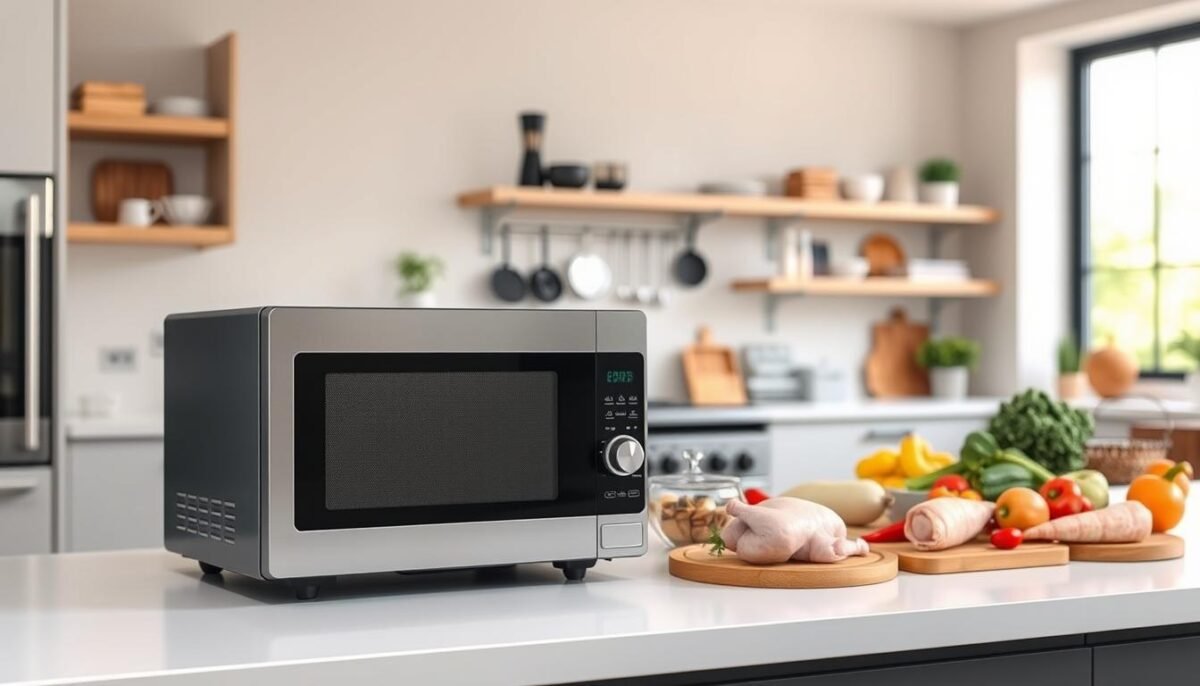
Setting up your new kitchen tool right is key for safety and performance. A complete air fry microwave setup makes sure your device works well. It also keeps your kitchen safe from heat damage.
Initial Cleaning and Burn-in Process
First, get rid of any factory oils or dust inside. Clean the inside walls and turntable with a damp cloth and soap. Make sure to rinse and dry all parts, like the air fry basket and rack, too.
Doing an air fry microwave burn-in is crucial to get rid of factory smells. Set it to air fry mode at the highest temperature for 15 to 20 minutes without food. You might smell something or see light smoke, which is normal as the elements get ready.
Positioning for Proper Ventilation
Good air fry microwave ventilation stops it from getting too hot. It needs enough space around it for hot air to escape. Always check your user manual for the right amount of space.
To keep air flowing well, follow these tips:
- Make sure there’s 3 to 4 inches of space on the sides and back.
- Have at least 12 inches of space above it.
- Don’t put it near curtains, towels, or anything that can catch fire.
- Don’t block the vents on the sides or back.
By placing it right, you avoid damage and get better cooking results. Good airflow keeps it cool and helps fans work better.
How to Use Air Fry Microwave for Daily Cooking
Learning to use your air fry microwave settings is key to great kitchen results. By mastering these controls, you can turn simple ingredients into tasty, restaurant-quality meals. Understanding how your appliance works with different foods is crucial for consistent convection microwave cooking.
Selecting the Correct Rack and Tray Placement
Choosing the right spot for your food is a top best air fry microwave tip. Always use the metal rack to elevate your food. This lets hot air circulate underneath for even cooking. Make sure your tray is on the right level to avoid uneven browning and ensure your food cooks well.
Setting Temperature and Time Parameters
Getting your temperature and time settings right is crucial. Recipes often need a specific heat to get a crispy food microwave finish without drying out the inside. Start with the manufacturer’s guidelines, then tweak based on your food’s density and size.
Preheating the Cavity for Optimal Crispiness
Never skip the air fry microwave preheat step for the best results. Preheating makes sure the cavity is at the right temperature before adding your food. This helps keep moisture in while crisping the outside. This simple step greatly improves the texture of everything from roasted veggies to proteins.
Adjusting Settings for Frozen Versus Fresh Foods
For a frozen food air fry meal, you might need to cook it a bit longer to thaw the ice. On the other hand, fresh food air fry meals often need higher heat for a shorter time to keep the produce fresh. Always watch your food closely during the last minutes to avoid overcooking.
| Food Category | Temperature Range | Typical Time | Rack Position |
|---|---|---|---|
| Frozen Fries | 400°F | 15-20 Minutes | High Rack |
| Fresh Vegetables | 375°F | 10-12 Minutes | Middle Rack |
| Breaded Chicken | 385°F | 18-22 Minutes | High Rack |
| Fresh Fish Fillets | 350°F | 8-10 Minutes | Middle Rack |
Essential Safety Tips and Best Practices
Using a microwave and convection oven together needs careful safety steps. Keeping your kitchen safe is key for a good cooking experience. Knowing how to use your device right helps keep your meals safe and tasty.
Handling Hot Accessories and Surfaces
The heat from convection and air fry modes stays long after cooking ends. Always treat the inside of your oven, racks, and trays as very hot. Use strong, heat-resistant oven mitts when taking out food.
Let the oven cool down fully before taking out parts. Never touch the heating elements or the top of the microwave. These stay hot for a while. Putting hot items on a heat-proof mat or trivet helps protect your countertops.
Choosing Microwave-Safe and Oven-Safe Cookware
Picking the right air fry microwave cookware is crucial to avoid accidents. Since these appliances heat in different ways, make sure your dishes are safe for both microwave and oven.
- Glass and Ceramic: Use only items labeled as oven-safe and microwave-safe.
- Metal: Only use the metal racks made for air frying by the manufacturer.
- Avoid Plastics: Don’t use regular plastic containers, as they can melt in high heat.
- Check Labels: Always check the manufacturer’s stamp on your cookware before cooking.
Preventing Smoke and Grease Buildup
One of the best air fry microwave tips is to keep it clean to avoid smoke. Grease splatters can be a fire risk if not cleaned often. If you see tough residue, follow a guide to clean spilled oil to keep your oven in good shape.
Wipe the inside walls after each use when the oven is cool. Regular cleaning stops carbonized food from causing bad smells and smoke. A clean oven means your food tastes better and your kitchen is safer.
Cleaning and Maintenance for Longevity
Keeping your appliance in top shape for years is easy with regular care. By cleaning your air fry microwave often, you stop food bits from sticking. This keeps your kitchen looking and smelling great.
Daily Wipe-Down Procedures
Always wait for your microwave to cool down before cleaning. Use a soft, damp cloth with mild soap to clean the inside and door seal. This microwave maintenance guide warns against using rough cleaners that might damage the interior.
Don’t forget to clean the top of the microwave where grease often lands. Wipe off these spots right away to avoid burning them during cooking. A quick clean now saves a lot of trouble later.
Deep Cleaning the Air Fryer Basket and Rack
The air fryer basket and rack need extra care to ensure good airflow. Grease on these parts can make your food cook unevenly. Soak them in warm, soapy water to remove tough grime.
Use a soft brush to gently clean the mesh parts. Make sure all openings are clear to help your air fry microwave last longer. Dry these parts well before putting them back to avoid rust or moisture.
Managing Filter Maintenance
The air fryer’s ventilation system is crucial for its health. Most have a grease filter that catches particles during cooking. Check this filter every month to keep it clean.
If the filter is full, wash it in hot water or replace it as the maker suggests. A clean filter helps the fan work better, keeping your kitchen safe and efficient.
Conclusion
Learning to use your air fry microwave opens up a world of tasty possibilities. You can make crispy, delicious meals quickly and easily in your kitchen.
Brands like Panasonic, GE, and Toshiba offer versatile appliances. They change how you cook dinner. These machines mix fast heating with golden-brown textures.
Keeping your unit in top shape is key. Regular maintenance ensures it stays a reliable kitchen friend for years.
Focus on safety and cleaning to get the most from your appliance. Small habits lead to better food and a longer-lasting machine.
Try new recipes to unlock your device’s full potential. We hope this guide helps you cook with confidence and creativity every day.
FAQ
Can I use metal racks inside my air fry microwave?
Yes, you can use metal racks from brands like Samsung or Panasonic in Air Fry or Convection mode. But never use metal in a standard microwave cycle. It can cause damage. Always check your GE Appliances or Toshiba manual for compatible racks.
Why does my new appliance produce a smell during the first use?
This smell comes from the burn-in process of your air fry microwave. Brands like Breville and LG suggest running it empty for 10 to 20 minutes first. This removes oils and residues, making it safe for cooking.
What is the best way to ensure a crispy food microwave finish?
For crispiness, preheat the microwave before cooking. Also, place racks and trays correctly. The air fryer basket helps air circulate well, like a deep fryer but without oil.
What type of cookware is required for air fry microwave technology?
Use cookware that’s safe for microwaves and ovens. Pyrex glass, CorningWare, and ceramics are good choices. Avoid plastic or thin silicone mats in air fry modes, as they can melt.
How much space is needed for proper air fry microwave ventilation?
Your microwave needs 3 to 12 inches of space on top, back, and sides. This ensures good ventilation. It prevents overheating and keeps your appliance working well.
How often should I clean the filters and interior?
Clean the interior daily after it cools to stop grease buildup. Clean filters monthly, especially if you cook fatty foods often. This keeps the exhaust system working right.
Is it necessary to flip food when using the air fry mode?
Flipping food halfway through is a good tip for even cooking. It’s key for foods like French fries or chicken wings. This ensures they cook evenly.