
Keeping your kitchen appliances clean is key for food quality and appliance health. Grease on the oven base can leave tough carbon deposits. Learning how to clean spilled oil in oven surfaces quickly helps avoid damage.
Regular upkeep is the best effective oven cleaning method for any home. Tackling spills right away means no harsh chemicals or hard scrubbing. This way, your oven works well for many years.
Our guide shows you a safe, easy way to fix your appliance. With these oven cleaning tips, you can handle even the toughest messes. Let’s keep your kitchen equipment in great condition.
Table of Contents
Understanding the Risks of Oil Spills in Your Oven
Oil spills in your oven pose serious risks. Ignoring these messes can lead to oven safety hazards that harm your home. It’s crucial to spot these dangers early to keep your kitchen safe and functional.
Fire Hazards and Smoke Production
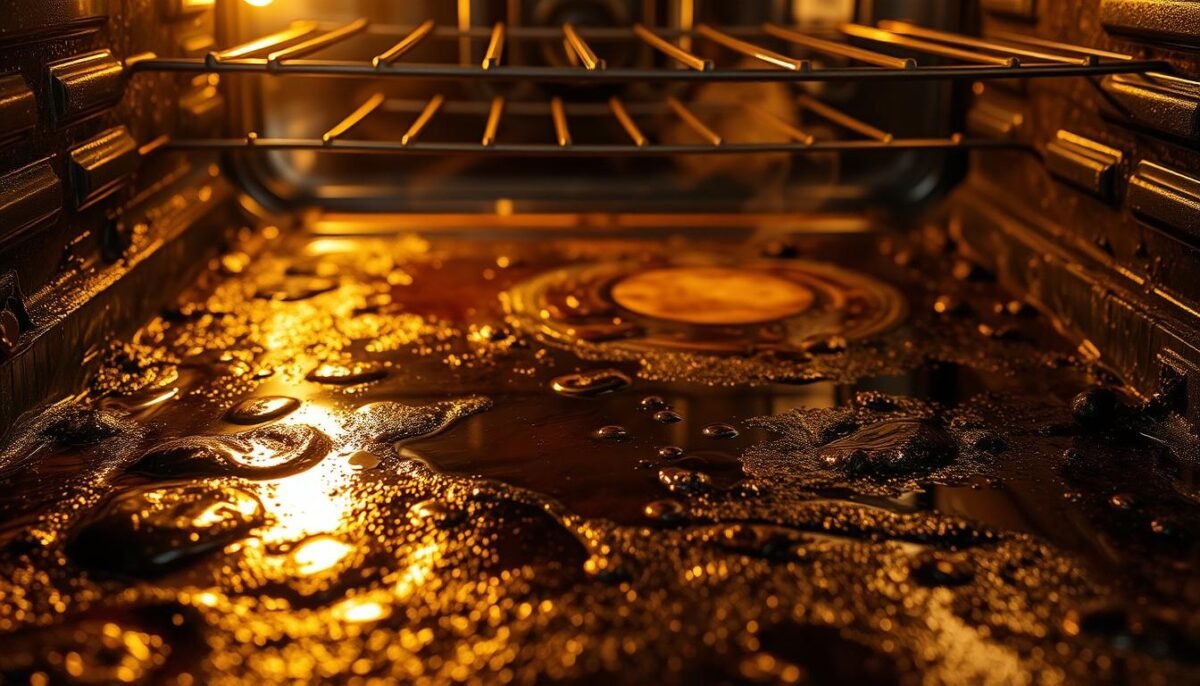
Spills can ignite fires when heated. Burnt oil in oven acts as fuel, causing flare-ups. These fires can spread quickly if the spill is large.
Grease buildup also leads to thick, smelly smoke during cooking. This smoke ruins food flavor and sets off alarms. Keeping your oven clean is key to oven fire prevention.
Potential Damage to Oven Components
Spills can damage your oven over time. Oil residue is acidic and can corrode the oven’s enamel coating. This exposes the metal to rust and further damage.
Following kitchen safety tips can prevent costly repairs or appliance replacement. Regular checks help catch spills before they cause harm. This protects your oven and keeps it working well for years.
Essential Tools and Cleaning Agents for the Job
Choosing the right cleaning agents is key to a quick clean. When you aim to remove grease from oven surfaces, the right tools save time and effort. Proper preparation helps you tackle tough spills without harming your appliance.
Recommended Natural Cleaning Solutions
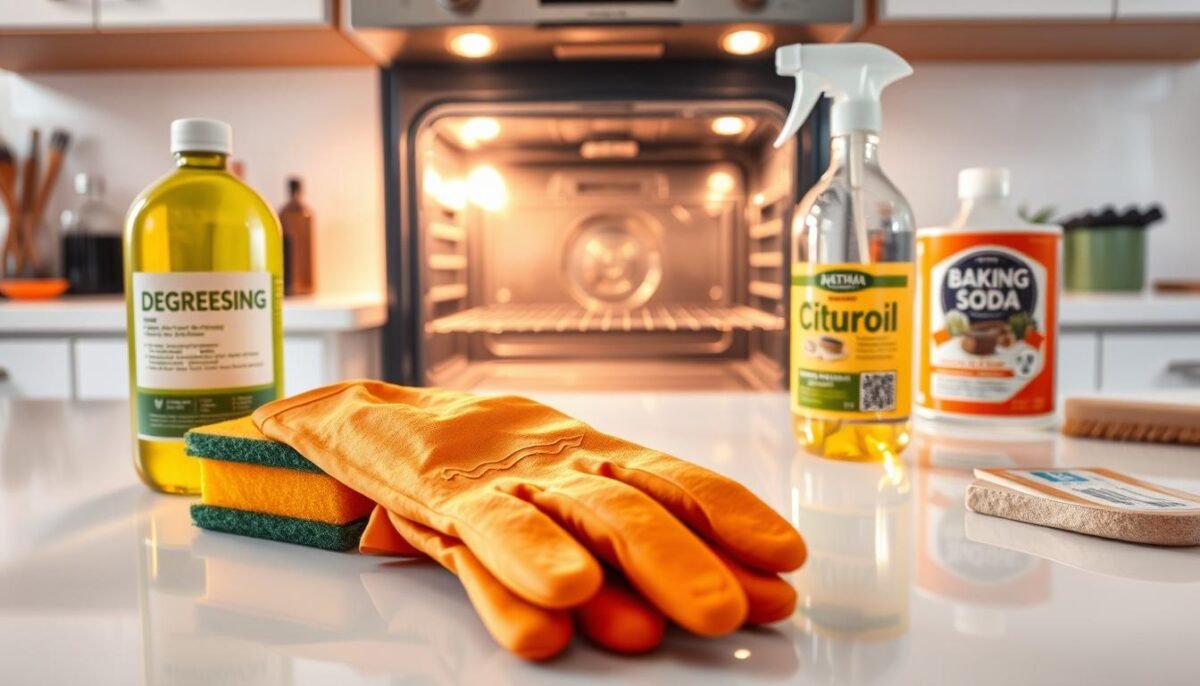
Many prefer a natural oven cleaner to avoid harsh fumes. A baking soda and water paste is great for oil stains. White vinegar in a spray bottle helps break down organic matter and neutralize odors.
These eco-friendly options are safe for most oven interiors. They gently maintain cleanliness. Letting the mixtures sit allows them to penetrate the grime before scrubbing.
Commercial Degreasers and Their Proper Use
For tough spills, a commercial oven degreaser is best. These products dissolve thick, carbonized oil that natural solutions struggle with. Always check the manufacturer’s instructions to ensure compatibility with your oven finish.
When using these cleaners, keep your kitchen well-ventilated. Apply the degreaser evenly for the best results. Avoid spraying on heating elements or electrical sensors to prevent damage.
Safety Gear for Deep Cleaning
Safety is crucial when deep cleaning. Wear nitrile or rubber gloves to protect your skin from chemicals and hot residue. Safety goggles prevent eye splashes during scrubbing.
Using the right oven degreasing methods means protecting yourself. A long-sleeved shirt or apron adds extra protection against grease splatters. These precautions make cleaning safer and more comfortable.
| Cleaning Agent | Best For | Safety Level |
|---|---|---|
| Baking Soda Paste | Light to Medium Grease | High (Non-toxic) |
| White Vinegar | Odor Removal/Light Film | High (Non-toxic) |
| Commercial Degreaser | Heavy, Burnt-on Oil | Moderate (Requires PPE) |
How to Clean Spilled Oil in Oven
Learning to clean spills in your oven takes patience and the right steps. When oil spills, the heat makes it hard to clean. By following a few steps, you can make your oven look new again.
Step One: Cooling and Initial Debris Removal
First, turn off the oven and let it cool down. Cleaning a hot oven is dangerous and can cause burns. Once it’s cool, use a plastic scraper or paper towel to remove loose debris and oil.
Step Two: Applying the Cleaning Agent
After removing loose debris, put your cleaning solution on the spill. Use a natural mix or a commercial degreaser. Make sure it covers the spill well. Let it sit for 15 to 20 minutes to work on the grease.
Step Three: Scrubbing and Emulsifying the Oil
This step is key to getting rid of grease in your oven. Use a soft scrubbing pad to work the cleaner into the spill. This breaks the grease’s hold on the oven floor.
Step Four: Wiping and Final Rinse
After the grease is broken, wipe it away with a damp microfiber cloth. You might need to rinse your cloth a few times. A final wipe with a dry cloth will make your oven floor clean and ready for cooking.
| Cleaning Method | Best For | Effort Level |
|---|---|---|
| Natural Paste | Light spills | Moderate |
| Commercial Degreaser | Heavy, burnt oil | Low |
| Steam Treatment | General maintenance | High |
Choosing the right oven degreasing methods depends on the spill’s severity. Always wear gloves and work in a well-ventilated area. Regular cleaning keeps your kitchen clean and efficient.
Dealing with Stubborn Burnt-on Residue
Dealing with burnt-on residue is common for home cooks. It’s not hard to fix with the right methods. Grease turns into a hard layer when heated, sticking to metal surfaces. Just wiping it off usually doesn’t work, so you need a special approach.
Using Baking Soda and Vinegar Paste
A natural oven cleaner is often the best choice for tough stains. Mix baking soda with water to make a paste. Add vinegar to create a fizz that helps remove burnt residue from the oven floor.
Spread the paste over the stains and let it sit for hours or overnight. It will dry and pull the oil out of the surface. Then, just wipe it off with a damp cloth to see the clean surface underneath.
Applying Steam Cleaning Techniques
Moisture can be your ally if scrubbing alone doesn’t work. Oven steam cleaning softens the hard layers, making them easy to wipe away. This method is great for cleaning burnt oil on the oven walls or ceiling.
Using a Bowl of Water
Make steam manually by putting a bowl of water in the oven. Heat it to 200 degrees Fahrenheit and let it simmer for thirty minutes. The steam will loosen the grease, making it easy to wipe off with a soft sponge.
Utilizing Oven Steam Settings
Many ovens have a steam cycle for cleaning. It uses heat and water to create a humid environment. This helps lift stubborn burnt oil in oven surfaces. Always check your oven’s manual for the right water amount and cycle time.
Cleaning Oven Racks and Accessories
Many homeowners forget to clean oven accessories during routine maintenance. Over time, these metal parts get covered in thick grease. This can affect how well your oven heats. When you deep clean oven racks, your oven works better.
Soaking Methods for Heavy Grease
To start cleaning burnt oil from racks, soak them well. Fill a big tub or your bathtub with hot water and a good degreaser. This mix softens the grime, making it easier to clean later.
Let the racks soak for at least two hours. For really tough grime, soak them overnight. This lets the chemicals break down the grease well.
Scrubbing Techniques for Metal Racks
After soaking, use a tough scouring pad or stiff-bristled brush to clean. Focus on corners and the underside where dirt hides. For tough spots, use baking soda and water paste.
Wear gloves to protect your skin from harsh cleaners. Scrub in circles to remove dirt. Then, rinse the racks well with clean water before putting them back in the oven.
Drying and Reinstalling Components
Drying your cleaning oven accessories properly is key. Use a clean, lint-free towel to dry every inch. This prevents rust and keeps the metal strong.
Once dry, put the racks back in their slots. Make sure they fit smoothly and evenly. This ensures even heat and keeps your oven in good shape.
| Cleaning Method | Best For | Effort Level |
|---|---|---|
| Hot Water Soak | General Grease | Low |
| Degreaser Spray | Burnt-on Oil | Medium |
| Baking Soda Paste | Stubborn Spots | High |
Preventive Maintenance Tips to Avoid Future Spills
Keeping your appliance clean is more than just cleaning up spills. It’s about preventing them from happening in the first place. By following a few proactive habits, you can save time and keep your kitchen in order. These easy oven cleaning tips will help your appliance stay in great shape for years.
Using Oven Liners and Drip Trays
One great way to handle oven spill cleanup is with oven liners or drip trays. They catch spills before they hit the bottom of your oven. Choose a non-stick, heat-resistant liner for easy cleanup.
Proper Placement of Baking Dishes
To stop prevent oven spills, think about where you put your dishes. Don’t fill them too much, as liquids can spill over. Place dishes in the oven’s center for better airflow and even cooking.
Regular Inspection Schedules
Make it a habit to check your oven often. Look inside after each use to catch spills before they become tough to clean. These kitchen safety tips help you stay on top of cleaning and keep your oven safe for cooking.
Conclusion
Keeping your kitchen equipment in top shape requires a consistent approach to hygiene. This oven maintenance guide provides the framework needed to protect your investment and ensure your meals taste their best.
Regular attention prevents the buildup of carbonized grease that often leads to smoke or fire risks. Effective oven cleaning remains the most reliable way to extend the lifespan of your appliance while keeping your home environment safe.
Adopting these simple oven care instructions transforms a daunting chore into a manageable routine. You gain peace of mind knowing your cooking space stays sanitary and ready for daily use.
Proactive habits stop small spills from becoming permanent stains. Share your own experiences with these cleaning methods or reach out if you have questions about specific appliance models. Your commitment to a clean kitchen makes every cooking session more enjoyable.
FAQ
Why is it critical to clean oil spills in the oven immediately?
Cleaning oil spills right away is key for your oven’s health and food safety. Grease can fuel fires and make cooking smoke a lot. It also damages the oven’s coating if not removed fast.
What are the most effective cleaning agents for removing stubborn grease?
A paste of Arm & Hammer Baking Soda and white vinegar works well for tough stains. For tough spills, try Easy-Off Fume Free Oven Cleaner or Dawn dish soap. Always use a soft sponge or cloth to avoid scratches.
How can I safely clean my oven without using harsh chemicals?
Steam cleaning is a safe method to remove burnt-on food. Use a heat-safe bowl of water and a low oven cycle to soften the oil. Then, treat with baking soda and vinegar for a safe, non-toxic clean.
What is the best way to restore greasy oven racks?
Soak the racks in hot water with degreaser or soap. Use a scrub to remove the grime. Dry them well before putting them back to avoid rust and ensure smooth movement.
Can I use the self-cleaning cycle to get rid of a large oil spill?
No, don’t use the self-clean cycle for big oil spills. The high heat can start a fire or release harmful smoke. Clean up debris first and then use the cycle.
What safety gear should be used during a deep oven cleaning?
Wear gloves and eye protection when using strong cleaners. Make sure your kitchen is well-ventilated to avoid fumes and odors.
How can I prevent oil and food from spilling onto the oven floor in the future?
Use oven liners or drip trays to catch spills. Place dishes right to avoid splatters. Regular checks can catch small spills before they burn.