
Switching from old gas or electric ranges to new electromagnetic tech is a big step up for any kitchen. This induction cooking guide gives you the key skills to use your new appliance well and keep it working at its best.
Getting to know how magnetic heat works is the first step to cooking success. By following these expert induction cooking tips, you can cook your meals fast and safely every time.
Learning how to use an induction cooktop right lets you control the temperature exactly and save energy. Keeping your cooktop in top shape means it will last for years. Using this tech makes cooking faster, cleaner, and more reliable every day.
Key Takeaways:
- Mastering electromagnetic heat for faster meal preparation.
- Prioritizing safety protocols for modern kitchen appliances.
- Optimizing energy efficiency through proper cookware selection.
Table of Contents
Understanding Induction Technology
Induction cooktops use electromagnetic energy, not traditional heat. This makes them more efficient and safe. Learn more about them in this comprehensive guide to mastery. It’s a big step up from old ways of cooking.
The Science of Electromagnetic Cooking
Induction cooking creates a magnetic field under the cooktop’s glass. When a compatible pan is placed on it, the magnetic field makes the pan heat up. The cooktop stays cool.
This method is efficient because it heats the pan directly. It means faster boiling and better temperature control. You don’t have to wait for the stove to warm up.
Key Differences Between Induction and Gas or Electric
Induction and gas stoves heat food differently. Gas stoves lose heat around the pot. Electric stoves take time to heat up.
Induction cooking is more efficient and safer. It only heats the cookware, not the cooktop. Here’s a comparison of the three:
| Feature | Induction | Gas | Electric |
|---|---|---|---|
| Heat Source | Electromagnetic | Open Flame | Radiant Coil |
| Efficiency | Very High | Moderate | Moderate |
| Safety | High (Cool Surface) | Low (Open Flame) | Medium (Hot Surface) |
| Speed | Fastest | Fast | Slow |
Choosing between induction, gas, or electric depends on your needs. Induction is better for energy and safety in today’s fast-paced homes.
Essential Cookware Requirements
Getting great results on an induction stove starts before you turn it on. Your pots and pans are key because induction stoves use magnetic fields to heat. Choosing the right cookware is crucial for your stove to work its best.
Identifying Induction-Compatible Materials
Induction stoves need cookware that can interact with magnetic fields. Cast iron and magnetic stainless steel are top choices. They work well with induction technology.
Aluminum, copper, or glass won’t work because they’re not magnetic. But, many pans now have a magnetic base. Always check the bottom for an induction symbol to make sure it’s compatible.
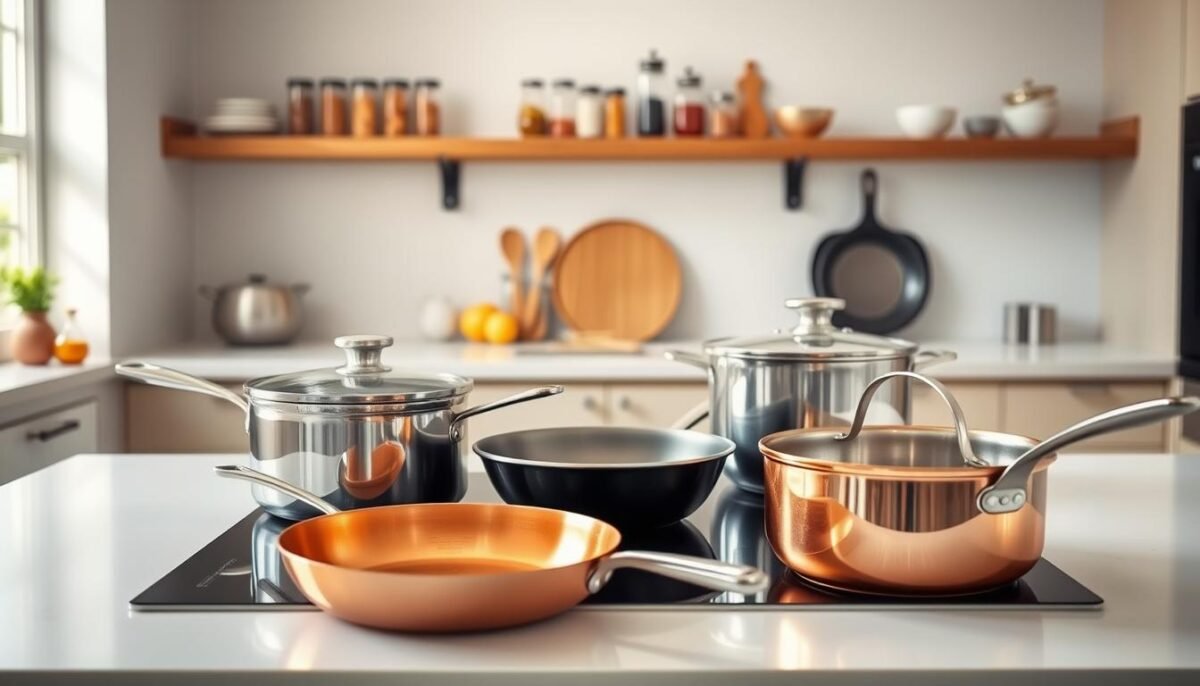
Not sure if your cookware works? Try a magnetic cookware test. Hold a fridge magnet on the bottom of your pot or pan. If it sticks, it’s good for induction stoves.
If the magnet doesn’t stick, your pan won’t heat up on an induction stove. This simple test saves time and avoids cooking problems. It’s a reliable method to check your cookware before cooking.
Optimizing Pan Size for Heating Zones
Matching your cookware to the induction burner size is important. Most stoves have sensors that check for a pan before heating. A pan too small might not trigger the stove, or it might turn off.
Using a pan too big can cause uneven cooking. The center gets hot fast, but the edges stay cool. For even cooking, pick a pan that fits the cooking zone well.
The Importance of Flat-Bottomed Cookware
The shape of your cookware base affects heat distribution. Induction stoves need direct contact with the glass surface. A flat bottom ensures maximum contact for even heating.
Pans with warped or rounded bottoms don’t make good contact. This can cause the stove to cycle on and off or lead to uneven cooking. Good, flat-bottomed pans improve your cooking and help your stove last longer.
How to Use an Induction Cooktop Safely
Learning to use your induction cooktop is key to a safer kitchen. When you master how to use an induction cooktop, you control your cooking space better. These modern stoves offer precise controls to prevent accidents.
Managing Heat Levels and Power Boost Features
Induction stoves have touch-sensitive panels for precise temperature control. You can switch from simmering to searing with just a tap. The Power Boost feature is great for boiling water fast, but you must watch it to avoid spills.
Make sure your cookware is right on the burner before using high power. This ensures even heat and prevents pan damage. Watching the digital display helps you cook safely and consistently.
Safety Precautions for Users with Pacemakers
Induction cooking uses electromagnetic fields to heat up. These fields are usually safe, but they might affect some medical devices. If you or a family member has a pacemaker, talk to a doctor before getting an induction stove.
Keep at least two feet away from the cooktop while it’s on. This simple rule helps avoid interference with medical devices. Making induction cooktop safety a priority keeps your kitchen safe for everyone.
Handling Residual Heat Indicators
The residual heat indicator is a key induction stove safety feature. Even though the surface doesn’t get as hot as traditional stoves, it can still be warm. The display shows a warning light until it’s safe to touch.
Never touch the cooking zone when the light is on. This light is a critical reminder to stay away from the surface. Once the light goes off, it’s safe to clean or touch the area.
Preventing Overheating and Automatic Shut-off
Modern induction units have smart sensors to watch your cookware’s temperature. If a pan is empty or gets too hot, the stove will turn off automatically. This stops fires and protects your kitchen.
These sensors give you peace of mind during long cooking times. They help you focus on your cooking. Always keep the control panel clean to ensure these sensors work right.
Maximizing Energy Efficiency
Learning to use your kitchen energy starts with understanding induction technology. It focuses on induction cooktop efficiency to make your daily cooking more eco-friendly. These appliances turn almost all energy into heat in your cookware, wasting very little.
Utilizing Precise Temperature Control
The secret to great cooking is the induction heat control in modern units. Unlike gas flames, induction keeps a steady temperature that changes quickly. This prevents burning and cooks your food just right.
Reducing Boil Times with Power Management
This technology quickly heats up to high temperatures. Using power management settings helps cook efficiently by focusing energy when needed. This shortens the time it takes for water to boil or oil to heat up.
Matching Cookware Diameter to Burner Size
To keep your cooktop working well, match your induction burner size to your cookware. A small pan on a big burner wastes energy by heating the glass. Always choose a burner that matches your pot or pan’s base.
- Always center your cookware on the designated zone for optimal magnetic coupling.
- Use lids to trap heat, which further reduces the energy required to maintain a boil.
- Check that your cookware base is flat to ensure full contact with the glass surface.
Best Practices for Simmering and Sautéing
For delicate tasks, start with high power to quickly reach the right temperature. Then, lower the heat to keep it steady. This dynamic approach is key for efficient cooking.
| Cooking Task | Energy Strategy | Result |
|---|---|---|
| Boiling Water | Use Power Boost | Fastest Time |
| Simmering | Low Power Setting | Consistent Heat |
| Sautéing | Medium-High Heat | Even Browning |
Maintenance and Cleaning Best Practices
A clean cooktop makes cooking better and more fun. Regularinduction cooktop maintenancekeeps your kitchen looking great and your appliance working well. Simple habits can make your cooktop look new for years.
Daily Cleaning Techniques for Glass Surfaces
Start cleaning when the cooktop is cool. Use a soft, non-abrasive microfiber cloth with water or a mildcleaning induction glasssolution.
Stay away from harsh chemicals and steel wool. They can harm the glass. Just wipe in circles to get rid of dust, fingerprints, and small spills.
Removing Stubborn Stains and Burnt Residue
For tough spills, you need a special plan. Learning how to clean spilled oil in the oven can help keep your kitchen clean.
For the cooktop, use a glass-ceramic cleaner on spills. Let it sit, then scrape off the residue with a razor-blade scraper. Make sure the blade is sharp and clean to avoid scratching.
Protecting the Cooktop from Scratches
Preventing damage is key. Never slide heavy pans across the surface. This can cause scratches over time.
Always lift pans when moving them. Also, make sure pans are clean and dry before using them.
| Cleaning Tool | Primary Use | Frequency |
|---|---|---|
| Microfiber Cloth | Daily dusting and light wiping | After every use |
| Ceramic Cleaner | Removing grease and streaks | Weekly |
| Razor Scraper | Removing burnt-on food | As needed |
| Soft Sponge | Applying cleaning solutions | Weekly |
By following thesesimple habits, you keep your glass surface safe. Good care makes your induction cooktop a reliable and attractive part of your home.
Conclusion
Switching to electromagnetic technology changes how you cook every day. You get faster and more precise cooking than gas or electric stoves.
Using these induction cooking tips helps you get the most from your appliance. Choosing the right cookware and keeping the surface clean protects your investment for years.
This guide is your roadmap for cooking. You now know how to control heat and energy use with confidence.
Your kitchen becomes more efficient with these modern habits. Try new recipes to see how fast your new cooktop works.
Share your favorite cooking methods with friends thinking of upgrading to brands like Bosch or GE Profile. Your experience shows them the benefits of this advanced tech.
FAQ
How does induction technology differ from traditional gas or electric stoves?
Induction stoves use electromagnetic technology, unlike traditional stoves. They have a copper coil that creates a magnetic field. This field directly heats the cookware, making it faster and cooler.
How can I determine if my existing pots and pans are induction-compatible?
Try the magnetic cookware test. Hold a magnet to the bottom of your pans. If it sticks, they’re good for induction. Brands like All-Clad and Le Creuset offer many compatible options.
Why is the use of flat-bottomed cookware emphasized for these cooktops?
Flat-bottomed cookware ensures even heat. It makes sure the electromagnetic field works well. Warped pans can cause uneven cooking or no activation.
Is it safe for individuals with pacemakers to use an induction cooktop?
Induction stoves might interfere with pacemakers. Always check with your doctor or the device maker, like Medtronic, before using it.
What are residual heat indicators and why are they necessary?
Even though the surface doesn’t get hot, it can still be warm. Residual heat indicators from Bosch and LG warn you. They prevent burns while the cooktop cools.
How can I achieve maximum induction cooktop efficiency while cooking?
Match the cookware diameter to the induction burner size. This ensures full engagement and energy efficiency. Use precise temperature control and power boost for faster cooking.
What is the best way to remove burnt residue without scratching the surface?
Use cleaners like Cerama Bryte or Weiman Glass Cooktop Cleaner. Apply with a soft cloth to remove stains. Lift pans to avoid scratches.
Does an induction stove have an automatic shut-off feature?
Yes, most induction stoves, like Frigidaire Professional or KitchenAid, have automatic shut-off. They turn off when a pan is removed or overheats, ensuring safety and saving energy.