
Many homeowners look at old wood finishes and wish for a change. Learning How to Redo Oak Cabinets is a smart way to update your home. It’s cheaper than a full renovation.
This kitchen remodeling guide shows you how to do it right. You can get a fancy look without spending a lot.
Renovating your kitchen cabinets is more than just painting. It’s a smart move that increases your home’s value. It’s all about oak cabinet restoration.
Whether you want a modern or classic look, it makes a big difference. Get ready to make your kitchen the center of your home with these tips.
Table of Contents
Planning and Preparation for Your Cabinet Project
A successful kitchen remodeling guide starts long before painting. Good planning is key to a smooth project. It helps avoid mistakes and delays.
By evaluating your needs and space, you set up for success. This ensures a smooth journey from start to finish.
Assessing the Condition of Your Oak Cabinets
Before choosing a finish, check your cabinets’ condition. Look for loose joints, deep gouges, or water damage near sinks. Solid oak is durable, but it needs extra care for a new look.
If your cabinets are solid, they’re ready for a makeover. But, if they’re warped or have broken hinges, fix these first. Fixing these problems early saves you from future issues.
Choosing Between Painting, Staining, or Refacing
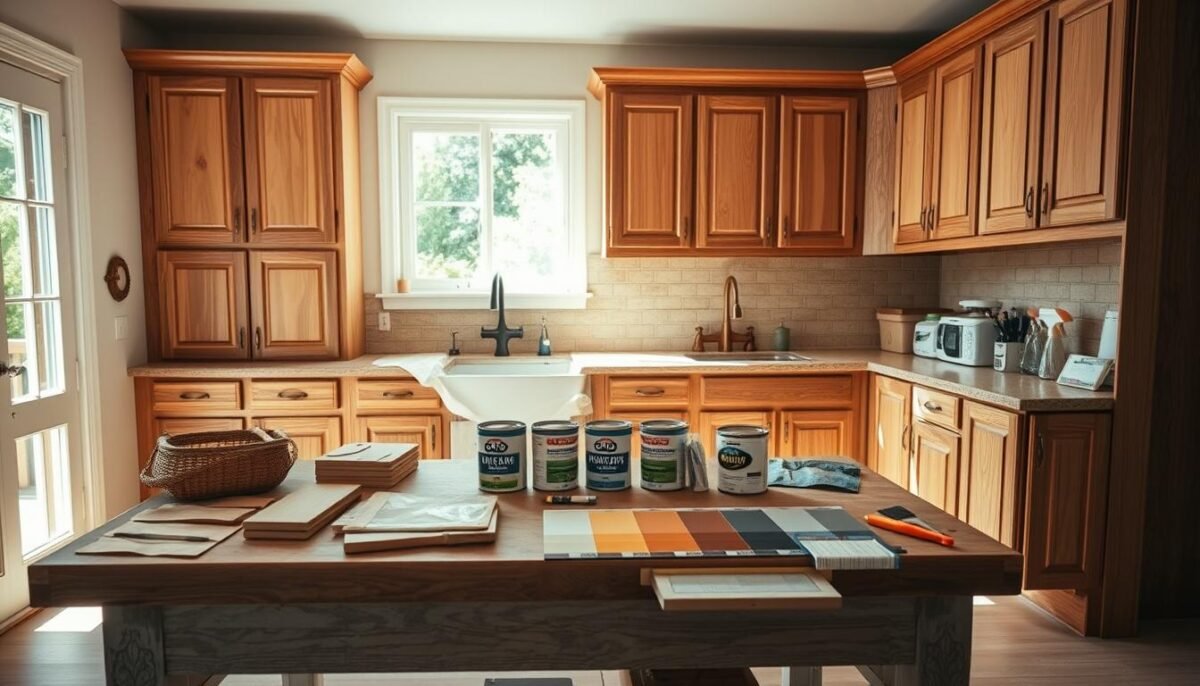
Choosing the right look is crucial. DIY cabinet painting gives a modern, bright feel. Staining, however, brings out the oak grain for a warmer look.
Painting or staining is cost-effective for updated cabinets. But, if doors are damaged or you want a new style, refacing might be better. Think about your budget and how much time you can spend on the project.
Creating a Workspace and Protecting Your Kitchen
Good kitchen cabinet prep keeps things organized and safe. Clear out cabinets and drawers for a clean start. Remove hardware and store it safely to avoid losing parts.
Protecting your home is key. Use drop cloths to cover surfaces from spills and dust. Work in a garage or well-ventilated area to keep your kitchen useable.
Essential Tools and Materials for the Job
To get a professional look on oak cabinets, start with top-notch materials. Oak is a porous wood with deep grain, so it needs special products for a smooth finish. Choosing the right tools now will save you time and headaches later.
Selecting the Right Primers and Paints
Finding the best primer for oak is key. You need something that fills the grain and prepares the surface for paint. Look for durable cabinet paint that’s a mix of acrylic and alkyd. It should be hard like oil but easy to clean like water-based.
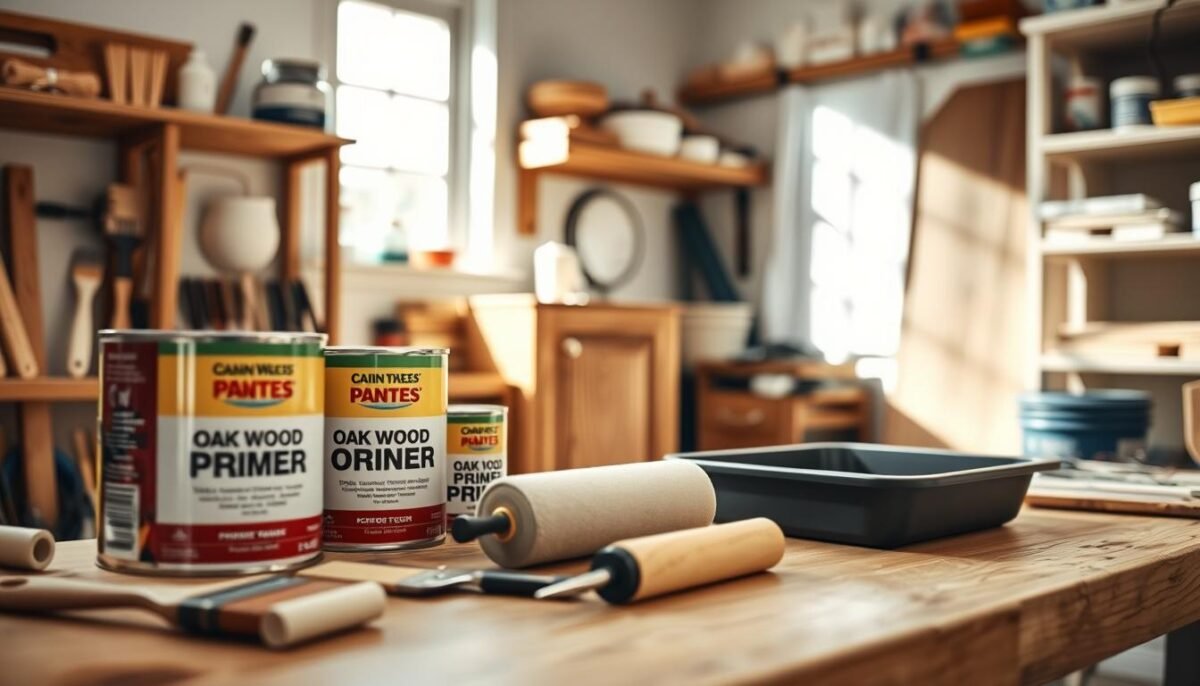
Oak has natural tannins that can stain light paints yellow. An oil-based primer acts as a chemical barrier, keeping these tannins inside. This step is crucial for a color that stays bright and true for years.
Must-Have Sanding and Cleaning Supplies
For proper prep, you’ll need various cabinet painting tools. Use high-density foam rollers for a smooth finish and synthetic brushes for details. Also, learn the right cabinet sanding techniques to avoid damaging the wood grain.
Hardware and Finishing Touches
After painting, a cabinet hardware upgrade adds the perfect touch. New knobs or pulls can make your kitchen look modern. Here’s a table to help pick the right finish for your kitchen style.
| Finish Type | Durability | Maintenance | Best For |
|---|---|---|---|
| Satin | High | Low | Modern Kitchens |
| Semi-Gloss | Very High | Very Low | High-Traffic Areas |
| Matte | Medium | Moderate | Rustic/Farmhouse |
How to Redo Oak Cabinets: Step-by-Step Process
Redoing oak cabinets needs patience and precision. Follow a logical sequence to ensure every surface is ready for a durable finish. This finish will last for years.
Removing Doors, Drawers, and Hardware
The first step is to remove cabinet doors and drawers. Use a power drill to unscrew hinges. Label each door with painter’s tape so you know where it goes later.
Put all screws and hinges in small, labeled bags. This step prevents losing small parts. It makes your cabinet hardware upgrade easier.
Deep Cleaning to Remove Grease and Grime
Thorough cleaning is key for kitchen cabinet prep. Oak cabinets often have years of cooking grease. This grease can stop paint from sticking.
Use a degreaser or TSP to scrub every surface. Then, wipe the wood with a clean, damp cloth. This removes chemical residue before the next step.
Sanding the Oak Grain for Proper Adhesion
Proper cabinet sanding techniques are crucial. Use medium-grit sandpaper to scuff the surface. This creates “tooth” for primer to grip.
Focus on removing the old finish, not sanding to raw wood. Sand in the grain direction to avoid scratches.
Applying Primer to Seal the Wood
Oak is porous and can bleed tannins if not sealed. Apply a high-quality, oil-based or shellac-based primer. This blocks stains and provides a uniform base.
A good primer helps your topcoat stick well. After the primer dries, sand lightly with fine-grit paper. This removes raised wood fibers.
Painting or Staining the Cabinet Frames and Doors
Start your DIY cabinet painting with quality cabinet painting tools. Use synthetic brushes or a foam roller. Apply thin, even coats to avoid drips and sagging.
Techniques for a Smooth Brush-Free Finish
For a professional cabinet finish, use leveling paint. Work in small sections and keep a “wet edge” to avoid lap marks. If you see imperfections, sand them lightly between coats for a glass-like finish.
Reinstalling Doors and Adjusting Hinges
Once the paint is fully cured, reattach your doors. Make sure each door aligns evenly for even gaps.
Do a final cabinet hinge adjustment for straight doors that close silently. This final step transforms your kitchen and brings satisfaction.
| Step | Primary Goal | Key Tool |
|---|---|---|
| Cleaning | Remove grease | Degreaser |
| Sanding | Improve adhesion | 120-grit paper |
| Priming | Seal tannins | Stain-blocking primer |
| Finishing | Smooth appearance | Synthetic brush |
Painting vs. Staining Techniques
Refinishing oak cabinets can be done in two ways: painting for a modern look or staining for a classic feel. Your choice depends on whether you want to hide or show the wood’s texture. Both methods can lead to a stunning makeover if done right.
Achieving a Modern Painted Look
Painting kitchen cabinets is a top choice for a clean, modern look. Using durable cabinet paint covers the oak’s grain for a smooth finish. This is great for brightening a dark kitchen or adding a trendy color.
For a professional cabinet finish, start with a high-adhesion primer. This stops wood tannins from showing through the paint. A well-painted surface is easy to clean and resists spills well.
Preserving the Natural Grain with Gel Stains
For a warm wood look, gel stain for oak is a good choice. Gel stains sit on the wood, giving you control over color. They enhance the wood grain, not hide it.
Gel stains are great for DIY projects because they don’t drip or run. You can get a deep, rich color that makes old oak look new. It’s a fantastic way to update your space while keeping it natural.
Comparing Durability and Maintenance Requirements
It’s important to know how to care for your cabinets to keep them looking new. Here’s a comparison to help you choose.
| Feature | Painted Finish | Gel Stained Finish |
|---|---|---|
| Durability | High (if using enamel) | Moderate (requires topcoat) |
| Maintenance | Easy to clean | Requires periodic waxing |
| Touch-ups | Visible if not blended | Easier to blend |
Following these cabinet maintenance tips will help your cabinets last. Painted surfaces are easy to clean with a damp cloth. Stained wood might need occasional polish. A consistent cleaning routine is key to a beautiful kitchen that lasts.
Troubleshooting Common Oak Cabinet Issues
Getting a professional look on oak cabinets is more than just painting. It’s about tackling common wood problems. Even with careful prep, you might hit some bumps. But, most of these problems have easy fixes to keep your project going smoothly.
Dealing with Deep Grain Texture
Oak’s deep pores can show through paint if not treated. Fixing wood grain texture is key for a smooth look. Use a high-quality wood grain filler before priming.
After the filler dries, sand it until it’s flat. This step makes sure your paint goes on evenly. Without it, the grain will show, ruining your clean look.
Preventing Tannin Bleed-Through
Yellow or brown spots on your paint can be a big problem. This happens when wood resins get to the surface, called tannin bleed. Preventing tannin bleed needs a good, shellac-based primer.
The best primer for oak keeps these resins inside. If spots show up, don’t worry. Just add more primer to seal it before your final coat.
Fixing Drips and Uneven Coverage
Drips happen when you put on too much paint at once. When using gel stain for oak, work in small areas. If you get a drip, wait for it to dry and then sand it lightly.
After sanding, touch up the area with a thin layer. Keeping it even is key to avoid streaks. Use quality brushes or foam rollers for a uniform finish.
| Issue | Primary Cause | Recommended Solution |
|---|---|---|
| Visible Grain | Open wood pores | Apply grain filler and sand |
| Yellow Spots | Tannin migration | Use shellac-based primer |
| Paint Drips | Excessive application | Sand smooth and re-coat |
| Uneven Color | Poor absorption | Apply thin, multiple layers |
Conclusion
Renovating your kitchen with oak cabinet restoration boosts your home’s value. It transforms old wood into a modern centerpiece that shows off your style.
Attention to detail is key in the final steps. Adjusting cabinet hinges ensures doors open smoothly for years. You can also find useful home organization tips to make your storage areas more functional.
Keeping your cabinets looking good requires regular care. Simple maintenance tips help maintain the finish and protect the wood. Clean surfaces with mild cleaners to avoid grease buildup.
Your hard work pays off with a result that looks like a pricey kitchen makeover. Enjoy a kitchen that’s both beautiful and functional. This project shows that with patience and the right methods, you can achieve great results without breaking the bank.
FAQ
Why is an oil-based primer recommended for oak cabinet restoration?
Oak wood is very porous and has a lot of tannin. An oil-based primer, like Zinsser Cover Stain, is needed to stop tannin bleed-through. This can make your topcoat look yellow. It also helps the paint stick well and gives a modern painted look.
How can I achieve a smooth, brush-free finish on deep grain oak?
For a professional cabinet finish without wood grain, use a grain filler like Aqua Coat before priming. Use high-density foam rollers and synthetic brushes from Purdy. This helps avoid drips and uneven coverage, making the surface sleek and modern.
What is the best way to clean cabinets before painting or staining?
A: Deep cleaning is key to remove grease and grime from years of kitchen use. A strong degreaser like Krud Kutter is needed for a clean surface. Then, sand the oak grain well. This is necessary for the durable cabinet paint to stick well.
Should I choose DIY cabinet painting or use a gel stain for oak?
Your choice depends on the modern aesthetic you want. DIY cabinet painting with Benjamin Moore Advance gives a solid, clean color. On the other hand, a gel stain for oak, like General Finishes, darkens the wood while keeping the natural grain.
How do I ensure my cabinet doors hang straight after reinstallation?
To hang doors straight, adjust the cabinet hinges carefully. If the frames are strong, you might reuse the old hardware. But, upgrading to Blum soft-close hinges can make them work better. Label each door during prep to ensure they go back in the right spot.
What maintenance is required to protect the new finish?
Keeping up with cabinet maintenance tips is crucial for a long-lasting finish. Clean with mild soap and water, not harsh chemicals. Check the cabinet hinge adjustment often to avoid doors rubbing and damaging the paint or stain.