
Creating a space for kids to explore nature is rewarding for parents. Many families want to get their kids off screens and into fresh air. How to Build a Mud Kitchen in 3 Easy Steps? This guide is a simple way to enhance your garden.
Building a mud kitchen for kids sparks creativity. These stations are great for sensory play and learning. Using reclaimed materials, you can make a fun area that keeps kids busy for hours.
This easy backyard DIY project turns your lawn into a play area. You don’t need to be a carpenter to do it. Making quality DIY outdoor play equipment creates memories and promotes activity. Your backyard will become the top spot for playdates and discovery.
Table of Contents
The Benefits of Outdoor Sensory Play
Outdoor sensory play is key for young children’s growth. It lets them touch and explore natural things like mud, water, and sand. These experiences are hard to find indoors and help spark curiosity and learning.
For toddlers, sensory play is a way to learn through touch, sight, and sound. It helps them improve their fine motor skills and hand-eye coordination. This play is not just fun; it’s crucial for their brain development.
Creating a backyard mud kitchen is a great idea. It gives kids a place to play and learn. They can pretend to cook and mix things, which boosts their creativity and social skills.
Choosing child-friendly outdoor activities helps kids balance screen time with real play. Being in nature lowers stress and boosts happiness. It lets kids explore and learn at their own pace.
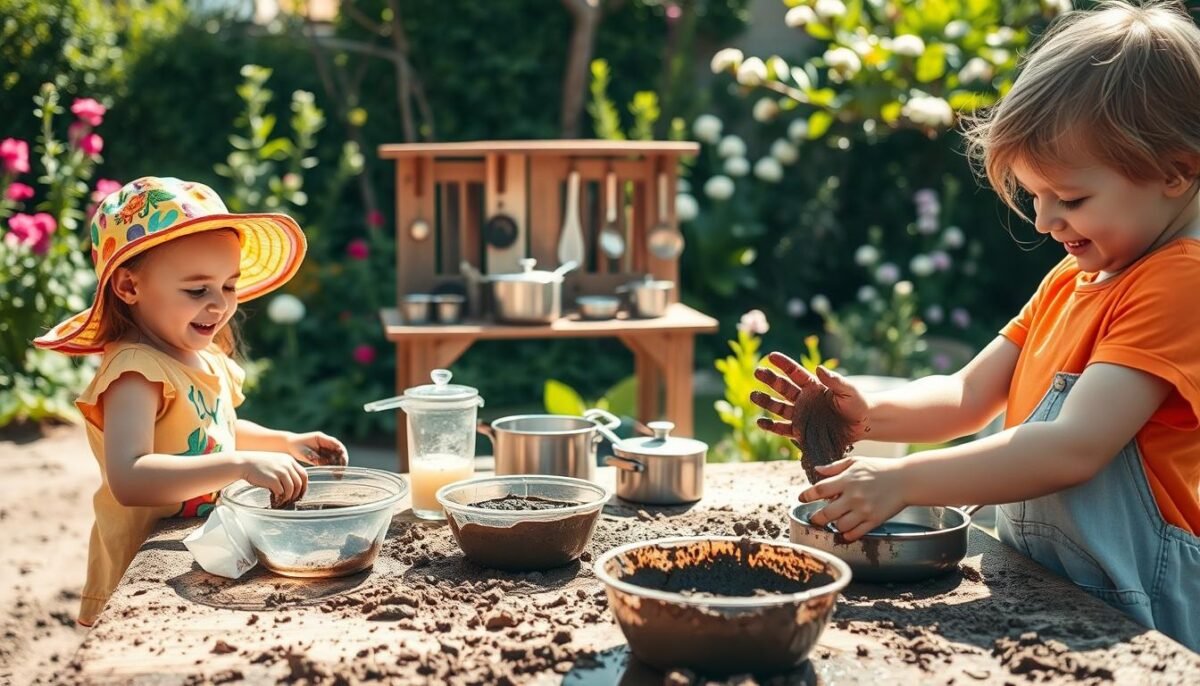
The table below shows how different natural materials help with different skills during outdoor play.
| Material | Primary Sensory Input | Developmental Benefit |
|---|---|---|
| Mud | Tactile/Viscosity | Fine motor strength |
| Water | Temperature/Flow | Scientific reasoning |
| Sand | Texture/Grain | Spatial awareness |
| Stones | Weight/Shape | Classification skills |
Essential Tools and Materials for Your Project
Starting your DIY outdoor play equipment project needs the right tools and lumber. Before you begin, make sure you have everything you need. This keeps your project flowing smoothly and saves you from last-minute trips to the store.
When using wooden mud kitchen plans, choose the right wood. Cedar or pressure-treated pine are good choices because they resist rot and last long. Always double-check your measurements before cutting to avoid wasting materials.
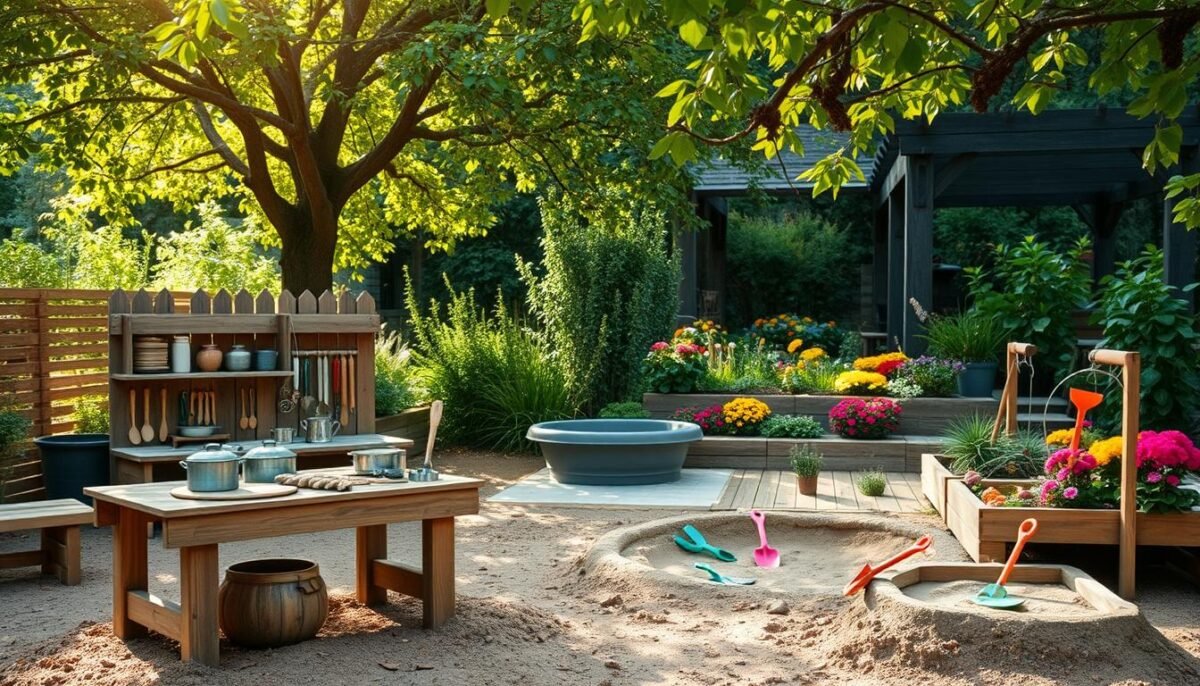
For an easy backyard DIY project, having the right tools is key. A cordless drill, circular saw, and a good measuring tape are essential. They help you build your kitchen accurately and confidently.
Keeping your supplies organized is crucial for a successful DIY backyard project. Grouping your screws, brackets, and wood before starting saves a lot of time. Here’s a list of the basic items you’ll need to start your project.
| Category | Essential Item | Purpose |
|---|---|---|
| Power Tools | Cordless Drill | Driving screws and pilot holes |
| Cutting Tools | Circular Saw | Sizing lumber and boards |
| Hardware | Exterior Screws | Securing joints for durability |
| Safety Gear | Safety Glasses | Protecting eyes during construction |
How to Build a Mud Kitchen in 3 Easy Steps?
Building a mud kitchen for kids is a simple project. It turns any garden into a creative space. By doing DIY backyard projects, you can make it fit your outdoor area perfectly. Breaking it down into three steps makes it easy and fun.
Designing and Preparing the Frame
The first step is a solid, level frame. Measure your space and draw a basic layout. Make sure it’s the right height for your kids. Stability is key, so use durable materials like pressure-treated lumber or cedar.
Attach your vertical posts to horizontal supports with screws. Make sure all corners are square for stability. A strong frame is essential for the kitchen’s longevity.
Installing the Countertop and Sink
With the frame ready, add the workspace. Many mud kitchen sink ideas use items from home. An old stainless steel bowl or plastic washbasin works great as a sink.
Cut a hole in the countertop that fits your sink. Place the sink in and secure it with adhesive or brackets. This makes the kitchen incredibly engaging for kids.
Adding Functional Features and Finishing Touches
To finish, add practical features. Consider hooks for ladles, a shelf for storage, or a backsplash. Sand all edges to keep it safe for kids.
| Component | Recommended Material | Key Benefit |
|---|---|---|
| Frame | Cedar or Pine | Durability |
| Countertop | Plywood or Pallet Wood | Cost-effective |
| Sink | Stainless Steel Bowl | Easy to clean |
| Hardware | Galvanized Screws | Rust resistance |
Finally, apply a non-toxic, weather-resistant finish. This protects the wood from the elements. These details make your kitchen a durable play station for years of fun.
Selecting the Best Wood and Weatherproofing Methods
Building a long-lasting outdoor play station needs careful material selection. Following wooden mud kitchen plans is key. The quality of your materials affects how well it handles rain, sun, and soil. Choosing the right materials makes your project last for many seasons.
Choosing Rot-Resistant Lumber
The right rot-resistant lumber types are crucial for outdoor projects. Cedar and redwood are great because they repel moisture and insects. They are naturally resilient, perfect for structures on the ground.
For a budget-friendly option, consider pressure-treated pine. But make sure it’s safe for kids. Always check the labels to ensure it’s safe for homes and durable outdoor furniture projects.
| Wood Type | Durability | Maintenance |
|---|---|---|
| Cedar | High | Low |
| Redwood | Very High | Low |
| Pressure-Treated Pine | Moderate | Medium |
Applying Non-Toxic Sealants
After building, weatherproofing outdoor wood is key to prevent decay. A good non-toxic wood sealant protects against water. This step is essential to prevent warping or cracking.
Choose a finish that’s safe for food and kids. A non-toxic wood sealant lets the wood breathe while keeping moisture out. Regular weatherproofing outdoor wood keeps your play station safe and looking good for years.
Creative Add-ons to Enhance the Play Experience
Turning a simple wooden structure into a fun station is key to truly engaging backyard play. Adding thoughtful accessories can make a backyard mud kitchen look like a real kitchen. This keeps kids entertained for hours and helps them learn important skills.
Incorporating Real Water Features
Adding a water source makes the mud-making process feel real. Simple ideas like using a stainless steel bowl or a plastic basin work well. For more, consider a hand pump or a gravity-fed system with a mounted water jug.
Real water access lets kids play with different mud textures. This is great for their senses. Whether they’re making “soup” or washing veggies, it’s a fun, real kitchen experience. Make sure the area drains well to stay safe and clean.
Organizing Utensils and Storage
A tidy kitchen makes playtime better and teaches kids to care for their space. Use mud kitchen storage solutions like hanging hooks or shelves. Pegboards or wooden crates are great for organizing tools.
Teaching kids to clean up is a valuable life lesson in responsibility. When everything has its place, the area stays inviting. Here are some storage ideas:
- S-hooks for hanging whisks and spatulas.
- Magnetic strips to hold metal spoons securely.
- Labeled bins for storing natural materials like pinecones or stones.
Safety Considerations for Backyard Play Areas
Creating a safe space for kids begins with careful planning and building. When kids play outside, the safety of their equipment is key. By making safe outdoor play areas, kids can have fun without risks.
Ensuring Structural Stability
A mud kitchen must stay steady during play. Use sturdy bracing on all corners to prevent it from tipping. Choose weather-rated screws instead of nails for tight joints.
Choosing durable outdoor furniture means picking screws that don’t rust. If the ground is uneven, add adjustable feet or anchor the base. This keeps the play station stable for a long time.
Managing Splinters and Sharp Edges
It’s important to protect kids’ hands when working with wood. Sand every surface well, focusing on corners and edges. Use medium-grit sandpaper first, then fine-grit for a smooth finish.
Choosing the right materials is also key to safety. Builders often pick rot-resistant lumber types like cedar or redwood. These woods are less likely to crack or splinter. Regular maintenance, like applying a non-toxic sealant, keeps the wood safe all year.
Maintenance Tips to Keep the Kitchen Lasting Longer
Start by checking your outdoor play equipment regularly. Use outdoor kitchen construction tips to spot problems early. Look for loose screws, wobbly legs, or soft wood signs of rot.
Using a non-toxic wood sealant is key to keeping your project looking good. It protects against moisture and UV damage. Reapply this sealant yearly to keep the wood strong against rain and sun.
Smart mud kitchen storage solutions are important in winter. If it snows a lot or gets very cold, cover the unit or move it inside. These steps help keep the wood stable and safe for kids.
| Maintenance Task | Frequency | Benefit |
|---|---|---|
| Tighten Hardware | Quarterly | Structural Stability |
| Apply Sealant | Annually | Moisture Resistance |
| Winter Storage | Seasonal | Prevents Wood Decay |
Conclusion
Building a custom mud kitchen turns your backyard into a place of discovery. It offers many benefits for young children’s growth. It’s a space where kids can touch and learn about different textures and natural things.
Making sure the outdoor play area is safe lets kids explore without danger. The strong build and right materials give parents peace of mind. This way, kids can really connect with nature while staying safe.
Creating a space for creative play boosts kids’ curiosity and confidence. You’ve set up a place for endless learning and fun. This simple addition encourages kids to move and think creatively.
Helping toddlers develop their senses helps them learn about the world. Watch as your kids make up recipes and have pretend parties. Share your project with friends or neighbors to inspire them too.
The best play areas grow with your kids. You can add new things or change the layout to keep it exciting. Enjoy seeing your family grow and thrive in this special outdoor space.
FAQ
Why is outdoor sensory play important for early childhood growth?
Sensory play is key for kids’ brains. It lets them touch different textures and materials. This helps them learn and understand the world.
It also boosts their fine motor skills. Plus, playing outside helps kids learn to share and work together.
What is the best type of lumber for a DIY backyard project like a mud kitchen?
For a long-lasting mud kitchen, choose rot-resistant wood like cedar or redwood. These woods are strong and perfect for outdoor use. High-quality wood means your play kitchen will last for years.
How can I ensure child safety in the garden while they use the mud kitchen?
Make sure the mud kitchen is stable and won’t tip over. Use strong screws and bracing. Sand all surfaces to avoid splinters.
Also, use a safe wood sealant to protect the wood. This keeps the play area safe and fun.
What are some creative mud kitchen sink ideas and water features?
Add real water features like a tank or hand pump to make it more exciting. Use recycled materials like stainless steel bowls for the sink. These features make the kitchen a fun, educational place.
How do I maintain the mud kitchen during seasonal changes?
Keep the mud kitchen in good shape by checking it often. Look for loose parts and tighten them. Apply sealant every year to protect the wood.
Also, store utensils inside during winter to keep the area clean and safe.
Can I build a mud kitchen if I have limited experience with DIY projects?
Yes, building a mud kitchen is easy for beginners. Start by designing and preparing the frame. Then, add the countertop and features.
With basic tools, you can create a space that encourages kids to explore and play on their own.
What items are recommended for mud kitchen storage solutions?
Good storage helps kids learn to clean up. Use hooks for pots and pans, and wooden crates for small items. This keeps the area tidy and makes playtime more fun.