
Sliding glass doors bring natural light and outdoor views into your home. They create an open, airy feeling that transforms any room. But without proper window treatments, these beautiful features can become privacy nightmares and energy drains.
The right sliding glass door coverings solve multiple problems at once. They give you control over light and privacy. They help with insulation to reduce energy bills. And they add style that complements your home design.
Finding the perfect solution means understanding your options. From traditional vertical blinds to modern sliding panels, each treatment type offers unique benefits. This guide walks you through our favorite covering solutions to help you make the best choice for your space.
Table of Contents
Vertical Blinds: The Classic Choice
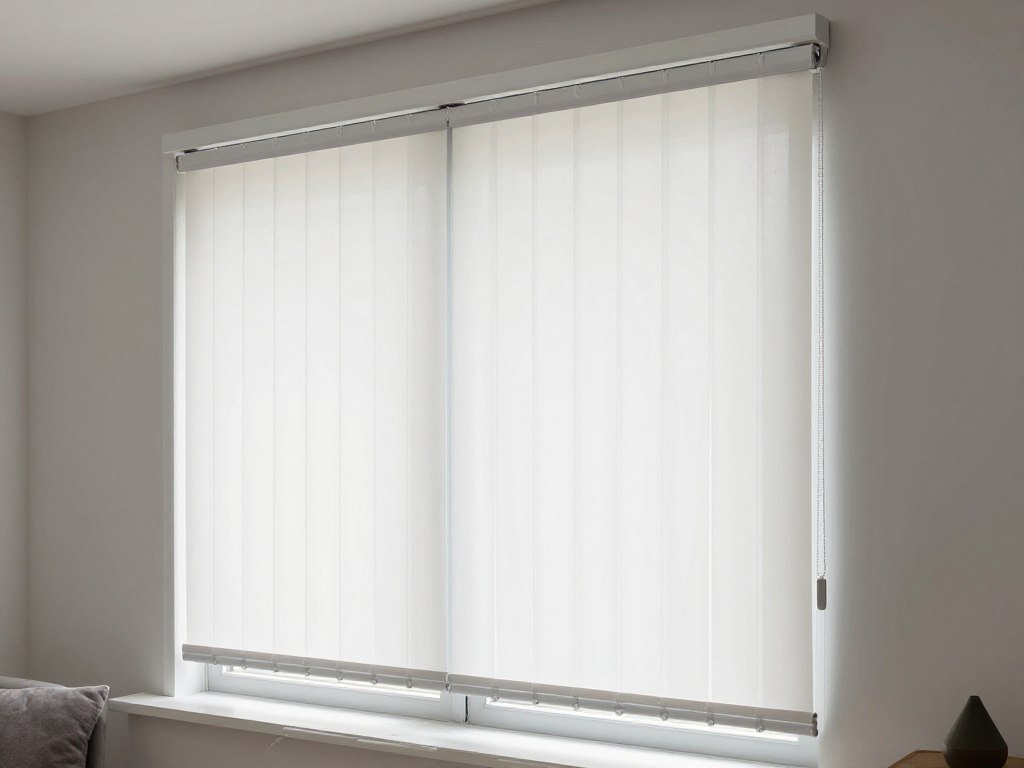
Vertical blinds remain one of the most popular sliding glass door coverings. They’ve been around for decades because they work. These window treatments feature long slats that hang vertically from a top rail.
The slats tilt to control light and privacy. They also slide to one side for door access. This dual functionality makes vertical blinds incredibly practical for sliding doors.
How Vertical Blinds Work
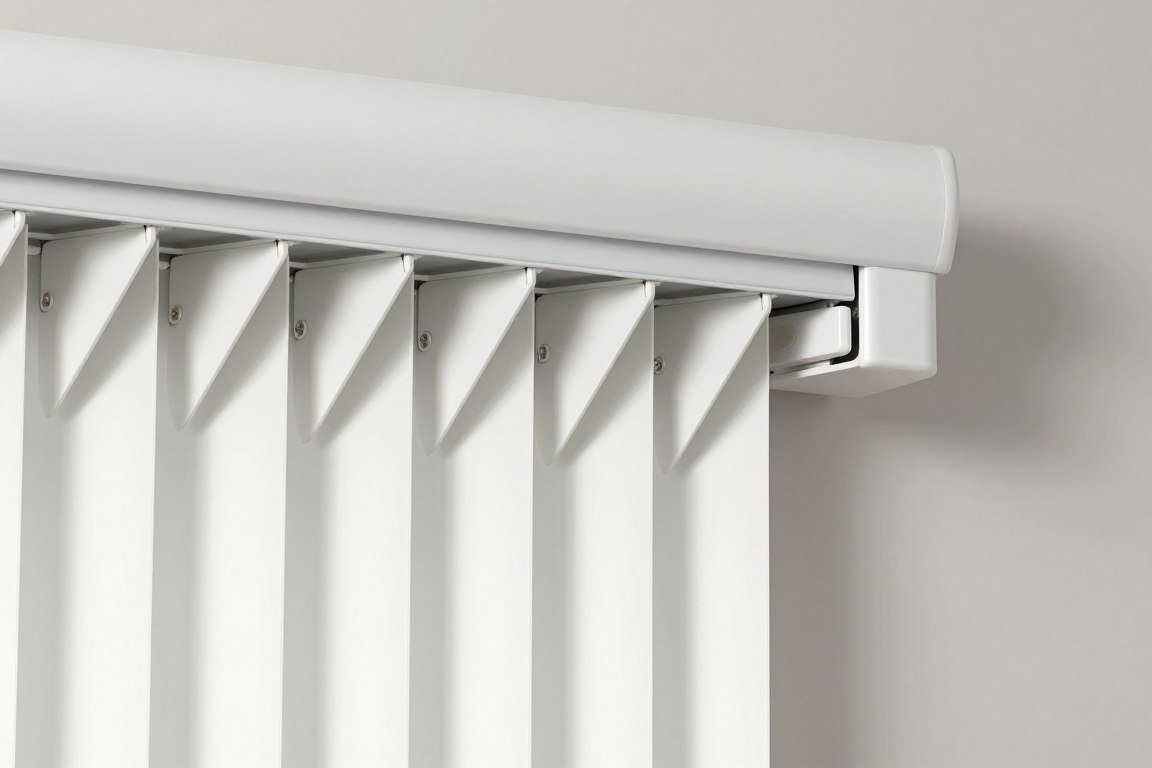
The design is straightforward but effective. Individual slats attach to a track system at the top. A wand or cord controls the tilt of all slats together.
When you want to open the door, the entire stack slides to one side. This keeps the treatment completely out of your way. No other window treatment offers this level of convenience.
Material and Fabric Options
Vertical blinds come in various materials to match different needs and styles. PVC and vinyl options cost less and work well in high-humidity areas. Fabric options provide a softer look with more colors and patterns.
Aluminum slats offer a sleek, modern appearance. They’re extremely durable and easy to clean. Wood and faux wood slats bring warmth and natural texture to your space.
Vinyl/PVC Vertical Blinds
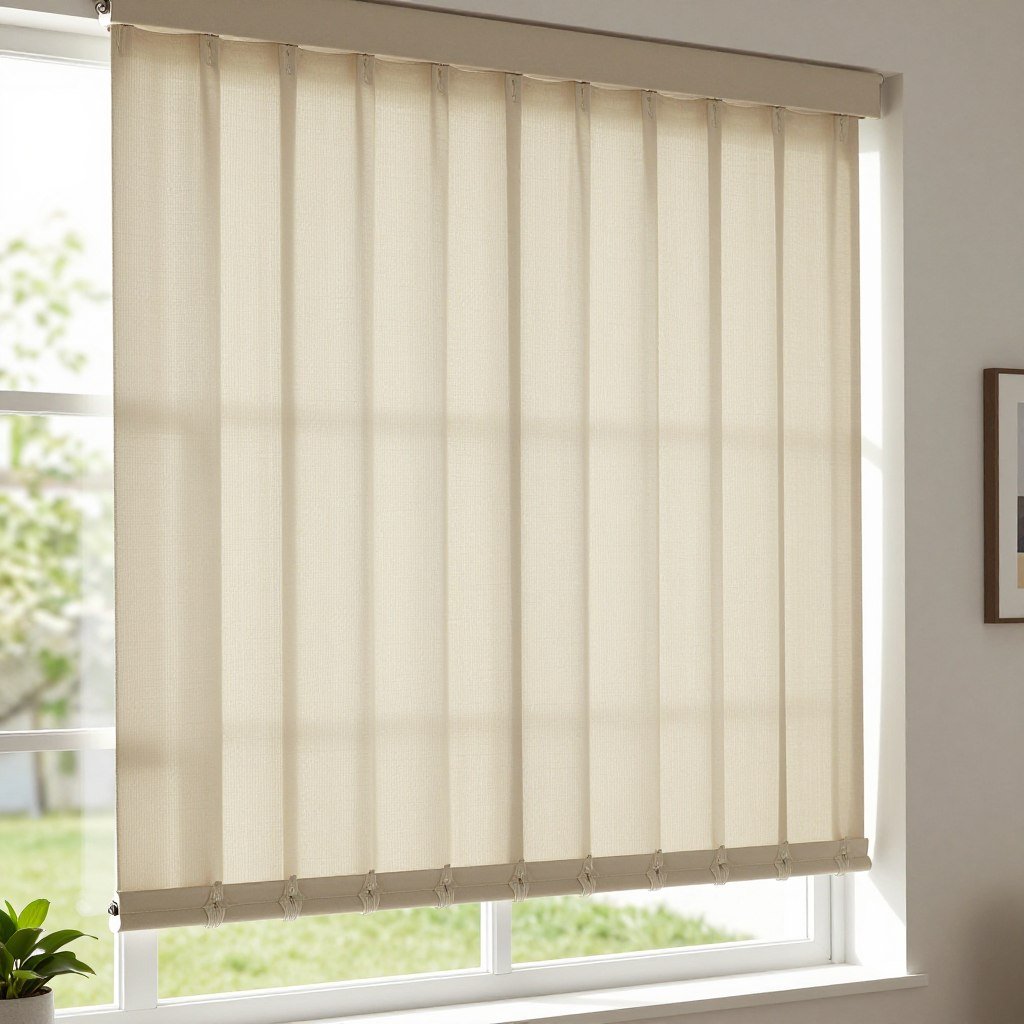
These are the most budget-friendly vertical blinds. They resist moisture and are perfect for high-humidity rooms. Easy maintenance makes them ideal for busy households.
Fabric Vertical Blinds
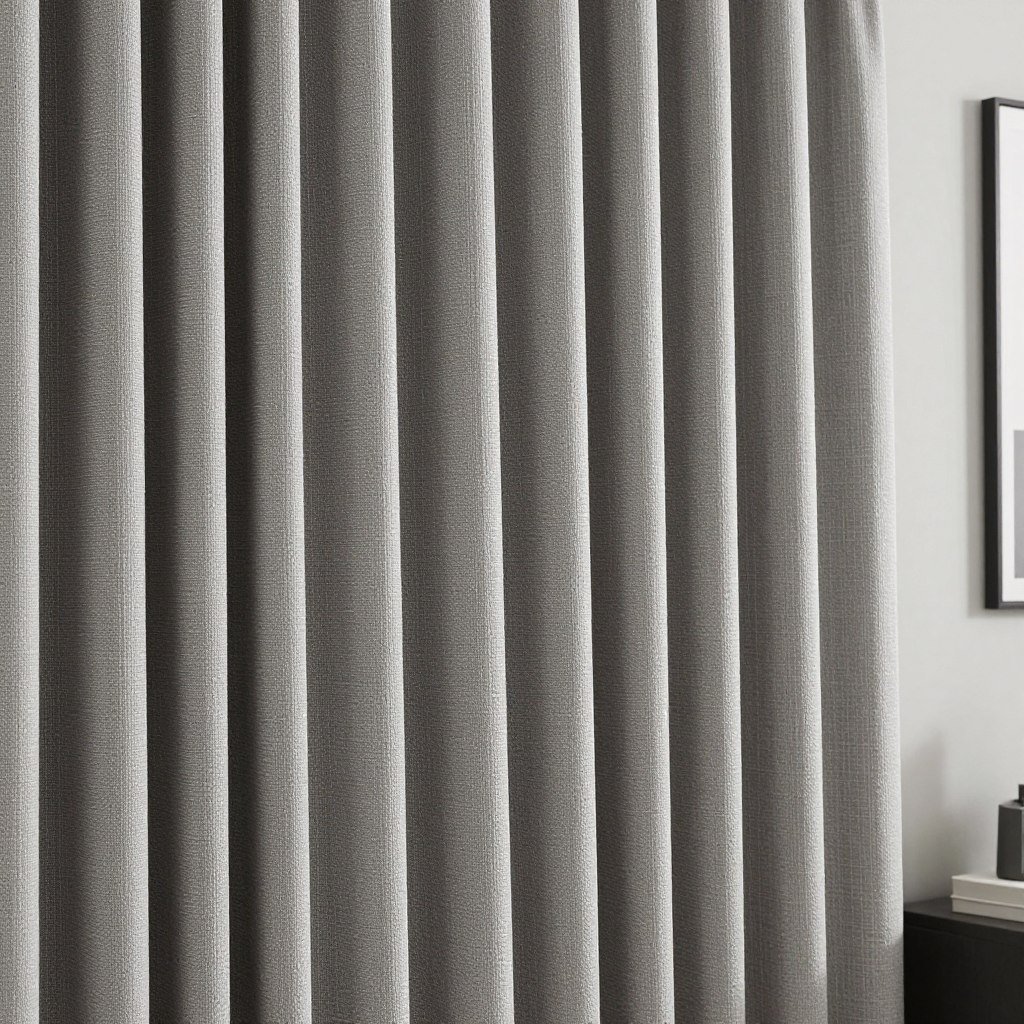
Fabric slats offer superior light control and insulation. They come in hundreds of colors and textures. Many fabrics provide UV protection to prevent furniture fading.
Aluminum Vertical Blinds
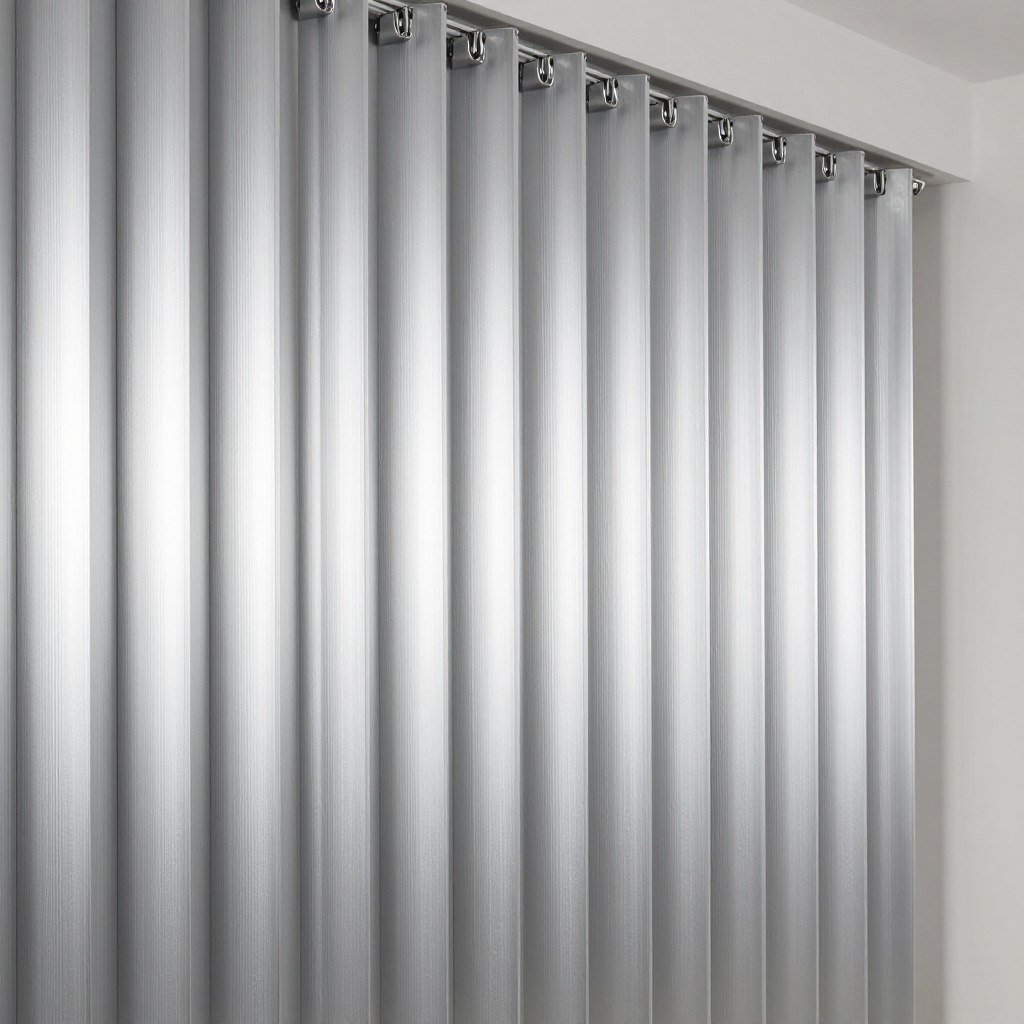
Metal slats provide maximum durability and a contemporary look. They’re fire-resistant and extremely easy to clean. Perfect for modern or industrial-style homes.
Advantages of Vertical Blinds
Pros
- Simple operation with one-hand control
- Complete door access when fully opened
- Excellent light control with adjustable slats
- Affordable option for large glass doors
- Easy to repair by replacing individual slats
- Low maintenance and easy to clean
- Wide range of colors and materials
Cons
- Can look dated in some home styles
- Slats may blow in the wind when door opens
- Noise when slats bump together
- Gaps between slats reduce complete privacy
- Not ideal for curved or angled doors
- Limited insulation compared to cellular shades
Cost and Installation
Vertical blinds are among the most budget-friendly sliding glass door coverings. Basic vinyl options start around $100 for standard-sized doors. Premium fabric or wood options can reach $400 to $600.
Installation is straightforward for most DIY enthusiasts. The headrail mounts to the wall or door frame with basic tools. Most homeowners can complete installation in under an hour.
Vertical Cellular Shades: Energy-Efficient Excellence
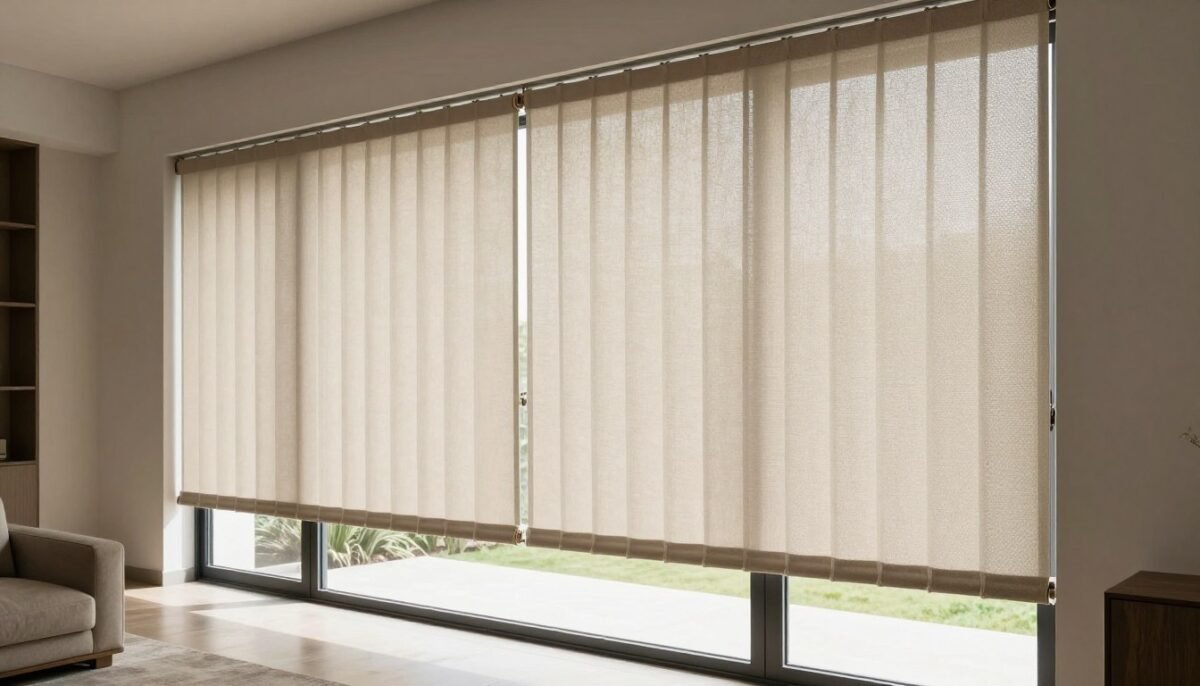
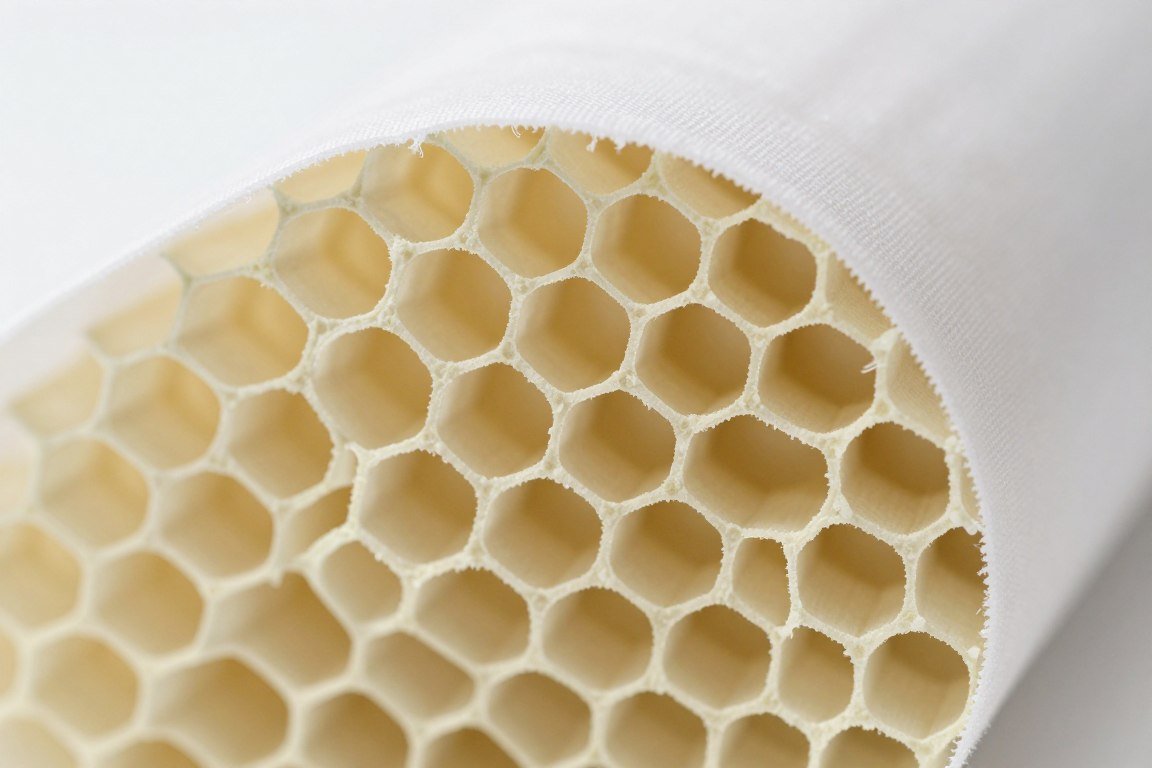
Vertical cellular shades represent a significant advancement in window treatment technology. These innovative coverings combine the functionality of vertical blinds with superior insulation properties. The secret lies in their unique honeycomb construction.
Each shade features cells that trap air inside. This creates an insulating barrier between your room and the glass. The result is better temperature control and lower energy bills year-round.
Understanding the Cellular Design
The honeycomb structure serves multiple purposes beyond energy efficiency. It diffuses light beautifully while maintaining privacy. Unlike vertical blinds with gaps, cellular shades offer complete coverage when closed.
Single-cell designs work well in moderate climates. Double-cell options provide maximum insulation for extreme temperatures. The cells come in various sizes to match different aesthetic preferences.
Light Control Options
Vertical cellular shades come in different opacities to control light exactly how you want. Sheer fabrics gently filter sunlight while maintaining views. Light-filtering options balance privacy with natural light.
Blackout cellular shades block virtually all light. They’re perfect for bedrooms or media rooms. Some designs even offer top-down, bottom-up functionality for ultimate control.
Sheer Cellular Shades
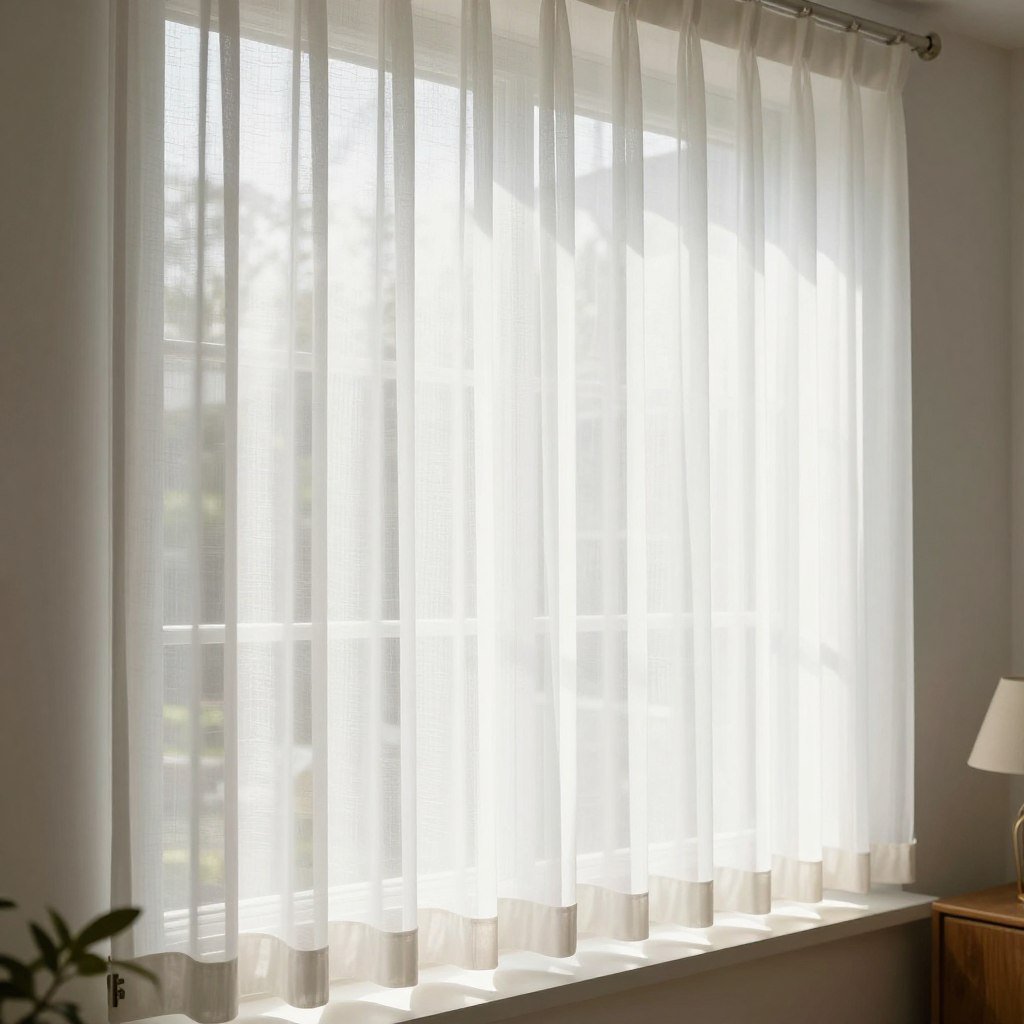
These allow the most natural light while still providing UV protection. You can see outside during the day while people outside see only a soft glow. Perfect for living rooms and areas where you want connection to outdoors.
Light-Filtering Cellular
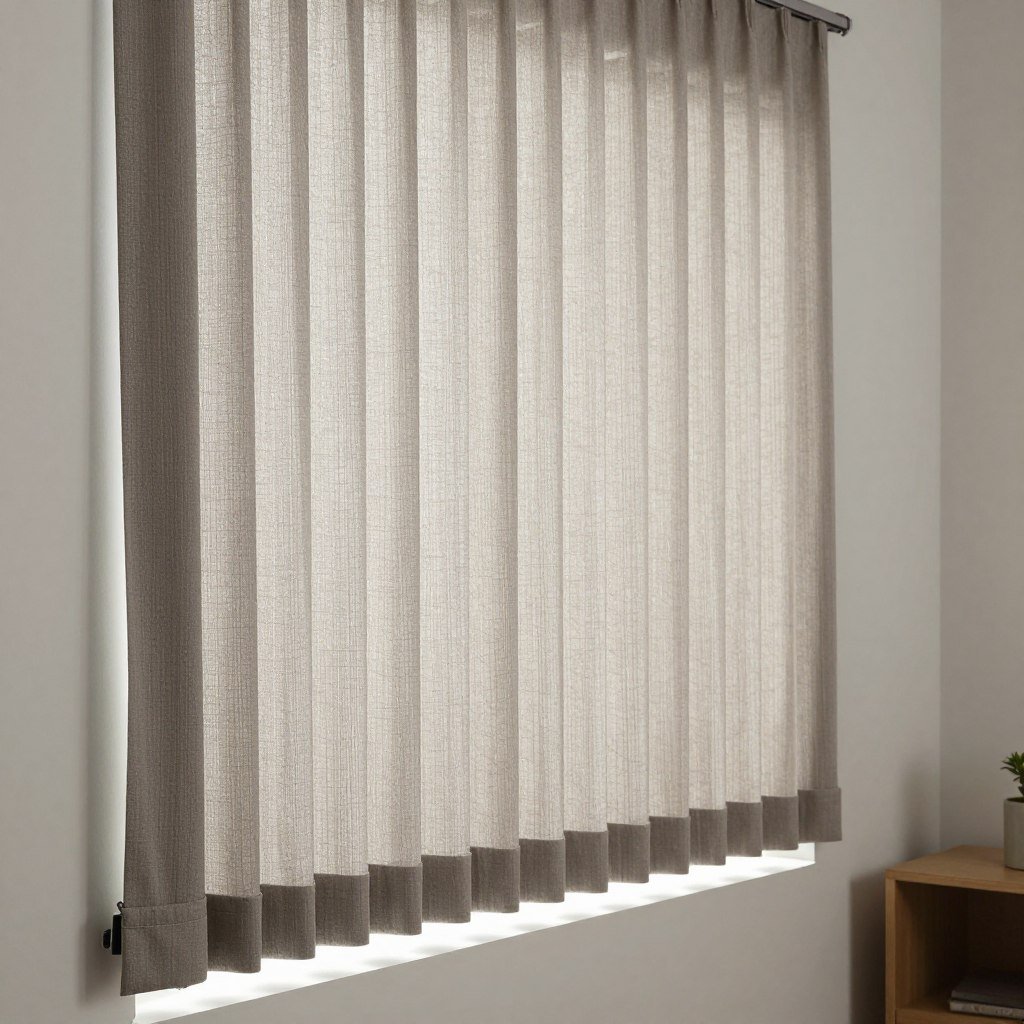
The most popular choice balances privacy and brightness. Light enters but people can’t see specific details inside. Reduces glare on screens while keeping rooms cheerful and bright.
Blackout Cellular Shades
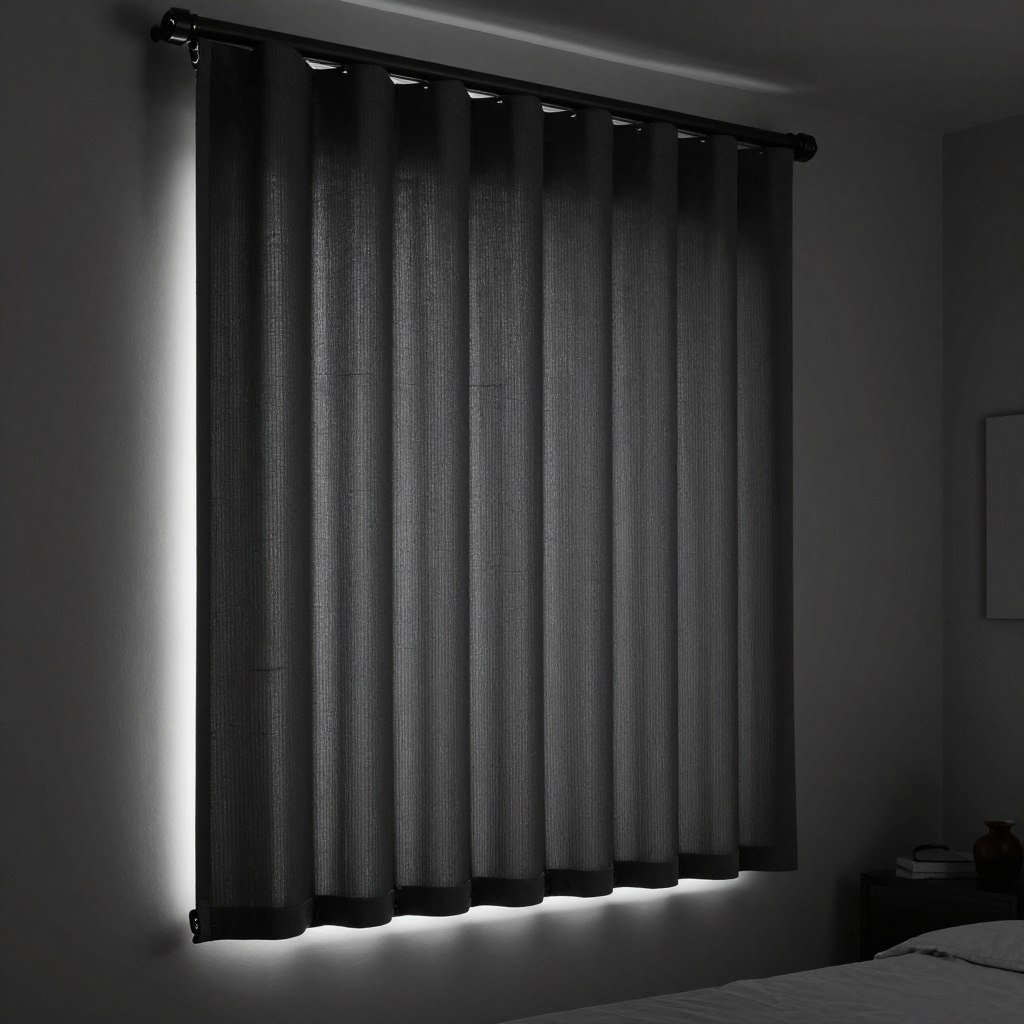
Block 99% of incoming light for complete darkness. Excellent for bedrooms, nurseries, or home theaters. Also provide the highest level of privacy at any time of day or night.
Energy Efficiency Benefits
The insulation value of vertical cellular shades can significantly reduce heating and cooling costs. Studies show they can improve window insulation by up to 40% compared to bare glass.
In summer, they block heat from entering your home. In winter, they trap warm air inside. This makes them one of the most energy-efficient sliding glass door coverings available.
Energy Savings Tip: Double-cell vertical cellular shades with a reflective backing can reduce heat loss by up to 50% in winter and block up to 80% of solar heat gain in summer, potentially saving $200-400 annually on energy bills for homes with large sliding glass doors.
Operating Systems
Modern vertical cellular shades offer several control options. Cordless lift systems provide a clean look and child safety. Motorized options add convenience with remote or smart home control.
Continuous cord loops work well for very large doors. They make raising and lowering heavy shades easier. Wand controls offer simple one-handed operation.
Pros and Cons of Vertical Cellular Shades
Pros
- Superior energy efficiency and insulation
- Complete privacy when fully closed
- Soft, elegant appearance in any room
- Excellent sound absorption properties
- Available in hundreds of fabric colors
- Child-safe cordless options available
- UV protection prevents furniture fading
- Smooth, quiet operation
Cons
- Higher cost than basic vertical blinds
- Fabric can collect dust over time
- Difficult to clean compared to hard blinds
- Can be damaged by pets or rough handling
- Limited lifespan compared to aluminum blinds
- Some styles may sag if not properly installed
Pricing Considerations
Vertical cellular shades typically cost more than traditional vertical blinds. Expect to pay $250 to $500 for standard sliding door sizes. Custom sizes or motorization can push costs to $800 or more.
The investment often pays for itself through energy savings. Many utility companies offer rebates for installing energy-efficient window treatments. Check with your local provider for potential savings.
Sliding Panel Track Blinds: Modern Sophistication
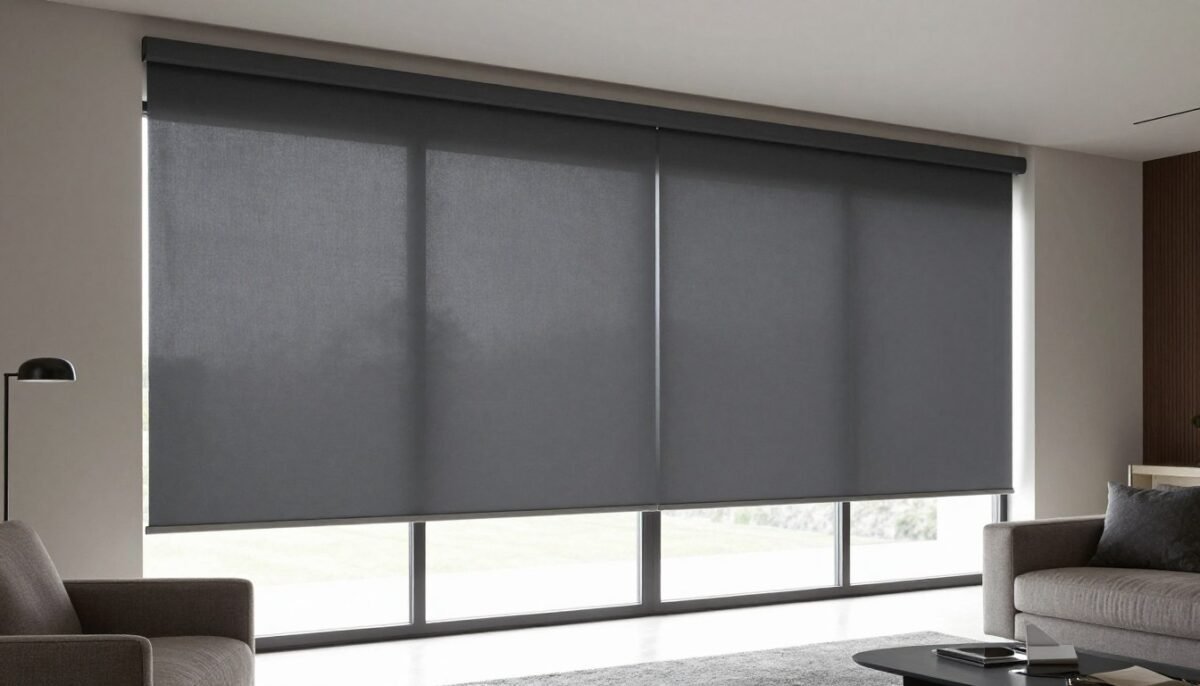
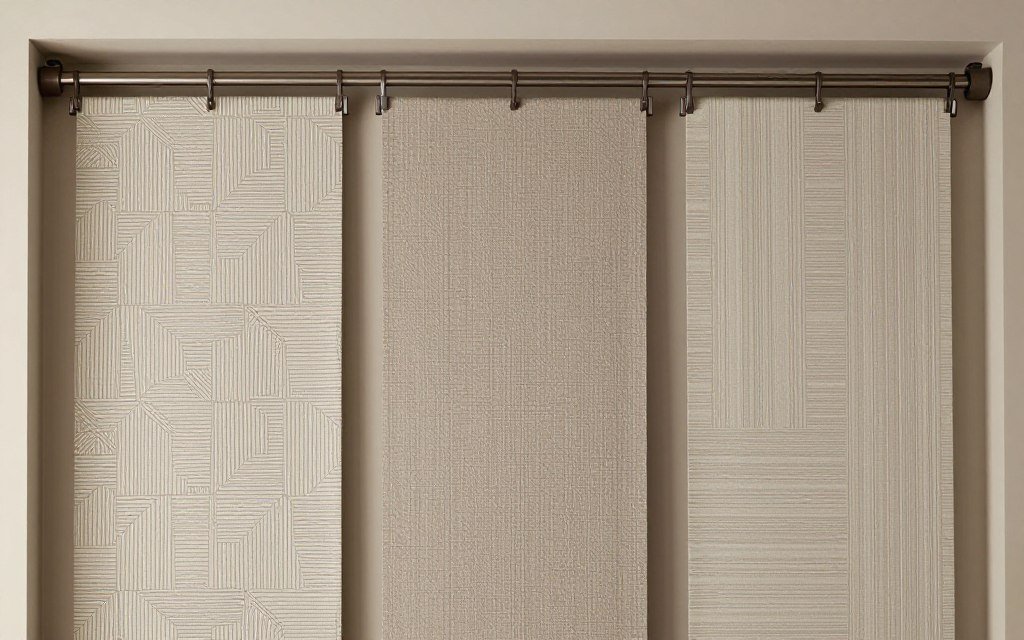
Sliding panel track blinds bring a contemporary aesthetic to sliding glass door coverings. These window treatments feature large fabric panels that glide along a track system. They create a sleek, minimalist look that complements modern home design.
Unlike traditional vertical blinds with many narrow slats, panel tracks use wide panels. Each panel typically measures 16 to 24 inches wide. This creates clean lines and an uncluttered appearance.
How Panel Tracks Function
The system uses multiple overlapping panels that slide independently. Each panel moves along its own track channel. You can position them to cover the glass completely, partially, or stack them to one side.
This flexibility makes panel tracks perfect for sliding glass doors. They move with your door opening pattern. Some systems accommodate up to six panels for extra-wide door expanses.
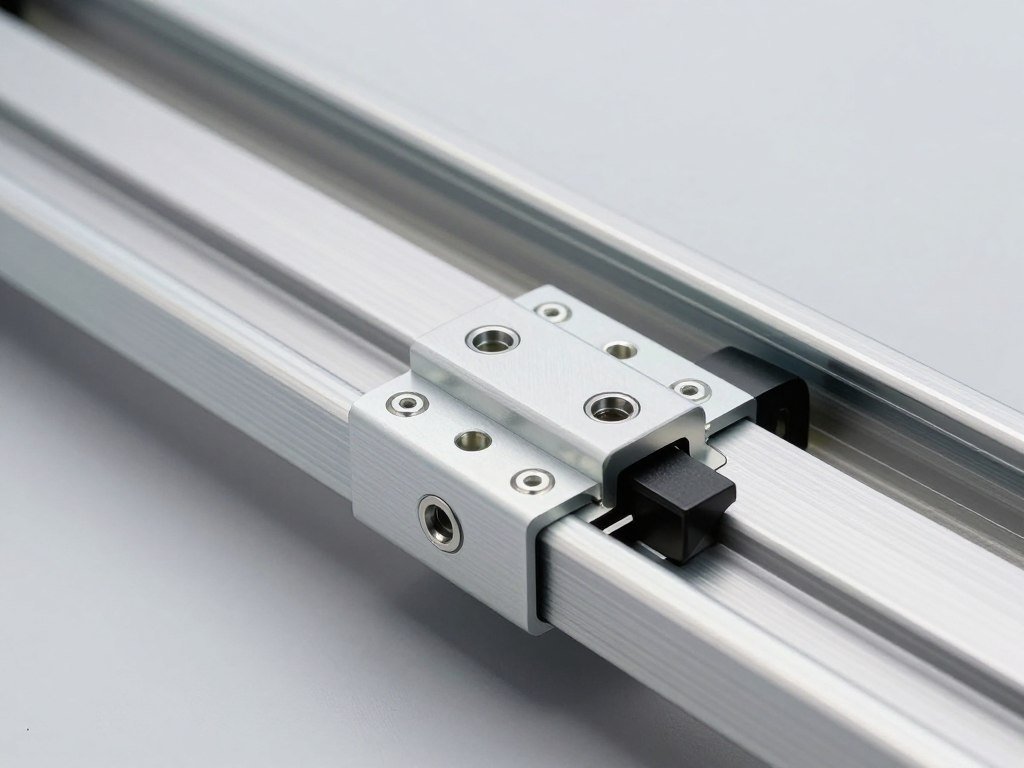
Fabric and Material Choices
Panel tracks offer extensive fabric options to match any interior design. Sheer fabrics create an airy, open feel while filtering light. Screen fabrics protect from UV rays while maintaining views.
Opaque fabrics provide privacy and room darkening. You can even mix different fabric types in one system. This allows custom light control throughout the day.
Sheer Panel Fabrics
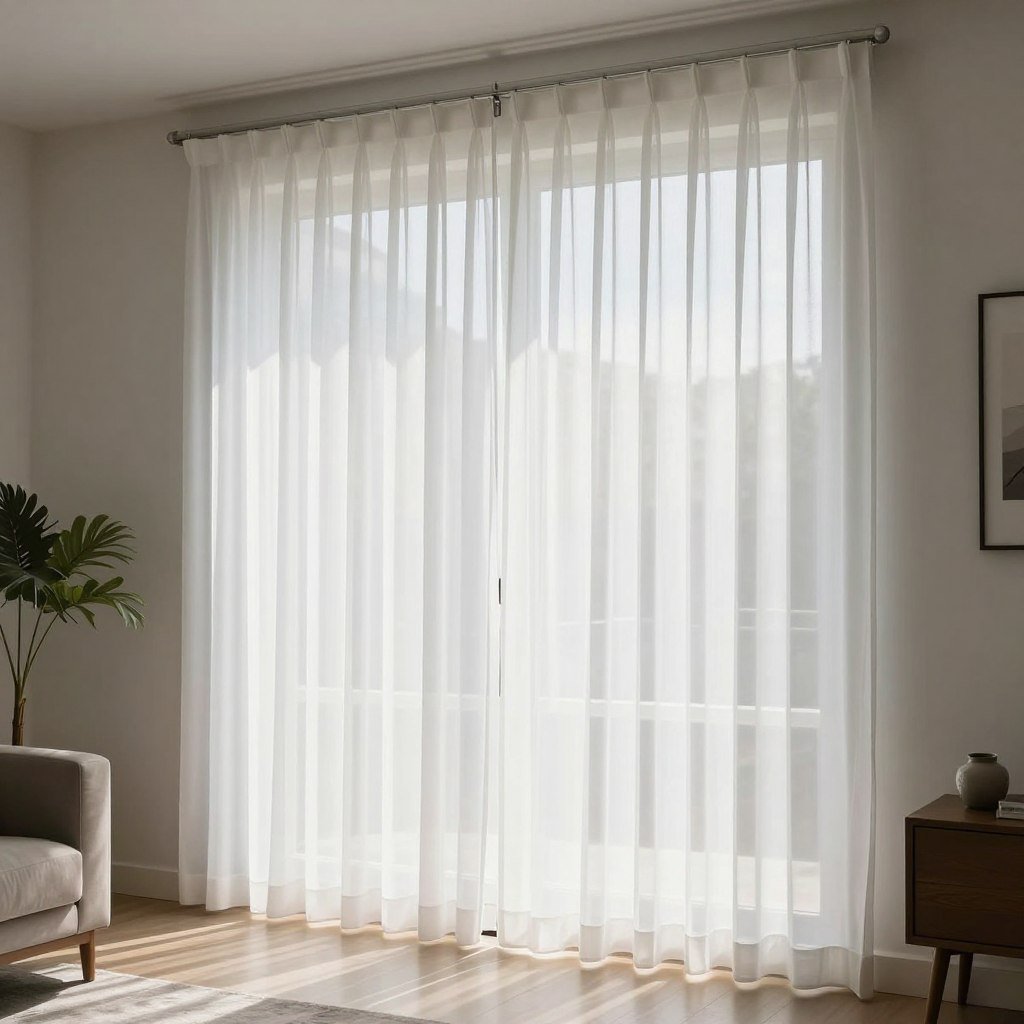
Lightweight and translucent materials soften incoming light. They maintain a connection to the outdoors while providing daytime privacy. Available in subtle patterns and textures for added visual interest.
Solar Screen Panels
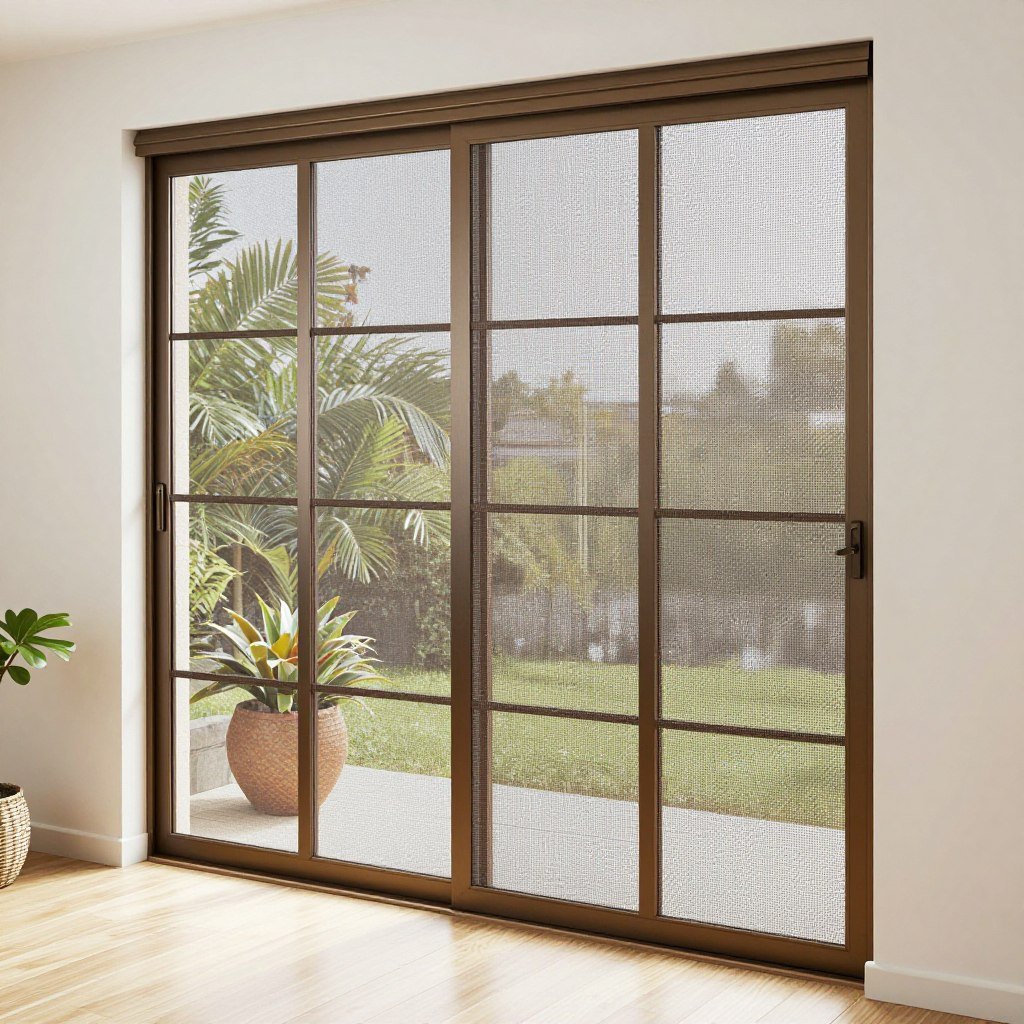
Woven screen materials block heat and UV rays effectively. You can still see outside clearly during the day. Perfect for rooms with direct sun exposure that need glare reduction.
Blackout Panel Fabrics
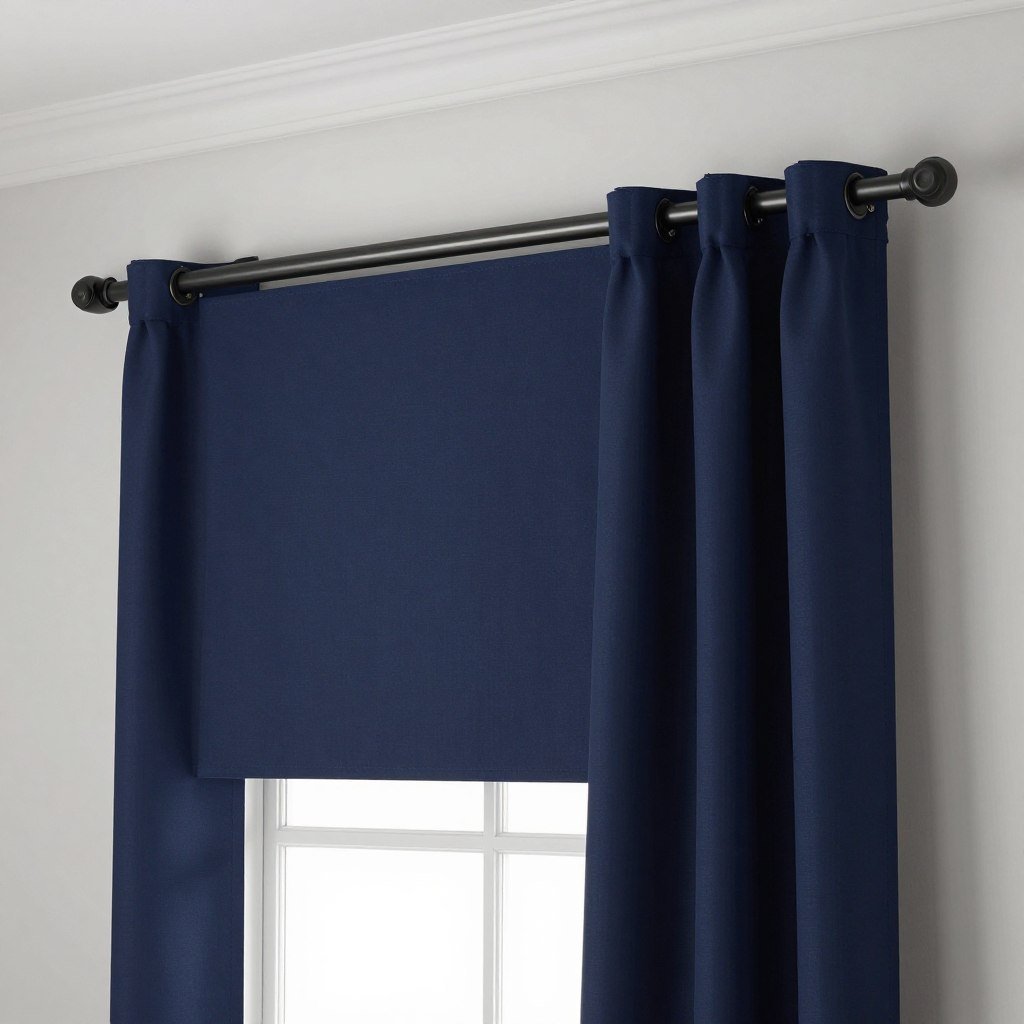
Dense, opaque materials block light completely for bedrooms or media rooms. They also provide the highest level of privacy. Available in bold colors and patterns to make a design statement.
Style and Design Versatility
Panel tracks work beautifully in contemporary and minimalist spaces. Their clean lines complement modern architecture. But they’re versatile enough for transitional and even traditional homes when paired with the right fabric.
Customization options are nearly endless. Choose solid colors for a subtle look or bold patterns for dramatic impact. You can coordinate with existing drapery or upholstery fabrics.
Installation and Space Requirements
Panel tracks require adequate wall or ceiling space for the track system. You need at least 3 inches of clearance on the stack side where panels collect when open. For wider doors, this space requirement increases.
Professional installation is often recommended. The track must be perfectly level for smooth operation. Improper installation can cause panels to drag or bind.
Advantages and Limitations
Pros
- Sleek, contemporary appearance
- Large panels minimize visual clutter
- Smooth, quiet gliding operation
- Excellent for wide expanses of glass
- Customizable with endless fabric options
- Can accommodate curved track designs
- Easy to operate with one hand
- Works well as room dividers too
Cons
- Higher cost than vertical blinds
- Requires more wall space when open
- Professional installation recommended
- Panels can wrinkle or sag over time
- Limited light control compared to tilting blinds
- Fabric panels need regular dusting
- Not ideal for small spaces
Cost Range
Panel track systems are premium sliding glass door coverings. Basic systems with simple fabrics start around $300. Designer fabrics and larger systems can cost $800 to $1,200 or more.
Custom sizing adds to the expense. But the investment creates a high-end look that elevates your entire space.
Drapery and Curtains: Classic Elegance
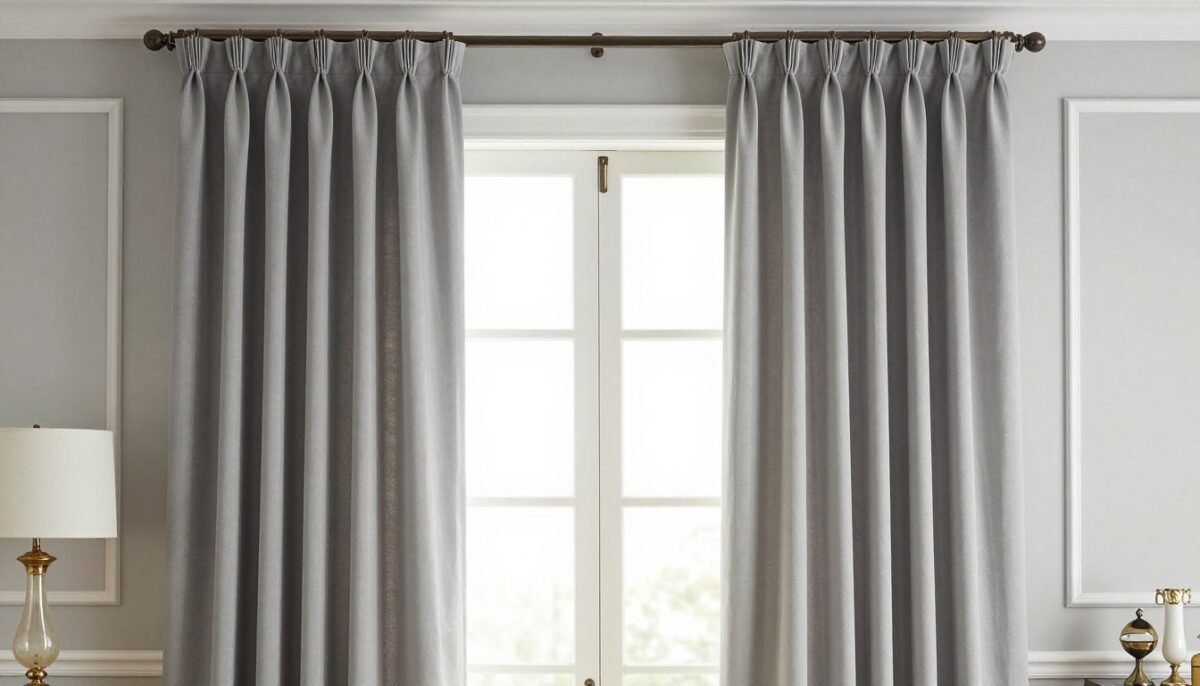
Drapery brings timeless elegance to sliding glass door coverings. These flowing fabric treatments add softness and warmth to any room. They’re incredibly versatile, working in traditional, contemporary, and transitional spaces.
Unlike rigid blinds or shades, curtains and drapery create movement and texture. They frame your glass door beautifully while providing functional light control and privacy.
Types of Drapery Styles
Several drapery styles work well for sliding doors. Pinch pleat drapery offers a tailored, traditional look with structured folds. Ripple fold creates a modern, wave-like appearance with consistent pleating.
Grommet panels provide a casual, contemporary style. The large rings slide easily on decorative rods. Tab-top curtains offer a relaxed, informal aesthetic perfect for casual spaces.
Pinch Pleat Drapery
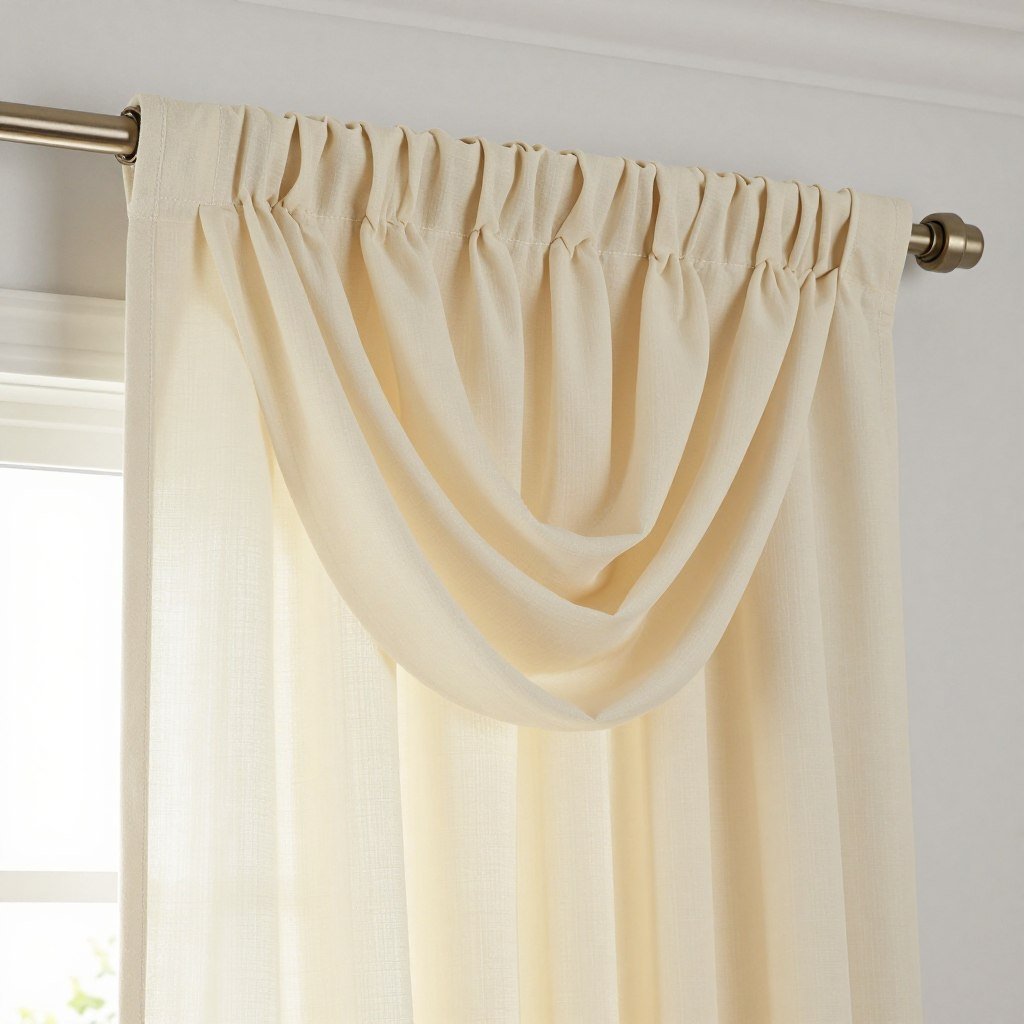
Classic pleated style with precise, uniform folds. Works with traverse rods for smooth operation. Perfect for formal living rooms and traditional home designs.
Ripple Fold Drapery
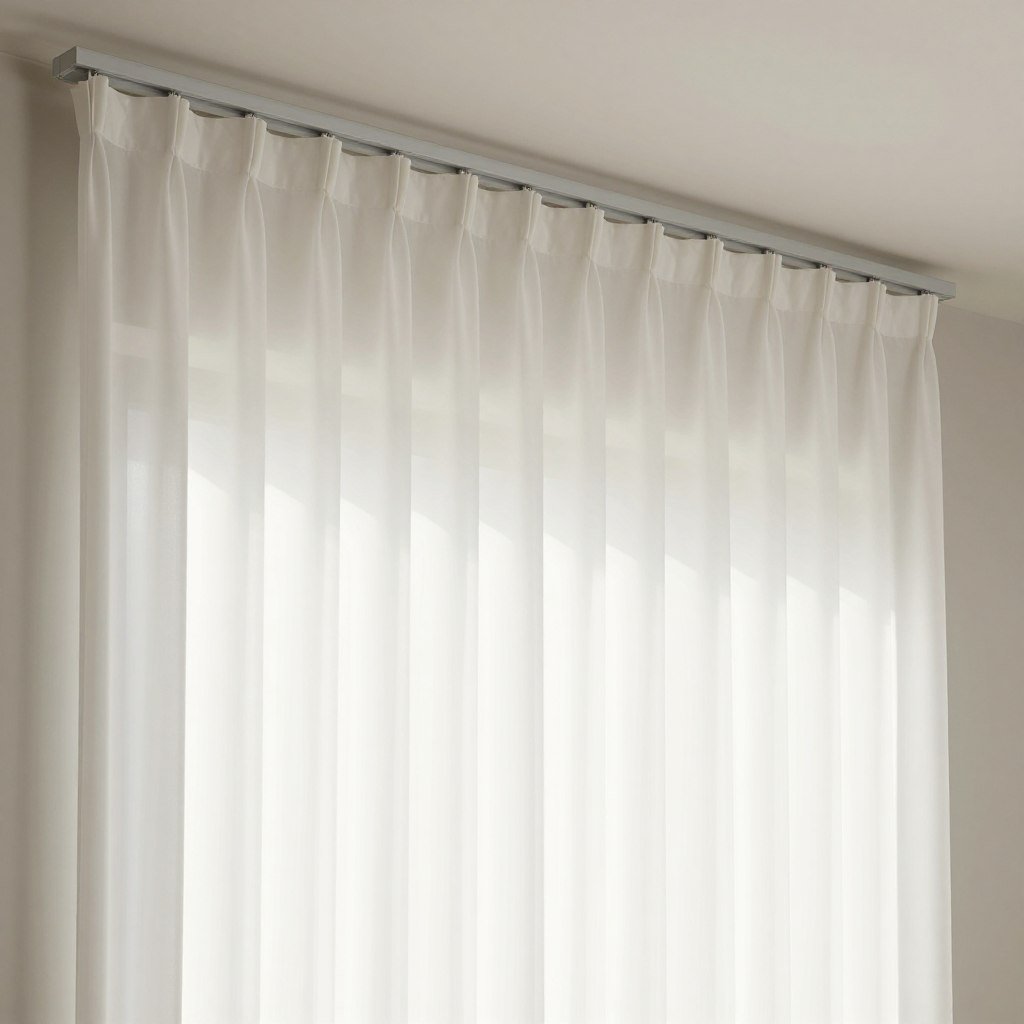
Modern style with continuous, uniform waves. Creates a sleek, contemporary look. Stacks back compactly when fully opened to maximize glass exposure.
Grommet Panels
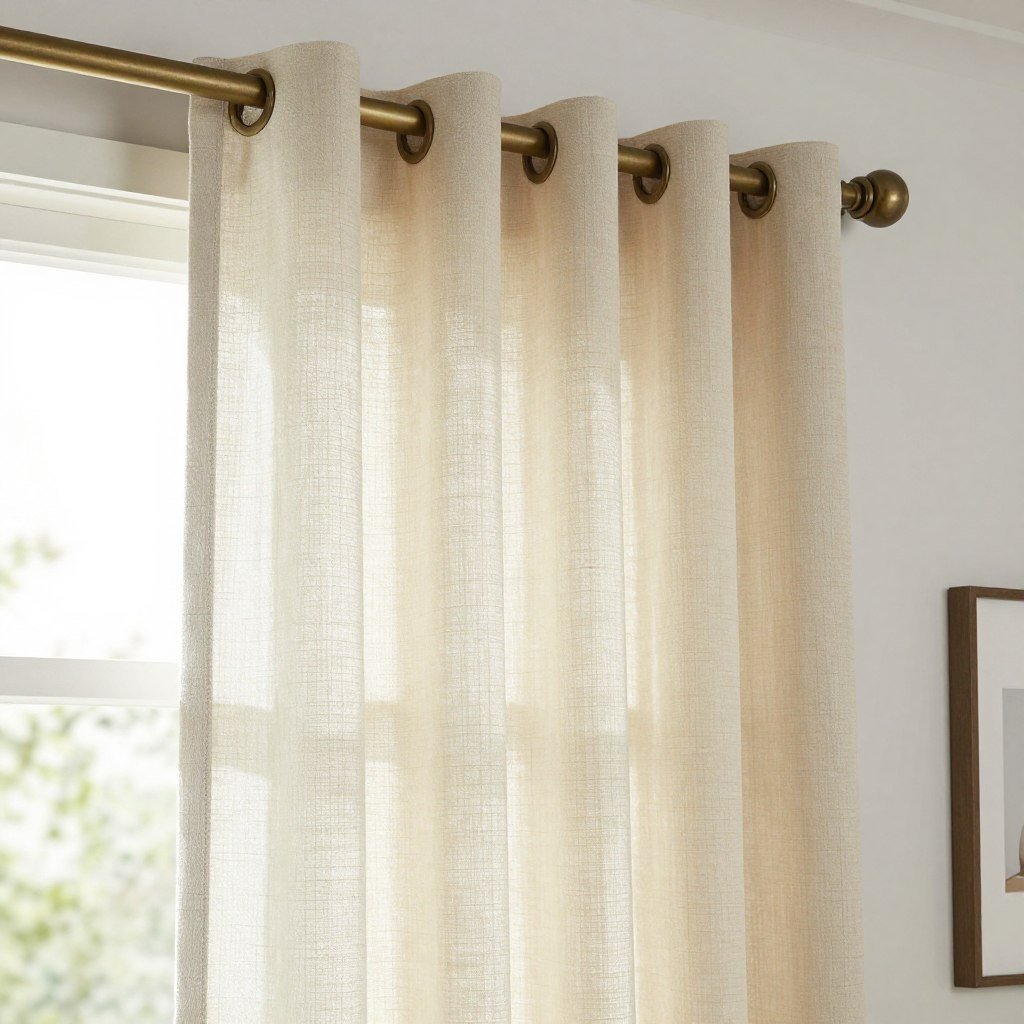
Casual panels with metal-ringed tops that slide on rods. Easy to open and close. Great for informal spaces and easy DIY installation.
Fabric Selection
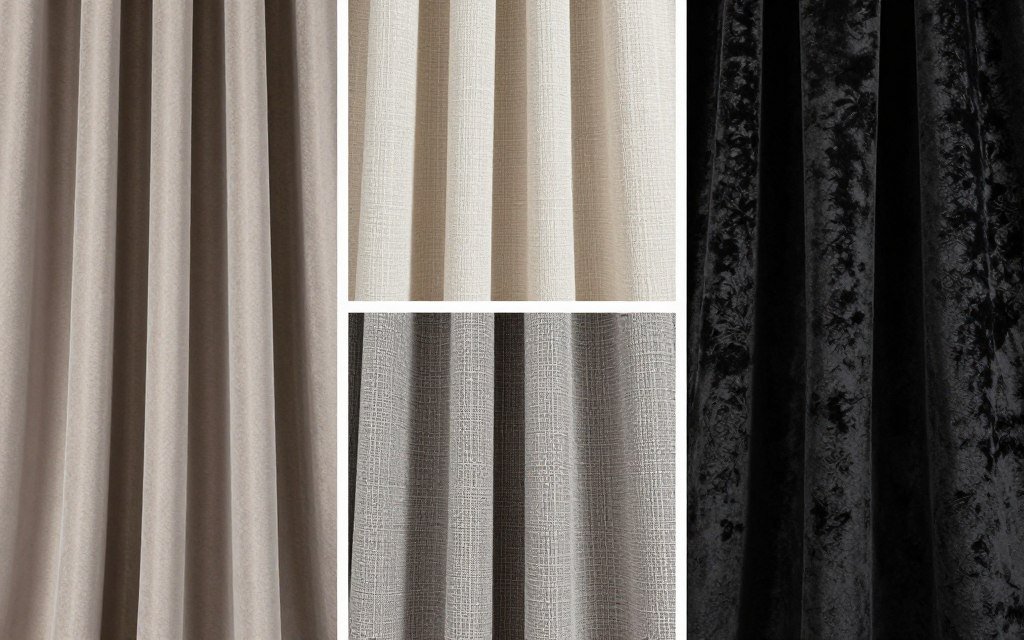
The fabric you choose dramatically affects both function and style. Light, sheer fabrics filter sunlight while maintaining some view. Medium-weight fabrics balance privacy with light transmission.
Heavy, lined drapery provides maximum light blocking and insulation. Blackout linings turn any fabric into room-darkening treatment. Thermal linings add energy efficiency.
Layering for Maximum Control
Many homeowners layer drapery with other window treatments for complete control. Sheer curtains paired with blackout panels give you flexibility throughout the day. Add blinds or shades underneath for even more options.
This approach looks luxurious and provides incredible functionality. Use sheers during the day for soft light. Close blackout drapery at night for privacy and darkness.
Design Tip: When layering window treatments, install the drapery on a ceiling-mounted track or rod at least 6-8 inches wider than the door frame. This allows curtains to stack completely off the glass when open, maximizing natural light and creating the illusion of larger windows.
Hardware and Installation
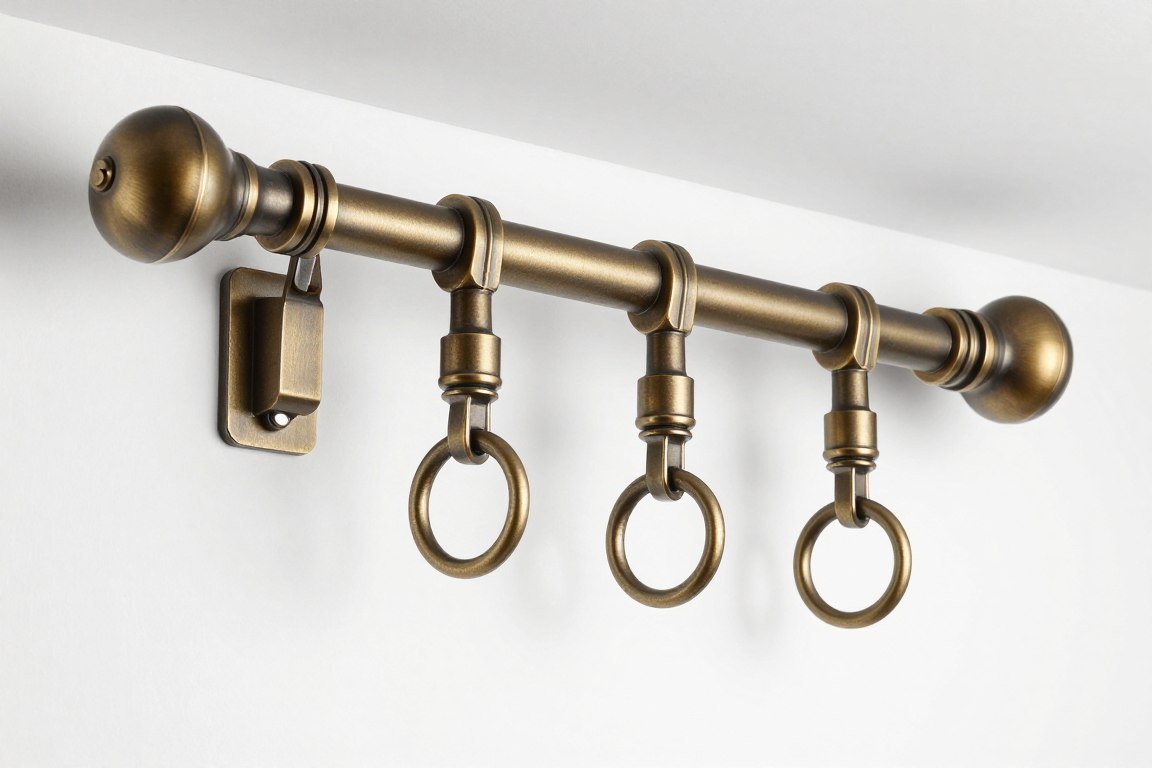
Proper hardware makes operating drapery effortless. Traverse rods allow you to open curtains with a simple pull of a cord or wand. Decorative rods add style but require manual movement of panels.
For very wide sliding doors, consider motorized drapery tracks. They open and close at the touch of a button. Smart home integration lets you control curtains from your phone or by voice.
Maintenance Considerations
Drapery requires more maintenance than blinds or shades. Most fabrics need professional cleaning every one to two years. Regular vacuuming with an upholstery attachment removes dust between cleanings.
Some casual curtain fabrics are machine washable. Check care labels before purchasing. Wrinkle-resistant fabrics make maintenance easier.
Pros and Cons
Pros
- Adds elegance and sophistication to rooms
- Extensive fabric, color, and pattern options
- Provides excellent insulation when lined
- Easy to customize to exact specifications
- Can be layered for versatile control
- Softens room acoustics naturally
- Works in any design style
- Creates luxurious, high-end appearance
Cons
- Higher maintenance than hard treatments
- Requires professional cleaning
- Can be expensive with custom options
- May collect dust and pet hair
- Takes up more space than blinds
- Not ideal for high-humidity areas
- Can drag on floor if not properly sized
Investment Range
Drapery costs vary widely based on fabric, lining, and customization. Ready-made curtain panels start around $50 to $150 per panel. Custom drapery typically ranges from $300 to $1,000 or more for sliding door sizes.
Designer fabrics and intricate details increase costs. But custom drapery is a long-term investment that can last decades with proper care.
Roller Shades: Simple and Streamlined
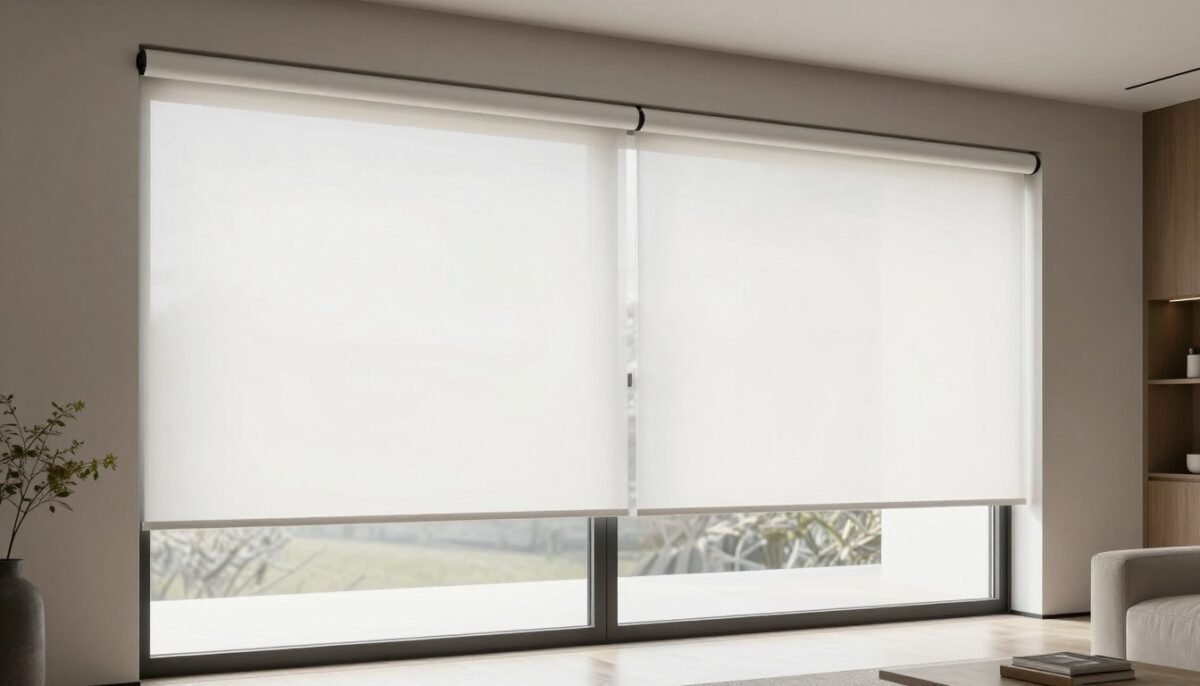
Roller shades offer one of the simplest sliding glass door covering solutions. A single piece of fabric rolls up into a compact cylinder when raised. This creates a clean, minimalist look that works in modern homes.
Despite their simplicity, roller shades provide excellent functionality. They’re easy to operate and require minimal maintenance. The straightforward design keeps costs reasonable while delivering reliable performance.
Fabric Performance Options
Roller shades come in various fabric types for different needs. Solar screen fabrics block UV rays and heat while maintaining outward visibility. You can see outside, but people outside see only a textured surface.
Light-filtering fabrics soften incoming light without completely blocking it. Blackout fabrics provide total darkness and privacy. Some fabrics even offer dual functionality with different properties on each side.
Solar Roller Shades
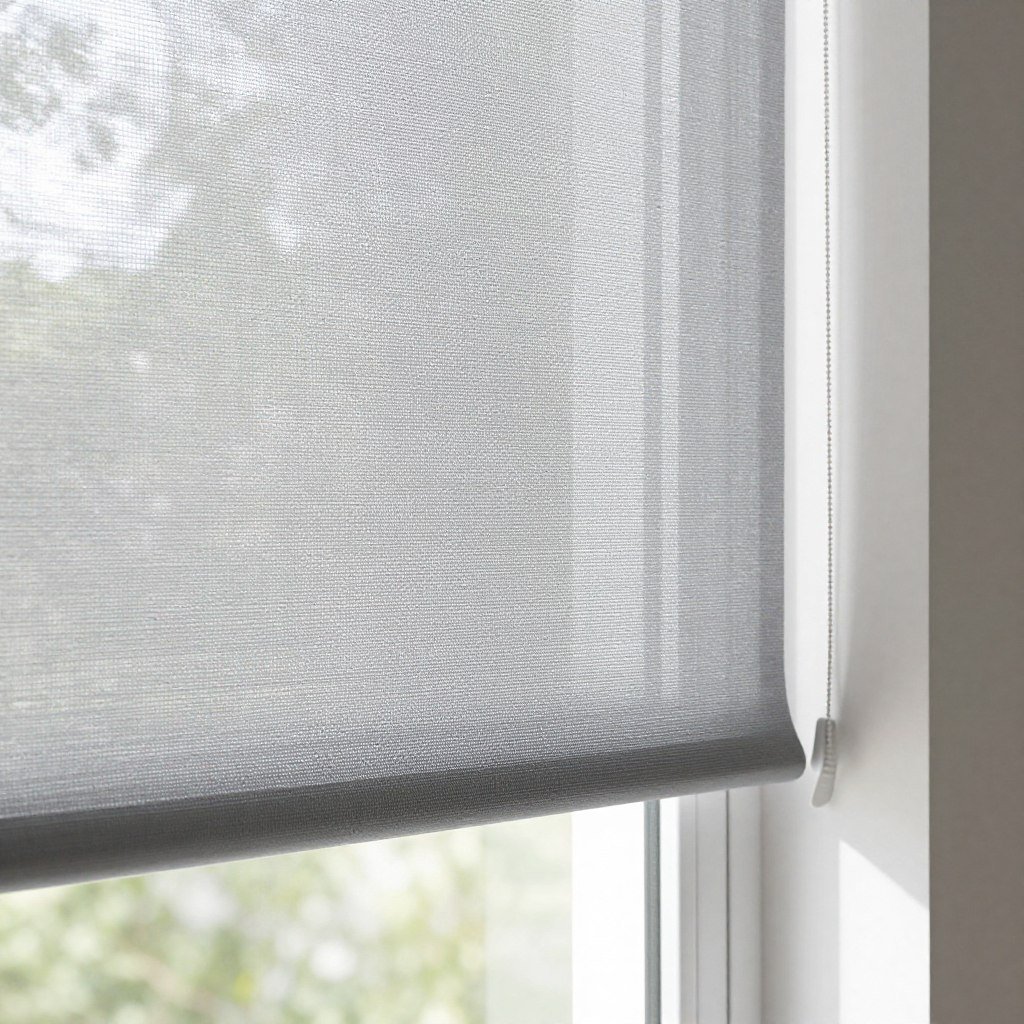
Open-weave fabrics reduce glare and heat by up to 90%. Perfect for rooms with direct sun exposure. You maintain views while protecting furniture from fading.
Light-Filtering Shades
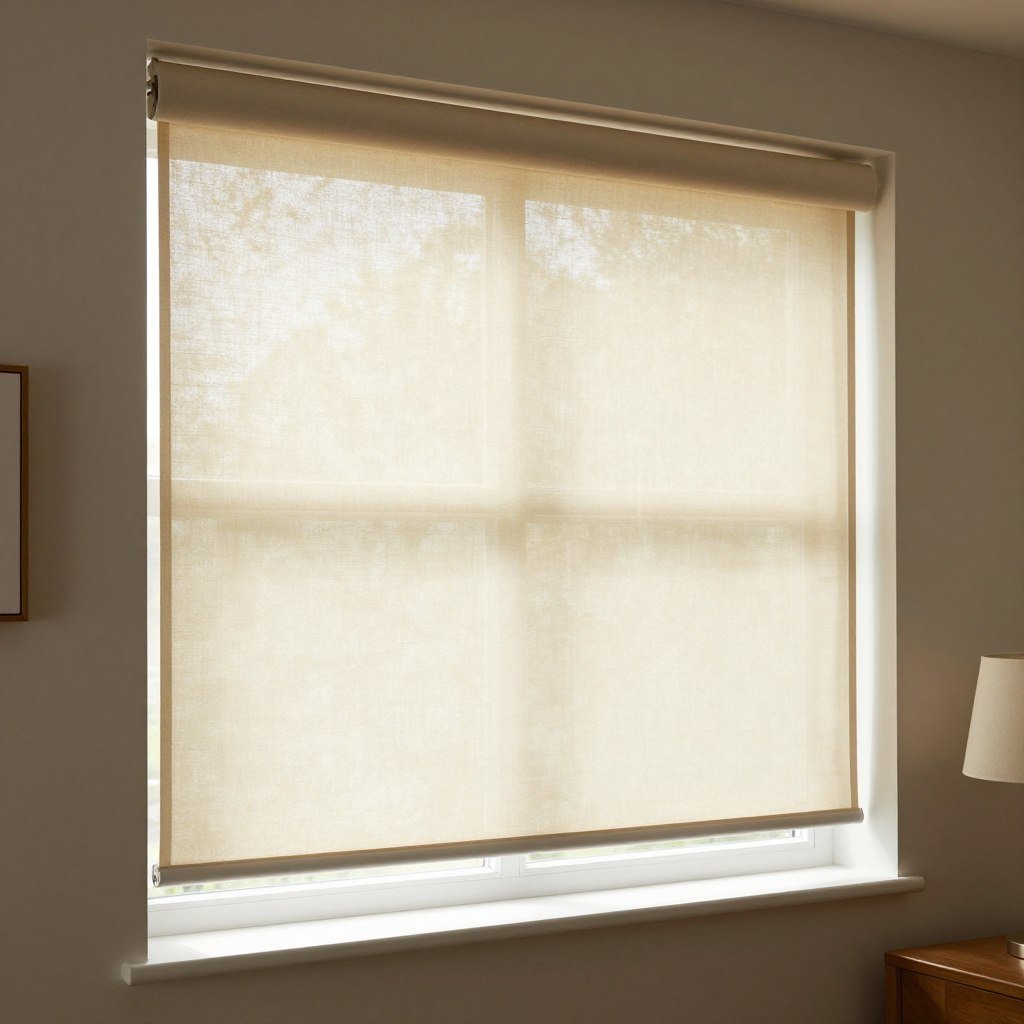
Semi-transparent materials balance privacy and natural light. They create a soft, ambient glow in your room. Ideal for living areas where you want brightness without harsh sun.
Blackout Roller Shades
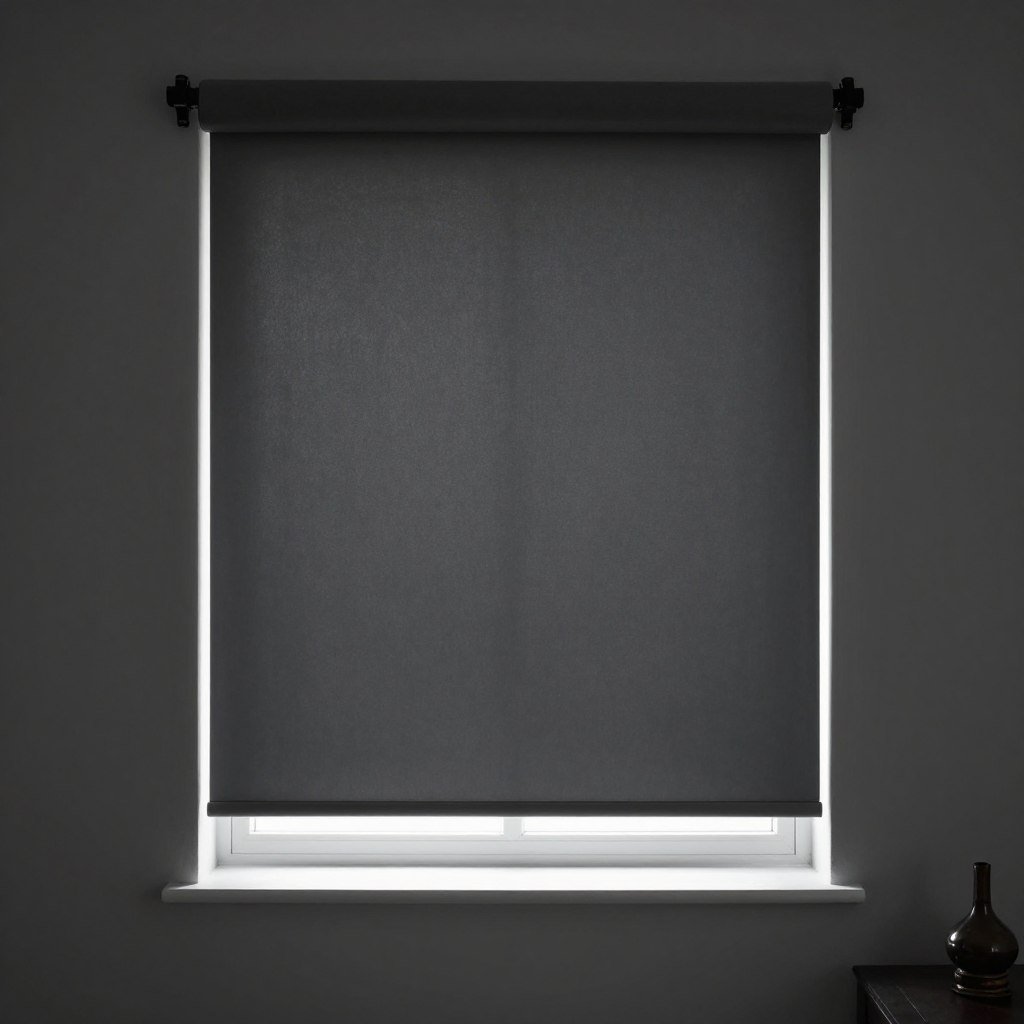
Block virtually all light for complete room darkening. Essential for bedrooms, nurseries, or home theaters. Also provide maximum privacy day or night.
Operating Mechanisms
Roller shades offer several control options to match your preferences. Spring-loaded mechanisms use a simple pull-down, snap-up operation. Continuous loop chain controls give precise positioning at any height.
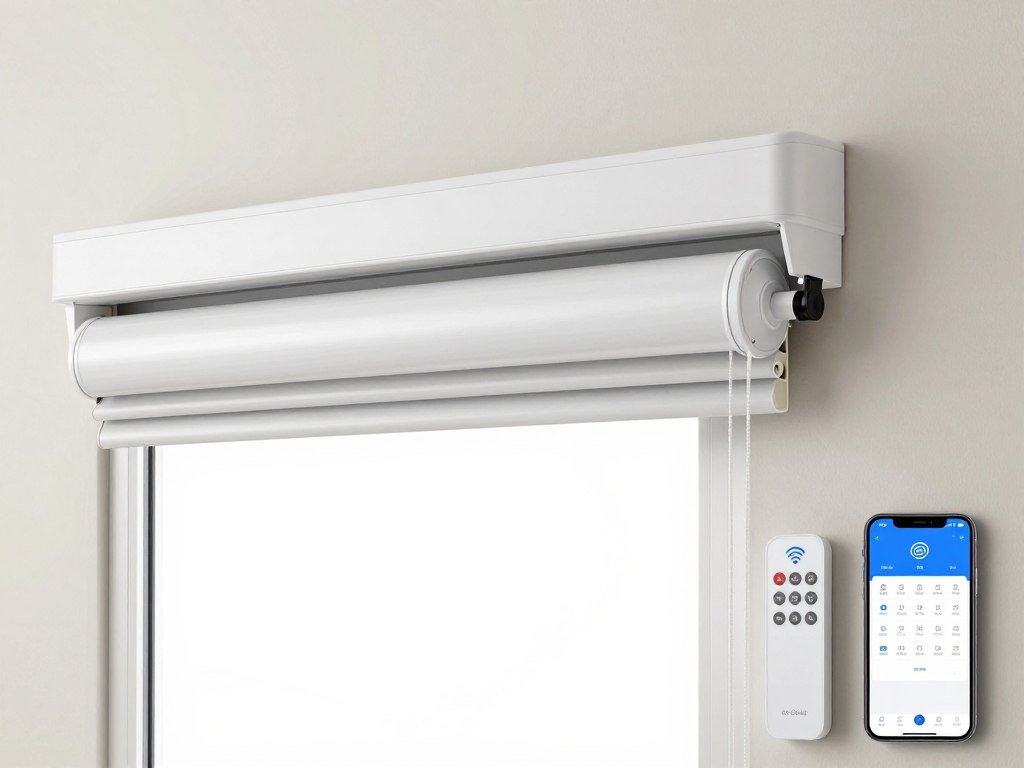
Cordless systems provide a sleek look with enhanced child safety. Motorized options add convenience, especially for hard-to-reach or oversized sliding doors. Many now integrate with smart home systems.
Sizing for Sliding Doors
For sliding glass doors, you have two main installation approaches. Mount one large roller shade to cover the entire door expanse. Or install individual shades for each door panel.
Single large shades create a seamless look when lowered. They’re simpler to operate. Individual shades offer more flexibility, allowing you to shade only part of the door as needed.
Benefits and Drawbacks
Pros
- Clean, minimalist appearance
- Compact when fully raised
- Easy operation with minimal effort
- Wide range of fabric colors and textures
- Affordable compared to other treatments
- Low maintenance and easy cleaning
- Child-safe cordless options available
- Motorization readily available
Cons
- No tilt adjustment for light control
- Either up or down, limited in-between options
- Large shades can be heavy to operate
- Fabric may wrinkle or crease over time
- Side gaps allow some light leakage
- Can look plain without additional treatments
- Limited insulation compared to cellular shades
Cost Expectations
Roller shades are among the most budget-friendly sliding glass door coverings. Basic light-filtering shades start around $150 for standard door sizes. Premium solar screens or blackout options range from $250 to $400.
Motorization adds $150 to $300 per shade. Custom sizing and designer fabrics increase costs. But even high-end roller shades remain more affordable than custom drapery.
Roman Shades: Tailored Sophistication
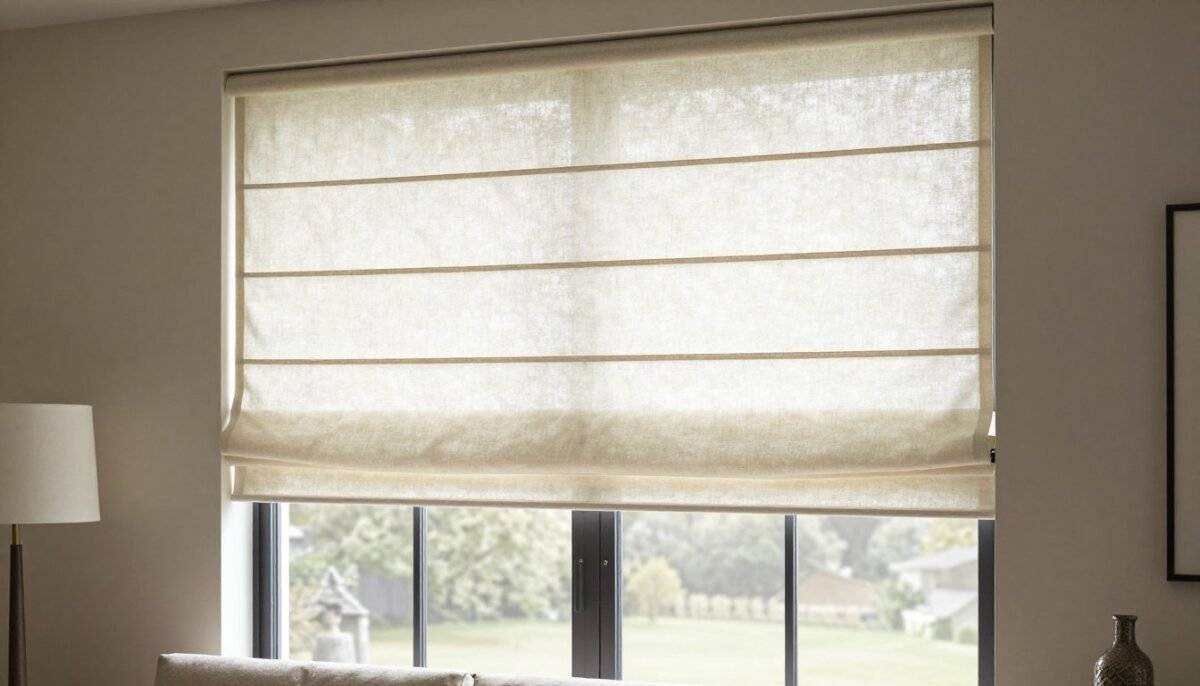
Roman shades combine the softness of fabric with the structure of blinds. They fold into neat horizontal pleats when raised. This creates a tailored, sophisticated look that works in both traditional and contemporary spaces.
The classic style has remained popular for centuries. Roman shades add visual interest without overwhelming your decor. They’re especially effective when you want the elegance of drapery with more functional light control.
Style Variations
Several roman shade styles suit different aesthetics. Flat roman shades create smooth, clean lines with no visible folds when lowered. Hobbled romans feature soft, cascading folds that remain even when the shade is down.
Relaxed roman shades have a gentle curve at the bottom for a casual look. Balloon shades create dramatic poufs and are more decorative than functional.
Flat Roman Shades
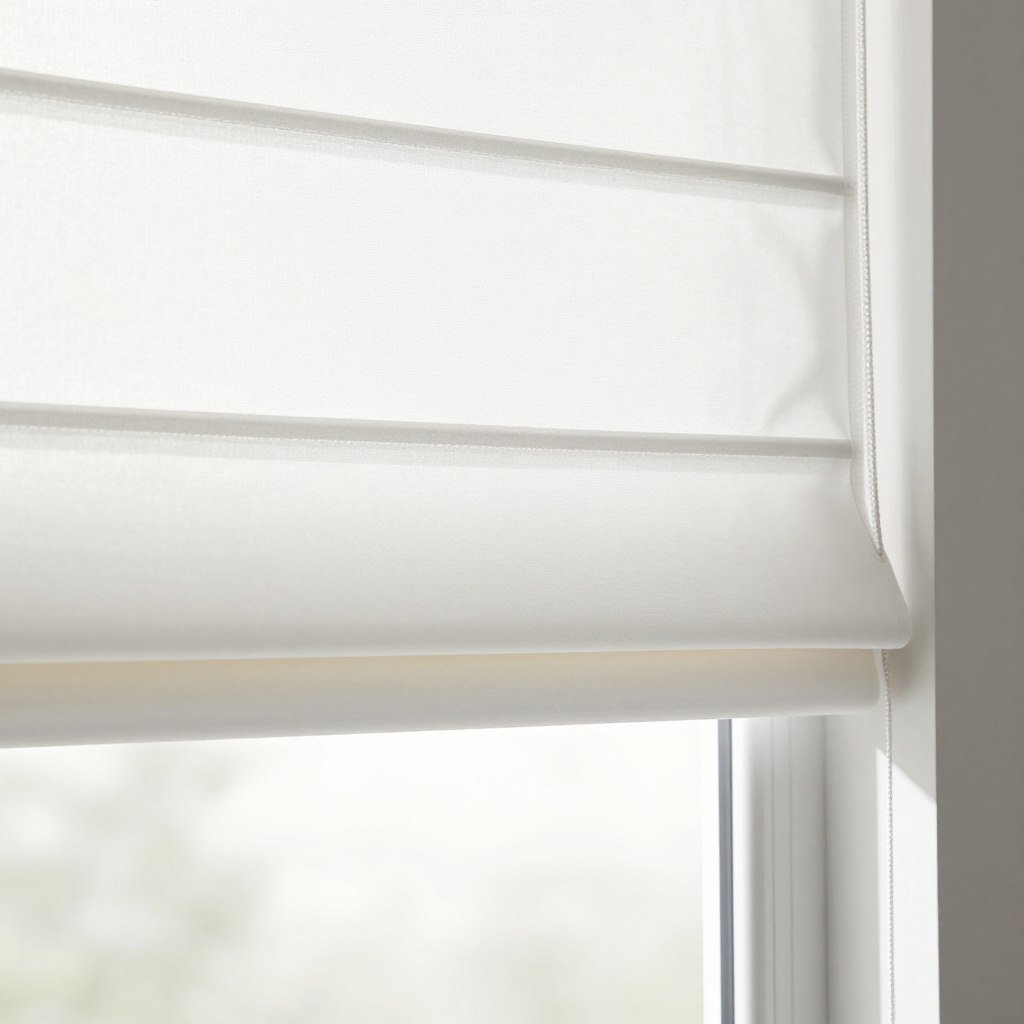
Sleek and modern with no folds when fully extended. The fabric lies completely flat against the glass. Perfect for contemporary homes and minimalist designs.
Hobbled Roman Shades
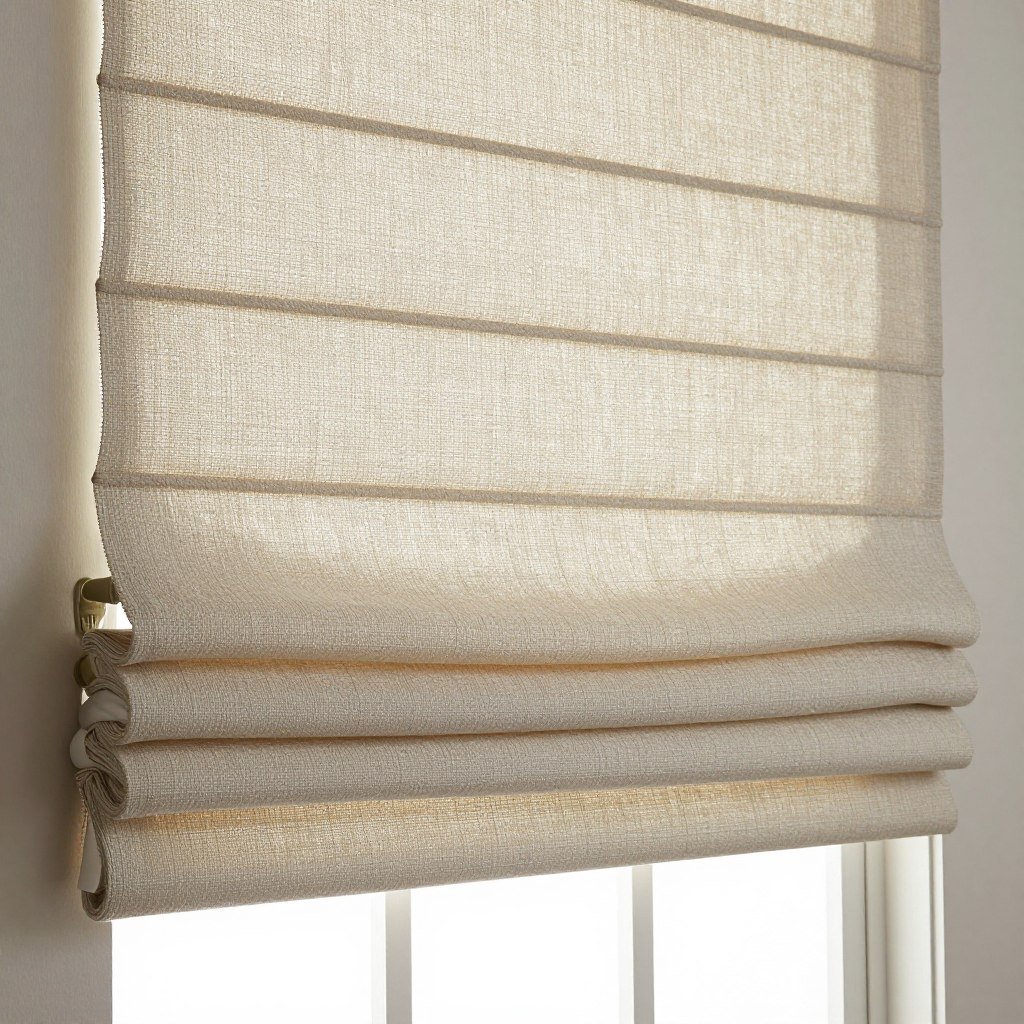
Traditional style with permanent soft folds. These create visual texture and interest. Ideal for formal living spaces and traditional home styles.
Relaxed Roman Shades
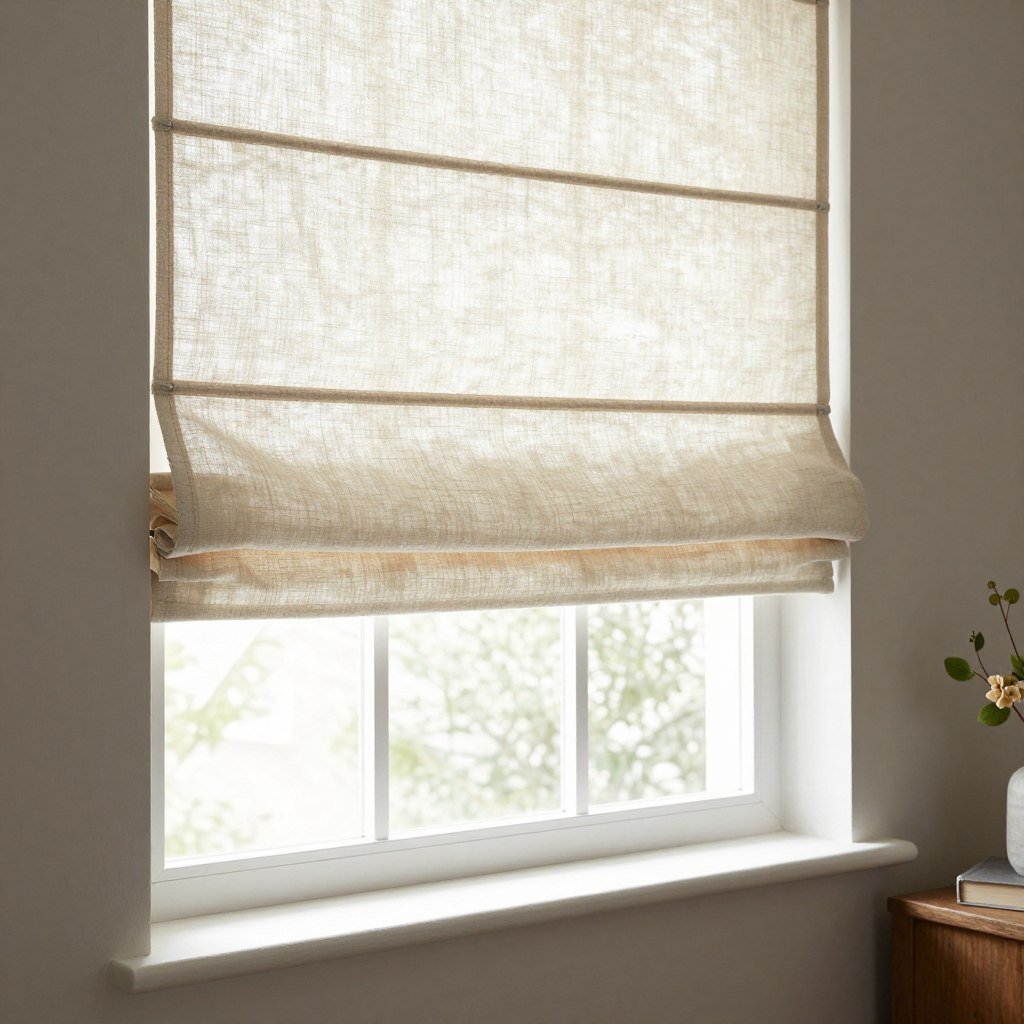
Casual elegance with a gentle bottom curve. Less formal than hobbled styles but more interesting than flat. Great for family rooms and casual spaces.
Fabric and Lining Options
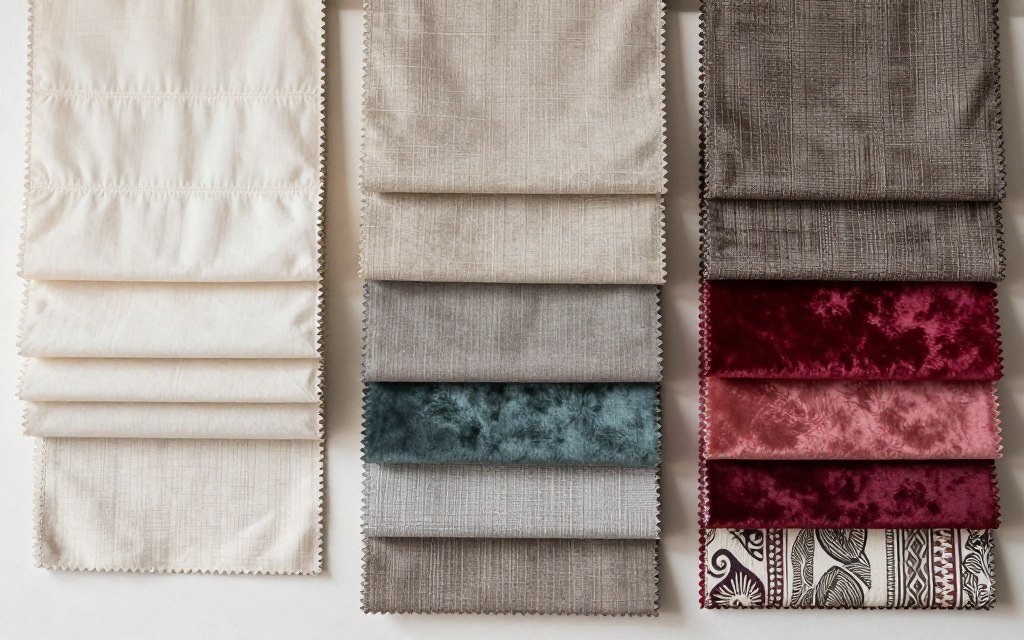
Roman shades work with virtually any fabric type. Lightweight cottons and linens create an airy feel. Heavier materials like velvet or tapestry add luxury and drama.
Linings enhance functionality significantly. Standard linings protect fabric from sun damage and add body. Blackout linings transform any fabric into room-darkening treatment. Thermal linings improve energy efficiency.
Challenges for Sliding Doors
Roman shades work best for sliding doors when installed as separate shades for each panel. One large shade covering the entire door becomes very heavy and difficult to operate.
The stacked folds at the top take up more space than roller shades when raised. Plan for adequate wall space above your door. The look is worth the extra clearance needed.
Operating Systems
Traditional roman shades use cord-lock systems for raising and lowering. Cordless lift options provide cleaner aesthetics and improved child safety. The shade raises and lowers with a gentle push or pull.
Motorized romans offer ultimate convenience for large or hard-to-reach installations. They integrate beautifully with smart home systems for automated scheduling.
Advantages and Considerations
Pros
- Elegant, tailored appearance
- Softens rooms with fabric texture
- Available in unlimited fabric options
- Provides good insulation when lined
- Works in many decorating styles
- Can coordinate with existing fabrics
- Creates visual interest with folds
- Offers privacy without blocking views completely
Cons
- More expensive than basic blinds
- Requires more maintenance than hard treatments
- Folds can collect dust
- Heavy when made for large doors
- Takes up significant stack space when raised
- May require professional cleaning
- Mechanism can malfunction over time
- Not ideal for high-humidity areas
Investment Level
Roman shades fall in the mid to upper price range for sliding glass door coverings. Ready-made options start around $200 per shade. Custom roman shades with quality fabrics and linings range from $400 to $800 per shade.
Designer fabrics and intricate fold styles increase costs. Professional installation adds to the expense but ensures proper operation and appearance.
Plantation Shutters: Permanent Elegance
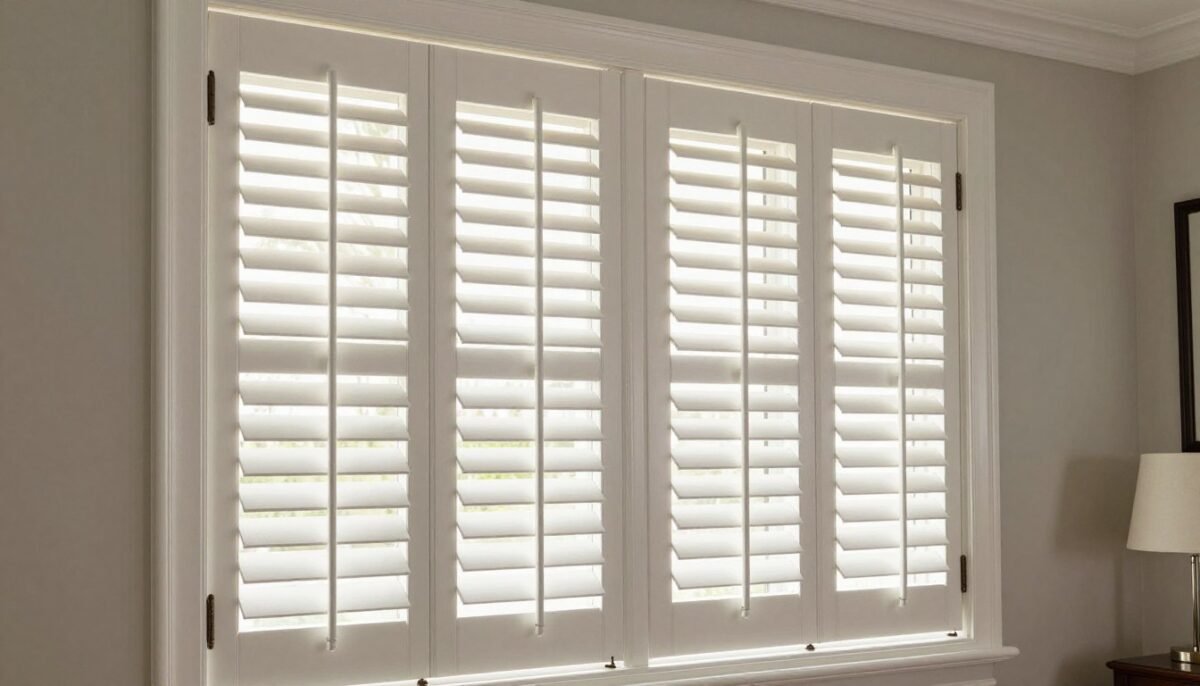
Plantation shutters offer a permanent, architectural approach to sliding glass door coverings. These solid window treatments become part of your home’s structure. They add significant value and timeless appeal.
Unlike temporary fabric treatments, shutters can last decades with minimal maintenance. Their classic design works in every style from traditional to contemporary. They’re one of the few window treatments that consistently increase home value.
Shutter Construction Types
Shutters come in different materials for various needs and budgets. Real wood shutters offer authentic beauty and customization. They’re available in many wood species and finishes.
Composite shutters resist moisture and warping better than wood. They’re ideal for high-humidity areas or homes with extreme temperature fluctuations. Vinyl shutters provide the most affordable option with good durability.
Wood Plantation Shutters
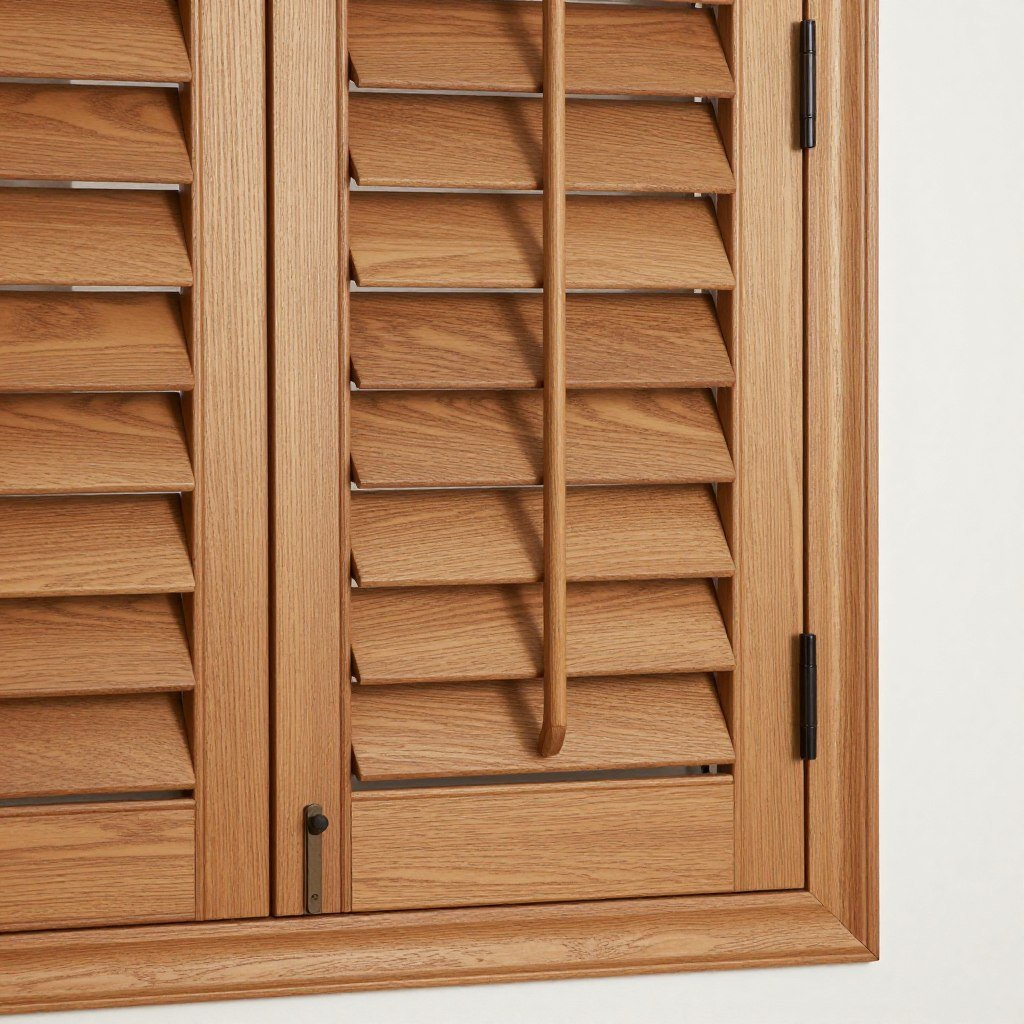
Premium option with authentic wood beauty. Available in painted or stained finishes. Best for climate-controlled interiors away from direct moisture.
Composite Shutters
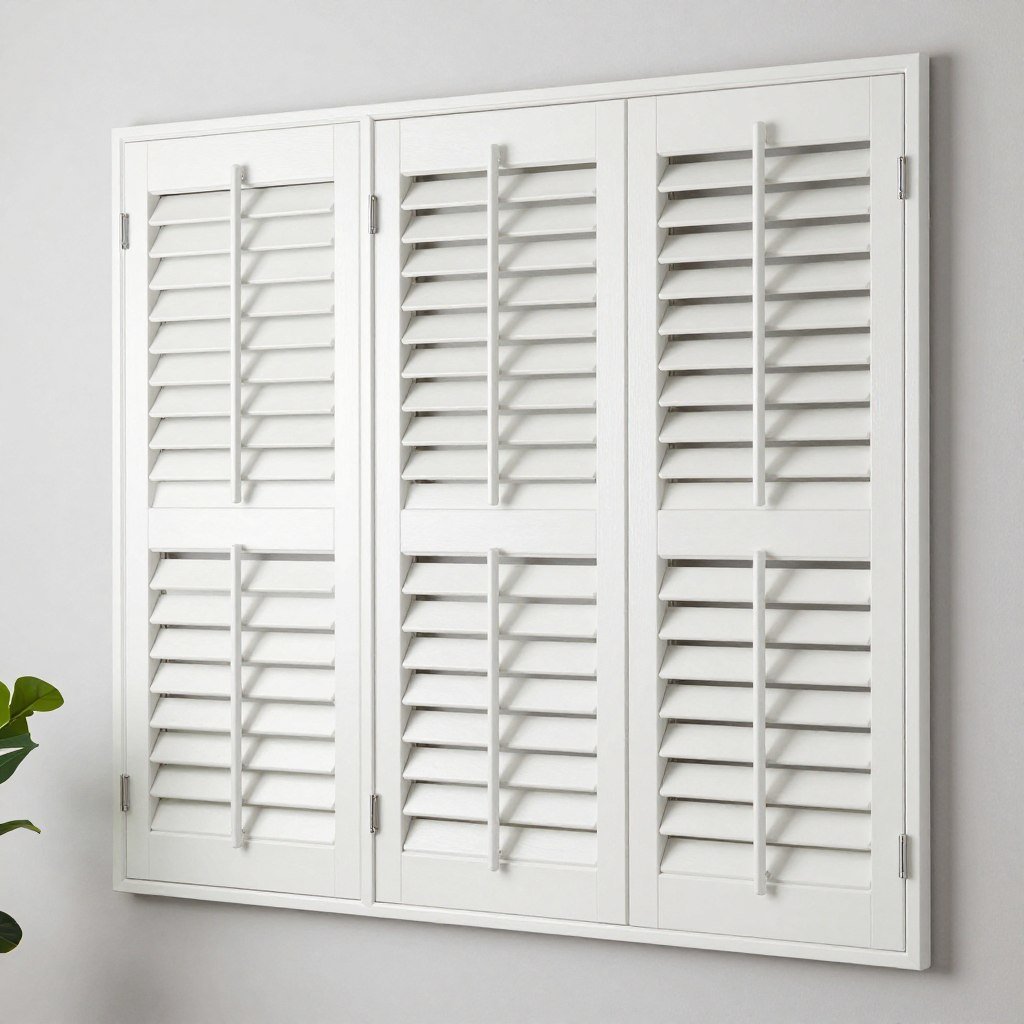
Engineered material that looks like wood but resists moisture. Won’t warp, crack, or fade. Perfect for bathrooms, kitchens, and humid climates.
Vinyl Shutters
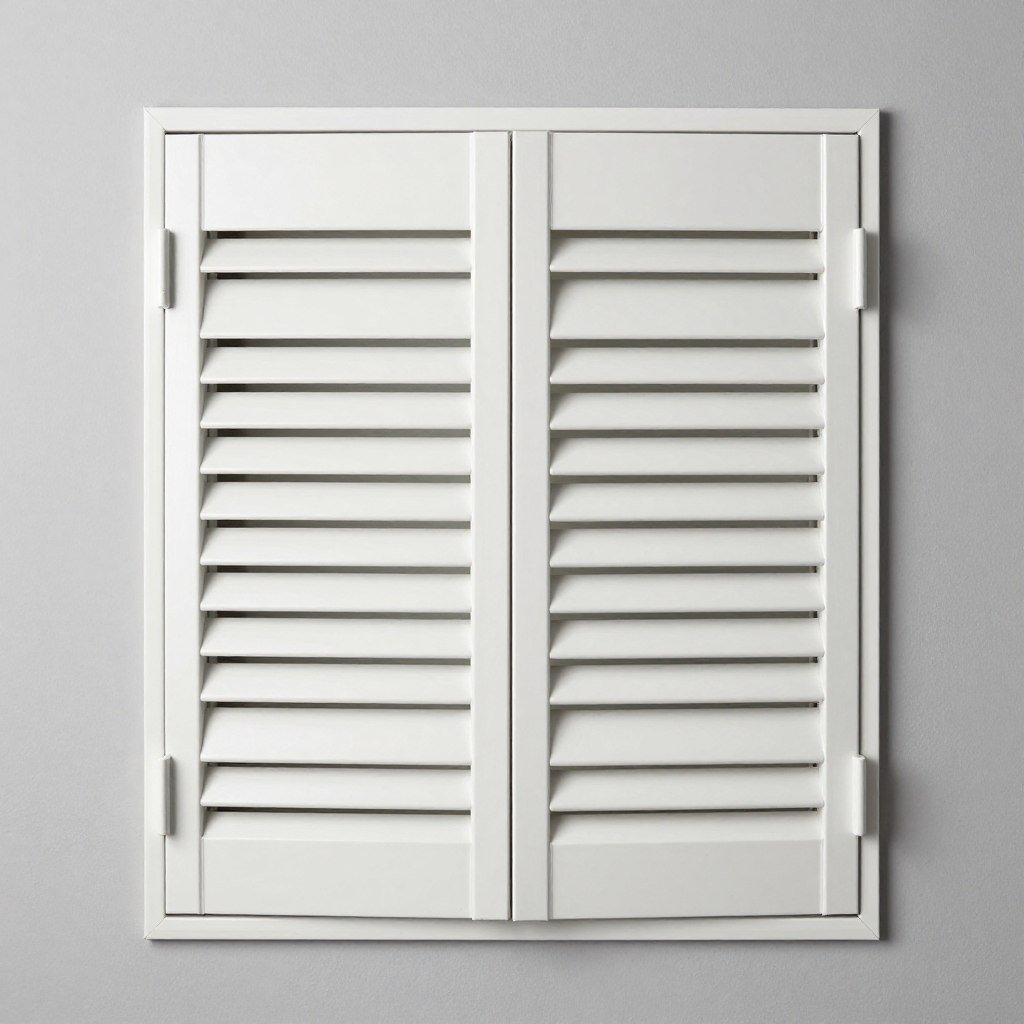
Most budget-friendly shutter option. Easy to clean and maintain. Good choice for rental properties or budget-conscious homeowners.
Louver Size Options
The louver width significantly impacts both function and appearance. Traditional shutters feature 2.5-inch louvers. Plantation shutters use wider 3.5 to 4.5-inch louvers for a more contemporary look.
Wider louvers allow more light when open. They also provide clearer views between slats. Larger louvers suit bigger windows and sliding doors better aesthetically.
Configuration for Sliding Doors
Shutters for sliding doors typically install as bi-fold or multi-fold panels. The panels fold back against the wall when you want to open the door. This keeps them completely out of the way.
Some installations use a bypass track system. Shutter panels slide like the door itself. This works well when wall space for folding is limited.
Light and Privacy Control
Shutters offer exceptional control over light and privacy. Tilt the louvers to any angle for precise light filtering. Close them completely for total privacy and darkness.
The solid construction blocks more light than fabric treatments. When closed and tilted, quality shutters can darken a room almost completely. Yet they allow airflow even when closed for privacy.
Benefits and Limitations
Pros
- Permanent solution that lasts for decades
- Increases home resale value
- Exceptional light and privacy control
- Easy to clean and maintain
- Energy-efficient insulation properties
- Timeless design suits any style
- Extremely durable construction
- No cords or chains to tangle
- Won’t fade or deteriorate like fabric
Cons
- Highest upfront cost of all options
- Professional installation required
- Heavier and more complex than other treatments
- Limited color options compared to fabric
- Takes up space when panels fold open
- Cannot be easily removed or relocated
- May not suit renters or temporary spaces
- Can be damaged if forced or improperly handled
Cost Investment
Plantation shutters represent the highest upfront investment for sliding glass door coverings. Vinyl shutters start around $500 to $700 for standard doors. Composite shutters range from $800 to $1,200.
Premium wood shutters can cost $1,500 to $2,500 or more for large sliding doors. Custom sizing and special finishes increase costs. But shutters often last 20-30 years, making the cost-per-year reasonable.
The investment typically returns 50-70% of its value in increased home resale price. Few other window treatments can make that claim.
Sheer Shades: Soft Light Diffusion
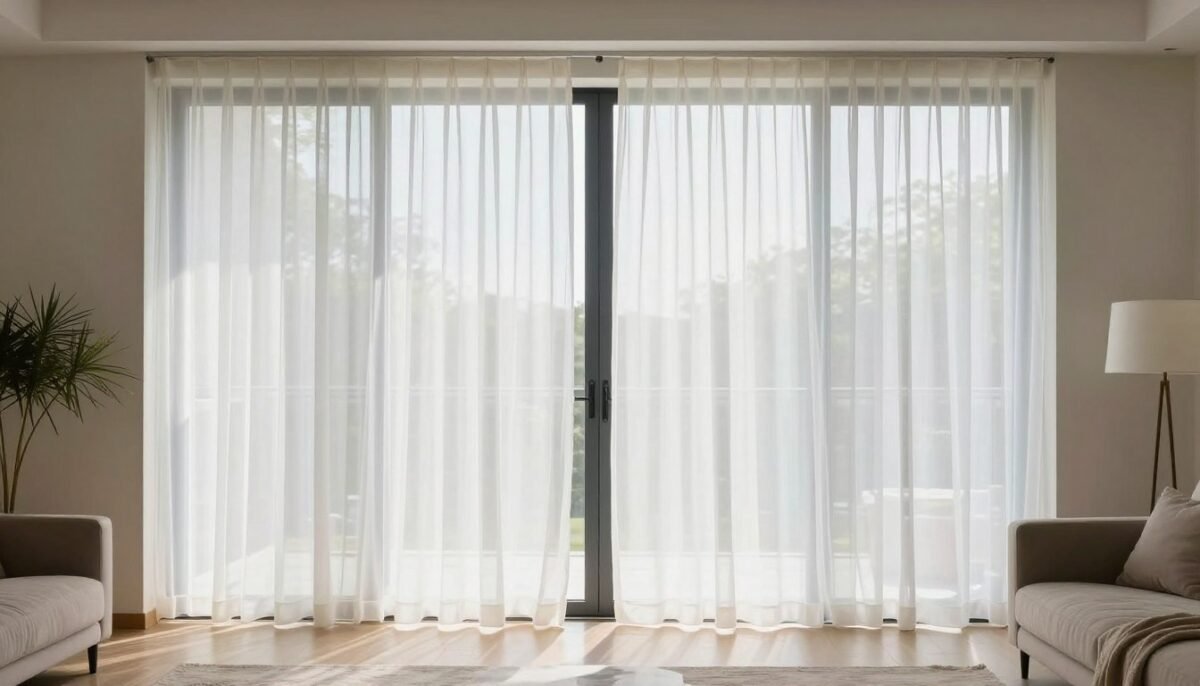
Sheer shades combine the elegance of drapery with the functionality of blinds. They feature soft fabric vanes suspended between sheer fabric layers. This unique design creates beautiful light diffusion.
When the vanes open, light filters through the sheer layers. This maintains privacy while filling your room with soft, natural light. Close the vanes for increased privacy while still allowing gentle illumination.
How Sheer Shades Function
The innovative design uses fabric vanes that tilt open and closed like traditional blinds. But instead of gaps between hard slats, sheer fabric panels fill the spaces. This eliminates harsh light lines and gaps.
Some sheer shades offer dual functionality. Lower them completely for full sheer coverage. Raise them to expose the window entirely. This gives you three levels of light control in one treatment.
Design and Aesthetic Appeal
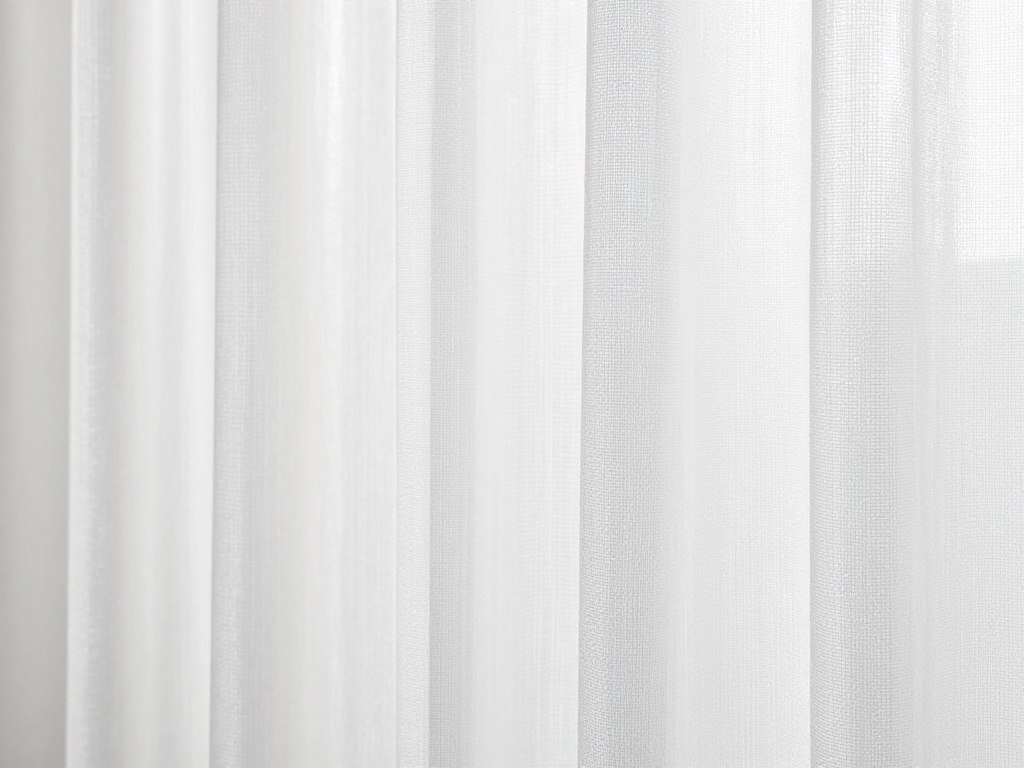
Sheer shades offer a sophisticated, upscale appearance. The soft fabric creates visual texture without heavy appearance. They look equally at home in contemporary or traditional settings.
Available in numerous fabric colors and textures, they complement any decor. White and neutral tones remain most popular for their versatility. Bolder colors can make a design statement.
Privacy and Light Balance
The unique construction provides excellent daytime privacy. People outside see only a soft, luminous surface. Yet natural light fills your room beautifully. At night with interior lights on, consider pairing with drapery for complete privacy.
The sheer layers filter UV rays effectively. This protects your furniture and flooring from sun damage while maintaining bright, cheerful rooms.
Light Control Insight: Sheer shades excel at reducing glare on screens and televisions while maintaining room brightness. The diffused light they create eliminates harsh shadows and creates even, flattering illumination throughout the day.
Operating Options
Sheer shades come with various control systems. Continuous loop lift systems provide smooth operation. Cordless lifts create clean lines and enhance safety.
Motorization works especially well with sheer shades. The gentle movement enhances their elegant appearance. Program them to adjust automatically throughout the day for optimal light.
Strengths and Weaknesses
Pros
- Beautiful light diffusion without harsh lines
- Maintains daytime privacy with views
- Elegant, sophisticated appearance
- UV protection for furnishings
- Reduces glare on screens
- Available in many colors and textures
- Quiet, smooth operation
- Works in any design style
Cons
- Higher cost than basic roller shades
- Limited room darkening capability
- Nighttime privacy may require additional treatment
- Fabric can collect dust
- More delicate than hard blinds
- Professional cleaning recommended
- Not suitable for high-humidity areas
Price Range
Sheer shades fall in the premium price category. Expect to invest $350 to $600 for standard sliding door sizes. Larger doors or motorization can push costs to $800 or more.
The elegant appearance and superior light quality justify the investment for many homeowners. They create a high-end look that elevates entire rooms.
Sliding Glass Door Covering Comparison
Choosing the right sliding glass door covering means weighing multiple factors. This comparison helps you understand how each option performs across key criteria. Consider your priorities for privacy, light control, energy efficiency, and budget.
| Treatment Type | Privacy Level | Light Control | Energy Efficiency | Price Range | Maintenance | Lifespan |
| Vertical Blinds | Good | Excellent | Fair | $100-600 | Low | 10-15 years |
| Vertical Cellular Shades | Excellent | Excellent | Excellent | $250-800 | Medium | 10-20 years |
| Sliding Panel Tracks | Excellent | Good | Good | $300-1200 | Medium | 15-20 years |
| Drapery/Curtains | Excellent | Good | Good-Excellent | $150-1000+ | High | 15-25 years |
| Roller Shades | Good-Excellent | Good | Fair-Good | $150-400 | Low | 8-12 years |
| Roman Shades | Excellent | Good | Good | $200-800 | Medium-High | 10-15 years |
| Plantation Shutters | Excellent | Excellent | Excellent | $500-2500+ | Low | 20-30+ years |
| Sheer Shades | Good (day) | Good | Fair | $350-800 | Medium | 10-15 years |
Key Selection Factors
Privacy Needs
Consider when you need privacy most. Some options work better during daytime hours. Others provide complete privacy day and night.
- Cellular shades offer 24-hour privacy
- Sheer shades excel during daytime
- Shutters provide adjustable privacy
- Vertical blinds have small gaps between slats
Light Management
Different rooms require different light control approaches. Think about how you use each space throughout the day.
- Bedrooms benefit from blackout options
- Living rooms work well with light-filtering
- Media rooms need complete darkness
- Kitchens can use sheer or solar fabrics
Energy Concerns
Insulating window treatments reduce heating and cooling costs. Some options perform significantly better than others.
- Cellular shades provide top insulation
- Shutters create solid thermal barrier
- Lined drapery adds insulation value
- Basic blinds offer minimal insulation
Budget Planning
Balance upfront costs with long-term value. Consider durability and energy savings when evaluating price.
- Roller shades offer best budget value
- Shutters cost most but last longest
- Cellular shades pay back through energy savings
- Custom drapery varies widely in price
Professional Tip: Don’t sacrifice quality for initial cost savings. Cheap window treatments often fail within a few years, requiring replacement. Mid-range to premium options typically deliver better performance and longer life, making them more economical over time.
Installation and Measurement Considerations
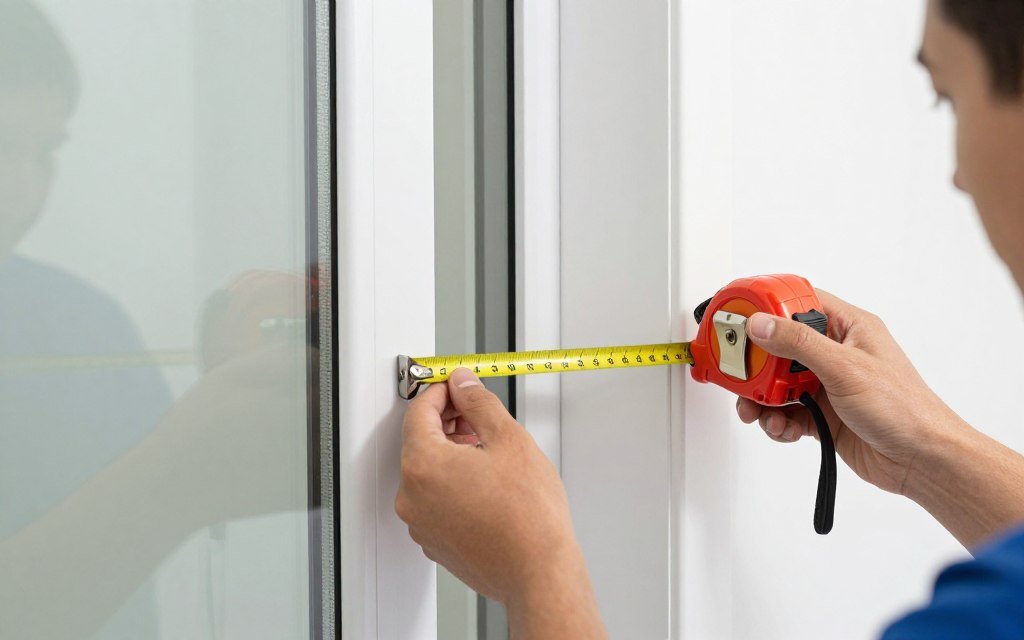
Proper installation ensures your sliding glass door coverings function perfectly. Measurements must be exact. Even small errors can cause operational problems or poor appearance.
Measuring Your Sliding Door
Accurate measurements are critical for custom window treatments. Measure the width at the top, middle, and bottom of your door opening. Use the narrowest measurement to ensure proper fit.
Measure height on both sides and in the center. Again, use the smallest measurement. These precautions account for walls and openings that aren’t perfectly square.
Inside Mount Measurements
Inside mounting places the treatment within the door frame. This creates a clean, built-in look. Measure the exact opening width and height.
Ensure you have adequate depth for your chosen treatment. Cellular shades and shutters need more depth than flat roller shades.
Outside Mount Measurements
Outside mounting extends the treatment beyond the frame. This provides better light blocking and makes doors appear larger. Add 3-4 inches to width on each side.
Extend height measurements at least 3 inches above and below the frame. This ensures complete coverage when the treatment is closed.
DIY vs. Professional Installation
Some window treatments are DIY-friendly. Others require professional expertise. Consider your skill level and the complexity of the product.
Good DIY Options
- Basic roller shades with simple brackets
- Grommet curtains on decorative rods
- Simple vertical blinds with clear instructions
- Tension-mounted temporary solutions
- Magnetic window film applications
Professional Installation Recommended
- Plantation shutters requiring precise fitting
- Motorized treatments with electrical work
- Heavy or oversized window treatments
- Custom drapery with complex hardware
- Panel track systems with multiple channels
- Treatments requiring wall reinforcement
Common Installation Mistakes to Avoid
Even experienced DIYers make mistakes. Being aware of common errors helps you avoid costly problems.
Critical Mistakes: Measuring only once without verification, failing to account for obstructions like door handles or locks, not checking if walls can support heavy treatments, ignoring manufacturer’s minimum clearance requirements, and installing treatments that interfere with door operation.
Tools and Hardware Needed
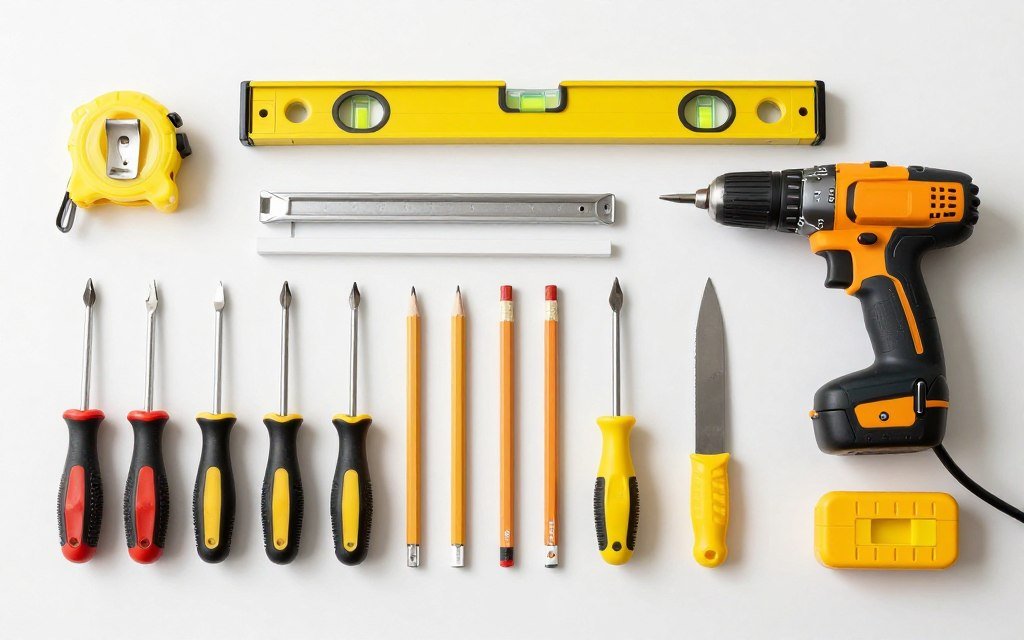
Having the right tools makes installation easier and more successful. Most basic installations require standard household tools.
- Tape measure (metal, at least 25 feet long)
- Level to ensure straight installation
- Drill with appropriate bits for your wall type
- Screwdriver set (both Phillips and flathead)
- Pencil for marking mounting positions
- Stud finder for locating wall supports
- Step ladder for safe overhead work
- Safety glasses for drilling protection
Maintenance and Care Tips
Proper maintenance extends the life of your sliding glass door coverings. Different materials require specific care approaches. Regular attention prevents damage and keeps treatments looking new.
Routine Cleaning by Material Type
Fabric Treatments
Fabric shades, curtains, and drapery need gentle care. Vacuum regularly using an upholstery attachment to remove dust.
- Vacuum monthly with soft brush attachment
- Spot clean stains immediately with mild detergent
- Professional cleaning every 1-2 years
- Avoid harsh chemicals that damage fabric
Hard Blinds and Shutters
Wood, vinyl, and aluminum materials tolerate more aggressive cleaning. They’re among the easiest window treatments to maintain.
- Dust weekly with microfiber cloth or duster
- Wipe with damp cloth for deeper cleaning
- Use mild soap for stubborn dirt
- Dry thoroughly to prevent water spots
Cellular and Honeycomb
The cell structure traps dust inside. Special care prevents damage to the delicate honeycomb design.
- Use compressed air to blow out dust
- Vacuum gently with lowest suction setting
- Never use water on cellular fabrics
- Professional ultrasonic cleaning for deep needs
Sheer and Solar Fabrics
Delicate materials require the gentlest approach. Rough handling can damage the fine weave.
- Dust regularly with soft, dry cloth
- Never scrub or rub aggressively
- Blot liquid spills immediately
- Professional cleaning recommended for stains
Seasonal Maintenance Tasks
Some maintenance tasks should happen seasonally. This prevents buildup and catches small problems before they become major issues.
- Spring: Deep clean all treatments as weather warms, inspect for winter damage, lubricate moving parts on blinds and shutters
- Summer: Check for sun damage or fading, tighten any loose hardware, verify motorized systems function properly
- Fall: Clean before closing windows for winter, inspect seals and weather-stripping on insulated treatments, test all operating mechanisms
- Winter: Monitor for condensation damage, especially on fabric treatments near cold glass, ensure treatments aren’t frozen to windows
Troubleshooting Common Problems
Why won’t my blinds raise or lower smoothly?
Dirt or debris in the track is the most common cause. Remove the blinds and clean all tracks thoroughly. Lubricate metal tracks with silicone spray. For cord-operated blinds, check for tangled or damaged cords that need replacement.
How do I fix sagging fabric shades?
Sagging often results from loose tension or stretched fabric. Check if the shade is properly secured in its mounting brackets. Tighten any adjustment screws. If fabric has permanently stretched, it may need professional repair or replacement.
What causes water stains on my treatments?
Condensation on cold glass drips onto treatments. Improve air circulation near windows. Consider treatments with moisture-resistant materials for humid areas. Clean water spots immediately with a dry cloth before they set.
How can I prevent my curtains from fading?
UV radiation causes most fading. Choose fabrics with UV-resistant treatments. Add protective window film to glass. Rotate curtain panels periodically so fading occurs evenly. Consider blackout or solar backing to protect decorative fabric.
When to Replace vs. Repair
Sometimes repair costs more than replacement. Knowing when to invest in repairs versus buying new helps you make smart decisions.
Good Candidates for Repair
- High-quality custom treatments under 10 years old
- Plantation shutters with minor hardware issues
- Designer drapery with small tears or loose hems
- Motorized systems needing new batteries or motors
- Vertical blinds with few broken slats
Better to Replace
- Budget treatments over 5 years old
- Severely faded or sun-damaged fabrics
- Broken mechanisms on inexpensive blinds
- Treatments with mold or water damage
- Outdated styles you want to update
Maximizing Energy Efficiency with Window Treatments
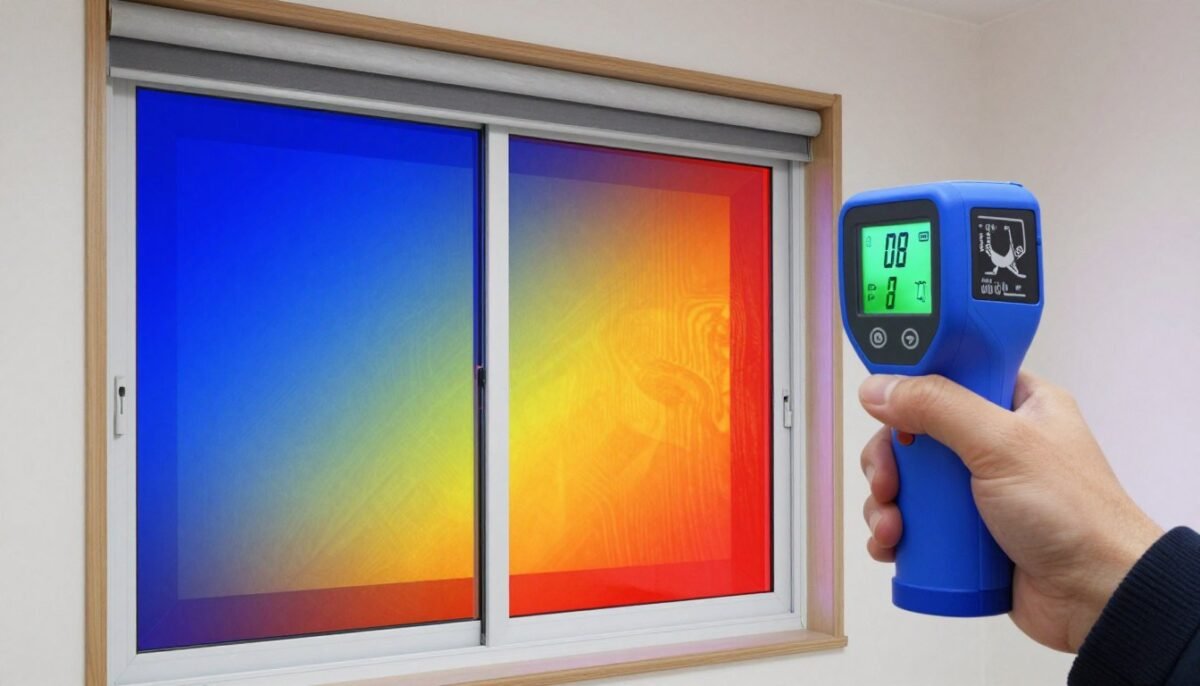
Energy-efficient window treatments can significantly reduce your heating and cooling costs. Sliding glass doors are major sources of heat gain in summer and heat loss in winter. The right coverings create an insulating barrier.
Understanding R-Value and Insulation
R-value measures insulation effectiveness. Higher numbers mean better insulation. Bare glass has an R-value around 1. Adding window treatments can increase this to 4 or higher.
Cellular shades provide the best R-value improvement. Their honeycomb structure traps air in pockets. Double-cell designs offer nearly double the insulation of single-cell options.
Seasonal Energy Strategies
Using your window treatments strategically maximizes energy savings. Different seasons require different approaches for optimal efficiency.
Summer Cooling Strategies
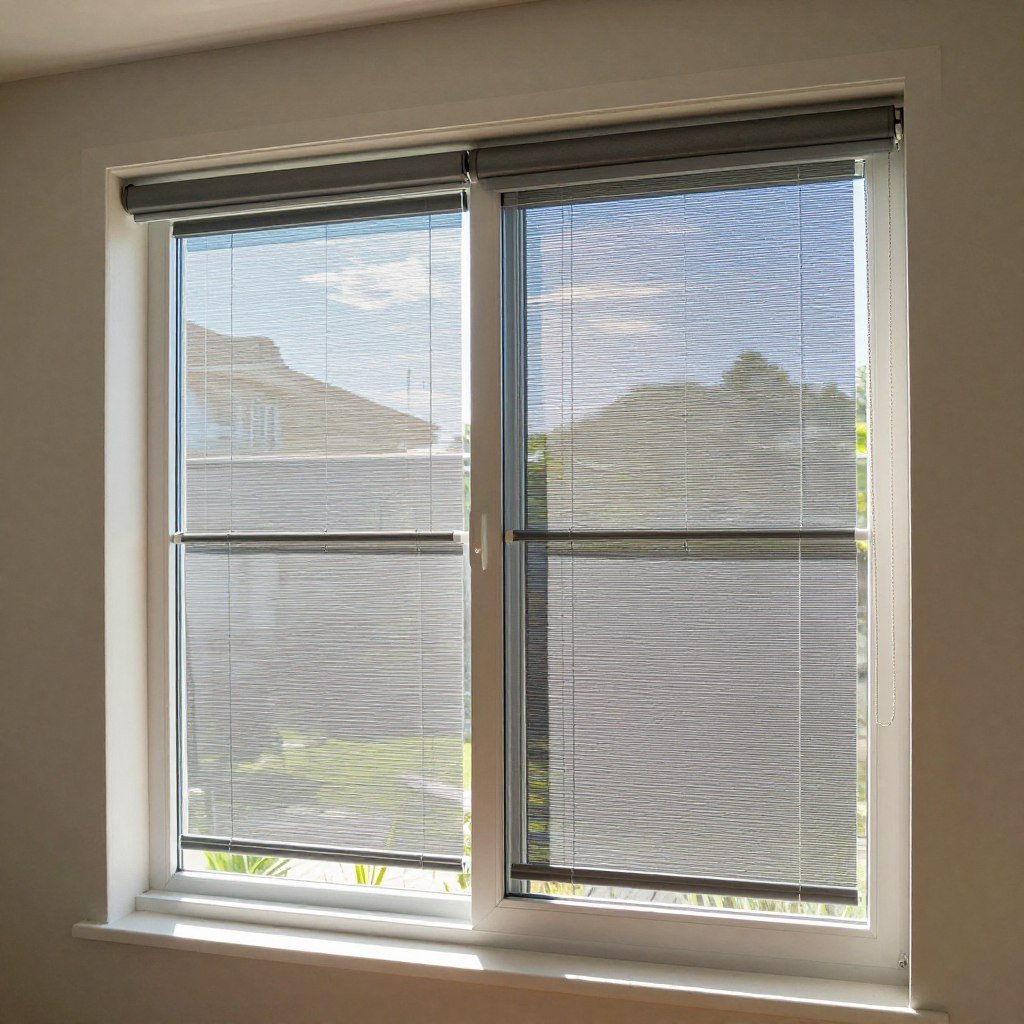
Close treatments during the hottest part of the day to block solar heat gain. Solar screens and reflective blinds work best. Keep them closed on south and west-facing doors where sun is strongest.
Open treatments during cooler evening hours to release trapped heat. Light-colored treatments reflect more heat than dark colors.
Winter Heating Strategies
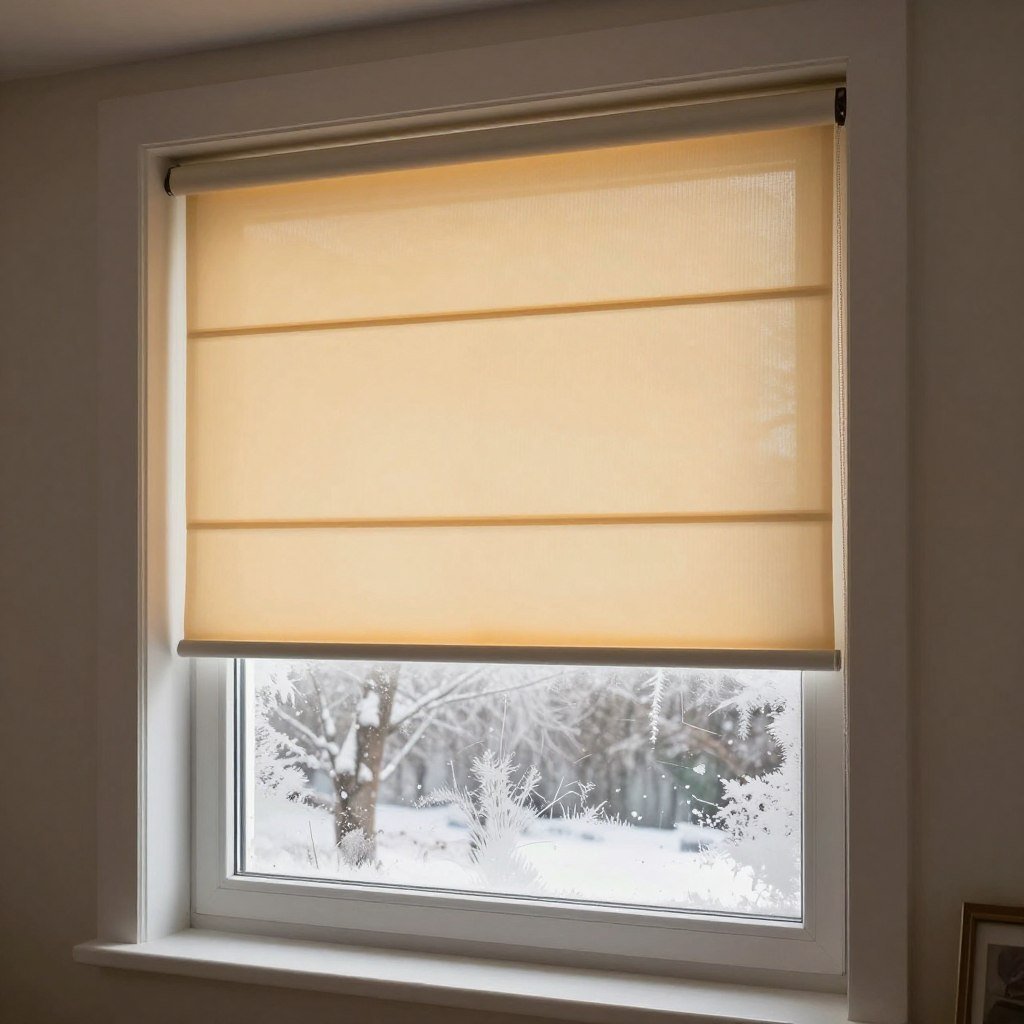
Open insulated treatments during sunny winter days to capture free solar heat. Close them at night to prevent heat loss through cold glass. Cellular shades provide excellent nighttime insulation.
Ensure treatments seal tightly to window frames to prevent drafts. Side tracks on cellular shades eliminate air gaps.
Additional Energy-Saving Features
Beyond basic insulation, certain features enhance energy performance. Look for these when selecting treatments.
- Reflective Backing: Metallic coatings bounce heat away in summer, reflect it back inside during winter
- Side Channels: Eliminate air gaps where treated air escapes around shade edges
- Top-Down Operation: Control light and privacy while maintaining insulation at window bottom
- Thermal Linings: Add insulation layer to drapery without changing decorative appearance
- Automated Controls: Program treatments to adjust automatically for optimal efficiency
Utility Rebates and Incentives
Many utility companies and government programs offer rebates for energy-efficient window treatments. These can offset purchase costs significantly.
Rebate Opportunity: Check with your local utility provider about energy efficiency rebate programs. Many offer $50-150 per window for qualifying cellular shades or other high-performance treatments. Some programs reimburse up to 50% of installation costs for whole-home upgrades meeting efficiency standards.
Look for treatments with Energy Star certification or similar endorsements. These typically qualify for rebate programs. Keep receipts and manufacturer specifications for rebate applications.
Style and Design Coordination Tips
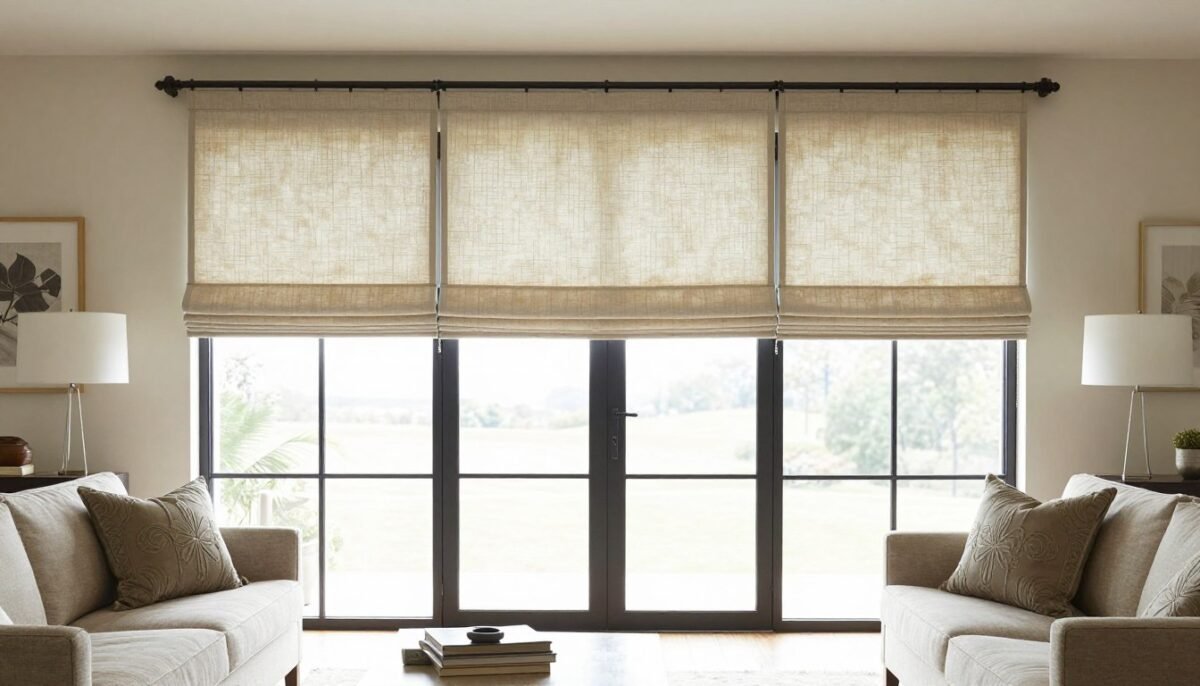
The right window treatments enhance your overall interior design. They should complement your existing decor while adding their own beauty. Thoughtful selection creates a polished, cohesive look.
Matching Window Treatments to Home Style
Different architectural styles call for different treatment types. Matching treatments to your home’s character creates harmony.
Contemporary/Modern Homes
Clean lines and minimalist aesthetics work best. Avoid fussy details or ornate hardware.
- Roller shades in solid colors
- Sliding panel tracks with geometric fabrics
- Ripple fold drapery in neutral tones
- Flat roman shades without embellishments
Traditional Homes
Classic details and rich fabrics suit traditional architecture. Don’t be afraid of pattern and texture.
- Plantation shutters in wood or painted finish
- Pinch pleat drapery with decorative hardware
- Hobbled roman shades in classic fabrics
- Fabric vertical blinds in traditional colors
Transitional Spaces
Bridge traditional and modern elements. Choose treatments that work with both styles.
- Cellular shades in neutral colors
- Simple grommet drapery panels
- Wood blinds with clean lines
- Sheer shades for soft contemporary look
Coastal/Casual Homes
Light, airy treatments enhance the relaxed coastal vibe. Natural materials work wonderfully.
- Sheer curtains in white or soft blue
- Bamboo or woven wood shades
- Light-filtering solar shades
- Casual tab-top panels in natural fabrics
Color Selection Strategies
Color choices significantly impact how treatments integrate with your space. Consider these approaches for selecting the perfect shade.
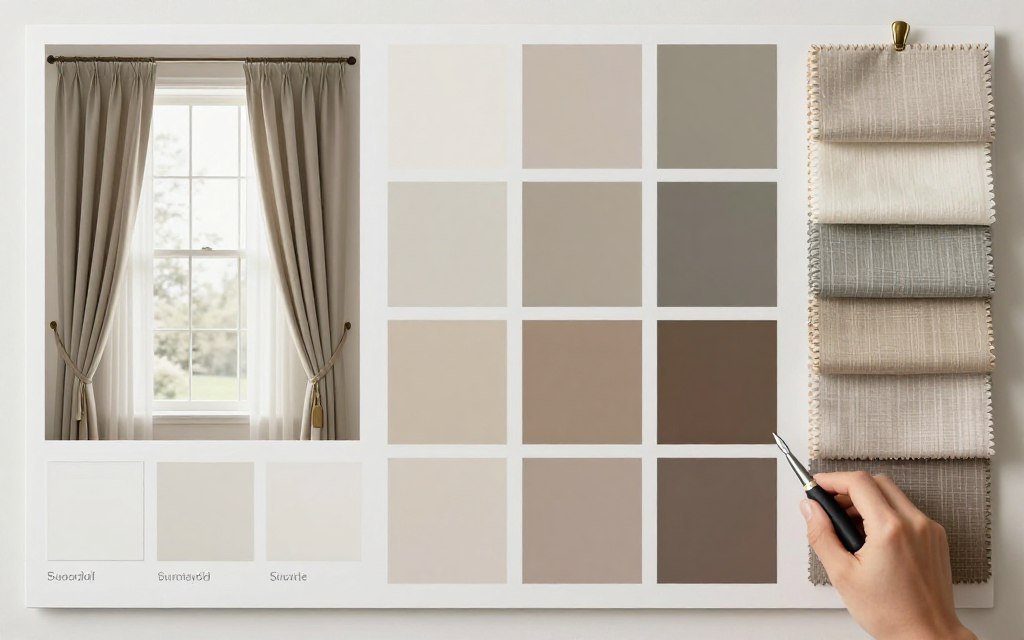
Safe Neutral Choices
- White and off-white work everywhere
- Beige and taupe are warm neutrals
- Gray offers cool, contemporary feel
- Natural wood tones add warmth
- Neutrals let other elements shine
- Easy to change decor around them
Bold Statement Options
- Deep colors create dramatic impact
- Patterns add visual interest
- Jewel tones bring richness
- Bold choices become focal points
- Work best in large rooms
- Coordinate with existing accent colors
Coordinating Colors
- Match or complement wall colors
- Pull colors from existing fabrics
- Coordinate with flooring tones
- Consider furniture colors
- Use undertones for harmony
- Test samples in natural light
Creating Visual Balance
Window treatments affect how a room feels. Large sliding doors can overwhelm smaller spaces. Strategic treatment choices restore balance.
For small rooms, avoid heavy, dark treatments that make spaces feel smaller. Choose light colors and simple styles. Mount treatments high and wide to make ceilings appear taller and doors larger.
In large rooms, substantial treatments add necessary weight. Don’t be afraid of bold patterns or rich colors. Layer treatments for added depth and interest.
Hardware as Design Element
Don’t overlook the impact of rods, tracks, and other hardware. These elements contribute to overall style. They can be subtle or make bold statements.
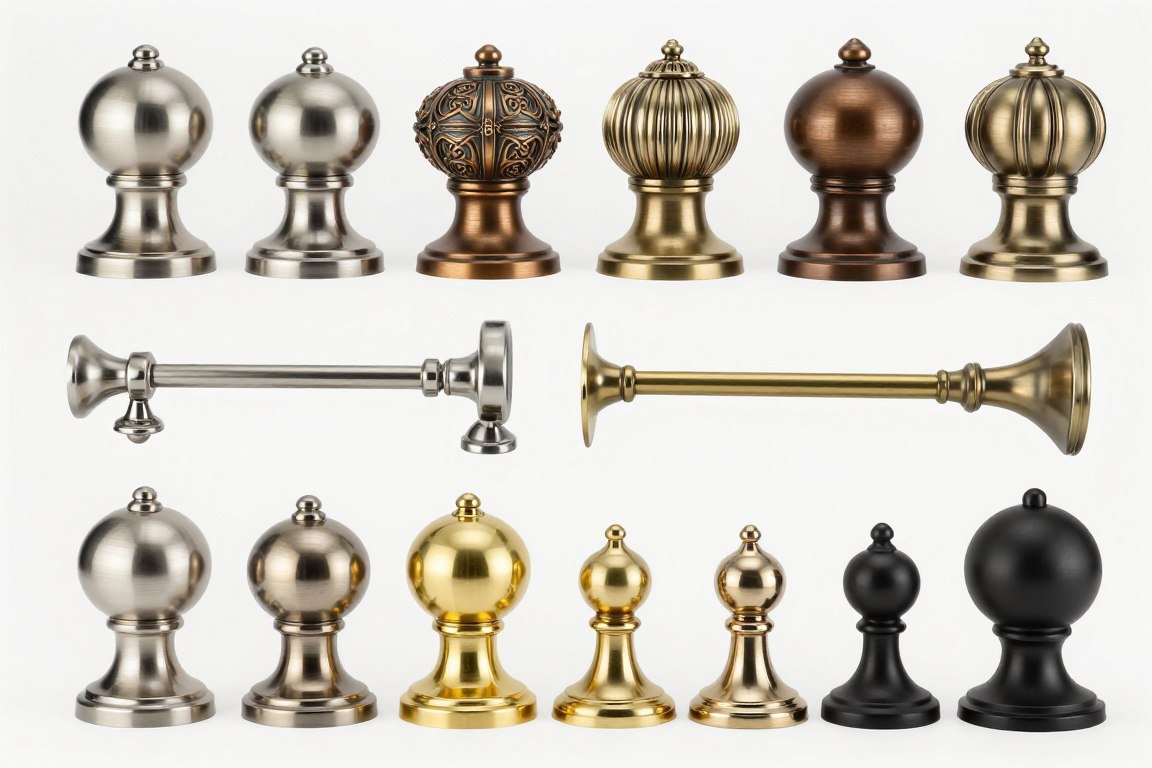
Match hardware finish to other room metals for cohesion. Brushed nickel coordinates with modern fixtures. Oil-rubbed bronze suits traditional spaces. Matte black makes a contemporary statement.
Making Your Final Decision
Choosing sliding glass door coverings requires balancing multiple factors. There’s no single perfect solution for everyone. Your ideal choice depends on your specific needs and priorities.
Best Options by Primary Need
If you have one overriding priority, these recommendations point you toward the best solutions.
Best for Energy Efficiency
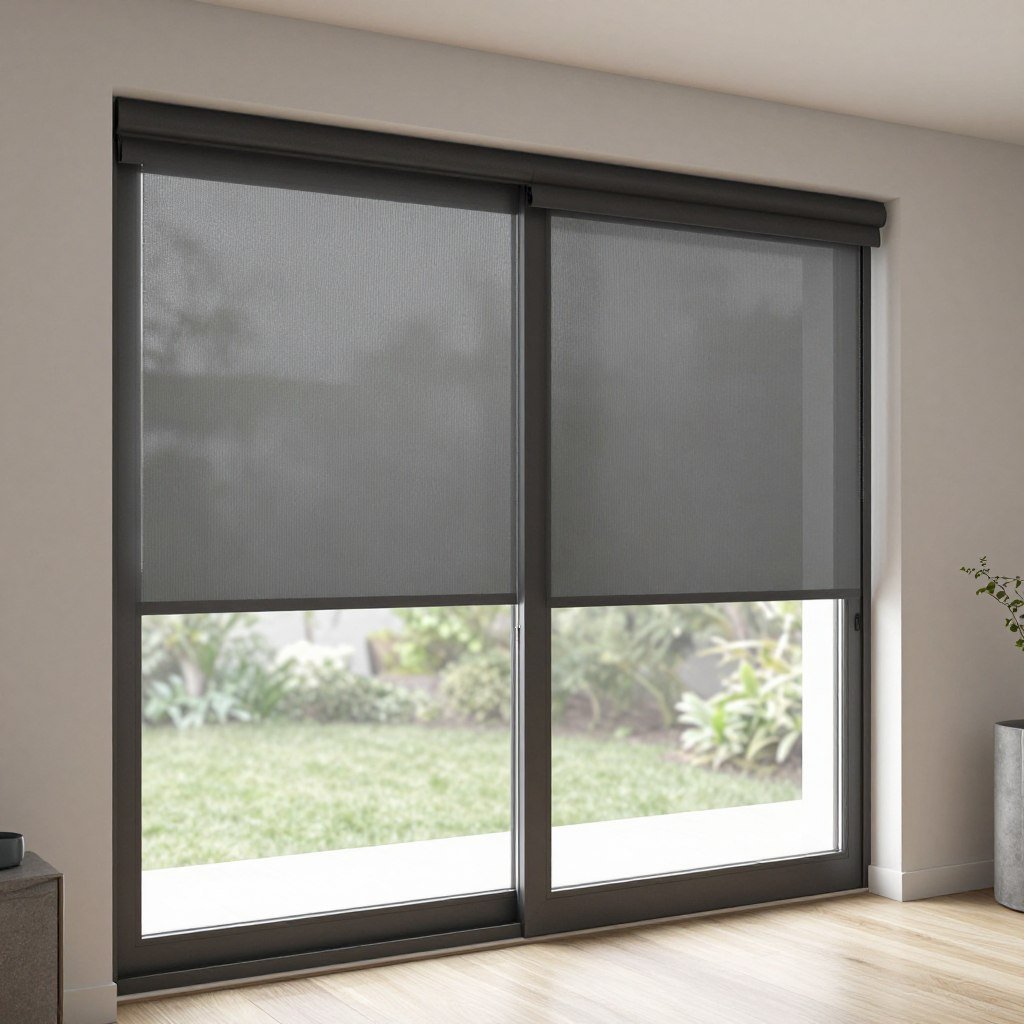
Winner: Double-Cell Cellular Shades
The honeycomb construction provides superior insulation. They offer the best R-value improvement and can cut energy costs by 20% or more.
Runner-up: Plantation Shutters
Best for Budget-Conscious
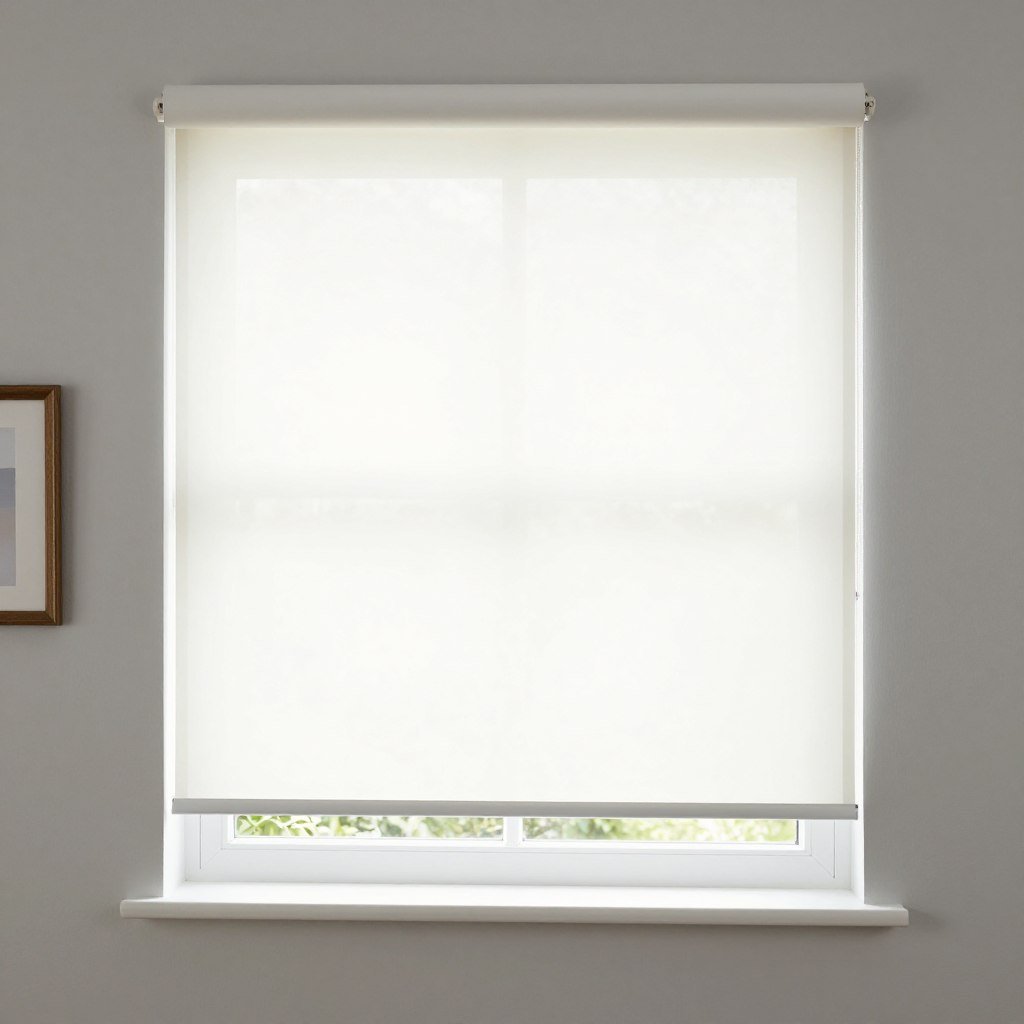
Winner: Roller Shades
Roller shades deliver excellent value. They’re affordable, functional, and available in many styles. Good quality options start under $200.
Runner-up: Vertical Blinds
Best for Complete Darkness
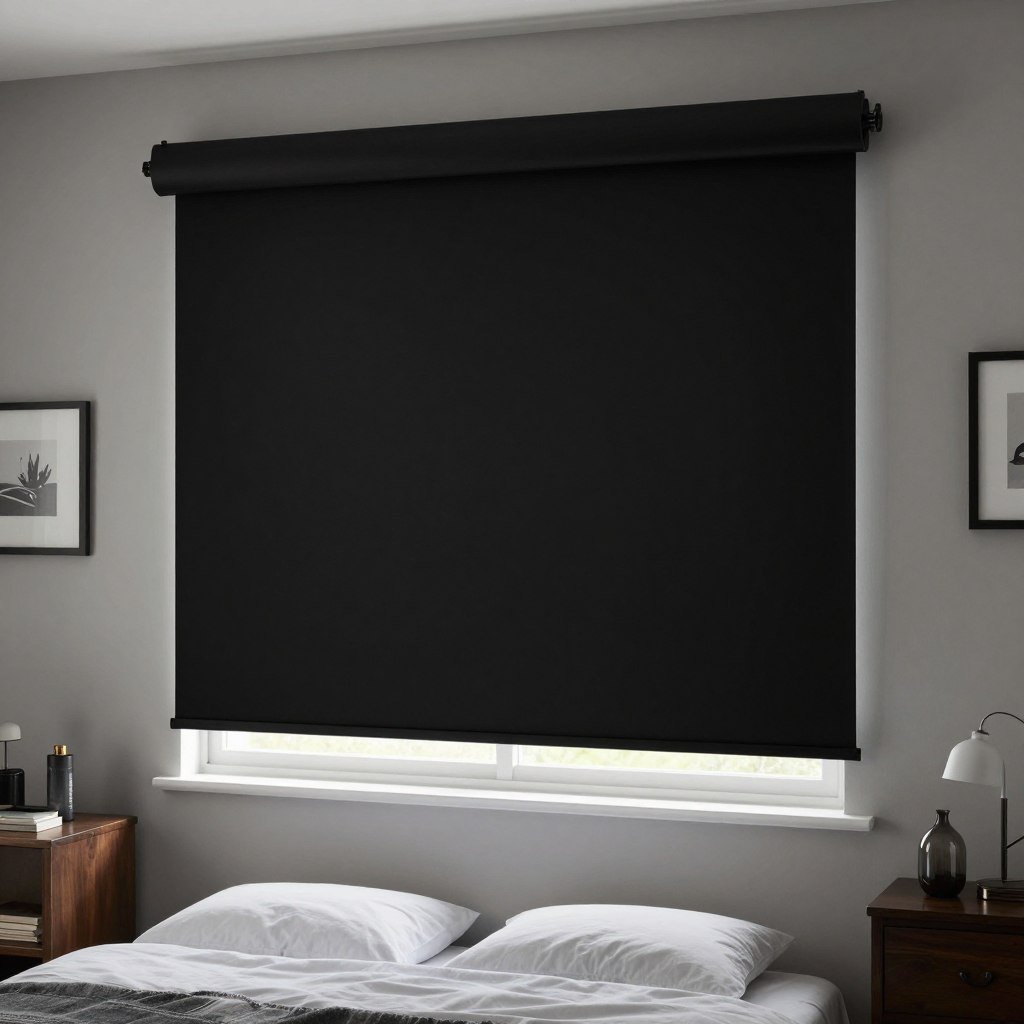
Winner: Blackout Cellular Shades
Cellular construction with blackout fabric blocks virtually all light. Side channels eliminate light gaps for complete darkness.
Runner-up: Blackout Roller Shades
Best for Elegant Style
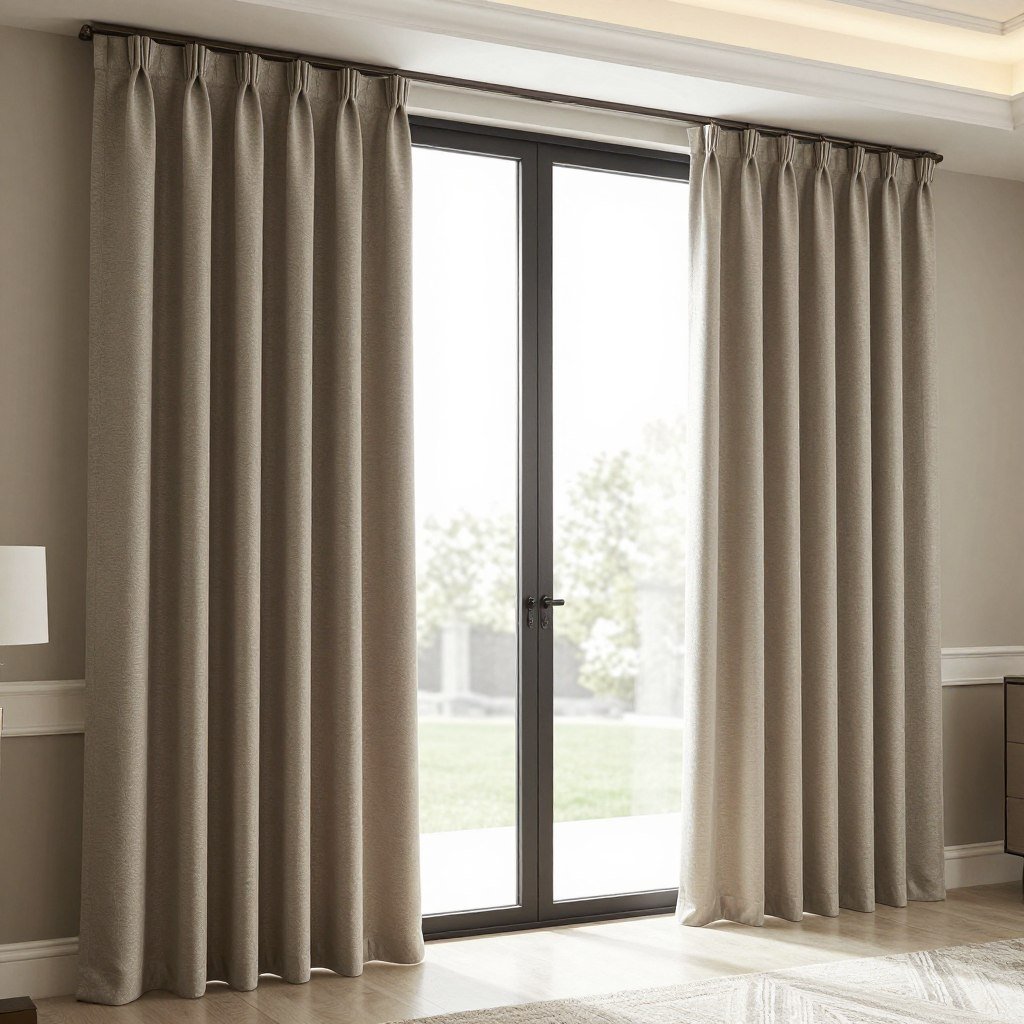
Winner: Custom Drapery
Nothing matches the elegance and customization of tailored drapery. Choose from unlimited fabrics and styles to create your perfect look.
Runner-up: Sheer Shades
Best for Modern Homes
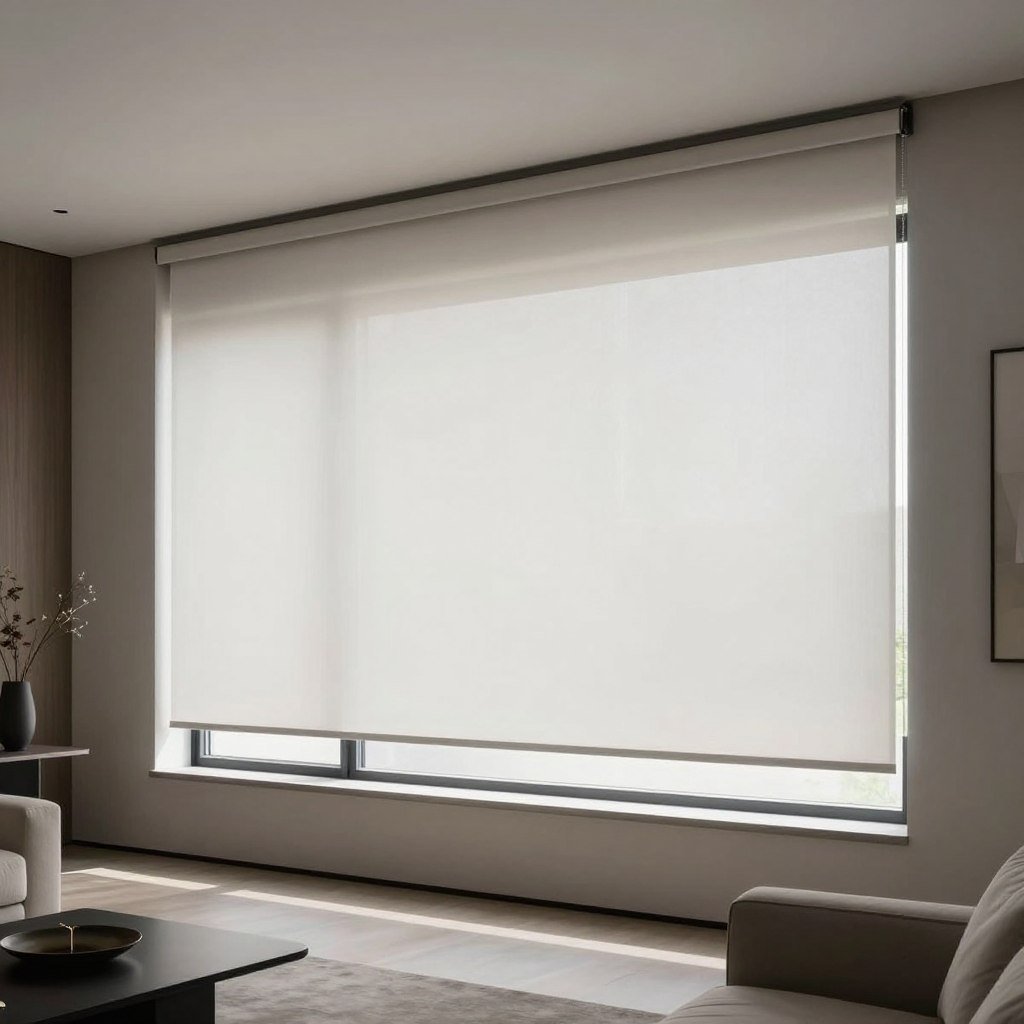
Winner: Sliding Panel Tracks
Large, clean panels create a distinctly modern look. They complement contemporary architecture beautifully while providing excellent functionality.
Runner-up: Flat Roman Shades
Best Long-Term Investment
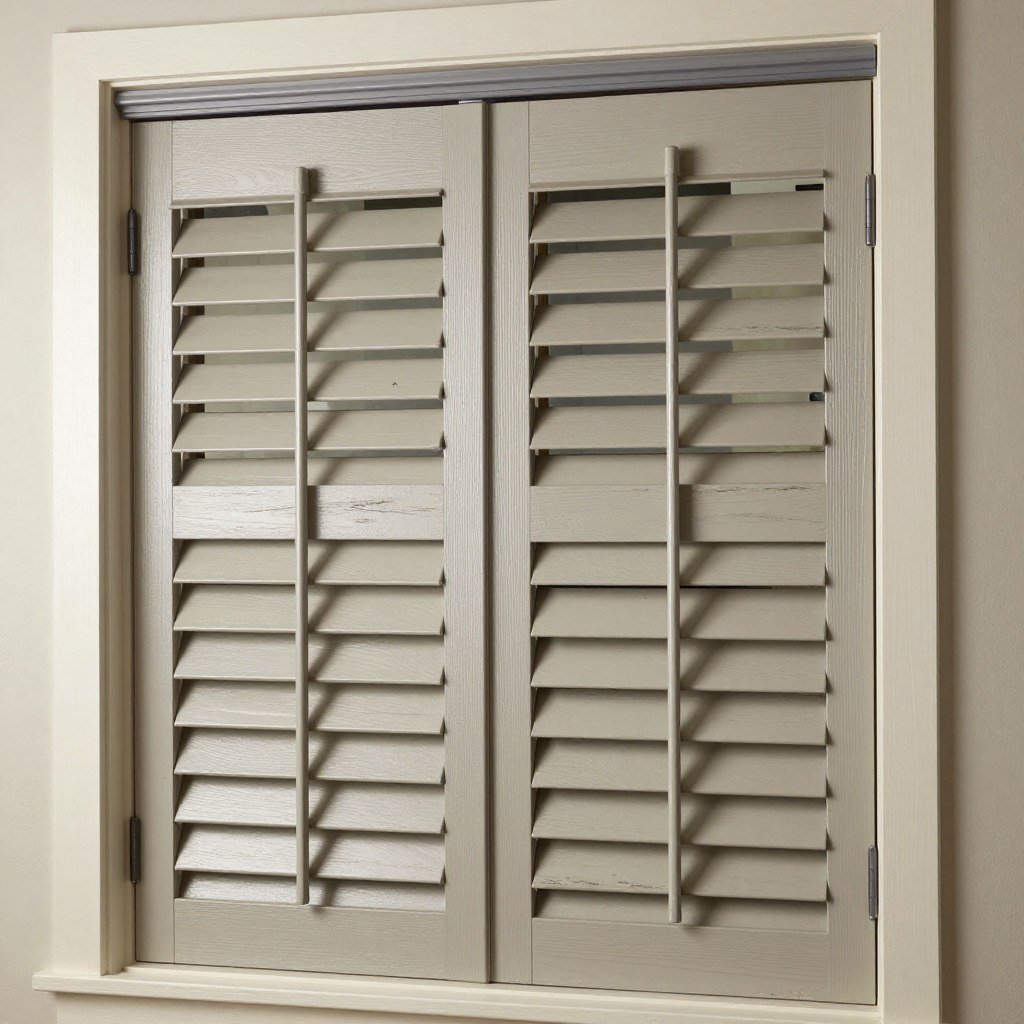
Winner: Plantation Shutters
Quality shutters last 20-30+ years and increase home value. Despite high initial cost, the cost-per-year is remarkably low.
Runner-up: Custom Drapery
Questions to Ask Before Purchasing
Before making your final decision, answer these important questions. Your responses will confirm the right choice for your situation.
- What’s my realistic budget? Include installation costs and potential customization. Remember to factor in long-term value, not just initial price.
- How long will I live here? Permanent solutions make more sense for forever homes. Temporary or budget options work for shorter-term situations.
- What’s most important – privacy, light control, or energy efficiency? Rank your priorities to identify the best solution for your needs.
- How much maintenance am I willing to do? Be honest about your time and willingness to care for treatments properly.
- Does my home style dictate certain choices? Some treatments work better with specific architectural styles.
- Do I have children or pets? Safety and durability become more important with active households.
- Will I need professional help with installation? Factor installation costs into your total budget from the start.
Transform Your Space with the Perfect Solution
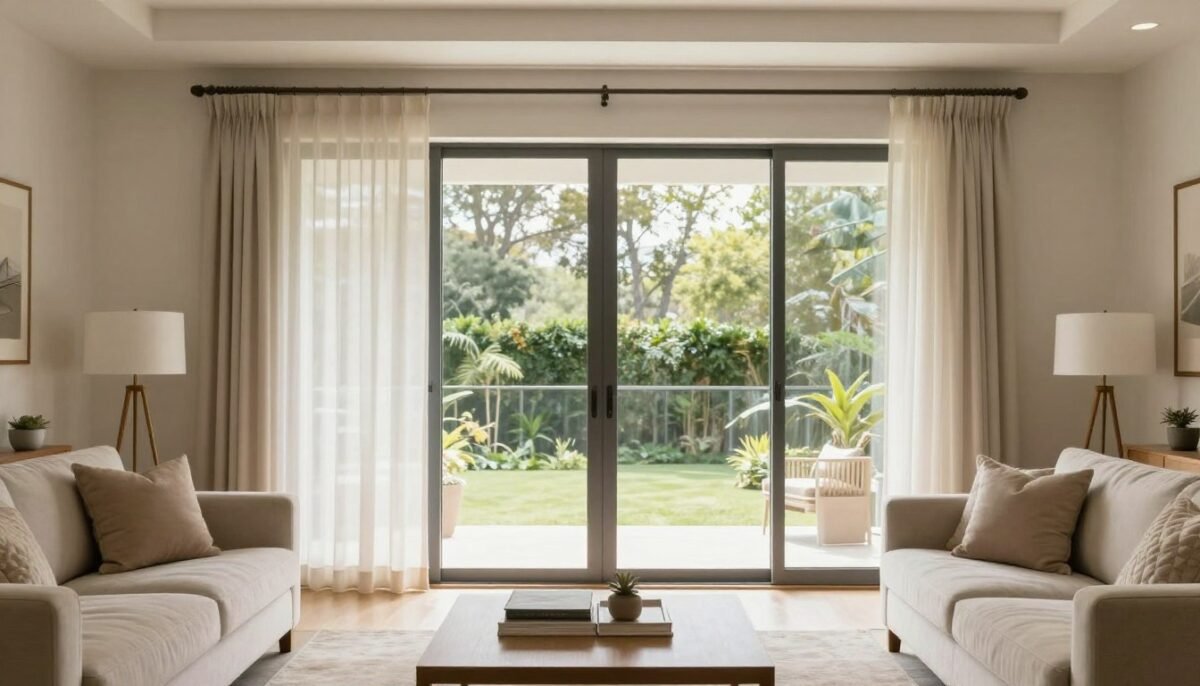
Sliding glass doors deserve window treatments that enhance both beauty and function. The right coverings solve privacy concerns, control light perfectly, and reduce energy costs. They transform your glass doors from potential problems into stunning features.
Every option we’ve explored offers distinct advantages. Vertical blinds provide affordable functionality. Cellular shades deliver unmatched energy efficiency. Drapery adds timeless elegance. Shutters create permanent architectural beauty.
Your perfect solution depends on your unique situation. Consider your budget, style preferences, and functional needs. Don’t rush the decision. Order samples to see fabrics and materials in your actual space. Consult with professionals who can guide you toward the best choice.
The investment in quality sliding glass door coverings pays dividends every day. You’ll enjoy better comfort, lower energy bills, and a more beautiful home. Take time to choose wisely, and you’ll love the results for years to come.