
Every child needs time to burn energy and develop motor skills. A chalk obstacle course for kids transforms any driveway or sidewalk into an exciting playground. These simple activities require nothing more than sidewalk chalk and creativity.
Parents everywhere struggle to find fun ways to keep children active. The beauty of chalk obstacle courses lies in their simplicity. You can create them anywhere, adapt them for any age, and change them every day.
This guide presents twenty creative chalk obstacle course ideas. Each activity builds different abilities while keeping kids engaged outdoors. From balance challenges to jumping games, these courses offer something for every child.
Table of Contents
Classic Hopscotch Obstacle Challenge
The classic hopscotch game serves as a perfect foundation for your chalk obstacle course. This activity combines jumping, balance, and number recognition in one simple course.
Draw ten numbered squares in the traditional hopscotch pattern. Make each square large enough for a child to land comfortably. Kids jump through on one foot, then turn around and come back.
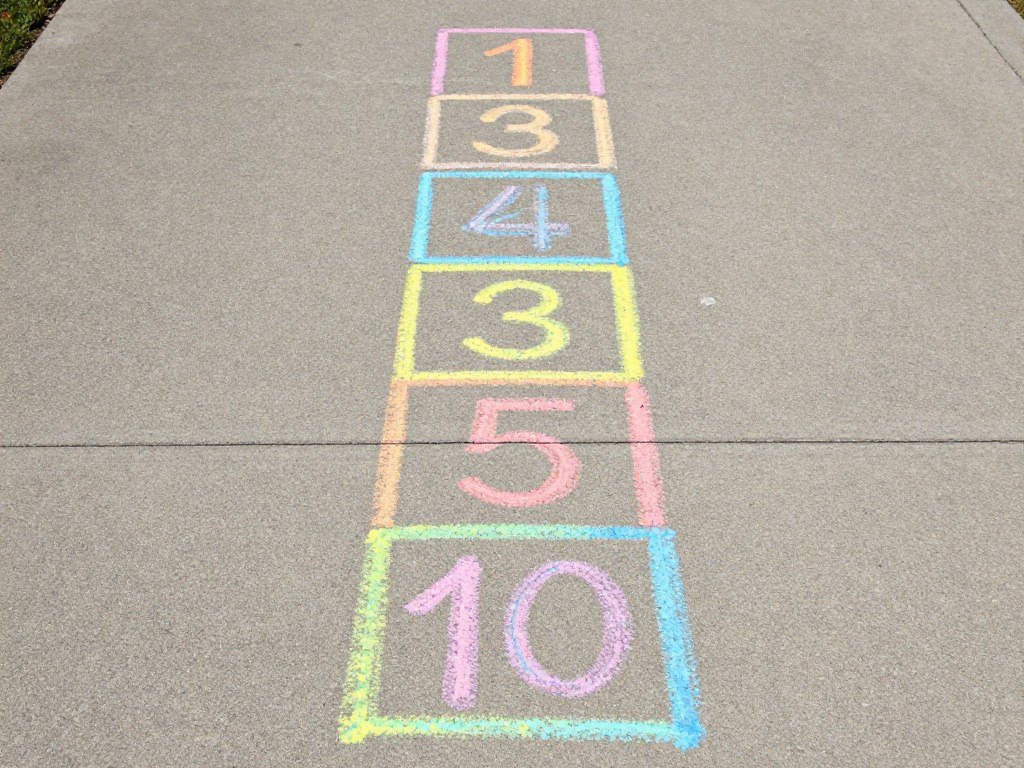
Add variations by including double squares where kids jump with both feet. Change numbers to letters for older children learning spelling. This activity develops coordination while teaching counting skills.
Rainbow Path Adventure Course
Create a winding rainbow path that challenges kids to follow curved lines. This chalk obstacle course develops balance and spatial awareness through colorful pathways.
Draw a curving path using different colors for each section. Make the path about one foot wide. Children must walk along the colored line without stepping off.
What You Need
- Multiple chalk colors
- Large flat surface
- Space for curves
- Clear boundaries
Skill Benefits
- Balance improvement
- Focus development
- Color recognition
- Gross motor skills
Increase difficulty by narrowing the path or adding zigzag sections. Kids can walk forwards, backwards, or sideways for extra challenge. This simple activity keeps children engaged for extended play time.
Animal Walk Stations
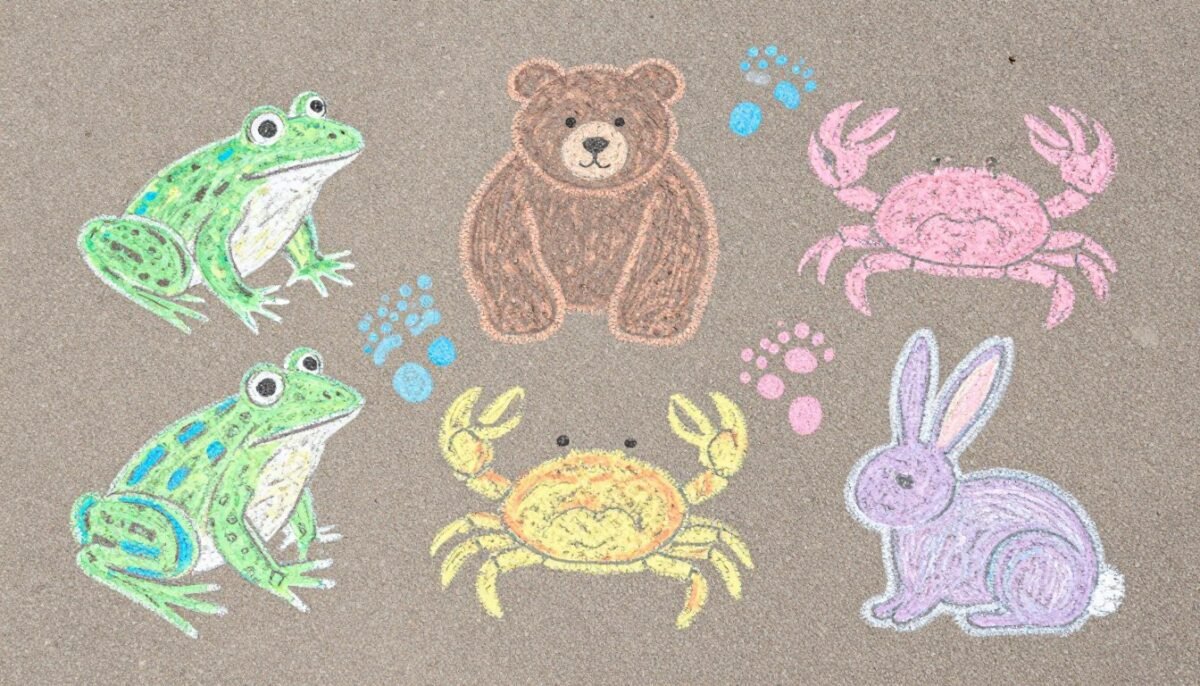
Animal walk stations turn movement into imaginative play. Draw different animal pictures along a path. Kids must move like each animal when they reach that station.
Include frogs for jumping, bears for crawling, crabs for sideways walking, and birds for hopping. Draw each animal clearly with its name underneath. Space stations about ten feet apart to allow full movement.
This obstacle course builds strength and creativity simultaneously. Children learn different movement patterns while having fun with pretend play. The activity works well for mixed age groups since each child moves at their own ability level.
Frog Jumps
Squat low and leap forward with both feet together. Great for building leg strength and coordination.
- Low squat position
- Arms between legs
- Jump and land together
Bear Crawl
Walk on hands and feet with bottom up. Strengthens core muscles and shoulder stability.
- Hands and feet down
- Straight arms
- Move opposite limbs
Crab Walk
Sit and lift hips, walking sideways on hands and feet. Builds arm and core strength.
- Belly facing up
- Lift hips high
- Move sideways
Jumping Circles Challenge
Draw circles of varying sizes scattered across your play area. Each circle becomes a landing spot for jumping practice. This chalk obstacle course for kids improves jumping accuracy and distance control.
Space circles at different distances to create easy and challenging jumps. Use colors to indicate difficulty levels. Kids jump from circle to circle without touching the ground outside.
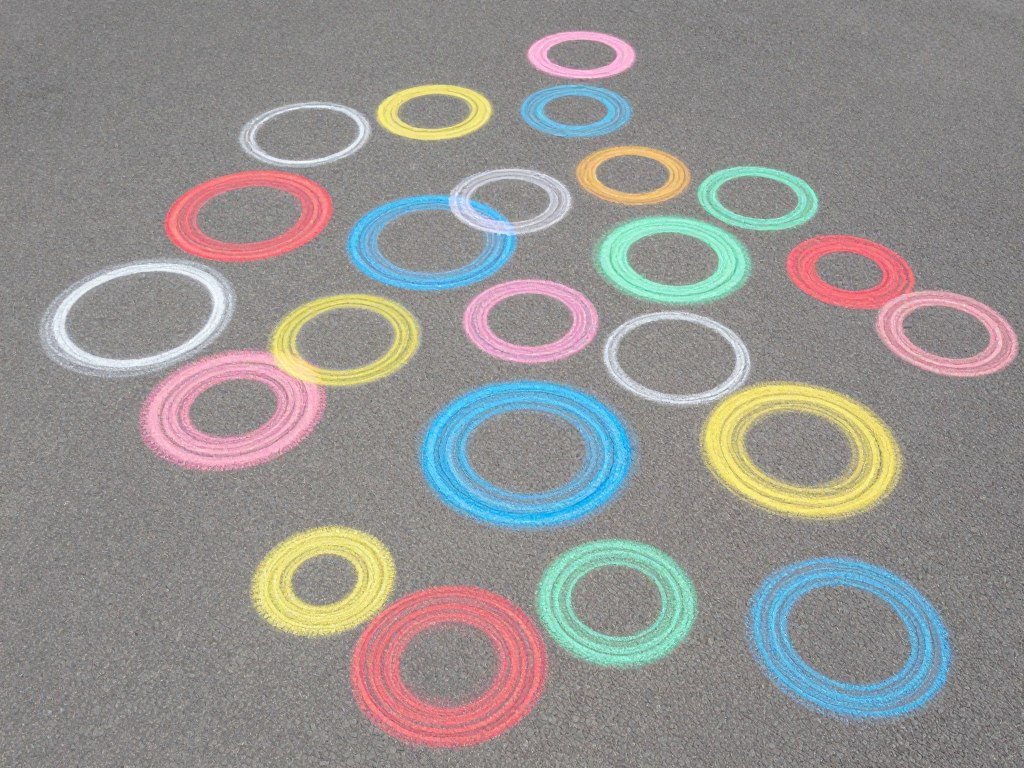
Add number sequences inside circles for a counting game. Children can only land on even numbers or skip count by twos. This combines physical activity with math practice naturally.
Balance Beam Lines
Simple straight lines transform into balance beams when drawn on the ground. Kids walk heel-to-toe along each line, developing stability and concentration.
Draw multiple parallel lines at varying widths. Start with wide lines for beginners and narrow them for advanced balance work. Add curves and angles to increase difficulty.
Challenge kids to walk with arms out, on tiptoes, or while carrying an object. Each variation builds different balance abilities. This activity particularly helps younger children develop coordination.
Alphabet Adventure Course
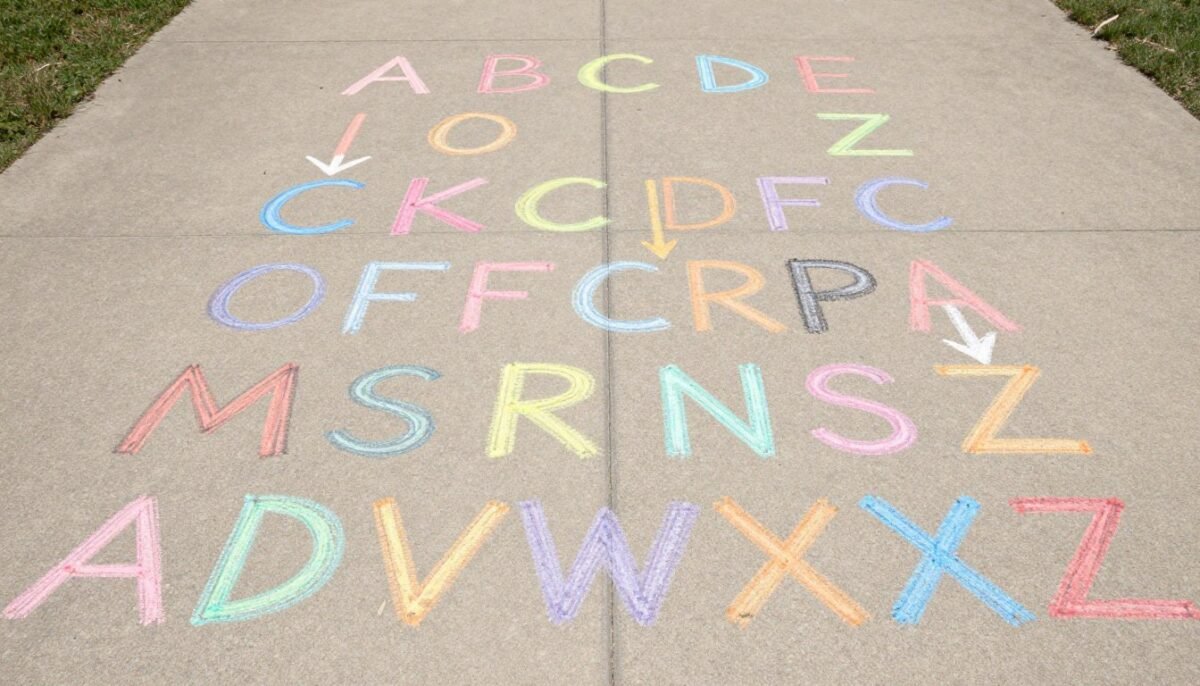
Combine learning with physical activity through an alphabet obstacle course. Draw large letters in sequence along a path. Children jump to each letter while saying its name and sound.
Space letters based on your child’s jumping ability. Add actions for each letter to increase engagement. Kids might hop to H, jump to J, or spin at S.
This course serves multiple purposes for early learners. They practice letter recognition while developing gross motor skills. The activity adapts easily for different learning levels.
Shape Hopping Game
Draw various shapes across your play area and call out which shapes kids should jump to. This obstacle course teaches shape recognition while providing cardiovascular exercise.
Include circles, squares, triangles, stars, and hearts in different colors. Make shapes large enough for safe landing. Call out “Jump to all triangles” or “Hop to blue shapes.”
Shape Ideas
- Circles for spinning
- Squares for stomping
- Triangles for jumping
- Stars for reaching up
- Hearts for hopping
Learning Benefits
- Shape identification
- Color recognition
- Following directions
- Quick thinking
- Cardiovascular fitness
Increase challenge by having kids jump with eyes closed after memorizing positions. Add shapes with multiple sides for older children learning geometry concepts.
Zigzag Speed Course
Create a zigzag pattern with cones or drawn markers. Kids weave through the course as quickly as possible while maintaining control. This obstacle develops agility and direction changes.
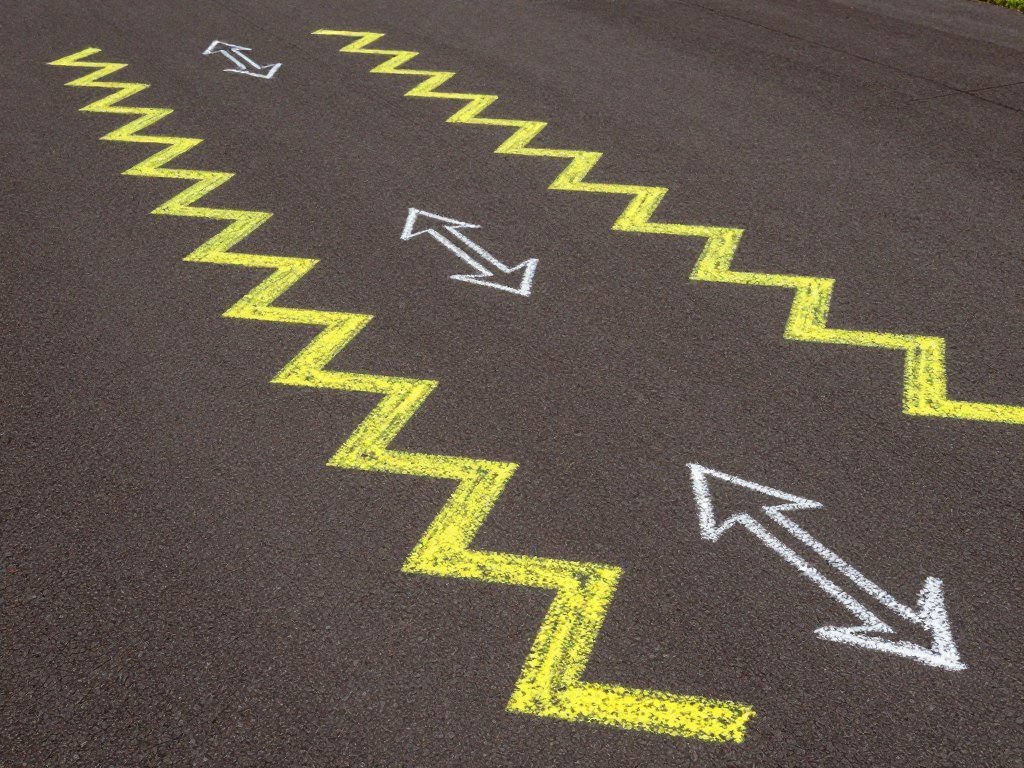
Draw X marks where children should plant their foot before changing direction. Space turns closer together for advanced kids. Time each run to encourage improvement and friendly competition.
This activity mimics sports training drills in a fun format. Kids develop the ability to change direction quickly while maintaining balance. The course works perfectly for burning excess energy.
Number Hop Sequence
Draw numbers one through twenty scattered randomly across your space. Children hop to each number in correct sequence. This chalk obstacle course combines counting practice with physical movement.
Vary the distances between numbers to create longer and shorter jumps. Use different colors for odd and even numbers. Kids must find each number while counting aloud.
Advanced versions include skip counting by twos, fives, or tens. Add simple math problems where kids jump to the answer. This activity makes math practice feel like active play.
Crawl Tunnel Challenge
Draw two parallel lines to create a tunnel path. Kids must crawl through without crossing the lines. This simple activity builds upper body strength and spatial awareness.
Make tunnels different widths for varying difficulty. Add curves and turns to increase challenge. Children can army crawl, bear crawl, or crab walk through different sections.
Time the crawls to add excitement. Kids race against their own previous times rather than competing directly. This builds self-improvement mindset while developing motor skills.
Target Throwing Stations
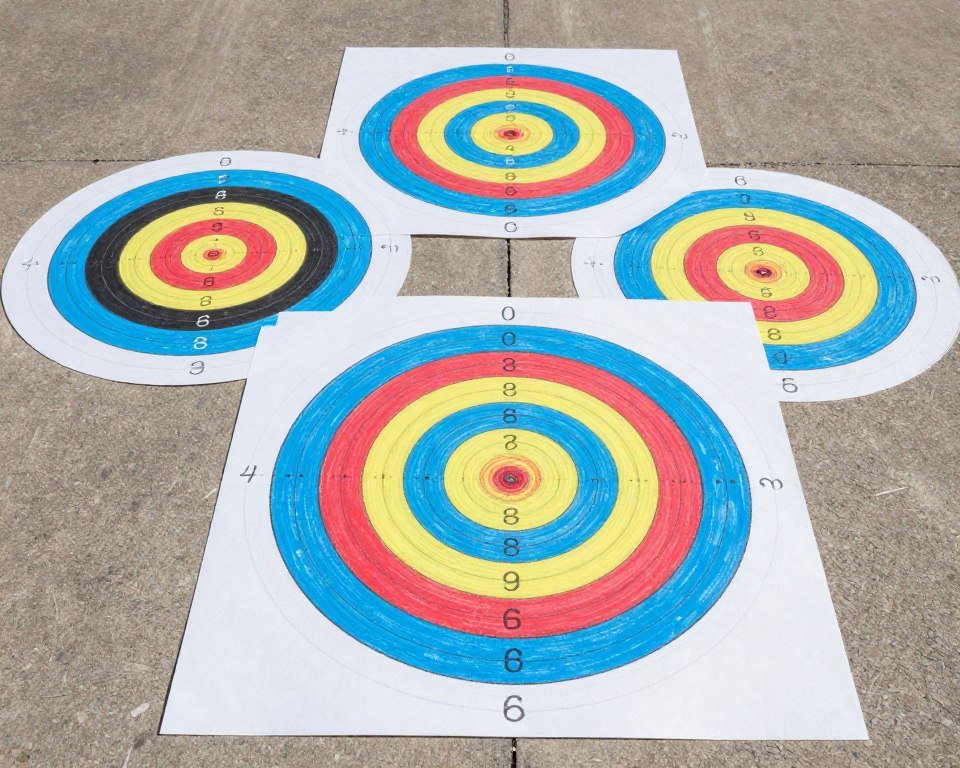
Draw target circles with point values for a throwing challenge. Kids toss beanbags or soft balls to hit the targets. This course develops hand-eye coordination and aiming skills.
Create multiple targets at varying distances. Assign different point values to each target zone. Children add their scores after each round of throws.
Combine throwing with obstacle elements by placing targets at the end of a running or jumping course. Kids must complete physical challenges before taking their shots. This adds cardiovascular activity to coordination practice.
Footprint Follow Path
Trace actual footprints or draw foot shapes along a winding path. Children step only on the footprints as they navigate the course. This chalk obstacle develops foot placement awareness and following patterns.
Alternate left and right foot markings to ensure proper stepping patterns. Space footprints closer for smaller children and wider for older kids. Add jumps by placing two footprints together.
Change directions frequently to challenge balance. Include backwards sections where kids must step carefully. This activity improves coordination while teaching pattern following.
Color Sorting Jump
Draw multiple squares in four different colors. Call out a color and kids jump to any square of that color. This fast-paced activity combines color recognition with quick movement decisions.
Increase speed as children become comfortable with the game. Add rules like “jump to colors that start with B” for older kids. Mix in shape identification for additional learning.
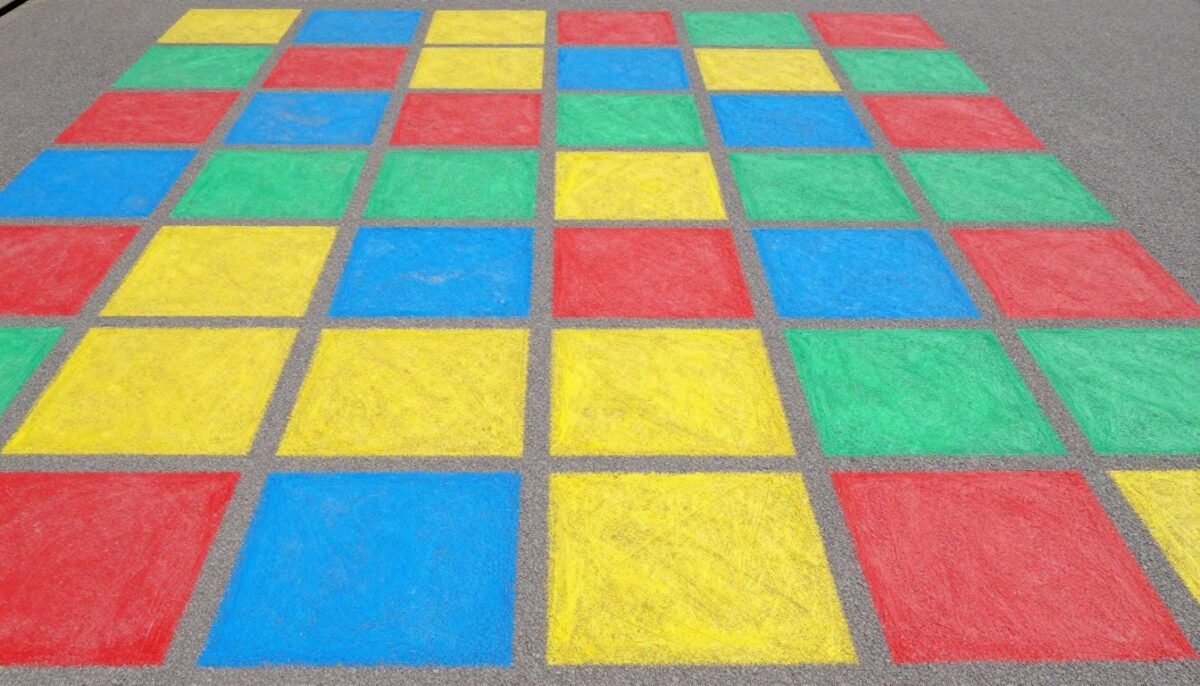
This obstacle course works excellently for groups. Multiple children can play simultaneously, jumping to different squares of the called color. The activity builds listening skills alongside physical abilities.
Obstacle Timing Course
Combine several simple obstacles into one timed course. Kids complete each section as quickly as possible while maintaining proper form. This comprehensive challenge uses multiple motor skills.
Include three to five different obstacles in sequence. Start with hopscotch, add a balance line, include animal walks, and finish with target jumps. Draw clear start and finish lines.
Time each attempt and record improvements. Kids compete against themselves rather than others. This builds confidence and shows measurable progress over time.
Beginner Course
- Short hopscotch section
- Straight balance line
- Three animal stations
- Wide jumping circles
Intermediate Course
- Extended hopscotch pattern
- Curved balance path
- Five animal stations
- Varied jump distances
Advanced Course
- Complex hopscotch grid
- Narrow zigzag lines
- Seven animal movements
- Small target circles
Simon Says Stations
Draw different action stations around your play area. Call out “Simon says go to the jumping station” or similar commands. This combines the classic game with physical obstacle challenges.
Create stations for jumping, spinning, clapping, hopping, and balancing. Label each station clearly with pictures and words. Kids must listen carefully and move to the correct spot.
This activity builds listening skills and impulse control alongside motor development. Children learn to wait for complete instructions before acting. The game naturally teaches following directions.
Maze Navigation
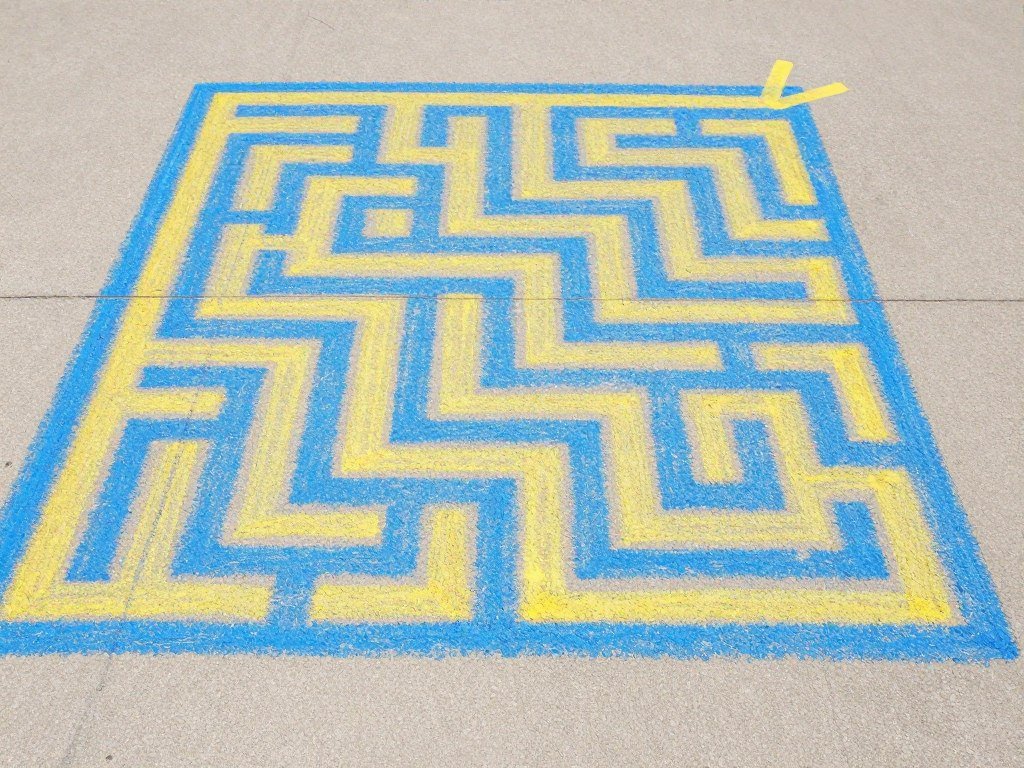
Draw a simple maze pattern that kids walk through to find the exit. This chalk obstacle course develops problem-solving skills while providing physical activity through walking.
Start with basic mazes for young children and increase complexity for older kids. Add challenges within the maze like jumping spots or balance sections. Include dead ends to encourage strategic thinking.
Time maze completion to add excitement. Kids can race against the clock or try to beat their previous times. This activity naturally combines cognitive and physical development.
Rhythm Stepping Stones
Create a path of circles or squares spaced at rhythm intervals. Kids step to a beat, either from music or clapping. This activity develops rhythm sense and coordination together.
Use different colors to indicate different rhythms or step types. Red circles mean stomp, blue means tiptoe, green means hop. Children follow the color code while maintaining rhythm.
Play music with clear beats to guide stepping. Start slow and gradually increase tempo as kids improve. This obstacle course uniquely combines music education with physical movement.
Long Jump Markers
Draw a starting line and multiple distance markers. Kids jump as far as they can from the start line. Mark their distance with their name or initials.
Space markers at increasing distances to show progression. Kids see their improvements over multiple attempts. This builds goal-setting skills and competitive spirit in a healthy way.
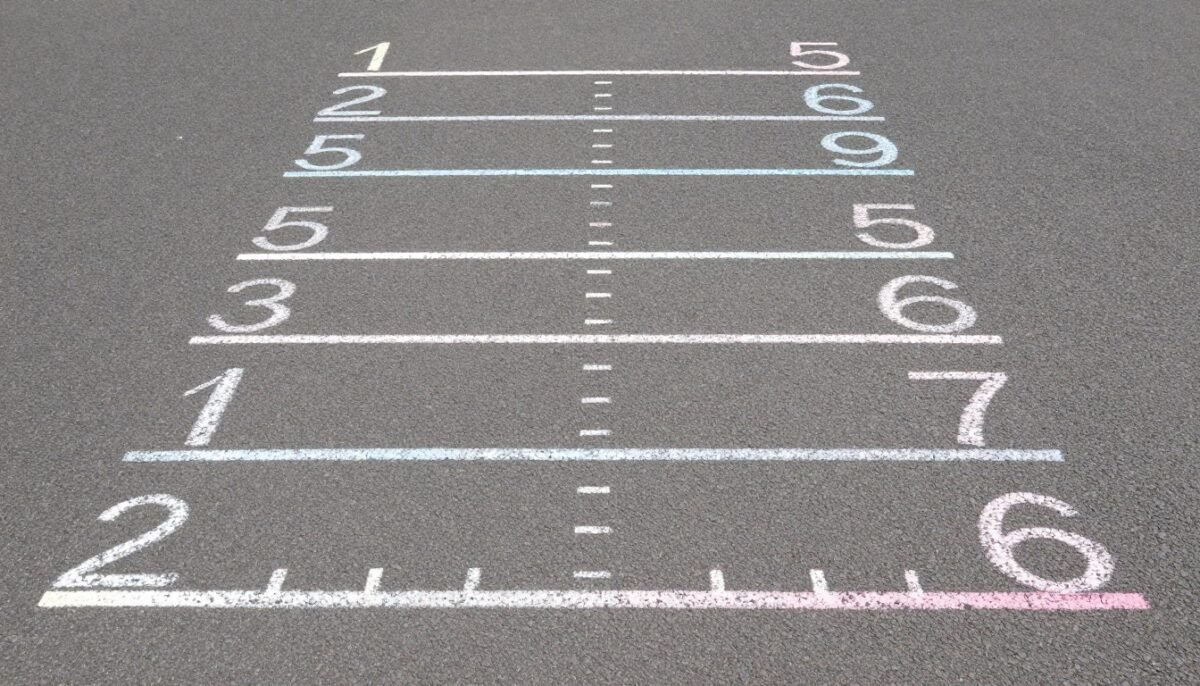
Add a running start section before the jump line. Teach proper jumping form including arm swing and landing techniques. This simple activity introduces basic track and field concepts.
Story Path Adventure
Create a path with different stations representing story elements. Draw scenes from a favorite story or make up a new adventure. Kids move through while acting out the narrative.
Include obstacles that match story events. A river to jump over, a mountain to climb, a forest to tiptoe through. This combines imaginative play with physical challenges.
Let children help create the story and corresponding obstacles. This builds creativity and ownership of the activity. The course becomes different each time based on new stories.
Traffic Light Game
Draw three large circles representing a traffic light. Red means freeze, yellow means slow walk, green means run. Call out colors as kids move through the course.
Combine this with other obstacles for a complete challenge. Kids must follow traffic rules while navigating balance beams or jumping sections. This teaches safety concepts through active play.
Add other traffic signs like stop signs, yield signs, or crosswalks. Children learn real-world symbols while developing impulse control. The activity makes safety education fun and memorable.
Creating Lasting Outdoor Memories
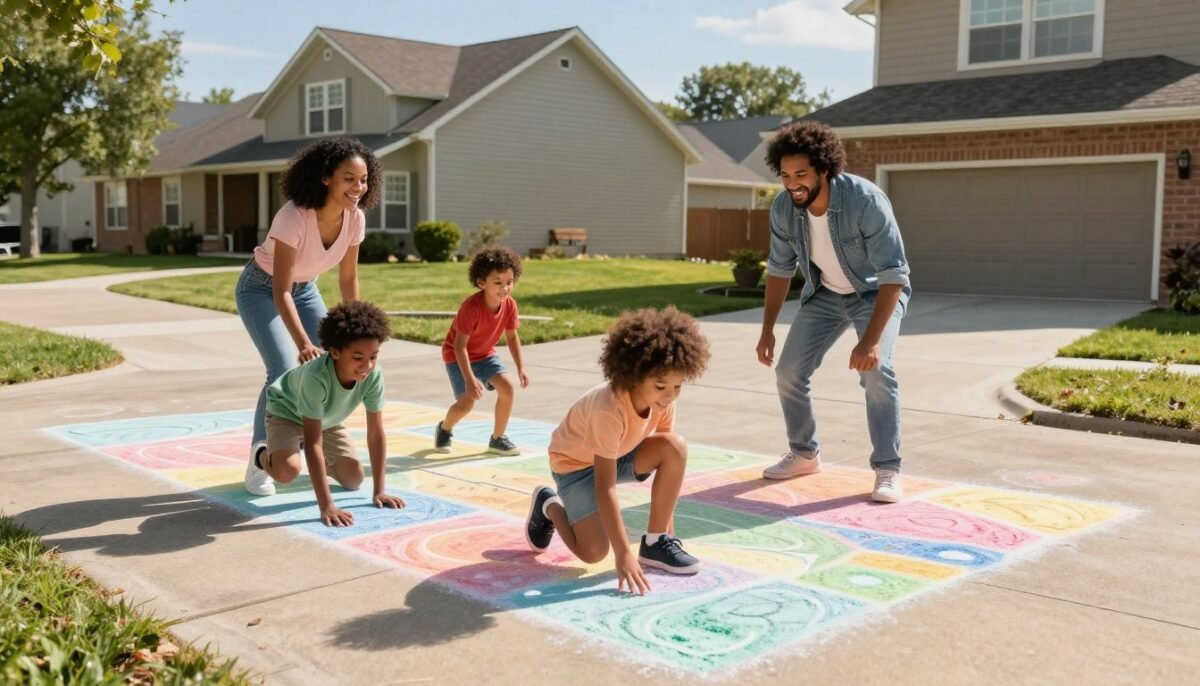
These twenty chalk obstacle course ideas transform ordinary outdoor space into exciting play areas. Each activity develops different abilities while keeping children engaged and active. The beauty of chalk obstacles lies in their flexibility and endless variation possibilities.
Start simple with one or two obstacles and gradually build complexity as kids gain confidence. Mix and match different elements to create new courses daily. The only limit is your imagination and available chalk.
Remember that every child develops at their own pace. Adjust difficulty levels to match individual abilities. The goal remains keeping kids moving, learning, and having fun outdoors.
Chalk obstacle courses provide screen-free entertainment that benefits both physical and cognitive development. They cost almost nothing but deliver tremendous value in childhood memories and skill building.