
Your television doesn’t have to be an eyesore in your beautifully designed living room. Transform it into an intentional design element that feels like part of your décor rather than a tech necessity.
Gallery walls around televisions have become one of the most popular interior design trends. They create visual interest while making your screen feel like a curated art piece.
This comprehensive guide presents 40 inspiring TV gallery wall ideas. You’ll discover practical layouts, frame selections, and design strategies that work in any space.
Table of Contents
Why Create a Gallery Wall Around Your TV
A well-designed gallery wall transforms your television from a black rectangle into a sophisticated focal point. The frames surrounding your screen create visual balance and architectural interest.
Many homeowners struggle with making their TV feel intentional. When you mount a screen on a blank wall, it dominates the room and draws attention for the wrong reasons.
Gallery walls solve this problem elegantly. They integrate technology into your design scheme while maintaining the curated feel of your living room or bedroom.
Design Benefits
- Creates symmetry and visual balance in your room
- Adds personality through artwork and photographs
- Makes the TV feel like an intentional design choice
- Provides flexibility to update décor seasonally
- Increases perceived value of your space
Practical Advantages
- Hides wall imperfections around mounting area
- Draws eyes away from cords and cables
- Offers storage opportunities with shelving integration
- Works with various interior design styles
- Adapts easily to different wall sizes
Classic Symmetrical TV Gallery Wall Ideas
Symmetrical arrangements create order and elegance around your television. These balanced layouts work exceptionally well in traditional and transitional spaces where harmony matters most.
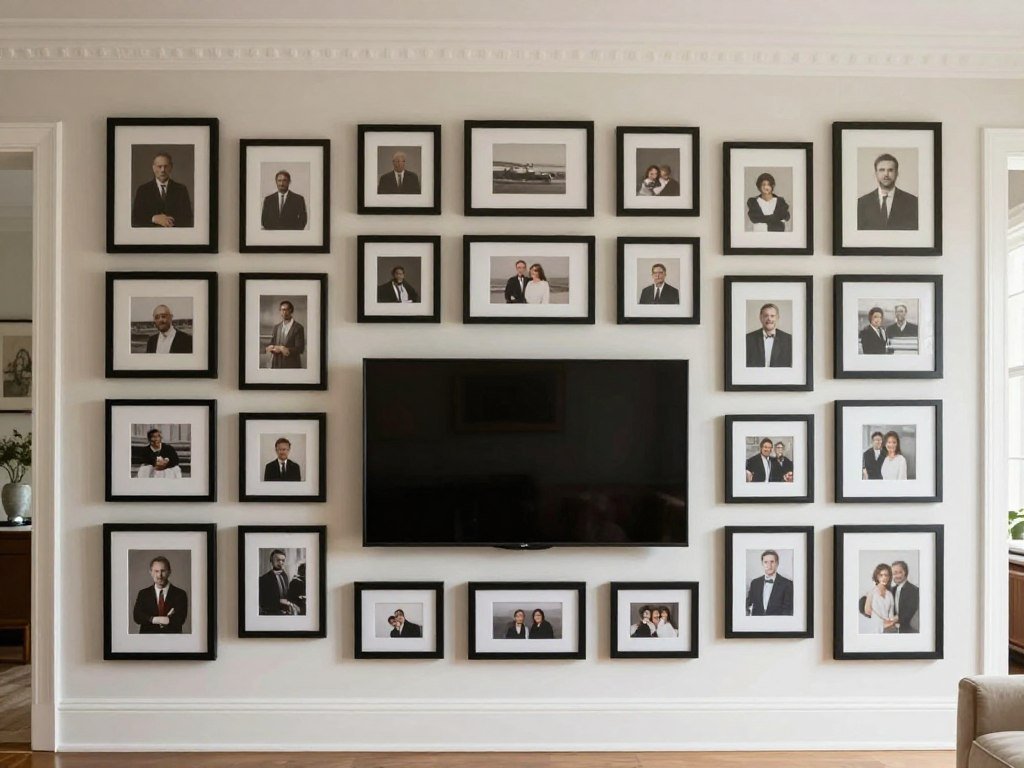
Idea 1: Grid Pattern Gallery Wall
Create a perfect grid with uniform frames on all sides of your TV. This approach works beautifully in contemporary living rooms where clean lines matter.
Use identical frame sizes and consistent spacing between each piece. The repetition creates a museum-quality feel that elevates your entire room design.
Idea 2: Mirror Image Layout
Place matching frames on either side of your screen at identical heights. This creates instant visual balance without overwhelming the space.
Choose artwork or photographs with complementary color palettes. The symmetry draws the eye across the entire wall rather than focusing solely on the television.
Idea 3: Horizontal Strip Above and Below
Install a row of frames above your TV and mirror it with another row below. This elongates the wall and makes standard ceiling heights feel more dramatic.
Keep frame sizes consistent within each row. The horizontal emphasis works particularly well in rooms with low ceilings or wide wall spaces.
Idea 4: Centered Focal Point Design
Surround your television with a border of frames that creates one large rectangular focal point. The TV becomes the centerpiece of a larger artistic composition.
Use thicker frames or matting to add visual weight. This approach makes smaller televisions feel more substantial and appropriate for larger walls.
Idea 5: Bookend Frame Arrangement
Place large statement frames on both sides of your TV like bookends. Fill the vertical space from floor to ceiling for maximum impact.
Select oversized artwork or mirrors for these anchor positions. The vertical lines create height and elegance in your living room or bedroom.
Asymmetrical and Eclectic Gallery Wall Styles
Asymmetrical layouts bring creativity and personality to your space. These arrangements feel collected over time and work beautifully in bohemian, eclectic, and modern interiors.
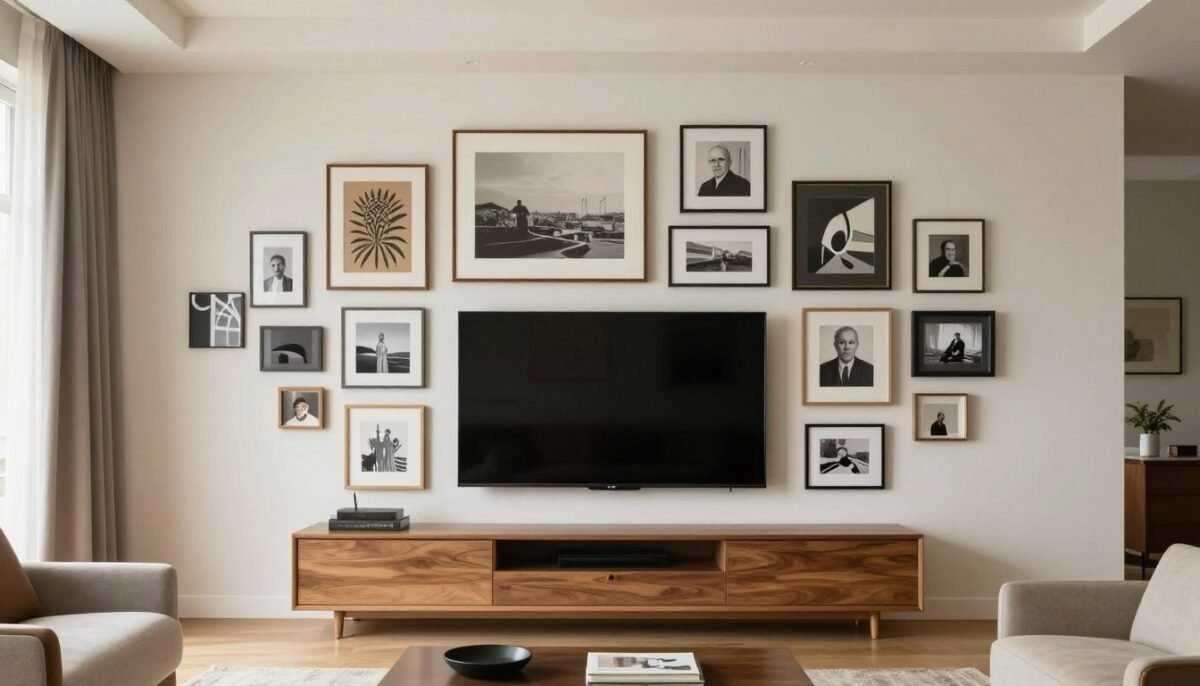
Idea 6: Salon Style Wall
Create a dense, organic arrangement with frames of various sizes clustered around your screen. This European-inspired approach celebrates collected art and personal photographs.
Start with your largest pieces and fill in gaps with smaller frames. The seemingly random placement actually requires careful planning to maintain visual balance.
Idea 7: Ascending Diagonal Pattern
Arrange frames diagonally upward from one side of the TV. This creates dynamic movement and draws eyes around the entire wall rather than straight to the screen.
Vary frame sizes along the diagonal line. The ascending pattern works especially well in rooms with vaulted ceilings or architectural features.
Idea 8: Clustered Corner Design
Concentrate your frames in one or two corners around the television. Leave other areas more open to create interesting negative space.
This approach works wonderfully in smaller rooms. The asymmetry prevents the wall from feeling too busy while still adding visual interest.
Idea 9: Scattered Organic Layout
Place frames at varying heights and distances from the TV in a way that feels natural and unplanned. The organic spacing creates a relaxed, lived-in atmosphere.
Mix vertical and horizontal orientations freely. This style suits casual family rooms and spaces where comfort matters more than formality.
Idea 10: L-Shaped Configuration
Build your gallery wall in an L-shape extending from one side and either up or down. This creates visual movement while keeping the design grounded.
Use the L-shape to draw attention to architectural features. This layout works particularly well when your TV sits near a fireplace or built-in shelving.
Frame Style and Material Combinations
Your frame choices dramatically impact the overall feel of your TV gallery wall. The right materials and styles support your interior design vision while complementing your existing décor.
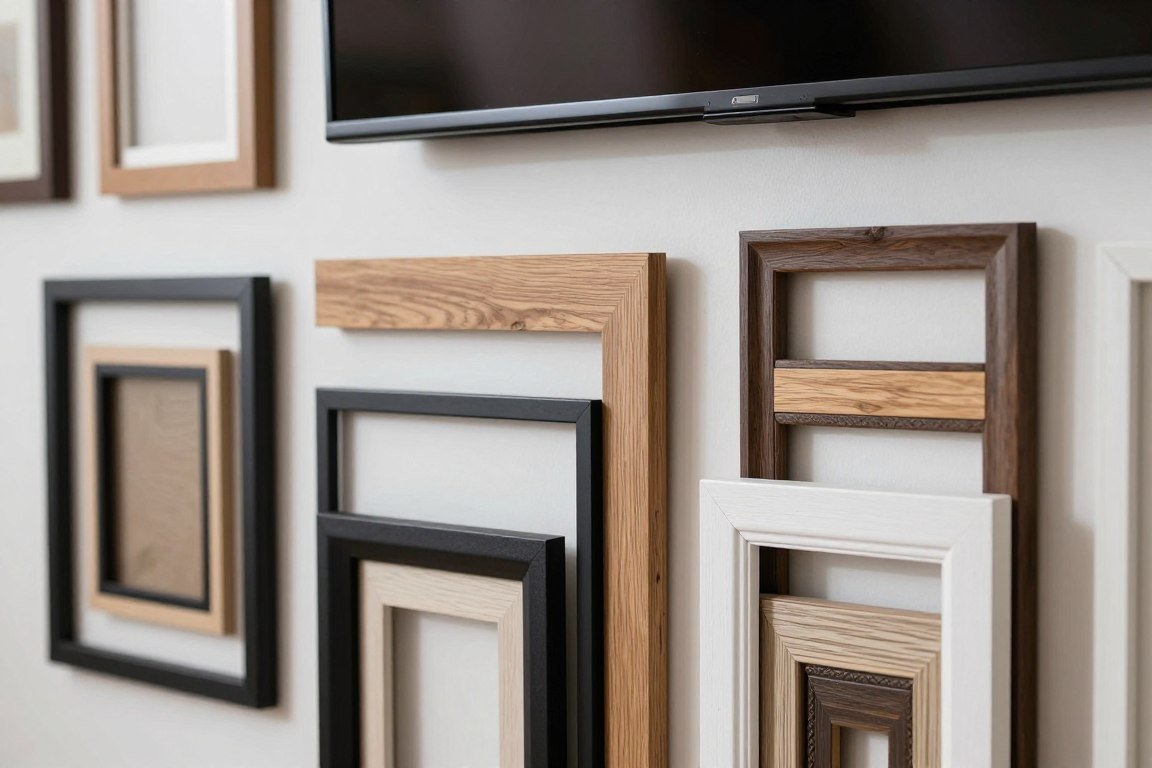
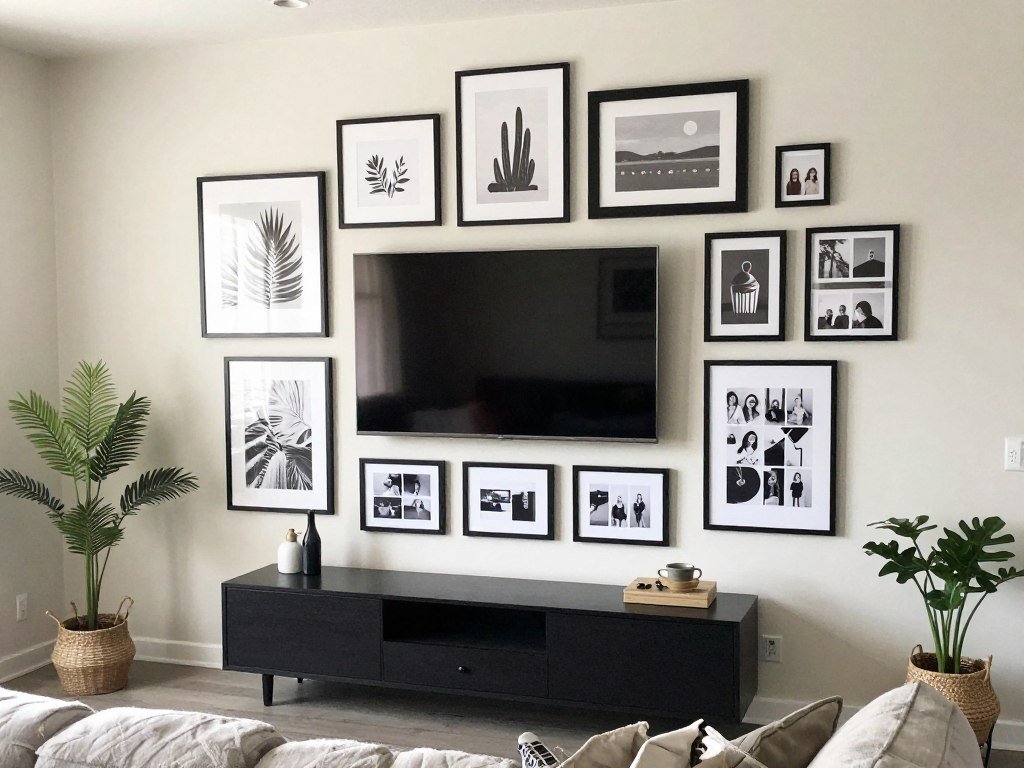
Idea 11: All-Black Frame Consistency
Create drama and cohesion with frames in matching black finishes. The monochromatic approach lets your artwork shine while maintaining a sophisticated gallery feel.
Black frames work in virtually any interior design style. They create strong visual boundaries that make even simple prints look more substantial and intentional.
Idea 12: Natural Wood Gallery
Embrace warmth with frames in natural wood tones. Oak, walnut, and maple frames bring organic texture that softens the technological feel of your television.
Wood frames complement existing furniture and cabinetry. They work especially well in spaces with wood flooring or other natural materials already present.
Idea 13: Mixed Metal Finishes
Combine brass, copper, silver, and matte black metal frames for an industrial-chic look. The mixed metals add dimension and reflect light beautifully around your screen.
Keep the metal tones consistent with other hardware in your room. This creates a cohesive design that feels intentional rather than mismatched.
Idea 14: White and Cream Frames
Achieve an airy, gallery-like atmosphere with crisp white or warm cream frames. This approach works beautifully in coastal, farmhouse, and Scandinavian-inspired spaces.
Light-colored frames make walls feel larger and brighter. They provide a neutral backdrop that lets colorful artwork become the focal point of your gallery wall.
Idea 15: Mixed Material Eclectic
Combine wood, metal, and painted frames in one cohesive arrangement. The variety adds visual interest while the shared color palette maintains harmony.
Limit yourself to three frame materials maximum. Too much variety can feel chaotic rather than intentionally eclectic in your living room design.
Color-Coordinated Gallery Wall Concepts
Color strategy transforms your TV gallery wall from simple decoration into a powerful design statement. Thoughtful color choices create mood and tie your entire room together.
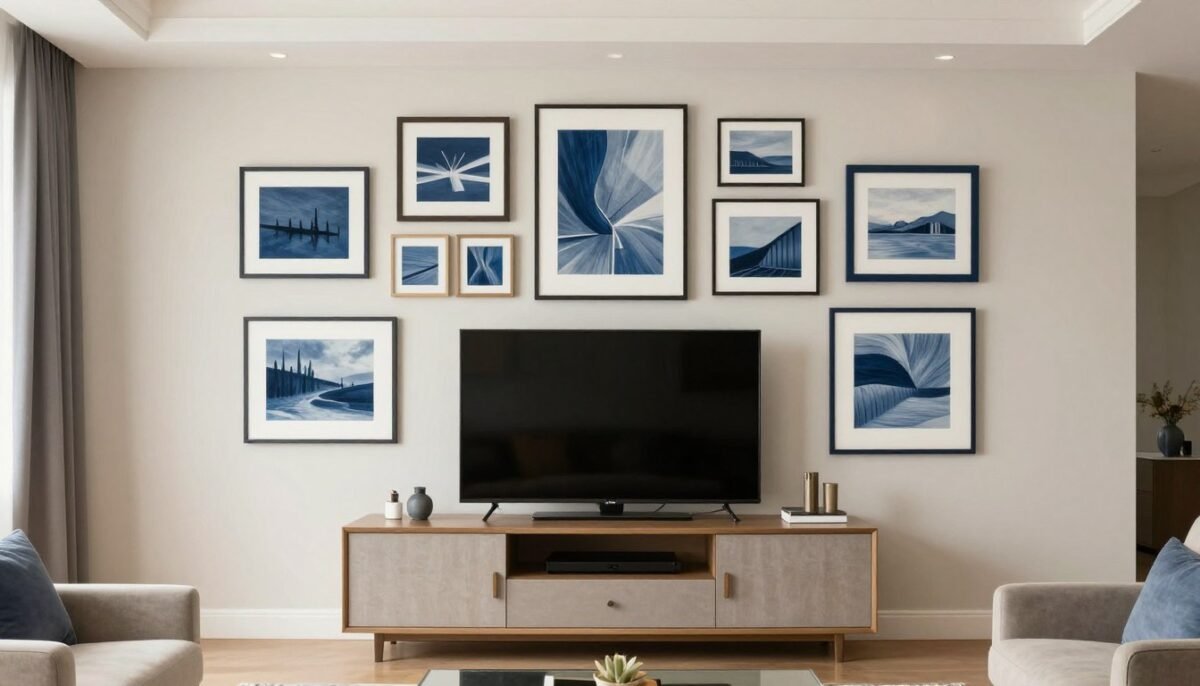
Idea 16: Monochromatic Blue Scheme
Create calm sophistication with frames and artwork in various shades of blue. The monochromatic palette feels intentional and creates a serene focal point in your living room.
Layer navy, cobalt, and sky blue tones for depth. This approach works particularly well in coastal or transitional spaces where relaxation is the priority.
Idea 17: Warm Earth Tone Collection
Embrace terracotta, rust, ochre, and warm browns for a cozy, grounded feeling. These earth tones make your TV area feel inviting and comfortable rather than sterile.
Earth tones complement wood furniture and natural textiles. The warmth balances the cool technology of your screen beautifully.
Idea 18: Black and White Gallery
Achieve timeless elegance with exclusively black and white photography or artwork. The graphic simplicity creates a sophisticated backdrop that never goes out of style.
Mix matte and glossy black finishes for subtle variation. This classic combination works in every interior design style from traditional to ultra-modern.
Idea 19: Jewel Tone Accent Wall
Make a bold statement with rich jewel tones like emerald, sapphire, and amethyst. The saturated colors create luxury and drama around your television.
Balance intensity with neutral frame colors. Too many competing bright frames can overwhelm the space and distract from both art and screen.
Idea 20: Pastel and Soft Hue Arrangement
Create a gentle, feminine feel with blush pink, soft mint, and pale lavender tones. These delicate colors work beautifully in bedrooms and sitting rooms where tranquility matters.
Keep the overall palette light and airy. Pastel schemes make small rooms feel more spacious while adding personality without overwhelming the space.
Incorporating Shelving and Functional Elements
Functional gallery walls do double duty by providing storage and display space alongside visual interest. These practical solutions work especially well in smaller homes where every surface matters.
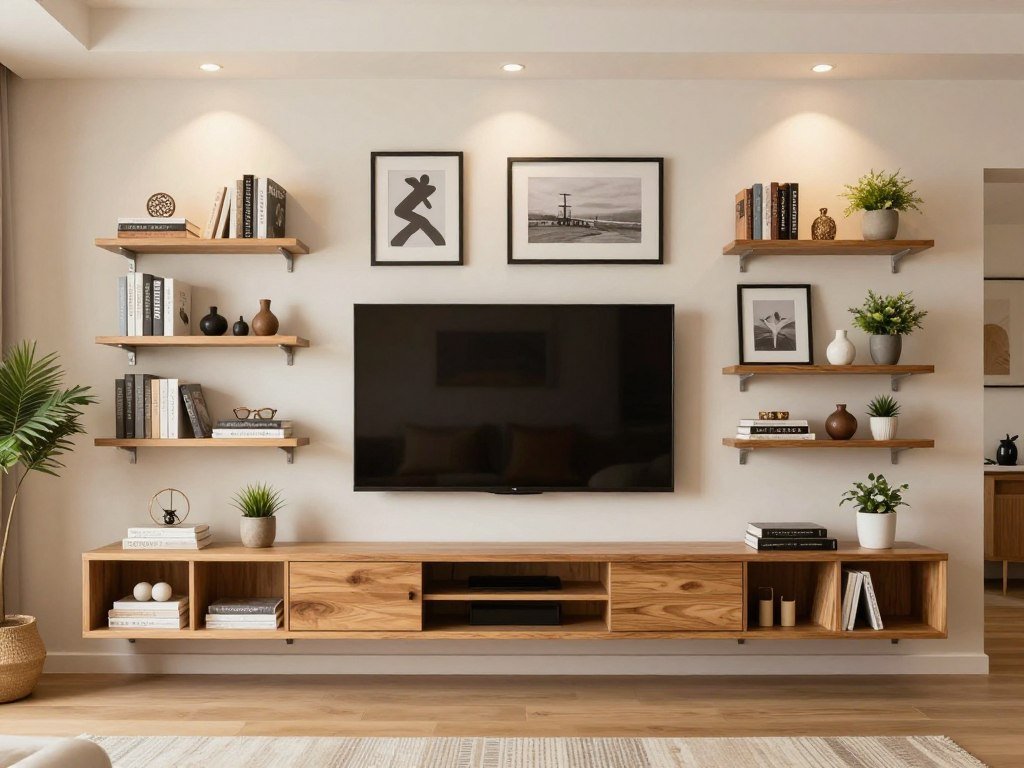
Idea 21: Floating Shelf Gallery
Install floating shelves above and beside your TV to display small frames, books, and décor items. The dimensional quality adds depth that flat frames alone cannot achieve.
Keep shelves shallow to avoid overwhelming the space. Three to five inches of depth provides enough room for layered items without protruding too far from the wall.
Idea 22: Picture Ledge Layers
Use picture ledges to create flexible display options around your television. You can easily swap artwork and photographs without new nail holes in your walls.
Overlap frames at varying heights on each ledge. This casual approach feels collected and lived-in while maintaining a cohesive gallery wall aesthetic.
Idea 23: Built-In Cabinet Integration
Frame your TV with built-in cabinetry that includes both closed storage and open shelving for art display. This custom approach creates a furniture-quality focal point.
Paint cabinet interiors a contrasting color for depth. The architectural quality elevates your entire living room and adds significant perceived value to your home.
Idea 24: Console Table Foundation
Ground your TV gallery wall with a console table beneath the screen. The horizontal surface provides space for table lamps, plants, and decorative objects that extend the gallery concept.
Keep the console height appropriate for the TV placement. Standard media console height ranges from twenty-four to thirty inches for optimal viewing angles.
Idea 25: Vertical Bookshelf Frame
Flank your television with tall, narrow bookshelves that double as vertical gallery spaces. Style the shelves with both books and small framed pieces for a library-inspired look.
Maintain consistent styling across both shelves. Symmetrical bookshelf arrangements create balance while providing practical storage for your living room or den.
Artistic and Thematic Gallery Wall Approaches
Themed gallery walls tell a story and express your personality. These curated approaches create conversation pieces that reveal your interests and aesthetic preferences.
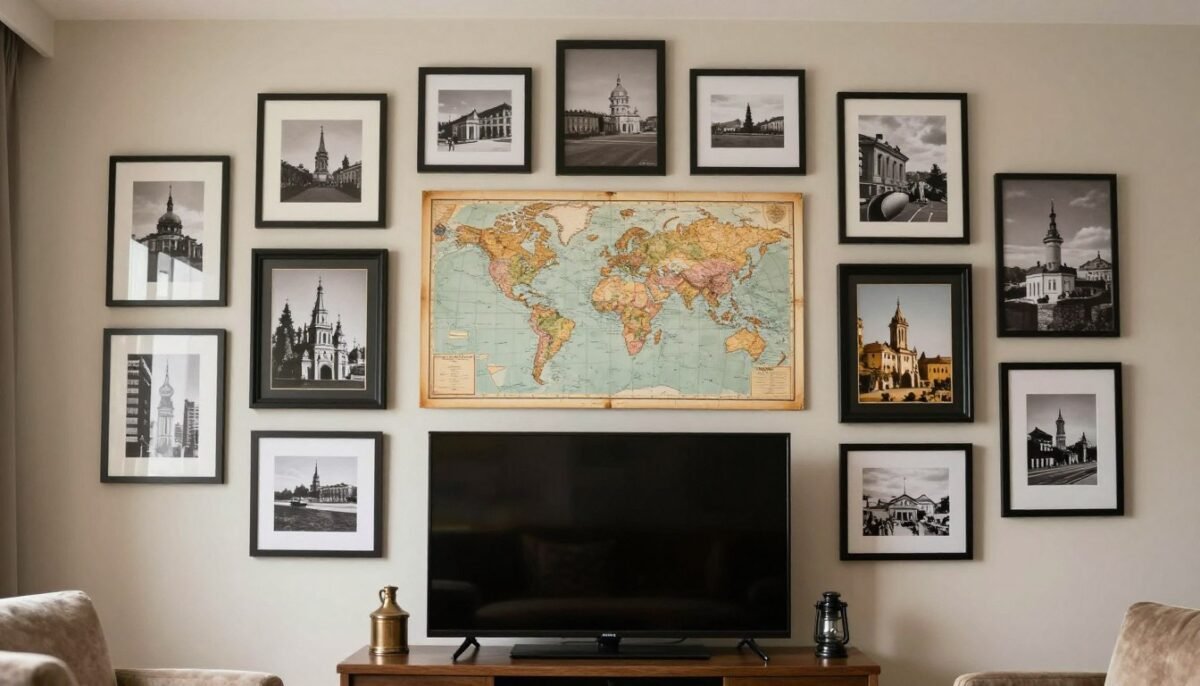
Idea 26: Travel Photography Collection
Showcase your adventures with a gallery wall of travel photographs around your TV. The personal connection makes your living room feel authentically yours.
Choose images with consistent editing styles. Whether black and white or saturated color, cohesive processing makes disparate locations feel like part of one collection.
Idea 27: Botanical Print Garden
Create a natural oasis with botanical prints, pressed flowers, and nature photography. This organic theme brings the outdoors inside while softening technology’s hard edges.
Mix scientific illustrations with contemporary plant photography. The combination of vintage and modern botanical art creates visual interest and depth around your screen.
Idea 28: Family Heritage Wall
Honor your family history with vintage photographs, heirlooms, and meaningful memorabilia arranged around your television. This transforms your media wall into a storytelling focal point.
Use archival framing materials to protect precious photographs. Acid-free matting and UV-protective glass preserve family memories while displaying them beautifully in your home.
Idea 29: Abstract Art Gallery
Embrace contemporary style with bold abstract artwork in various sizes. The non-representational art creates visual interest without competing with whatever appears on your screen.
Limit your color palette to three or four hues. Too many competing colors can make the wall feel chaotic rather than artfully curated in your modern living room.
Idea 30: Typography and Quote Wall
Inspire daily with motivational quotes, song lyrics, or meaningful text arranged artfully around your TV. Typography art feels modern and personal simultaneously.
Vary font styles and sizes for visual interest. Mix script and block fonts to create contrast while maintaining readability from typical seating distances.
Specialized Room-Specific Gallery Wall Ideas
Different rooms require different approaches to TV gallery walls. These specialized ideas address the unique needs of bedrooms, family rooms, and multi-purpose spaces.
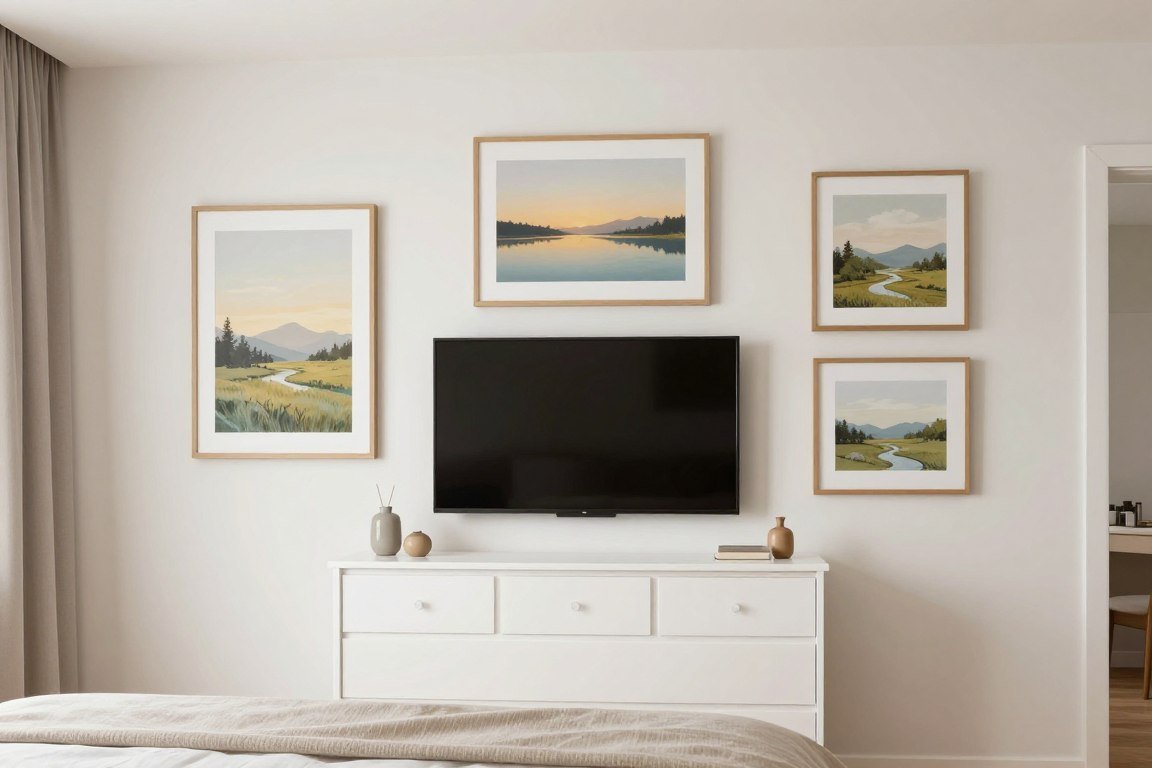
Idea 31: Bedroom Sanctuary Design
Create a calming gallery wall in your bedroom with soothing landscapes, abstract art in muted tones, and personal photographs that promote relaxation.
Avoid overly stimulating images or bright colors. Bedrooms require peaceful visuals that support rest rather than energize the space like living room galleries might.
Idea 32: Kids’ Playroom Adventure
Design a playful gallery wall around the playroom TV with colorful children’s art, educational prints, and fun typography that grows with your kids.
Use removable hanging systems for flexibility. As children age, you can easily update artwork without damaging walls or committing to permanent arrangements.
Idea 33: Home Office Motivation
Surround your office TV or monitor with inspirational quotes, achievement certificates, and vision board elements that keep you motivated throughout the workday.
Include functional elements like a wall calendar or pinboard. Home offices benefit from gallery walls that combine aesthetic appeal with practical workspace organization.
Idea 34: Basement Entertainment Hub
Create a movie theater vibe in your basement with film posters, cinema-inspired art, and entertainment memorabilia framing your large screen.
Use deeper frames to accommodate three-dimensional items. Basement entertainment spaces can handle bolder, more playful gallery walls than formal living rooms typically allow.
Idea 35: Outdoor Living Space
Extend your gallery wall concept to covered outdoor areas with weather-resistant frames and prints. Outdoor TVs deserve the same design attention as interior screens.
Choose fade-resistant artwork and sealed frames. Outdoor conditions require special materials, but the gallery wall concept works beautifully in screened porches and covered patios.
Frame TV Specific Gallery Wall Techniques
Samsung Frame TVs and similar art-mode televisions offer unique opportunities for gallery wall integration. These screens already mimic artwork, making them natural gallery wall centerpieces.
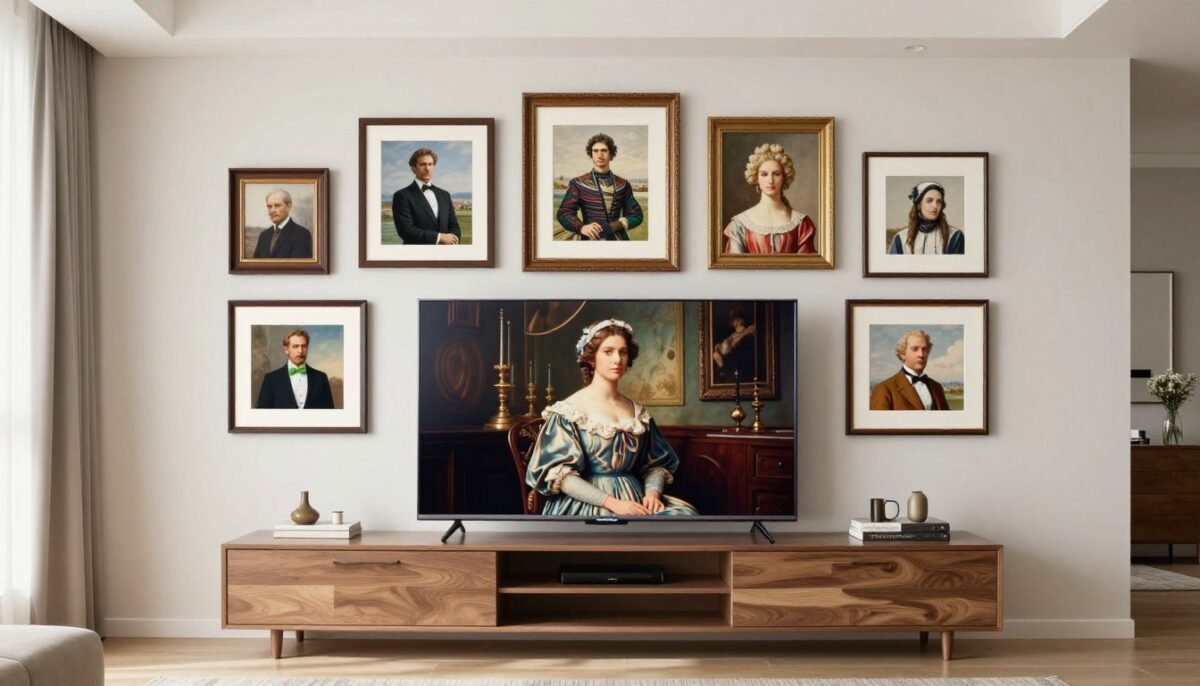
Idea 36: Matching Frame Borders
Select physical frames that match your Frame TV’s customizable bezel. This creates seamless integration where the television truly becomes part of the art collection.
Coordinate the digital art displayed on your Frame TV with surrounding physical pieces. When the TV shows classical paintings, surround it with similar traditional artwork for maximum cohesion.
Idea 37: Gallery Wall as Frame TV Extension
Treat your Frame TV as the largest piece in your gallery and build outward from there. The screen’s ability to change artwork means your gallery wall can have a flexible centerpiece.
Rotate digital art seasonally to refresh the entire wall. This flexibility is Frame TV’s greatest advantage for gallery wall enthusiasts who enjoy frequent design updates.
Idea 38: Contrasting Modern and Traditional
Highlight your Frame TV’s technology by contrasting it with genuinely antique or vintage frames. The juxtaposition creates interesting tension between old and new.
Use ornate gold frames beside the sleek Frame TV. This unexpected combination works beautifully in eclectic or maximalist interiors where contrast is celebrated.
Idea 39: Minimalist Frame TV Showcase
Let your Frame TV be the star with just two or three carefully chosen pieces flanking it. Minimalist approaches work when the TV itself displays exceptional digital art.
Choose oversized frames for maximum impact with minimal pieces. Less is more when your Frame TV features museum-quality digital artwork that deserves attention.
Idea 40: Full Wall Art Installation
Create a floor-to-ceiling gallery wall where your Frame TV occupies the central position. This immersive approach transforms your entire wall into an art installation.
Maintain breathing room around the Frame TV despite the density. Even in full-wall galleries, the television needs slight separation to maintain its identity as the focal point.
Essential Planning and Installation Tips
Successful TV gallery walls require careful planning before you ever pick up a hammer. These practical tips ensure your installation looks professional and withstands the test of time.
Measuring and Spacing Guidelines
Start by measuring your TV dimensions and the full wall space available. Your gallery wall should feel proportional to both the television and the room itself.
Maintain two to three inches of space between your TV and the nearest frames. This breathing room prevents the wall from feeling cluttered while clearly defining the screen as a separate element.
Keep consistent spacing between all frames in your arrangement. Professional designers typically use one and a half to three inches between pieces, depending on frame size and overall wall dimensions.
Before You Start
Proper preparation prevents costly mistakes and ensures your gallery wall looks professionally installed.
- Create paper templates of each frame
- Tape templates to wall to test layout
- Photograph template arrangement for reference
- Locate wall studs with a stud finder
- Gather all necessary hanging hardware
- Check that TV mount is secure
Layout Strategy
Strategic planning creates balanced, professional-looking gallery walls that complement your television perfectly.
- Start with largest pieces first
- Maintain consistent eye-level alignment
- Balance visual weight across the wall
- Consider viewing angles from seating
- Leave room for future additions
- Plan for cable management behind frames
Hanging Hardware
Using appropriate hardware ensures your gallery wall remains secure and level for years to come.
- Use wall anchors for drywall installations
- Choose heavy-duty hangers for large pieces
- Install picture rail for rental-friendly options
- Level each frame individually
- Secure frames with wall bumpers
- Consider adjustable hanging systems
Common Mistakes
Avoid these frequent errors that undermine even well-planned TV gallery walls.
- Hanging frames too high or too low
- Inconsistent spacing between pieces
- Ignoring visual weight distribution
- Forgetting about cable visibility
- Using inadequate hanging hardware
- Overcrowding the space around TV
Creating Visual Balance
Visual balance means distributing visual weight evenly around your television. Heavy, dark frames need counterbalancing on the opposite side to prevent the wall from feeling lopsided.
Step back frequently during installation. What looks balanced up close may feel off from your typical viewing distance on the couch or bed.
Use odd numbers of frames when possible. Groups of three, five, or seven pieces feel more dynamic and interesting than even-numbered arrangements in most gallery wall applications.
Lighting Considerations
Proper lighting transforms a good gallery wall into a stunning focal point. Consider both natural light sources and artificial illumination when planning your layout.
Avoid placing frames where glare from windows will make them difficult to see. Position reflective glass away from direct light paths that create viewing problems during certain times of day.
Add picture lights or track lighting to highlight your gallery wall in the evening. Dedicated art lighting makes your television area feel like a genuine gallery space in your home.
Maintaining and Updating Your Gallery Wall
Gallery walls evolve over time as your tastes change and your life progresses. These maintenance and update strategies keep your TV gallery wall looking fresh and relevant.
Seasonal Refresh Ideas
Swap out a few key pieces seasonally to keep your gallery wall feeling current. You don’t need to change everything, just three to five strategic pieces create a refreshed look.
Spring might call for lighter colors and botanical themes. Fall often works well with warmer tones and landscape photography that reflects the changing season outside your window.
Store off-season artwork properly to prevent damage. Keep frames in a climate-controlled space away from extreme temperatures and humidity that can warp frames or damage prints.
Cleaning and Care
Dust your gallery wall monthly using a microfiber cloth or soft duster. Regular maintenance prevents buildup that makes cleaning more difficult and can damage frames over time.
Clean glass with streak-free cleaner and a lint-free cloth. Spray the cloth rather than the glass directly to avoid moisture seeping behind the glass and damaging artwork.
Check hanging hardware annually to ensure everything remains secure. Walls settle and hardware can loosen over time, especially in homes with temperature fluctuations.
Pro Tip: Take a photograph of your completed gallery wall from multiple angles. These reference photos make it easy to reinstall everything in the same arrangement if you ever need to take frames down for painting or moving.
Growing Your Collection
Leave intentional gaps in your initial gallery wall design. These spaces allow you to add meaningful pieces over time without completely rearranging your entire wall.
Collect artwork and photographs that genuinely resonate with you rather than rushing to fill every space. A slowly collected gallery wall feels more authentic than one assembled all at once from a home décor store.
Consider commissioning custom art that fits specific gaps in your arrangement. Local artists often create pieces in exact sizes and color palettes that complement your existing gallery wall perfectly.
Working With Different Wall Types
Not all walls are created equal when it comes to hanging heavy televisions and multiple frames. Understanding your wall type ensures safe, secure installations.
Drywall Solutions
Standard drywall requires wall anchors for any frame heavier than a few pounds. Toggle bolts and molly bolts distribute weight across larger wall areas, preventing damage and sagging.
Always locate studs for your TV mount regardless of wall type. Televisions are too heavy and valuable to trust to anchors alone, even the heavy-duty variety designed for drywall applications.
Plaster Wall Considerations
Older homes with plaster walls require different approaches than modern drywall construction. Plaster is harder and more brittle, requiring pre-drilling to prevent cracking during installation.
Use masonry bits to drill pilot holes in plaster walls. Regular drill bits can cause the plaster to crack or crumble, potentially damaging your wall beyond just the intended hole.
Brick and Concrete Installations
Exposed brick or concrete walls create industrial-chic backdrops for TV gallery walls. However, they require specialized hardware and installation techniques for secure mounting.
Masonry anchors and concrete screws provide the holding power needed for both televisions and heavy frames. These installations are more permanent but extremely secure when done correctly.
Rental-Friendly Alternatives
Renters can create beautiful TV gallery walls without damaging walls. Picture rail systems, adhesive strips rated for appropriate weights, and lean-in arrangements offer flexible solutions.
Build a freestanding frame around your TV using a shelving unit or room divider. This furniture-based approach creates the gallery wall effect without any wall mounting required.
Budget-Friendly Gallery Wall Approaches
Stunning TV gallery walls don’t require designer budgets. These economical strategies help you achieve high-end looks without overspending on your living room design project.
Affordable Frame Sources
Big-box retailers offer surprisingly stylish frames at fraction of custom framing costs. IKEA, Target, and HomeGoods provide coordinated frame collections that create cohesive gallery walls economically.
Thrift stores and estate sales yield unique vintage frames at unbeatable prices. A coat of spray paint unifies mismatched frames into intentional collections that look custom and expensive.
DIY Art and Printables
Download high-resolution printable art from websites offering free or low-cost designs. Print at home or use affordable print services to create custom-sized pieces that fit your exact frame dimensions.
Create your own abstract art using canvas boards and acrylic paint. YouTube tutorials make even complex techniques accessible to beginners with minimal artistic experience or natural talent.
Mixed Media Approaches
Combine framed art with three-dimensional elements like mirrors, small shelves, and decorative plates. The variety creates visual interest while reducing the total number of frames needed to fill your wall.
Use fabric remnants or wallpaper samples as affordable frame fillers. Interesting textures and patterns create impact without requiring expensive artwork or professional photography.
Budget Breakdown: Gallery Wall for Under $200
- Eight frames from IKEA or Target: $80
- Four printable art downloads: $20
- Four personal photos printed: $15
- Hanging hardware variety pack: $25
- Two decorative mirrors: $40
- One floating shelf: $20
This budget covers a complete TV gallery wall with professional appearance and mixed elements that create visual interest around your screen.
Mid-Range Investment: $500 Gallery Wall
- Ten custom-sized frames: $200
- Five pieces of original art: $150
- Professional photo printing: $50
- Premium hanging system: $60
- Accent lighting: $40
A moderate budget allows for higher-quality materials and some original artwork while still maintaining affordability for most homeowners and their design projects.
Premium Gallery Wall: $1000+ Investment
- Custom framing for fifteen pieces: $600
- Original artwork and photography: $250
- Professional installation: $100
- Picture lighting system: $150
Premium investments include professional services and original art that create heirloom-quality gallery walls with lasting value for your home and family.
Troubleshooting Common Gallery Wall Problems
Even well-planned gallery walls can encounter issues during or after installation. These solutions address the most frequent problems homeowners face with TV gallery wall projects.
Problem: Gallery Wall Feels Unbalanced
When one side of your gallery wall feels heavier than the other, redistribute visual weight by moving your largest or darkest pieces toward the lighter side.
Add an additional frame or mirror to the sparse side. Sometimes the solution is simply adding one more element to achieve the balance your eye recognizes as missing.
Problem: Frames Won’t Stay Level
Install small adhesive bumpers on the bottom corners of each frame. These tiny felt pads prevent frames from shifting and help maintain the level position you carefully established.
Check that your hanging wire or sawtooth hangers are centered properly. Off-center hardware causes frames to tilt naturally toward one side regardless of initial leveling efforts.
Problem: Gallery Wall Looks Cluttered
Remove ten to twenty percent of your frames and reassess. Often gallery walls become overcrowded as we add “just one more” piece beyond what the space can comfortably accommodate.
Increase spacing between remaining frames. Adding just half an inch more breathing room between pieces dramatically reduces visual clutter without removing additional artwork.
Problem: Visible Cables and Wires
Use cord covers that match your wall color to hide cables running from your TV to outlets. These paintable plastic channels blend seamlessly when matched to wall paint.
Position larger frames strategically to hide cable runs. Sometimes the best solution is creative placement rather than extensive rewiring or wall cutting for concealment.
Problem: Wrong Color Palette Choice
Introduce new elements in your desired color palette gradually. Rather than replacing everything, add two or three pieces in better colors and remove the most offending items.
Change frame colors with spray paint before replacing entire frames. A simple paint update to existing frames often solves color palette problems more economically than starting over.
What Works Well
- Planning layout with paper templates before drilling
- Starting with your largest pieces first
- Maintaining consistent spacing throughout
- Using proper wall anchors for security
- Leaving room for future additions
- Stepping back frequently to check balance
- Coordinating frame styles intentionally
Common Pitfalls to Avoid
- Hanging everything too high above TV
- Crowding frames too close to screen edges
- Mixing too many different frame styles
- Ignoring cable management planning
- Using inadequate hanging hardware
- Installing without measuring first
- Forgetting about glare from windows
Transform Your Space With a Thoughtful TV Gallery Wall
Your television doesn’t have to be a design compromise. With thoughtful planning and creative vision, it becomes an integrated part of a beautiful gallery wall that showcases your personality and elevates your entire room.
The forty ideas presented in this guide offer starting points for every style preference and budget level. Whether you prefer symmetrical sophistication or eclectic creativity, there’s a gallery wall approach that works for your unique space and lifestyle.
Remember that gallery walls evolve over time. Start with a solid foundation and allow your wall to grow organically as you discover artwork, photographs, and meaningful pieces that deserve display in your home.
The most successful TV gallery walls balance aesthetic beauty with practical function. They hide technology’s utilitarian aspects while celebrating the personal stories and artistic sensibilities that make your house a home.
Take your time with planning, invest in proper installation, and don’t be afraid to adjust as you go. The perfect gallery wall rarely happens in one session but develops through thoughtful curation and occasional refinement over months or even years.
Your living room deserves a focal point that reflects who you are and how you live. A well-designed TV gallery wall accomplishes exactly that while solving the universal challenge of integrating technology into beautiful interior spaces.