
Imagine cooking a meal with just the sun’s power. Making a DIY solar oven lets you use the sun’s heat for cooking. It’s great for those who love sustainable living or cooking off the grid.
So, How to Make the best Solar Ovens? It’s all about using materials that reflect and hold heat well. Building your own oven teaches you about thermodynamics and cuts down on electricity or gas use.
Choosing eco-friendly cooking is a smart move for a greener life. This guide helps you build, improve, and fix your solar oven. Start using the sun’s power to cook your favorite meals in a new way.
Table of Contents
Understanding the Science Behind Solar Cooking
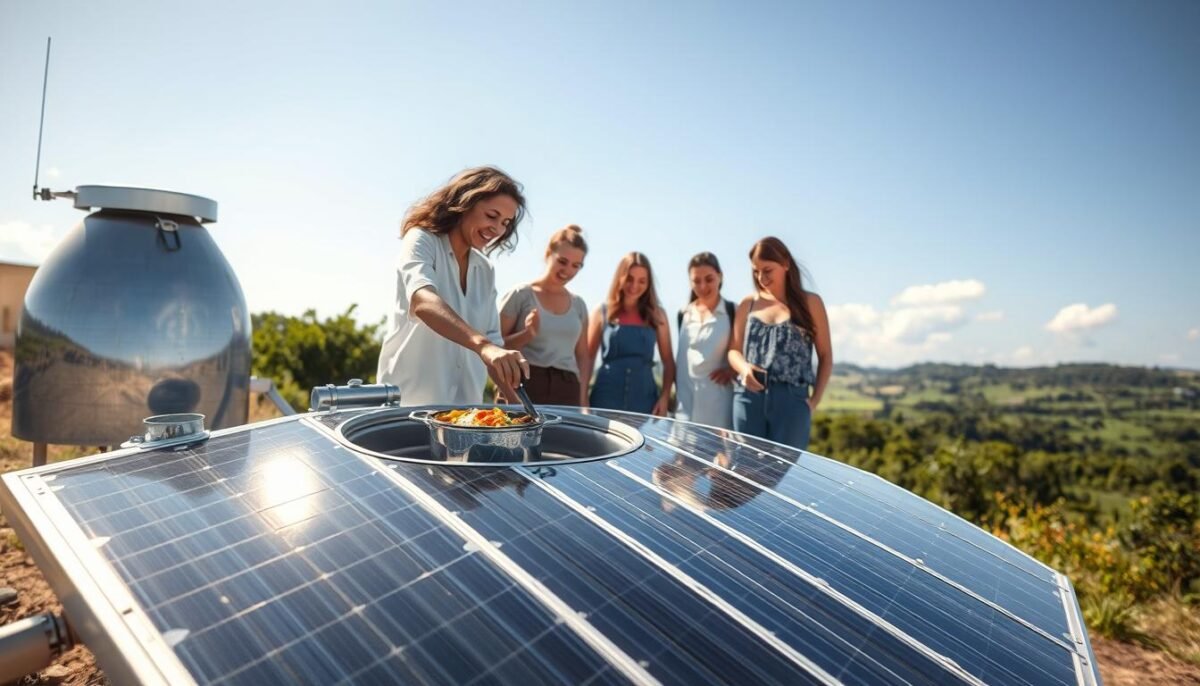
Using the sun for cooking is a cool science. It turns sunlight into the heat needed for food. This solar cooking method uses physics to work well outside.
How Solar Thermal Energy Works
The main idea is to catch solar thermal energy from sunlight. When sunlight hits a surface, it absorbs the light and turns it into heat. This heat then spreads out, warming the air and food inside.
Your cooking device needs to catch as much light as it can. Reflective parts help focus the sun’s rays. This makes sure the most energy gets to your food.
Essential Components for Heat Retention
After catching the energy, keeping it warm is key. Good heat retention stops the heat from escaping. Without it, cooking would be slow and uneven.
Two important parts help keep your oven warm:
- Glazing: A clear cover lets sunlight in but keeps heat inside.
- Thermal Mass: Heavy pots or liners store heat, keeping it steady even when it’s cloudy.
By focusing on these parts, your heat retention stays strong. This lets you cook well with your solar cooking setup, no matter the weather.
Gathering Materials and Tools for Your Project
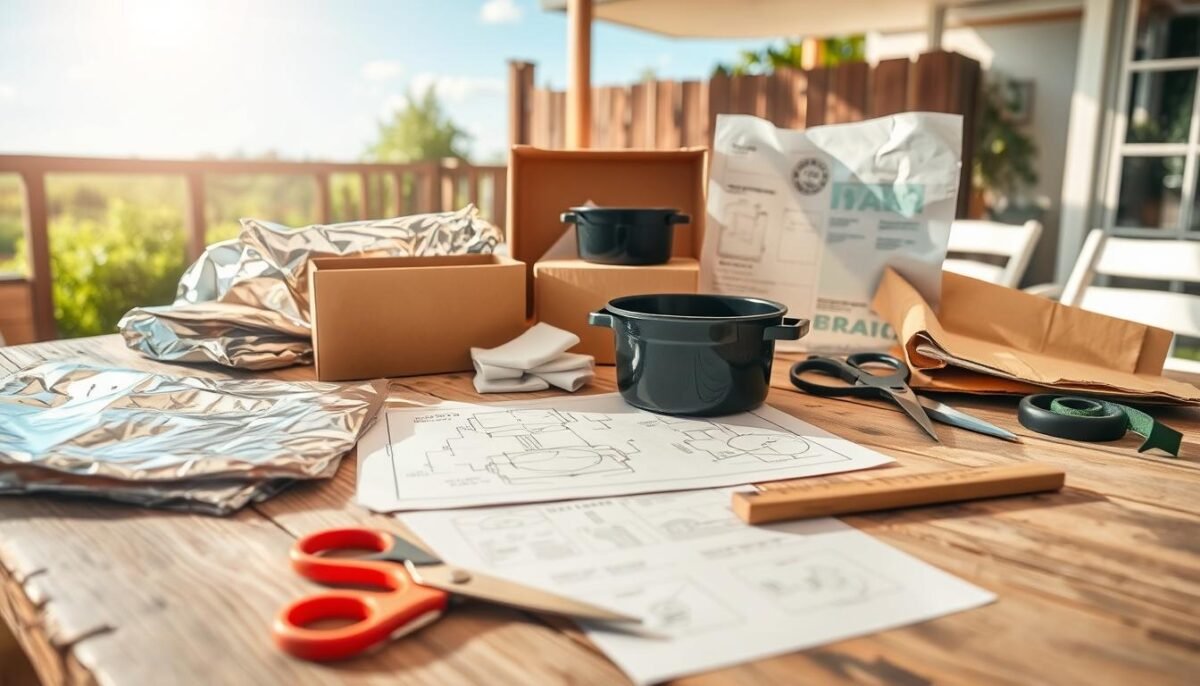
Building a solar cooker needs careful material and tool selection. Good preparation makes your DIY solar oven last long and work well in sunlight. Choosing quality parts makes your solar oven construction better.
Selecting the Right Reflective Materials
Your cooker’s main job is to catch and focus light. Choose reflective materials that reflect light well. Heavy-duty aluminum foil works great if it’s smooth and wrinkle-free.
For lasting results, think about polished metal sheets or special reflective films. These are easier to clean and last longer. Make sure the surface is clean to keep light strong.
Insulation Options for Maximum Efficiency
Good solar oven insulation keeps temperatures high, even when it’s cloudy. Use recycled cardboard boxes with wool or cotton batting. These keep heat in well and are good for the planet.
Don’t use synthetic foams that melt or give off bad smells. Choose dense, heat-safe materials for a tight seal. A well-insulated box cooks food steadily for hours.
Safety Gear and Construction Tools
Get your basic tools ready before starting. You’ll need a sharp knife, a measuring tape, and high-temperature tape. Always wear gloves when handling sharp edges or hot spots.
| Material Type | Primary Function | Recommended Choice |
|---|---|---|
| Reflective | Light Concentration | Aluminum Foil |
| Insulation | Heat Retention | Recycled Cardboard |
| Adhesive | Structural Integrity | High-Temp Tape |
| Safety | User Protection | Work Gloves |
How to Make the best Solar Ovens?
To get high temperatures in your DIY solar oven, focus on how you put it together. Learning how to make the best solar ovens shows that being precise is crucial. A well-made oven catches sunlight well and keeps a steady heat for hours.
Step One: Constructing the Outer Box
The outer box is the base of your cooker. Choose strong materials like corrugated cardboard or wood for durability. Good solar oven construction means the outer shell is solid enough to hold the weight of the inside parts and the glass lid.
Step Two: Installing Internal Insulation
After building the frame, work on solar oven insulation to stop heat loss. Use materials like wool, crumpled newspaper, or foam board to line the inside walls. This layer is key for heat retention, helping the oven get hot enough for cooking.
| Insulation Material | Thermal Efficiency | Ease of Use |
|---|---|---|
| Wool Batting | High | Moderate |
| Recycled Newspaper | Medium | High |
| Rigid Foam Board | Very High | Low |
Step Three: Creating the Reflective Lid Assembly
The lid assembly is a solar collector that focuses sunlight into the cooking area. Attach a reflective surface, like aluminum foil or a mirror, to a hinged panel. Adjusting the angle of this lid helps track the sun for better light capture.
Step Four: Sealing the Cooking Chamber
The last step is to seal the glass or plastic cover tightly. Use weather stripping or silicone sealant to keep hot air inside. A perfectly sealed space is crucial for consistent heat, which is important for safe and efficient cooking.
Optimizing Your Solar Oven for Peak Performance
Getting consistent results with cooking with the sun depends on your setup. The quality of your oven matters, but managing your environment is key. By tweaking your setup, you can boost your solar oven efficiency all year round.
Positioning Your Oven Toward the Sun
Direct sunlight is the best energy source. Check your oven’s alignment every thirty to sixty minutes. This ensures the sun’s rays hit the reflective surfaces just right.
A simple shadow trick helps. When the shadow is smallest, your oven is aligned perfectly.
Adjusting Reflectors for Seasonal Changes
The sun’s path changes a lot between summer and winter. In summer, the sun is high, so your reflectors need a flatter angle. In winter, they should be steeper to catch the sun’s lower arc.
Changing these panels regularly keeps your solar oven temperature high, even on shorter days. Consistency in these adjustments prevents heat loss and keeps cooking times steady.
Monitoring Internal Temperatures Safely
Safety is crucial when cooking with natural heat. Always use an oven-safe thermometer to check the heat inside without opening the lid. Opening it too often drops the heat fast, making your oven work harder to get back up.
| Season | Sun Angle | Reflector Tilt |
|---|---|---|
| Summer | High | Low (Flat) |
| Spring/Fall | Moderate | Medium |
| Winter | Low | High (Steep) |
Best Practices for Solar Cooking Success
Mastering cooking with the sun is more than just building a box. It’s about making smart choices about tools and setting. Focus on keeping heat in and using materials wisely. This turns your backyard into a reliable kitchen.
Choosing Suitable Cookware Materials
The right solar oven cookware is key for quick heat. Choose thin, dark metal pots. They soak up sun better than glass or ceramic. A tight lid keeps steam in and heat in.
| Material Type | Heat Absorption | Efficiency Rating |
|---|---|---|
| Dark Enamelware | Excellent | High |
| Cast Iron | Good | Moderate |
| Stainless Steel | Fair | Low |
Recommended Foods for Solar Ovens
Some dishes are better for solar cooking. Slow-cooked stews, grains like rice or quinoa, and simple baked goods work great. They love the slow, even heat of solar ovens.
Stay away from recipes that need quick, high heat. Solar ovens are great for slow-roasting. This makes tough meat tender and softens veggies.
Managing Cooking Times and Weather Variables
Successful cooking with the sun means being flexible with the weather. Clouds can drop the temperature, so add extra time. Watch the sky and adjust your oven’s direction if needed.
Be realistic about cooking times. If the weather changes, finish cooking in a regular oven. This way, you won’t lose your progress. Stay alert to the weather to get better at solar cooking.
Troubleshooting Common Solar Oven Issues
When your solar oven doesn’t get hot enough, it’s time to inspect it closely. Even well-made ovens can falter due to environmental issues or small mistakes. To fix your solar oven troubleshooting, first find out where it’s losing heat.
Addressing Heat Loss Problems
Most often, the problem is poor sealing. If heat leaks out, your solar oven temperature won’t climb. Make sure the lid and cooking chamber are sealed tight.
Adding insulation can also help a lot. If the oven’s outside feels warm, heat is escaping. Use non-toxic insulation to keep the heat inside.
Improving Reflectivity and Light Capture
If your oven is sealed but still not working well, check your light setup. The quality and angle of your reflective materials are key. Make sure they’re clean and aimed right at the sun.
Look for the “hot spot” inside to see if light is hitting your food right. Adjust your reflectors to focus the light better. This can really improve your solar oven efficiency.
Handling Unexpected Cloud Cover
Weather can be unpredictable, and clouds can ruin your cooking plans. When the sun hides, keep the lid shut to save the heat. Don’t open the oven to peek, as it will lose heat.
If clouds last over thirty minutes, move your food to a regular oven. Safety is key, especially with meat. Always check the food’s temperature with a thermometer before eating.
Conclusion
Building a solar oven changes how you see the world. It turns basic materials into a tool for cooking. You become less dependent on traditional energy and learn to cook in an eco-friendly way.
Every meal made with sunlight shows your dedication to a green lifestyle. It cuts down your carbon footprint with each dish. This change helps make the planet healthier for the next generations.
Your solar energy journey doesn’t end with one meal. Try new recipes and tweak your reflector to catch more sun. Making small changes can lead to big improvements.
Teach your friends and neighbors about using the sun’s power. Your knowledge can motivate others to use renewable energy. Keep discovering how the sun can power your home and kitchen.
FAQ
How does a DIY solar oven generate enough heat to cook food safely?
A solar oven turns sunlight into heat. It uses reflective materials like aluminum foil to focus sunlight. This heat is trapped inside, making it hot enough to cook food.
Which materials provide the most effective insulation for a homemade solar cooker?
Use dense, non-toxic materials for insulation. Options include cardboard, newspaper, or wool. Seal the cooking chamber tightly to keep heat in.
What type of cookware should be used to maximize solar absorption?
Dark-colored metal pots work best. They absorb sunlight well. Avoid shiny pots as they reflect sunlight away.
How often do I need to adjust the oven to account for the sun’s movement?
Adjust the oven every 30 to 60 minutes. This keeps the sun’s angle right. Some ovens have tools to help with this.
Can I still cook if there is intermittent cloud cover?
Yes, but it takes longer. Solar ovens keep heat even in shade. Use a thermometer to check the temperature.
Are there specific foods that are better suited for solar cooking?
Solar ovens are great for slow-cooked foods. They’re perfect for stews, grains, and baked goods. They cook food gently without burning.
How can I troubleshoot a solar oven that isn’t reaching high temperatures?
Check for heat loss and ensure the glazing fits well. Replace aluminum foil if it’s not shiny. Cook during the sunniest hours.