
Welcome to the world of premium beans. Understanding the nuances behind every cup makes your daily ritual special.
This Starbucks coffee guide looks into the brand’s history and quality standards. We see how their commitment to excellence has made them a global name.
Finding the perfect Starbucks brewed coffee takes patience and attention to detail. Let’s dive into the craft of roasting to help you discover your favorite flavor.
Each coffee has its own unique notes, shaped by where it comes from and how it’s roasted. Mastering these elements means you’ll enjoy every sip fully.
Table of Contents
What Is Considered a Brewed Coffee at Starbucks? – Coffee Connoisseur’s Guide
When you enter Starbucks, knowing what brewed coffee is helps you order easily. The menu is wide, but knowing the main types makes your visit better. This Starbucks menu guide helps you tell apart simple drip coffee from complex espresso drinks.
Starbucks brewed coffee is made by hot water flowing through ground coffee beans in a filter. This method makes a clean, consistent cup. Unlike espresso, brewed coffee uses gravity and time, not high pressure, to get its flavor.

Brewed coffee is different from drinks like lattes, cappuccinos, or Americanos. Those drinks start with espresso. For a simple, traditional coffee, look for “Brewed Coffee” on the menu.
Here are key points to remember for your next Starbucks visit:
- Preparation: It’s made in large batches with automatic drip machines.
- Base: It’s just ground coffee beans and filtered water.
- Consistency: Each cup tastes the same, based on the roast you choose.
- Customization: You can add cream, milk, or sweeteners to taste.
By using this Starbucks menu guide, you can easily find what you want. Whether you like light, medium, or dark roast, Starbucks brewed coffee gives you a classic, reliable drink every time in the United States.
The Science of Starbucks Drip Coffee Brewing
Starbucks is known for its consistent taste, thanks to strict standards in equipment and technique. They use drip coffee brewing to make sure every cup tastes the same. This is done by using machines that remove the need for human error.
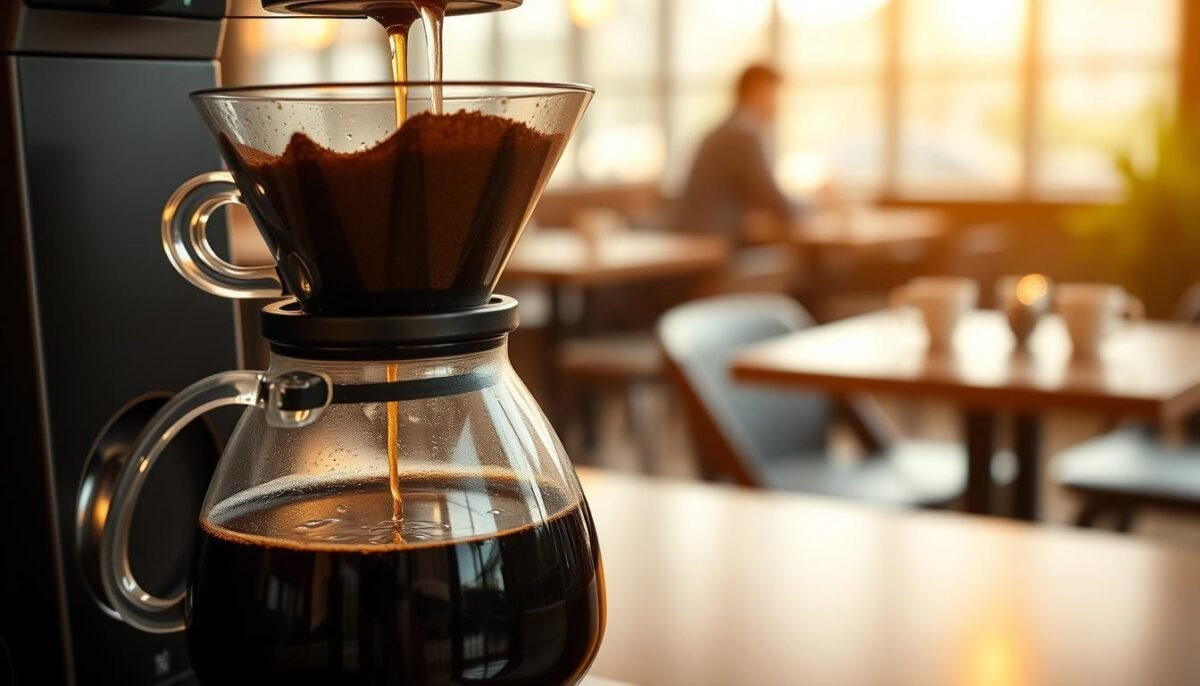
Standard Batch Brewing Methods
The company uses special commercial brewers for high-volume brewing. These standardized methods let baristas focus on serving customers while the machine handles the brewing. Each batch is measured carefully to get the perfect grounds-to-water ratio for every roast.
Baristas follow strict steps to start brewing, keeping the coffee fresh. The high-capacity equipment helps them make consistent coffee, which is key in busy cities.
Water Quality and Temperature Standards
Water quality is crucial for drip coffee brewing. Starbucks uses advanced filters to remove impurities that could change the taste. This ensures the coffee’s unique flavors are preserved.
Keeping the water at the right temperature is also important. The water must be at a specific temperature to extract the right flavors without burning the coffee. Precision heating elements ensure the water stays at the perfect temperature, making every cup smooth and balanced.
Comparing Starbucks Pike Place Roast and Blonde Roast
Choosing a coffee at a shop often depends on your coffee roast intensity preference. Many stick to their usual, but knowing the differences can make your day better. The classic medium-bodied choice and the lighter, brighter option are two popular ones.
Flavor Profile of Pike Place Roast
The Pike Place Roast is known for its balanced taste. It’s a medium roast that suits most coffee lovers. You’ll find notes of toasted nuts and cocoa, making it smooth and not too bitter.
Characteristics of Veranda Blend Blonde Roast
The Blonde Roast, like the Veranda Blend, has a lighter taste. It’s roasted for less time to keep the coffee’s natural flavors. People say it’s mellow and soft, with citrus hints and a sweet, gentle acidity.
When to Choose Each Roast
Choosing the right coffee is all about your mood and taste. For a comforting, substantial taste, go with the Pike Place Roast. It’s great with milk or cream because of its balanced body.
But if you like a lighter, brighter coffee, the Blonde Roast is better. It’s ideal for those who find dark roasts too heavy. Both roasts offer a special way to start your day with coffee.
Dark Roast Varieties and Flavor Profiles
Exploring dark roasts opens up a world of deep, complex flavors. These coffees are perfect for those who love a bold cup with a rich body. Knowing about coffee flavor profiles helps find the perfect intense brew for you.
Sumatra and Earthy Notes
Sumatra coffee is known for its full-bodied character. It offers a unique taste that’s different from Latin American beans.
- Earthy and herbal aroma.
- Low acidity with a smooth finish.
- Complex spice notes that linger on the tongue.
Caffè Verona and Cocoa Undertones
Caffè Verona is a favorite multi-region blend. It’s made to go well with chocolate desserts because of its rich taste.
This blend has velvety cocoa undertones for a sweet, balanced finish. It’s a blend that shows off the art of mixing, keeping it sweet without bitterness.
French Roast Intensity
For the most intense experience, French Roast is the top choice. It’s the darkest roast in the standard lineup, taking the beans to their limit.
The result is a smoky, unique flavor that shows extreme intensity. It’s a bold choice for those who want a sharp, intense start to their day.
| Roast Name | Primary Flavor | Intensity Level |
|---|---|---|
| Sumatra | Earthy/Herbal | High |
| Caffè Verona | Dark Cocoa | High |
| French Roast | Smoky/Charred | Very High |
Decaf and Half-Caf Options for the Discerning Drinker
Many coffee lovers want the rich flavor of a premium roast without caffeine’s jittery effects. Luckily, decaf coffee options are available for those who value taste most. You can enjoy a complex cup at any time without worrying about sleep or feeling too stimulated.
The Swiss Water Process and Decaffeination
The Swiss Water Process is the top choice for keeping bean quality high. It uses water, temperature, and time to remove caffeine without chemicals. This method soaks green coffee beans in a concentrated extract, removing caffeine while keeping flavor oils.
This technique avoids chemicals, so the beans keep their original taste. You’ll find the distinctive notes of the coffee’s origin—like nutty, floral, or fruity—still vibrant. It’s a high-quality choice for those who don’t want to give up flavor.
Customizing Your Caffeine Intake
You can also customize your caffeine intake. Many prefer a “half-caf” blend, mixing regular and decaf beans for a milder energy boost. This lets you enjoy your morning coffee while keeping caffeine levels in check.
Just ask your barista to mix your favorite drink with a specific ratio. This flexibility means your drink is made just for you. Whether you’re sensitive to caffeine or unwinding in the evening, these options make your coffee experience smooth.
| Coffee Type | Caffeine Level | Flavor Integrity |
|---|---|---|
| Standard Roast | High | Full Intensity |
| Half-Caf Blend | Moderate | Balanced |
| Swiss Water Decaf | Negligible | High Retention |
Pour-Over Coffee: A Manual Brewing Alternative
Leaving behind automated machines opens up a world of manual coffee art. Pour-over coffee is a favorite among many for its deep engagement. It turns a simple morning into a daily ritual filled with joy.
The Ritual of the Pour-Over
Manual coffee brewing is a calming ritual. It demands focus on water temperature, the coffee’s bloom, and the pour’s rhythm. This hands-on method makes making coffee a mindful experience.
By controlling each step, you’re part of the coffee’s journey. You see the coffee release gases and develop its aroma. This connection with the beans is unique to manual brewing.
Why Choose Pour-Over Over Batch Brew
Many love pour-over for its cleaner, more vibrant taste. Unlike batch brewing, pour-over brings out coffee’s unique flavors. It’s great for those who want to taste the coffee’s floral, fruity, or nutty notes.
Choosing between brewing methods depends on what you want. If you seek flavor precision and enjoy the process, pour-over is perfect. It’s for those who see their coffee as more than just a caffeine boost.
Cold Brew and Iced Coffee Distinctions
Many coffee fans get cold brew and iced coffee mixed up. But these drinks are quite different. They both cool down your drink, but how they’re made changes the taste. Knowing the cold brew vs iced coffee difference helps pick the right one for you.
The Cold Brew Steeping Process
Cold brew is made by steeping coffee grounds in cold water for hours. This method takes up to 20 hours. It extracts deep flavors without the bitterness of hot brewing.
Traditional Iced Coffee Preparation
On the other hand, iced coffee is brewed hot and then chilled. It’s brewed stronger to handle the ice. This flash-chilling keeps the coffee’s aroma, making it bright and refreshing.
Acidity and Body Comparison
Cold brew is better for those who can’t handle acidic coffee. It’s smoother because it’s brewed without hot water. Iced coffee, however, has more acidity, giving it a lively taste.
The feel of these drinks is also different. Cold brew is thick and velvety, while iced coffee is lighter, like tea.
| Feature | Cold Brew | Iced Coffee |
|---|---|---|
| Brewing Method | Cold Steeping | Hot Drip |
| Brewing Time | 12-20 Hours | 5-10 Minutes |
| Acidity Levels | Low | High |
| Flavor Profile | Smooth/Chocolatey | Bright/Crisp |
Conclusion
Finding your perfect cup of coffee is more than just picking a name. This guide helps you understand complex flavors and brewing methods. It makes it easy to find what you like.
You now know the difference between light, medium, and dark roasts. This knowledge lets you choose the perfect coffee for you. Use this guide to try new beans and brewing styles on your next visit.
Coffee is a journey of discovery. Whether you love bold French Roast or smooth pour-overs, your ideal coffee is out there. Keep trying new things to find your favorite.
Share your favorite coffee finds with others. Your feedback helps them discover new flavors. Enjoy every sip as you learn and explore.
FAQ
What is the primary difference between brewed coffee and espresso-based drinks at Starbucks?
Brewed coffee at Starbucks is made by drip brewing. Hot water flows through ground coffee in a filter. This includes Pike Place Roast and other dark and blonde roasts.
Espresso-based drinks, like lattes and cappuccinos, are made by forcing water through ground beans. This creates a strong shot of espresso.
How does the science of water quality affect the flavor of a Starbucks batch brew?
Starbucks uses a strict water filtration system everywhere. Since coffee is mostly water, the water’s mineral content is key. They control water temperature and quality to bring out the coffee’s flavors.
This ensures the coffee isn’t too bitter or sour. It also lets the coffee’s unique notes shine through.
Between Pike Place Roast and Veranda Blend, which is better for a lighter caffeine experience?
Veranda Blend, a Blonde Roast, has more caffeine than you might think. It has a citrusy brightness in flavor.
Pike Place Roast, a medium roast, has a balanced taste with nutty and cocoa notes. It depends on whether you like a smooth or bright coffee.
What makes the Sumatra dark roast distinct from the Caffè Verona?
Sumatra has an earthy and herbal taste with a heavy body and low acidity. Caffè Verona, a blend, has rich cocoa notes and a sweet finish.
For a smoky taste, try the French Roast. It’s the darkest and boldest option.
Is the decaffeination process at Starbucks safe for those sensitive to chemicals?
Starbucks offers decaf options, like Swiss Water Process, which is chemical-free. This method keeps the bean’s flavor.
For less caffeine, ask for a Half-Caf version of most brewed coffees. This lets you adjust caffeine levels.
Why would a coffee enthusiast choose a Pour-Over instead of a standard drip coffee?
Pour-Over is a manual method that’s more ritualistic and precise. It’s slower and allows for better flavor extraction.
It’s perfect for those who want to enjoy the unique flavors of a single-origin bean.
What is the technical difference between Starbucks Cold Brew and traditional Iced Coffee?
Cold Brew is never heated. It’s made by steeping coffee in cool water for 20 hours. This makes it smooth and full-bodied.
Iced Coffee is brewed hot and then chilled quickly. It’s crisper and has a traditional acidic snap.
How can I identify the body and acidity levels in different Starbucks roasts?
Blonde Roasts like Veranda Blend have high acidity and a light mouthfeel. Medium roasts, like Pike Place Roast, have balanced body and acidity.
Dark roasts, like Sumatra and French Roast, have a heavy body and low acidity. Knowing these profiles helps predict the taste of your coffee.